
GI Side Effect & Drug Comparison Tool
Understand the trade-offs and manage your expectations during treatment.
Key Profiles
Patient Expectations
GI Adaptation Timeline (General Estimate)
Taking medication for type 2 diabetes is usually about the numbers-lowering your HbA1c and keeping your blood sugar stable. But for those prescribed Acarbose is an alpha-glucosidase inhibitor that delays carbohydrate absorption in the small intestine or Miglitol is a similar medication that inhibits glucose absorption but is absorbed more readily by the body, the real struggle isn't the numbers; it's the gas. If you've started these drugs and feel like a walking balloon, you aren't alone. About 20-30% of people quit these medications within the first few months because the bloating and flatulence become too much to handle.
The good news? This discomfort is usually a temporary phase of your gut bacteria learning to handle a new diet of undigested sugars. If you can push through the first few weeks with a smart strategy, these drugs offer a massive perk: they lower blood sugar without causing weight gain or the dangerous "sugar crashes" (hypoglycemia) associated with other diabetes meds. Here is how to navigate the gastrointestinal (GI) rollercoaster and get to the side of the treatment where the benefits outweigh the bloating.
Why These Drugs Cause So Much Gas
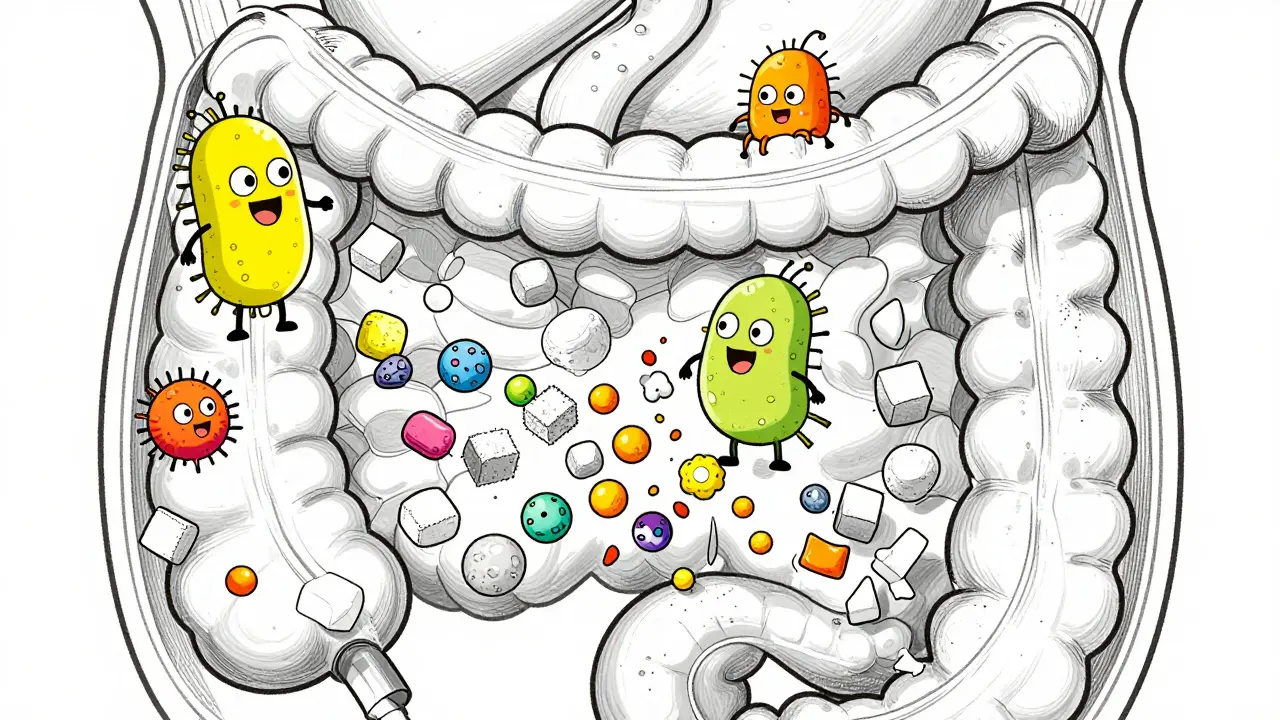
To understand the gas, you have to understand how these drugs work. Most diabetes medications target the liver or the pancreas. Acarbose and Miglitol are different; they work right in your gut. They block the enzymes that break down complex carbs into simple sugars. Because those carbs aren't absorbed in the small intestine, they travel further down into the colon.
Once they hit the colon, the bacteria living there have a field day. They ferment those undigested carbohydrates, and the byproduct of that fermentation is gas. It's essentially a "sugar feast" for your gut microbiome. This is why the side effects peak between day 3 and day 7-your bacteria are reacting to a sudden surge in available food. Over two to eight weeks, your colonic microbiota usually adapt, and the volume of gas begins to drop.
Comparing Acarbose vs. Miglitol: Which is Easier on the Gut?
Not all alpha-glucosidase inhibitors are created equal. The biggest difference comes down to how your body absorbs the drug itself. Acarbose is barely absorbed by your system (less than 2%), meaning it stays in the gut and works locally. Miglitol, on the other hand, is absorbed by the body at a rate of 50-100%.
This technical difference has a real-world impact. In clinical trials, people taking Miglitol generally report less severe bloating and flatulence than those on Acarbose. If you are particularly sensitive to GI distress, Miglitol is often the preferred choice. However, Acarbose is sometimes slightly more effective at lowering long-term HbA1c levels, creating a trade-off between maximum efficacy and maximum comfort.
| Attribute | Acarbose | Miglitol |
|---|---|---|
| Systemic Absorption | Low (<2%) | High (50-100%) |
| Typical GI Impact | More severe flatus/bloating | Moderate GI distress |
| Weight Impact | Weight Neutral | Potential for slight weight loss |
| HbA1c Reduction | Approx. 0.8% | Approx. 0.6% |
| Dosing Timing | First bite of meal | First bite of meal |
The Secret to Starting: Slow and Steady Titration
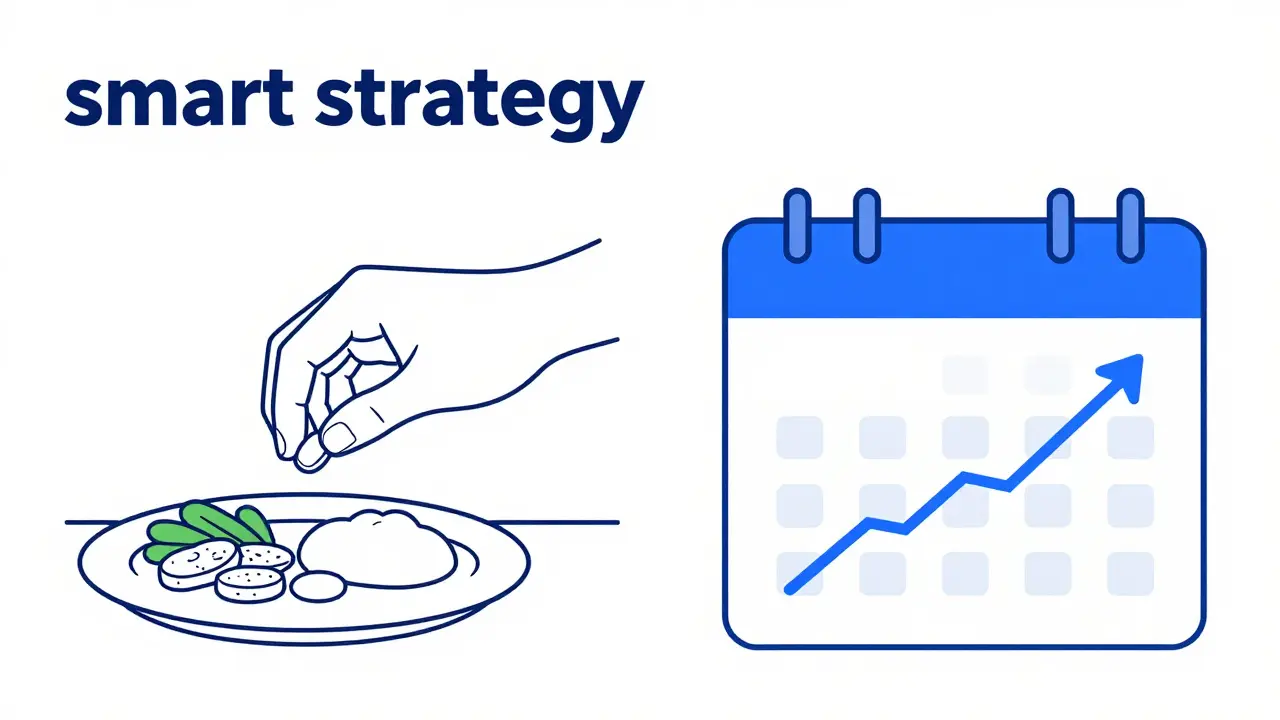
The biggest mistake patients make is jumping straight into the full target dose. This is a recipe for immediate GI disaster. The gold standard for starting these meds is a process called titration-gradually increasing the dose to let your gut adjust.
Instead of starting at 100mg, experts suggest beginning with a low dose, such as 25mg three times daily. Stay at this level for a few weeks. Once your body stops reacting violently to the 25mg dose, increase it by another 25-50mg every two to four weeks. This slow climb can reduce the rate of people quitting the drug from 30% down to about 12%. If you're struggling, some users find success by starting with a single dose during their largest meal of the day and slowly adding doses for breakfast and lunch over a month.
Dietary Tweaks to Quiet the Gas
What you eat while taking these medications determines how much gas you produce. Since these drugs block carb digestion, loading up on high-fiber foods or simple sugars during the first few weeks can act like adding fuel to a fire.
- Limit simple sugars: Avoid high-sugar desserts or sodas, as these can exacerbate bloating.
- Moderate your fiber: While fiber is usually good, too much during the initial titration period can make the bloating feel unbearable. Ease into high-fiber vegetables.
- Consistent carb intake: Aim for a steady amount of carbohydrates (around 45-60g) per meal. Spikes in carb intake lead to spikes in fermentation.
- The "First Bite" Rule: Always take your medication with the first bite of your meal. Taking it too long after you start eating reduces its ability to block glucose absorption, meaning you get fewer benefits and potentially more side effects.
Quick Fixes and Supplements for Relief
When the bloating becomes a social liability, there are a few evidence-backed ways to bring the volume down. You don't have to just "tough it out."
For immediate relief of the "bubble" feeling, Simethicone (available over-the-counter) can help break up gas bubbles in the gut, reducing the severity of bloating. Some patients find that activated charcoal capsules, taken about 30 minutes before meals, can help reduce the actual volume of gas released.
For a longer-term solution, look into Probiotics. Research shows that specific strains, like Lactobacillus GG or Bifidobacterium longum BB536, can actually reduce the frequency of flatulence by helping the gut microbiome stabilize more quickly. By adding these "good" bacteria, you essentially help your gut process the undigested carbs more efficiently.
When to Call Your Doctor
While gas and bloating are expected, some symptoms aren't. It is important to monitor your health closely. While rare, there have been reports of hepatotoxicity (liver damage) associated with Acarbose. If you notice yellowing of the skin or eyes (jaundice) or dark urine, contact your provider immediately.
Additionally, if you experience severe abdominal pain that doesn't go away after a few weeks, or if you develop chronic diarrhea that prevents you from staying hydrated, the medication may not be the right fit for your specific gut chemistry. There are plenty of other options, including newer combination tablets like Acbeta-M that use controlled-release technology to lower the incidence of gas.
How long do the gas side effects actually last?
For most people, symptoms peak between day 3 and day 7. Significant improvement is typically seen by week 2 to 4 as the bacteria in your colon adapt to the extra carbohydrates. By week 8, most patients find the side effects have become manageable or have disappeared entirely.
Can I take Acarbose or Miglitol if I'm overweight?
Yes, and they are actually very useful for this. Unlike some other diabetes medications that cause weight gain, these are weight-neutral. In fact, some studies have shown that Miglitol can lead to a slight reduction in body weight while improving blood sugar control.
What happens if I miss a dose?
If you miss a dose, do not double up on the next one. Just resume your normal schedule. Because these drugs must be taken with food to work, taking a missed dose hours later on an empty stomach won't provide the glycemic benefit and might just cause stomach upset.
Are there any foods I should absolutely avoid?
Avoid excessive simple sugars (like high-fructose corn syrup or heavy sweets) and avoid overloading on extremely high-fiber legumes during the first two weeks of treatment. These provide too much "fuel" for the bacteria in your colon, which increases gas production.
Is Miglitol always better than Acarbose?
Not necessarily "better," but generally better tolerated. Miglitol typically causes less flatulence and bloating due to its higher systemic absorption. However, Acarbose may offer slightly more significant long-term reductions in HbA1c for some patients.
All Comments
Darius Prorok April 10, 2026
Simethicone is basically the only way to survive the first month. Just get the generic stuff from the pharmacy and take it with every meal or you'll be miserable.
Michael Flückiger April 11, 2026
You can totally do this!!! Just keep pushing through the bloat!!! It gets so much better after a few weeks, I promise!!!
Grace Lottering April 12, 2026
Big Pharma just wants us dependent on these. Why push pills that make you bloat? Suspicious.
Nikhil Bhatia April 13, 2026
Too much text. Just switch to Miglitol if you can afford it.
Benjamin cusden April 13, 2026
It is quite elementary that the systemic absorption rate of Miglitol renders it superior for those with a fragile constitution. To suggest that Acarbose is preferable simply for a marginal increase in HbA1c reduction is to ignore the fundamental quality of life metrics. One must consider the pharmacological profile of the drug rather than just the raw data points. Most patients lack the discipline for proper titration, which is why they fail. It is a matter of basic physiological adaptation. The microbiome does not simply 'change' by magic; it requires a controlled introduction of substrates. Those who complain usually didn't follow the dosing schedule precisely. I find it amusing that people struggle with such a straightforward mechanism. The biochemistry is transparent. If you can't handle a bit of flatulence for the sake of glycemic control, perhaps you aren't cut out for this specific regimen. It is an intellectual failing to prioritize short-term comfort over long-term metabolic stability. The efficacy gap is negligible compared to the adherence gap. Read the clinical data more carefully next time.
GOPESH KUMAR April 14, 2026
The body is but a vessel for chemical reactions, and gas is simply the music of the gut microbiome dancing to the tune of glucose. We seek stability in our blood but forget that instability in the colon is the price of that peace. It is a cosmic trade-off. Most people just want a magic pill without the ritual of adaptation.
Laurie Iten April 15, 2026
it is interesting how we view the body as a machine to be tuned rather than a garden to be tended
Victoria Gregory April 16, 2026
That's such a beautiful way to put it!! 🌸 We just need to be patient with our bodies while they adjust!! ✨
Ruth Swansburg April 16, 2026
Stay strong everyone. You can achieve this!