Medication Safety & Polypharmacy Checker
According to WHO reports, taking 5 or more medications simultaneously creates significant health risks.
Select any ongoing physical issues. This tool uses standard deprescribing principles (like STOPP/START) to flag medication classes often associated with these symptoms.
Potential Risk Factors:
No symptoms selected yet.
Need a Deprescribing Review?
Discuss your list with a GP or Pharmacist using frameworks like STOPP/START or the Beers Criteria. Never stop medications abruptly without supervision.
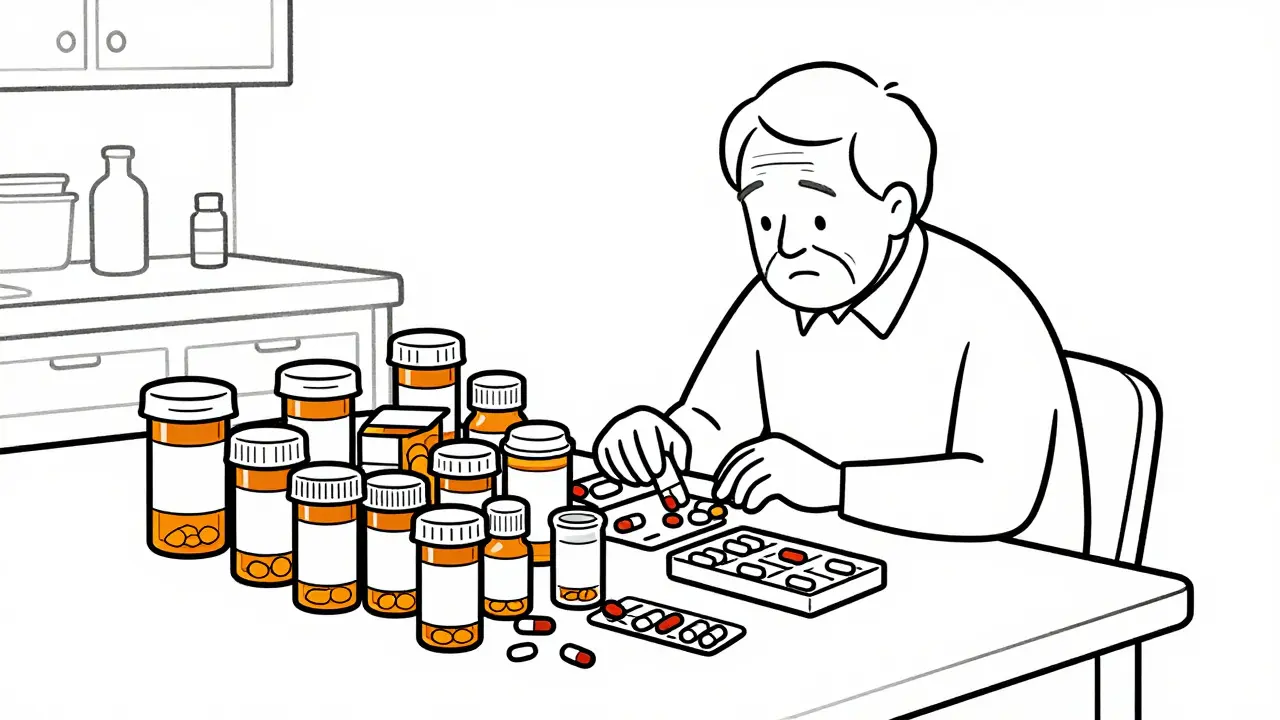
Imagine you or someone you care for takes five different pills every morning. Now imagine taking eight, ten, or twelve. That isn't just a daily routine; that is a medical balancing act gone wrong. We call this Polypharmacy, defined as the use of five or more medications simultaneously. It happens more often than you think. In fact, roughly 40% of older adults globally fall into this category, according to recent World Health Organization reports. The problem isn't just the cost; it is the risk. Inappropriate medication combinations contribute to 30% of hospital admissions among adults aged 65 and older. To fix this, healthcare systems are turning to Deprescribing Frameworkssystematic processes designed to stop unnecessary medications.
What Actually Is Deprescribing?
Many people think stopping a medicine is just quitting. It is not. Deprescribing is the systematic process of evaluating whether the harms of a medication outweigh its benefits. It considers your actual physical function, how long you expect to live, and what matters most to you personally. Research from 2015 established this as a formal clinical strategy, moving away from the old idea of "more prescriptions equals better care." Today, it is an active intervention. Dr. Amy Gravely, a leading voice in drug safety, notes that deprescribing requires the same rigour as starting a new therapy. You cannot just throw medicines away. You need a plan.
The goal is simple: reduce Potentially Inappropriate Medications (PIMs)drugs known to cause harm in specific populations. For older adults, these drugs often cause confusion, falls, or stomach bleeding. By using structured frameworks, clinicians can identify which medicines are truly necessary and which are legacy issues-prescribed years ago and never reviewed. This reduces the pill burden and cuts down on nasty side effects without compromising health.
Key Frameworks Doctors Use
How do you decide what to stop? Clinicians rely on proven tools rather than guesswork. These tools provide the evidence base for making tough calls about removing essential-seeming drugs.
- STOPP/START Criteria: One of the most widely used tools, version 3 was published in 2021. It lists specific situations where a drug should probably be stopped (STOPP) and when one should be considered (START).
- Beers Criteria: Maintained by the American Geriatrics Society, this list identifies 34 medications potentially inappropriate for older adults. The 2023 edition updated several warnings regarding pain killers and sedatives.
- Shed-MEDS: A newer framework validated in 2023. It involves reviewing best possible medication history, evaluating necessity, making recommendations, and synthesising the data. Studies showed it reduced medication count significantly without increasing adverse events.
- DIGE Initiative: Used nationally in Canada since 2018, this initiative focuses specifically on guidelines for the elderly.
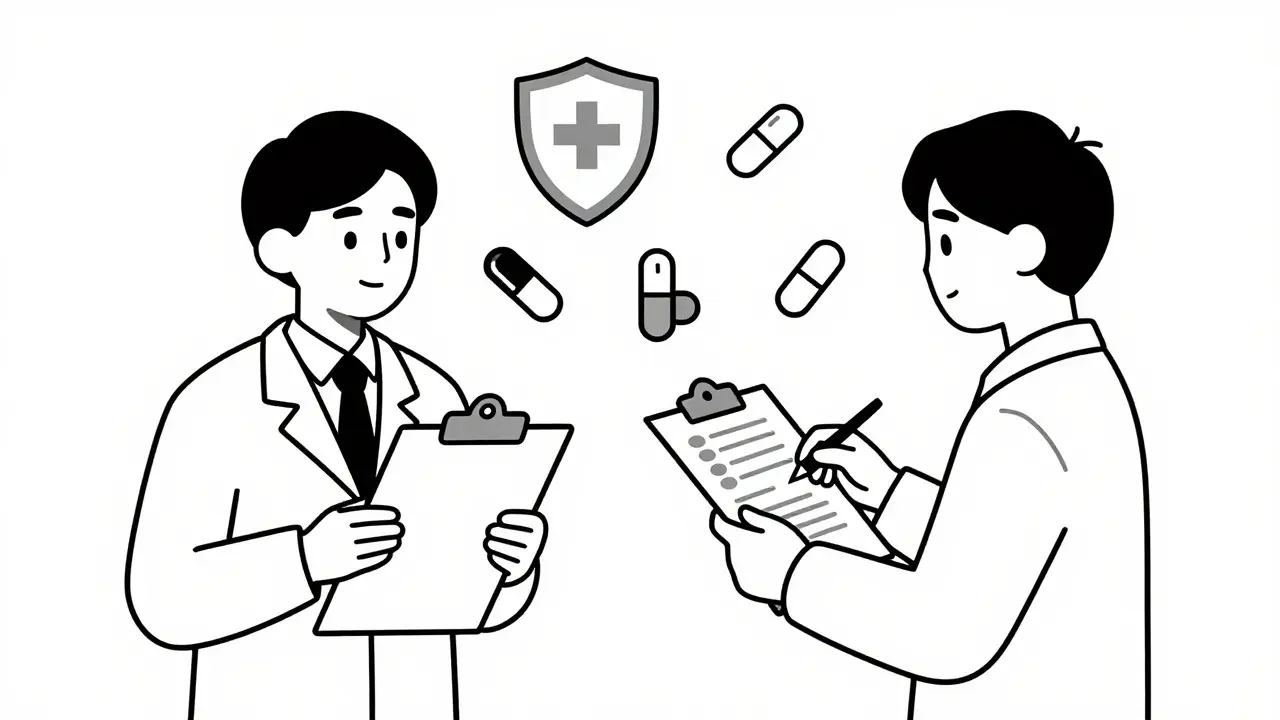
These are not just wishlists. They are backed by GRADE assessments of recommendation strength. For instance, the guideline for proton-pump inhibitors (PPIs) follows a four-step method. First, you identify suitable patients. Second, assess how strong the original reason for the drug was. Third, taper the dose over four to eight weeks. Finally, monitor if symptoms come back. This step-by-step logic prevents dangerous cold-turkey stops.
Medications Most Often Targeted
You cannot deprescribe everything at once. Current evidence-based guidelines focus heavily on five major classes of drugs. If you manage a home with elderly relatives, looking at these specific types can help spot potential risks during doctor visits.
| Medication Class | Why Reduce? | Safety Note |
|---|---|---|
| Proton-Pump Inhibitors (PPIs) | Long-term use increases fracture risk and kidney issues. | Taper slowly to prevent rebound acidity. |
| Benzodiazepines (BZRAs) | High risk of falls, confusion, and dependence. | Requires very gradual tapering to avoid seizures. |
| Antipsychotics | Often prescribed off-label for behavioural issues in dementia. | Increases mortality risk in dementia patients. |
| Antihyperglycemics | Strict sugar control in frail elderly may lead to dangerous hypoglycaemia. | Adjust goals based on life expectancy. |
| Opioid Analgesics | Risk of constipation, constipation, and respiratory depression. | Non-drug pain strategies should replace opioids. |
For example, benzodiazepines are notoriously difficult to stop. A pharmacist named Sarah Chen reported success using algorithms from deprescribing.org. She managed to taper 18 out of 22 patients over six months. Only two experienced mild withdrawal symptoms. That kind of track record proves that structured plans work better than winging it.
The Implementation Reality
In theory, deprescribing sounds great. In practice, it faces serious hurdles. Time is the biggest enemy. A survey of 450 clinicians found that primary care physicians average just 7.2 minutes per patient visit. Comprehensive deprescribing conversations require shared decision-making. That is hard to squeeze into seven minutes.
This is why pharmacists play such a huge role. Interventions led by pharmacists or nurse practitioners reduce medication burden by 1.5 to 2.5 drugs without increasing hospital stays. However, implementation rates in primary care remain below 15%. Why? Because standard electronic health records (EHRs) often lack the prompts needed. Some forward-thinking systems have fixed this. Twelve US healthcare systems implemented algorithm-based prompts that default to not prescribing high-risk meds, forcing doctors to actively override safety protocols to prescribe them.
Financially, it makes sense too. Healthcare systems implementing these protocols generate a return on investment of $3.20 for every dollar spent. This comes from reduced medication costs and fewer emergency room visits. The global market for deprescribing is projected to hit $1.2 billion by 2028, driven by aging populations. By 2030, one in six people globally will be over 65, meaning the demand for safe medication management will skyrocket.
Addressing Patient Concerns
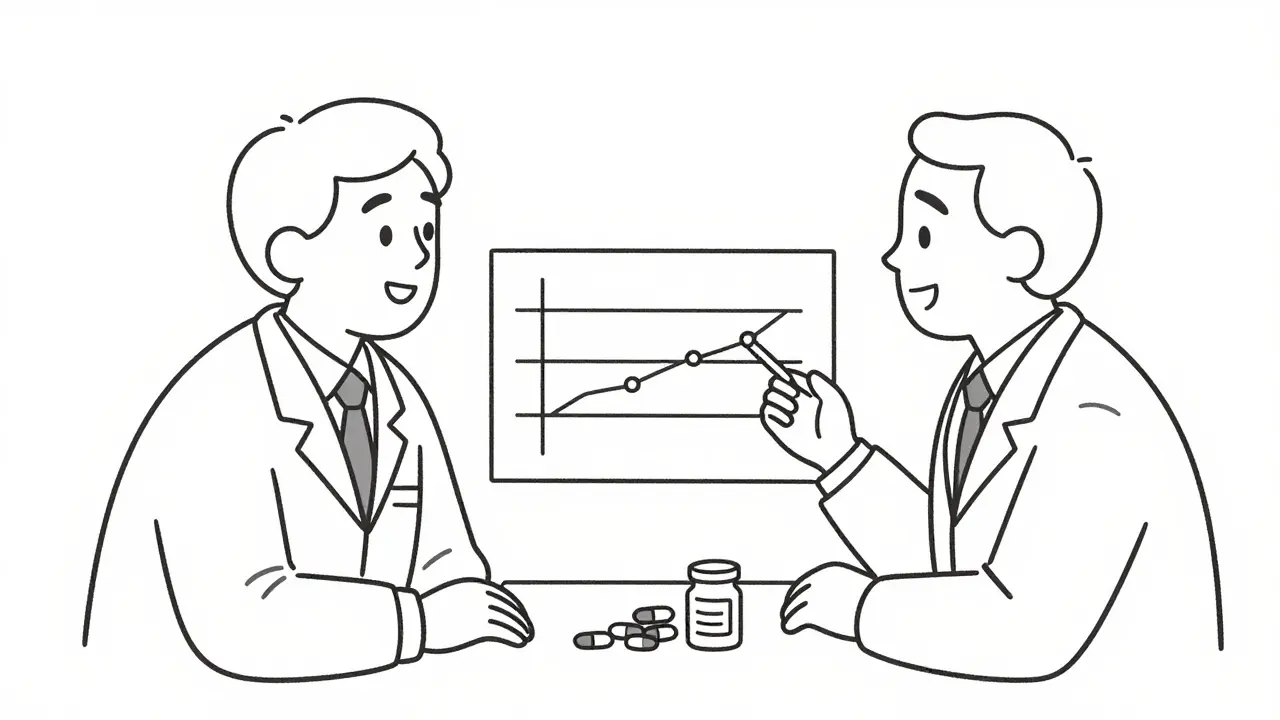
Patients often feel anxious about stopping meds they've taken for years. A qualitative study showed 22% of older adults expressed worry despite knowing their pill count was high. They fear their symptoms will return. This is real. Withdrawing a drug like a sleeping pill or antidepressant must be done with care.
Education is the bridge. Explaining that some symptoms improve after stopping a drug helps. Sometimes, dizziness wasn't caused by age, but by the blood pressure tablet itself. When patients see improvements in energy or memory after stopping one drug, confidence builds. But for those with advanced dementia, doctors must be careful. As Dr. Joseph Teno warns, indiscriminate deprescribing can compromise quality of life if symptom management drugs are removed without alternatives.
Policy Shifts and Future Outlook
The tide is shifting towards mandatory reviews. The American Medical Association released a policy in June 2024 stating physicians should routinely assess the continuing appropriateness of all medications. Furthermore, the Centers for Medicare & Medicaid Services announced in early 2024 that deprescribing metrics will be part of the Merit-Based Incentive Payment System starting in 2026. This means doctors will likely get financial penalties or bonuses based on how well they manage unnecessary medications.
Technology is also catching up. The National Institutes of Health funded projects to develop AI-driven EHR tools. These tools will automatically flag opportunities to stop a drug based on patient data. By 2030, experts predict deprescribing assessments will be as routine as checking blood pressure. Until then, frameworks like STOPP/START and DIGE remain our best compass for navigating the complex world of prescription safety.
Is deprescribing the same as stopping medication suddenly?
No, deprescribing is rarely sudden. It usually involves tapering doses over weeks or months to allow the body to adjust safely. Stopping certain drugs like benzodiazepines abruptly can cause seizures or severe withdrawal symptoms.
Who decides which medications to stop?
It is a collaborative decision between the patient, their GP, and often a specialist pharmacist. The patient's preferences, life expectancy, and functional status guide the choice, not just a list of rules.
Does deprescribing affect my insurance coverage?
Generally, no. In many cases, having fewer medications lowers pharmacy copays and overall out-of-pocket costs. Insurance companies may even encourage it through wellness programmes.
Can I reverse deprescribing if symptoms return?
Yes. If monitoring shows symptoms recurs, the medication can be restarted. The framework includes a phase dedicated to monitoring for exactly this purpose.
Which doctors are trained in deprescribing?
Geriatricians and pharmacists typically receive the most training in these frameworks. Primary care GPs are increasingly receiving updates through guidelines like STOPP/START, but availability varies by region.
All Comments
Angel Ahumada March 30, 2026
The concept of reducing pharmaceutical load is fundamentally tied to the existential burden placed upon the aging demographic by institutional negligence while we consider the deeper philosophical implications of dependency on synthetic compounds
one might argue that autonomy is lost when compliance becomes mandatory yet the patient remains trapped within a system designed for continuity rather than cessation
the framework presented lacks nuance regarding the psychological comfort derived from ritualistic ingestion
we ignore the human desire for care through consumption
Carolyn Kask April 1, 2026
I suppose the rest of the world is finally catching up to what we figured out decades ago in our hospitals
though frankly nobody wants to admit that prescribing less means the doctor gets paid less so obviously the resistance is economic not medical
let’s see how long before the insurance companies figure out how to monetize this new framework idea
typical progressive thinking to cut corners
emma ruth rodriguez April 2, 2026
Your perspective suggests a misunderstanding of the systemic incentives!; healthcare providers operate under strict liability constraints which often necessitate over-prescription as a defense mechanism against litigation risks!!
Furthermore! the financial models do not support reduced drug volume without substantial administrative overhaul!!; consequently! simply applying frameworks ignores the operational reality of modern practice!
Ruth Wambui April 2, 2026
Have you noticed how the big pharmaceutical giants always push more drugs down our throats until we are completely dependent on their chemical leashes
these frameworks smell like a government plot to ration care during the coming collapse
why would they suddenly want us to take fewer pills unless they ran out of profit margins to squeeze
suspicious timing indeed
Katie Riston April 4, 2026
When we discuss the removal of medication we must first confront the metaphysical nature of healing itself
Is health merely the absence of disease or is it a state of harmonious balance
The body often seeks equilibrium despite our interference with chemical agents
Modern medicine tends to view symptoms as enemies to be vanquished rather than signals to be understood
This binary thinking leads directly to the polypharmacy crisis described in the original text
We forget that nature abhors a vacuum and often fills gaps with unnecessary inputs
Deprescribing requires a shift in consciousness regarding what safety truly means
It demands trust in biological resilience which has been eroded by generations of fear-mongering
We treat the elderly as broken machines needing constant parts replacement instead of organic beings with wisdom
The anxiety surrounding stopping drugs stems from a fear of vulnerability
Yet vulnerability is the only path toward authentic recovery and true well-being
If we continue to medicate away every sensation we lose our connection to our own physical existence
Silence can sometimes be louder than the noise of a crowded pharmacy counter
True care involves listening to the body rather than silencing its voice with tablets
We must embrace the quiet spaces left behind by stopped medications
Beccy Smart April 6, 2026
Too many meds are just corporate greed in disguise 🙎😤
Jonathan Sanders April 6, 2026
You people really think a checklist fixes years of trauma from bad treatment
I am exhausted hearing people believe systems work for once
My grandmother took a thousand pills because someone was scared to stop one and now she is gone
Why bother discussing solutions when the outcome is inevitable suffering anyway
Just give me something to make the pain go away for five minutes please
Christopher Curcio April 8, 2026
The pharmacokinetic implications of rapid tapering cannot be overstated regarding receptor upregulation
We need to consider the half-life variance across different organ failure scenarios specifically in renal insufficiency
Empathy dictates that withdrawal protocols must mirror individual metabolic clearance rates precisely
Polypharmacy creates synergistic toxicity profiles that require algorithmic review before any cessation attempt
A multidisciplinary approach involving clinical pharmacist oversight ensures hemodynamic stability during the transition phase
Rick Jackson April 9, 2026
There is validity in both sides of this spectrum regarding medical necessity
Balance is key when evaluating risk versus benefit for the vulnerable
We should encourage dialogue rather than accusation between providers and patients
Trust rebuilds slowly through consistent transparent communication
Every small step towards clarity helps the broader community understand the value of review
sanatan kaushik April 10, 2026
In my village doctors rarely stop medicines once started
The fear of illness return is strong among the people we know
Why fight when taking the pill gives peace of mind immediately
We need better teaching not more complicated guidelines written by experts far away
People want simple answers not complex theories
Debbie Fradin April 11, 2026
It is fascinating how hopeful this data appears despite the obvious structural rot underneath
One observes a clear trend towards optimism even when the infrastructure is crumbling beneath us
I find it amusing that we expect progress without solving the money problem first
Perhaps we are finally evolving past the worst of the profit driven model
Let us wait and see if they actually implement anything real