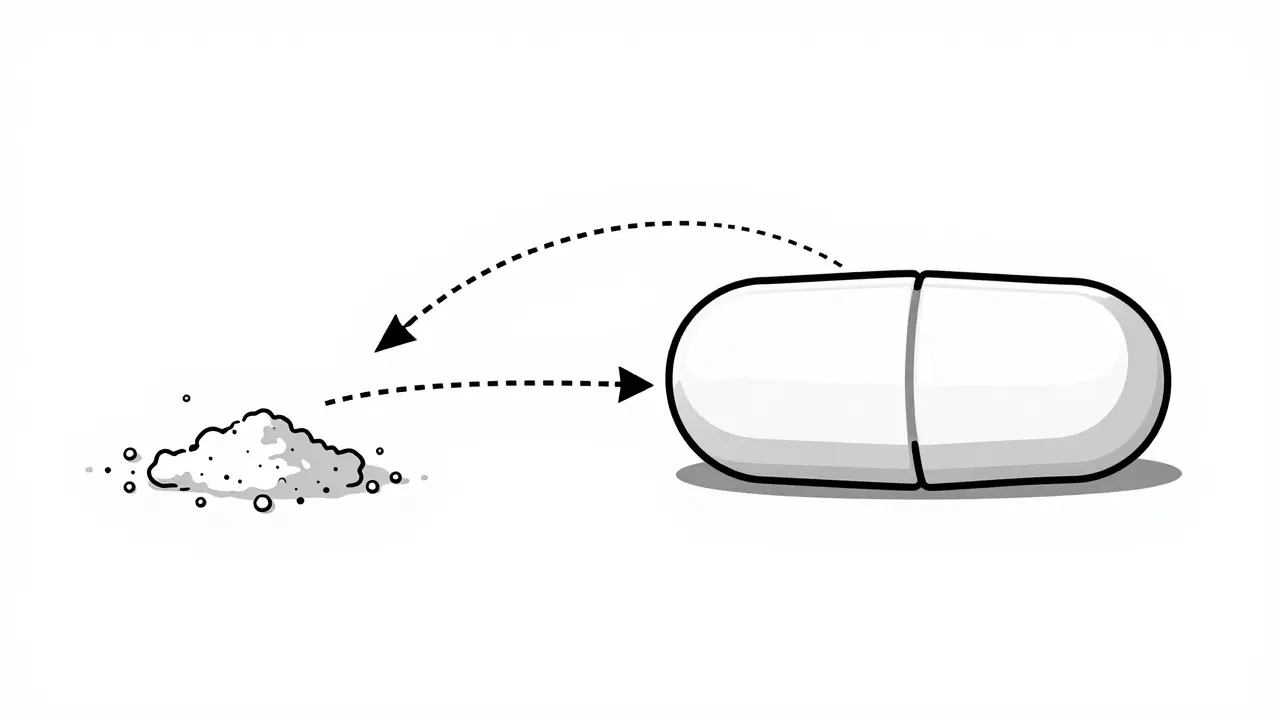
The Myth of the "Inactive" Ingredient
When you look at a drug label, you'll see a long list of ingredients. Most people focus on the active pharmaceutical ingredient (API)-the part that actually treats the condition. Everything else is labeled as "inactive." For decades, the medical world assumed these components were just fillers, like the flour in a cake, doing nothing but holding the structure together. But here is the truth: the term "inactive" is a bit of a misnomer. Excipients is the technical term for these inactive ingredients, which are substances formulated into a medication to bulk it up, stabilize it, or help it reach the right part of your body. While they aren't designed to treat your disease, they can absolutely change how your body reacts to a drug, how fast the medicine kicks in, and even whether you have an allergic reaction.
What Exactly Are Excipients Doing in Your Pill?
If a drug were just the active ingredient, it would often be a tiny, microscopic speck of powder-impossible to handle or swallow. Excipients make up anywhere from 60% to 99% of a tablet's total mass. They aren't just there for show; they perform critical biological and mechanical jobs. For instance, excipients act as the delivery vehicle that ensures the drug doesn't dissolve the moment it touches your tongue, but rather where it's most effective, like the small intestine.
Common types of these ingredients include:
- Fillers: These add bulk so you can actually hold the pill. Lactose and microcrystalline cellulose are frequent flyers here.
- Binders: The "glue" that keeps the tablet from crumbling in the bottle. Polyvinylpyrrolidone is a common example.
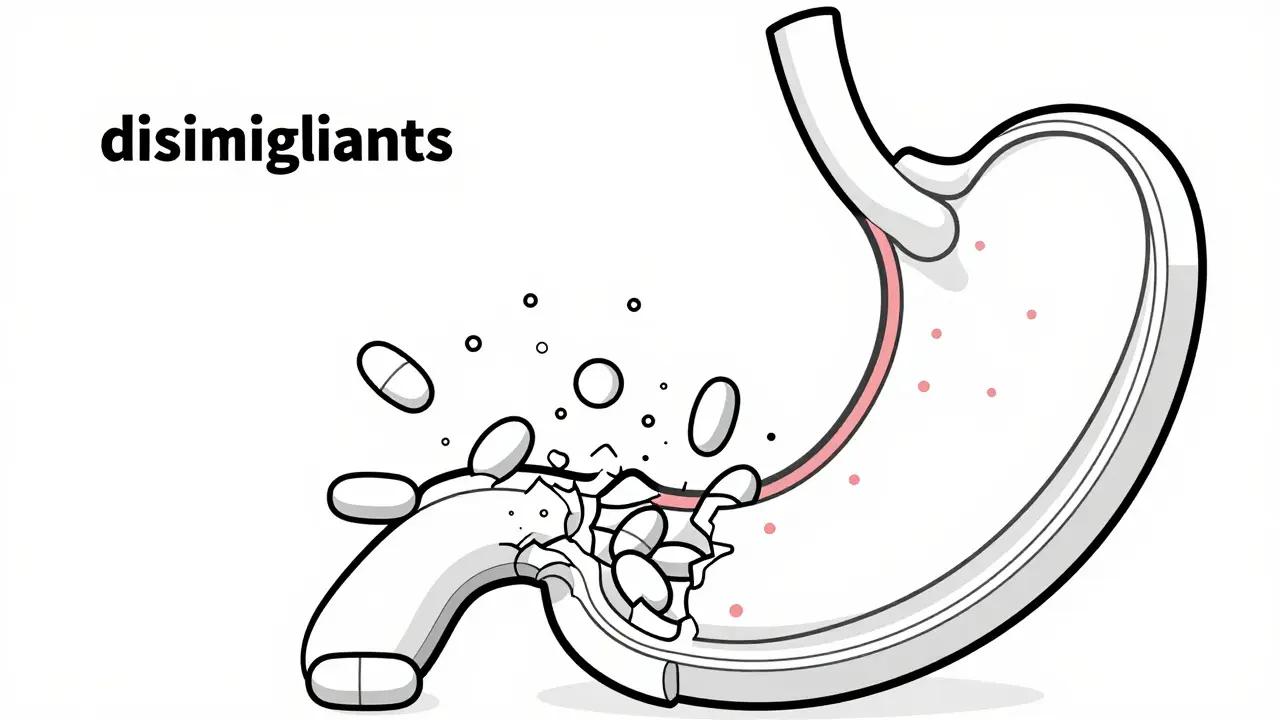
- Disintegrants: These help the pill break apart once it hits your stomach. Croscarmellose sodium is often used to ensure the drug releases quickly.
- Lubricants: These prevent the powder from sticking to the machinery during manufacturing. Magnesium stearate is the industry standard.
- Coloring Agents: Things like tartrazine, which help patients identify their meds.
Can a Different "Inactive" Ingredient Change the Effect?
You might wonder why a generic version of a drug feels different than the brand-name version, even if the active dose is identical. The answer often lies in the excipient profile. While the FDA (U.S. Food and Drug Administration) allows generic manufacturers to use different inactive ingredients for most oral meds, those differences can impact pharmaceutical efficacy.
Consider the role of a disintegrant. If a generic company replaces one disintegrant with another, they might accidentally slow down how fast the pill dissolves. In a 2020 case involving a generic version of Entresto, a company tried to replace magnesium stearate with sodium stearyl fumarate. The FDA rejected the application because the change caused a 15% difference in the drug's release rate. If a drug releases too slowly, it might never reach the therapeutic level in your blood; if it's too fast, it could cause a spike in side effects.
| Excipient Type | Potential Impact of Change | Real-World Risk |
|---|---|---|
| Disintegrant | Changes dissolution speed | Slower onset of action or reduced absorption |
| Lubricant | Alters tablet hardness | Inconsistent drug release (bioequivalence failure) |
| Filler/Stabilizer | Affects chemical stability | Drug degrades faster; shorter shelf life |
| Preservative | Biological interaction | Allergic reactions or hypersensitivity |
The Science of "Hidden" Activity
Here is where it gets controversial. For a long time, we assumed excipients were biologically inert. However, a landmark 2020 study published in Science shook this foundation. Researchers found that many ingredients we thought were "quiet" actually interact with biological targets in the body. Out of 314 tested excipients, 38 showed activity against 44 different biological targets.
This means some "inactive" ingredients might actually be doing something pharmacological. For example, sodium benzoate and propylene glycol have been shown to interact with monoamine oxidase enzymes. When these ingredients reach certain concentrations in your body, they aren't just filling space-they're interacting with your biochemistry. This could explain why some people have "idiosyncratic" reactions to a drug that others tolerate perfectly; it might not be the drug itself, but the specific blend of excipients in that brand.
Safety Risks: Allergies and Contamination
For most people, excipient differences are a non-issue. But for those with sensitivities, they are a primary safety concern. Lactose intolerance is a classic example; a patient might react poorly to a tablet simply because it uses lactose as a filler, even if the active drug is safe.
Beyond allergies, the process of changing excipients can introduce new risks. In 2018, 14 generic versions of the blood pressure medication valsartan were recalled. The cause? A new solvent system (a type of processing excipient) led to the contamination of the drug with NDMA, a suspected carcinogen. This proves that while the end result of a different excipient might look the same, the chemical path to get there can introduce dangerous impurities.
How the FDA Manages Excipient Safety
To keep things safe, the FDA maintains the Inactive Ingredient Database (IID). This is essentially a massive ledger of about 1,500 approved excipients and the maximum concentrations allowed for different routes of administration. For example, polysorbate 80 is safe at 5% in a pill you swallow, but if it's going directly into your vein (intravenous), the limit drops to 0.05% because the body's tolerance is much lower when the digestive system is bypassed.
The rules are even stricter for high-risk delivery methods. For eye drops (ophthalmic) or injections (parenteral), generic companies must usually prove "qualitative and quantitative sameness." This means they can't just swap out a filler; they must use the exact same inactive ingredients at the exact same levels as the original brand-name drug to avoid triggering severe inflammatory or immune responses.
Can I switch from a brand-name drug to a generic if the inactive ingredients are different?
In most cases, yes. The FDA requires generics to be bioequivalent, meaning they deliver the same amount of active drug to your bloodstream in the same amount of time. However, if you have known allergies to specific dyes, fillers (like lactose), or preservatives, you should check the inactive list of the generic version before switching.
Why do some generics feel like they work differently than the brand name?
While the active dose is the same, differences in excipients can alter the dissolution rate-how fast the pill breaks down in your stomach. This can slightly change how quickly you feel the effects or how the drug is absorbed, though for the vast majority of patients, this difference is clinically insignificant.
Are all "inactive" ingredients safe?
Most are safe at the concentrations approved by the FDA. However, recent research suggests some can interact with biological targets in the body. Additionally, some people experience hypersensitivity or allergic reactions to specific excipients, such as aspartame or certain coloring agents.
What is the IID and why does it matter?
The Inactive Ingredient Database (IID) is an FDA tool that lists approved excipients and their safe concentration limits. It ensures that pharmaceutical companies don't use an ingredient at a level that could be toxic or irritating to the user.
Do injections have different excipient rules than pills?
Yes. Because injections bypass the protective barriers of the digestive tract, the FDA requires much stricter "sameness" for inactive ingredients in parenteral, ophthalmic, and otic products to prevent severe immune reactions.
What to Do If You're Concerned
If you are sensitive to certain chemicals or have had a bad reaction to a generic medication, don't guess. The best move is to ask your pharmacist for the "package insert" or the full ingredient list of both the brand and the generic versions. Compare the lists for any dyes or fillers you know you react to. If you notice a difference in how a drug works after a switch, document the exact brand and generic manufacturer; this information is vital for your doctor to determine if an excipient is causing the issue.
All Comments
Vijay AGarwal April 25, 2026
Absolutely critical point! Many people don't realize that the 'inactive' label is basically a pharmaceutical fairy tale. In my experience, the interplay between a lubricant like magnesium stearate and the drug's bioavailability can be the difference between a miracle cure and a complete waste of time! It's high time we stop treating excipients as mere background noise and start treating them as the chemical architects of the pill!
Daniel Runion April 26, 2026
Oh, please!!! As if this is some kind of 'revelation'!!! Anyone with a basic understanding of chemistry knows this!!! The FDA is just a rubber stamp for Big Pharma's bottom line anyway!!! Total joke!!!
Majestic Blue Band April 27, 2026
It is honestly terrifying how they just admit it now that these 'inactive' ingredients are actually interacting with our biological targets, because if you think about it, this is exactly how they sneak in behavioral modifiers or tracking agents without having to list them as active drugs since they've just categorized them as fillers to bypass the strict regulations, and once you realize that the IID database is probably just a curated list of what they want us to know while the real experimentation happens in the generic swaps that change our brain chemistry slowly over years, you can't even trust a simple aspirin anymore without wondering who is actually pulling the strings behind the chemical curtain of these so-called stabilizers.
Brittney Prince April 29, 2026
Totally a conspiracy. They probably just use the cheapest fillers from overseas and hope we don't notice our guts melting.
Jaclyn Vo April 30, 2026
Um, hello? I've been saying this for years! 🙄 I literally had a reaction to a generic brand that the doctor said was 'identical' and I was like, duh, look at the dyes! 💅 It's honestly a crime that we have to do our own research because the system is just so lazy! 🙄💅
James Harrison May 1, 2026
Makes you think about the nature of 'purity' in medicine. We want the active ingredient, but we're forced to accept a cocktail of others just to make the delivery possible. It's a strange trade-off between chemical necessity and biological risk.
suresh kumar May 2, 2026
This is a spicy little read! My cousin's neighbor tried a generic pill and broke out in weird neon spots, totally wild stuff. These chemical concoctions are like a gambling game for your stomach!
Eric Mwiti May 4, 2026
Right, because the FDA is just world-renowned for its flawless, lightning-fast oversight. Truly a gold standard of safety.
Sharyl Foster May 6, 2026
Actually, the bioequivalence standards are way too loose. If there's a 15% difference in release rate, that's not 'equivalent,' that's a different drug. The industry just calls it 'insignificant' to keep the profit margins high on generics.
Jon Moss May 6, 2026
I feel you on the generic switch issues. Just takes a bit of patience to find the one that works for your body.
Michael Deane May 6, 2026
This is why we need to bring all the manufacturing back to the US and stop relying on these sketchy foreign labs that can't even keep their solvents clean, because when you've got carcinogens in your blood pressure meds, it's a national security failure and a slap in the face to every American worker who knows how to actually run a clean line without cutting corners for some overseas profit!
Michael Chukwuma May 6, 2026
That's a really fair point about the allergies. It must be so frustrating for people who can't just take any generic available.
Karyn Tindall May 7, 2026
I am absolutely floored that this is common knowledge for some but a mystery to others! It is simply terrifying to think we are swallowing these unknown quantities every single day!
Beena Garud May 9, 2026
The philosophical implication that a substance deemed 'inactive' can possess biological agency challenges our very definition of pharmacological intent. It suggests a duality in medicinal chemistry where the vessel is as influential as the cargo.
sachin singh May 10, 2026
It is truly heartening to see this level of detail regarding the IID. The commitment to safety through quantitative sameness in high-risk delivery methods is most impressive.