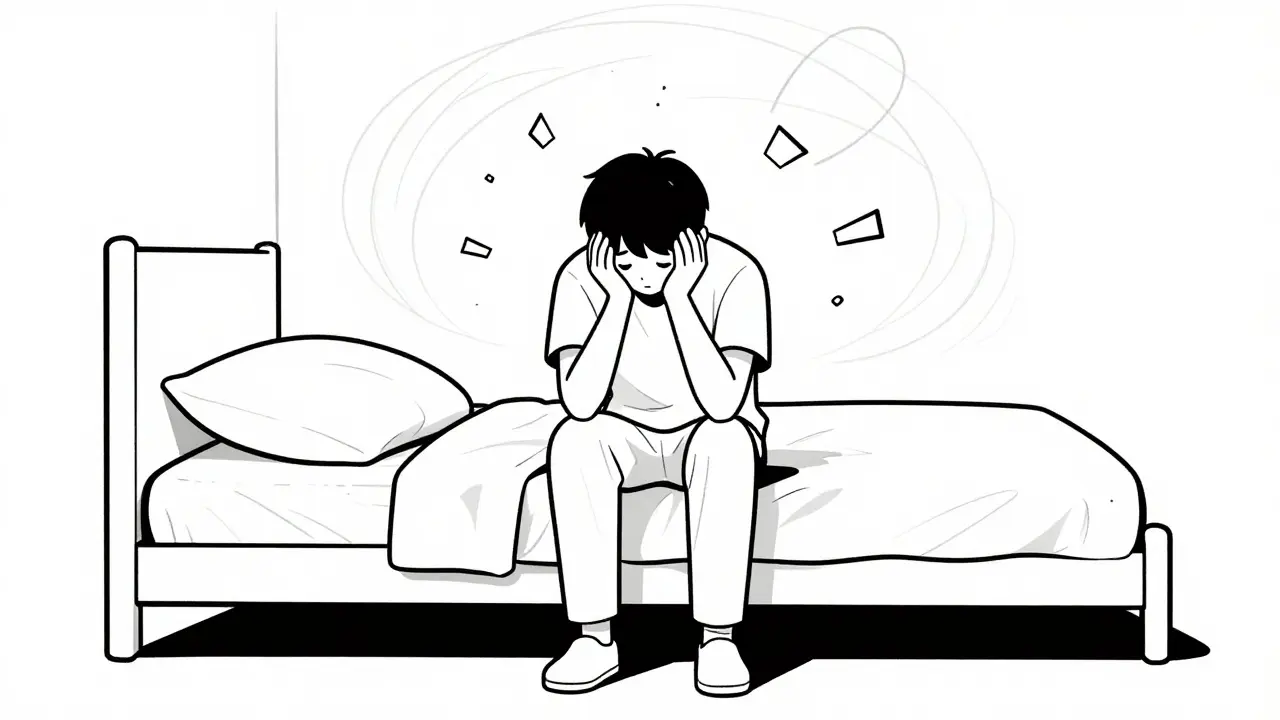
Imagine waking up one day and realizing the world doesn't look or feel quite right anymore. Maybe voices are speaking when no one is there, or you’re convinced someone is watching you for a reason that makes perfect sense to you but confuses everyone else. This isn’t just stress or bad luck; it might be First-Episode Psychosis (FEP), defined as the initial occurrence of psychotic symptoms where an individual experiences disruptions to thoughts and perceptions that make it difficult to distinguish reality from imagination. For families, this moment is often terrifying and confusing. But here is the most important thing to know: how you respond in those first few weeks can change the entire course of the person’s life.
We are not talking about a hopeless situation. Research shows that catching psychosis early-specifically within the first twelve weeks of symptom onset-is critical. The World Health Organization calls this the "window of opportunity." If treatment starts during this time, outcomes are significantly better. Delaying care by just three to six months can lead to functional decline that is much harder to reverse later. So, what exactly should you do? How does modern treatment work, and how can your family actually help without making things worse?
What Is First-Episode Psychosis Really?
Psychosis is not a single disease; it is a set of symptoms. It usually appears between the ages of 15 and 35, which is why it often hits young adults right when they are starting college or their first jobs. The symptoms generally fall into a few categories:
- Hallucinations: Seeing, hearing, or feeling things that aren’t there. Hearing voices is the most common type.
- Delusions: Strong beliefs that are not based in reality, like thinking you have special powers or that the government is tracking your thoughts through your phone.
- Disorganized thinking: Speech that jumps around unpredictably or answers that don’t match questions.
- Abnormal motor behavior: This can range from agitation to being completely unresponsive.
It is vital to understand that the person experiencing these symptoms is not "crazy" or dangerous by default. They are struggling with a brain chemistry issue. In Exeter, and across the UK and US, we see that stigma keeps people away from help. If you suspect FEP, treat it like a medical emergency, similar to a heart attack. Speed matters.
The Gold Standard: Coordinated Specialty Care
In the past, if someone had psychosis, they might get a prescription for medication and a referral to a therapist who saw them once a month. That model has largely been replaced by something far more effective called Coordinated Specialty Care (CSC). CSC is a multidisciplinary approach providing integrated services including medication management, psychotherapy, family support, case management, and supported employment or education.
This approach was proven effective by the National Institute of Mental Health's RAISE project. The results were stark. People in CSC programs stayed in treatment longer, had 25% greater improvement in quality of life, and were 40% more likely to be working or in school compared to those getting standard community care. Why does it work? Because it treats the whole person, not just the symptoms.
| Feature | Standard Community Care | Coordinated Specialty Care (CSC) |
|---|---|---|
| Treatment Retention | 40-50% | 65-75% |
| Symptom Reduction Speed | Slower | 30-40% faster |
| Functional Recovery (GAF Score) | 10-15 point improvement | 20-25 point improvement |
| Family Involvement | Minimal or ad-hoc | Structured psychoeducation (8-12 sessions) |
| Employment/School Support | Referral only | Active coaching (IPS methodology) |
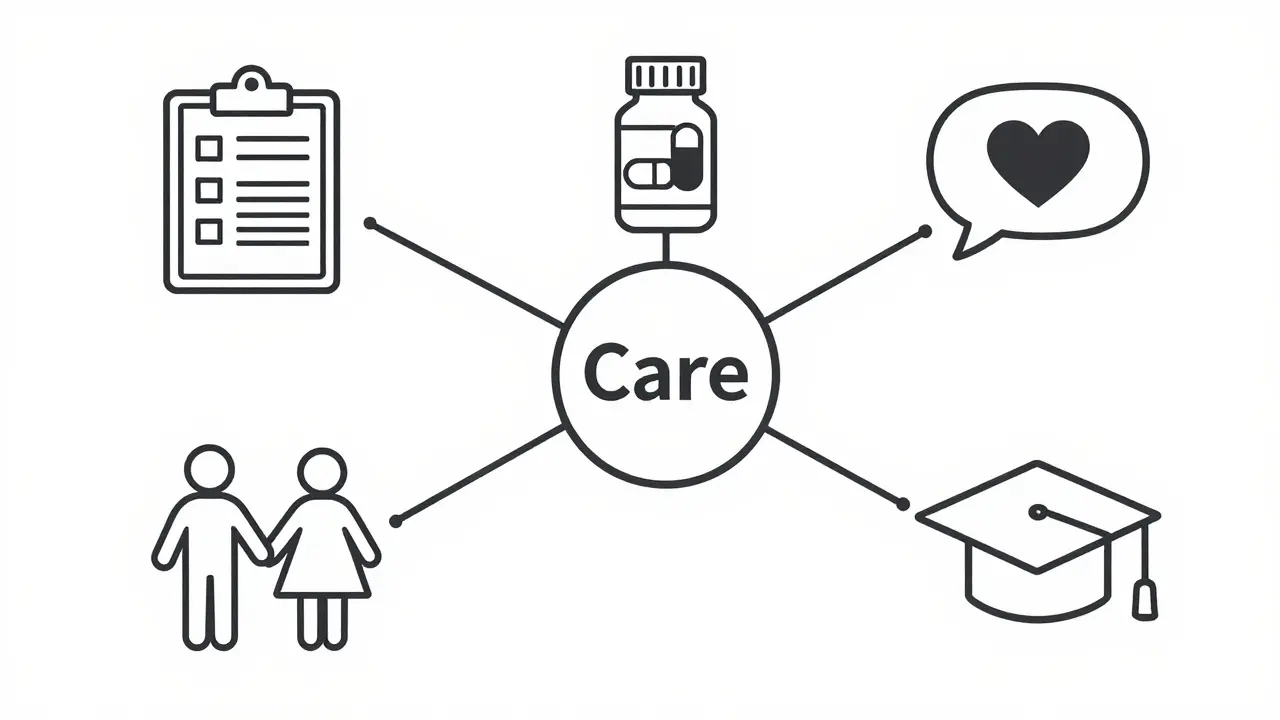
The Five Pillars of Effective Treatment
If you are looking for a program, check if they offer these five core components. Missing even one can weaken the outcome.
- Case Management: You need a dedicated person to help navigate the system. During acute phases, contact should happen 2-3 times a week. This person helps with housing, benefits, and appointments.
- Medication Management: Antipsychotics are standard, but less is often more. Guidelines recommend starting at lower doses than used for chronic schizophrenia to minimize side effects. Second-generation antipsychotics are common, but metabolic monitoring (weight, glucose) must start immediately due to health risks.
- Recovery-Oriented Psychotherapy: Cognitive Behavioral Therapy for psychosis (CBT-p) helps individuals challenge delusional thoughts and build resilience. Sessions are typically weekly for the first six months.
- Family Psychoeducation: This is not optional. Structured family therapy reduces relapse rates by 25%. It teaches families how to communicate without escalating tension.
- Supported Employment/Education: Using the Individual Placement and Support (IPS) method, coaches help individuals find real jobs or return to school. Competitive employment rates hit 50-60% with IPS, compared to 20-30% in traditional vocational rehab.
How Families Can Actually Help
Families often feel helpless or blamed. Neither is true. Your role is crucial, but it requires a shift in mindset. Here is how to support effectively:
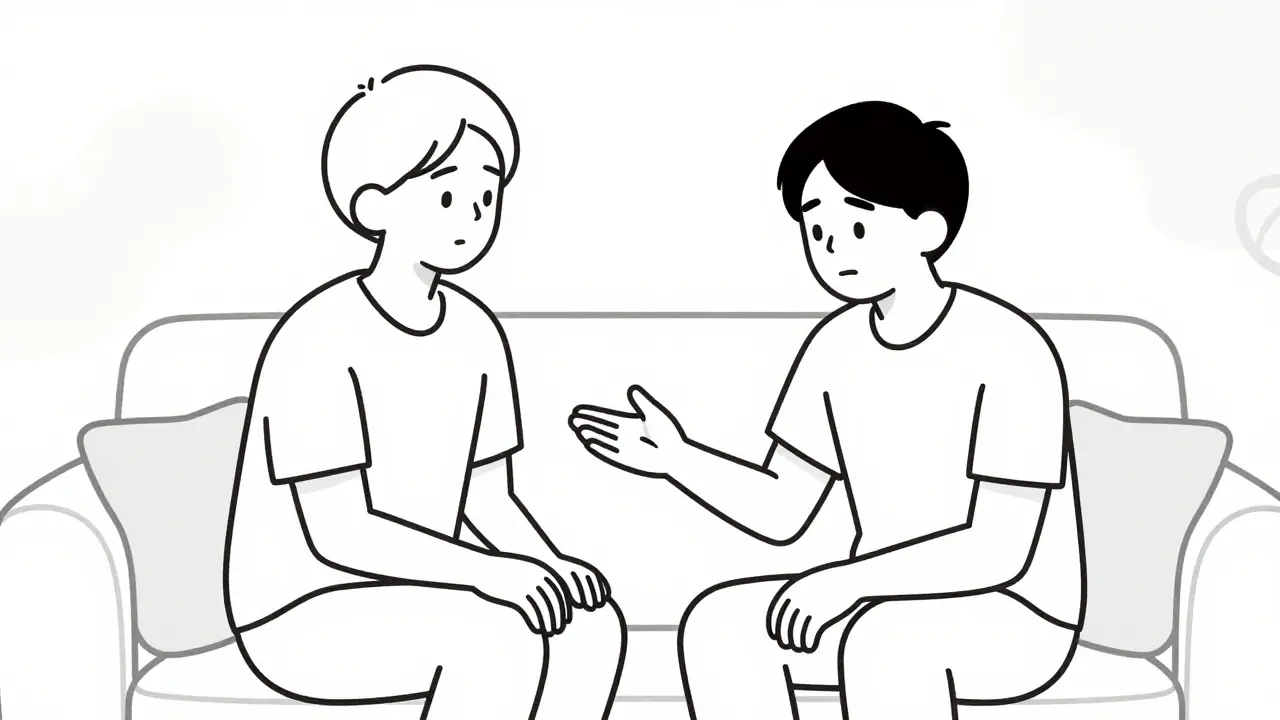
Lower Emotional Expression (LEE): Research shows that high criticism, hostility, or emotional over-involvement triggers relapses. Instead of saying, "You’re acting crazy again," try, "I notice you seem stressed. Do you want to talk about it, or would you prefer some quiet time?" Validate their feelings without validating the delusion. If they say the FBI is after them, don’t argue facts. Say, "That sounds really scary. I’m here with you, and you’re safe in this house."
Join the Psychoeducation Sessions: Don’t skip these. Learning about the biology of psychosis helps remove the personal sting. Understanding that dopamine dysregulation causes hallucinations makes it easier to separate the person from the illness.
Monitor Physical Health: As Dr. Raquel Gur notes, metabolic syndrome risk increases 4-7 fold with certain medications. Encourage healthy eating and walking. Track weight and waist circumference quarterly. This is part of the treatment plan, not just lifestyle advice.
Navigating the System and Barriers
Even with great science, access remains a hurdle. In the U.S., only 35% of counties have certified CSC programs. Rural areas are hit hardest, with 62% lacking any access. If you live in a city like Exeter, London, or New York, you may have better options, but waitlists can still be long.
Look for programs affiliated with major hospitals or universities. Check if they use fidelity measures like the Quality Assessment Tool for CSC (QAT-CSC). Programs scoring above 70% adherence are delivering evidence-based care. Also, ask about telehealth options. During the pandemic, telehealth increased family participation by 35%, and many programs now keep this flexible option open.
Financially, Medicaid and many private insurers cover CSC components under rehabilitative services, but coverage varies by state. In the UK, NHS Early Intervention in Psychosis (EIP) teams provide these services free at the point of care. Always ask specifically for "early intervention" or "first episode" services, as adult psychiatric wards often lack the specialized, hopeful focus of EIP/CSC models.
What Does Recovery Look Like?
Recovery is not always a straight line. Some people have one episode and never another. Others manage a chronic condition. The goal of early intervention is to maximize function. Studies show that with CSC, 68% of participants sustain employment or education involvement at four years. That is a life-changing statistic.
Dr. John Kane emphasizes that the first 12 months are a "neuroplastic period." Interventions now can alter the disease trajectory. This means the effort you put in today pays off for decades. Stay engaged. Keep showing up to therapy. Celebrate small wins, like getting out of bed or attending a class. These are victories.
How long does first-episode psychosis last without treatment?
Without treatment, psychotic episodes can last weeks to months, and the duration of untreated psychosis (DUP) directly correlates with poorer long-term outcomes. A delay of 3-6 months can lead to irreversible functional decline. Early intervention within the first 12 weeks yields the best prognosis.
Is Coordinated Specialty Care covered by insurance?
Coverage varies. In the US, Medicaid waivers in 31 states cover CSC components. Private insurers increasingly recognize CSC as cost-effective due to reduced hospitalizations. In the UK, NHS Early Intervention in Psychosis teams provide these services as part of standard mental health care.
Can a person with first-episode psychosis return to school or work?
Yes. Supported employment and education are core parts of CSC. Using the Individual Placement and Support (IPS) model, 50-60% of individuals achieve competitive employment or stay in school, compared to 20-30% in traditional care. Coaching helps navigate accommodations and workplace dynamics.
What should I do if my loved one refuses treatment?
Resistance is common due to lack of insight (anosognosia). Avoid arguing about the reality of symptoms. Focus on distress rather than diagnosis. Say, "I see you’re not sleeping well and seem anxious. Let’s see a doctor to help with that." Involve crisis teams if safety is at risk. Building trust takes time.
Are antipsychotic medications necessary for everyone?
Most guidelines recommend antipsychotics as a first-line treatment to reduce symptom severity quickly. However, shared decision-making is key. Some individuals with mild symptoms may trial non-pharmacological interventions first, though this requires close monitoring. Lower doses are preferred to minimize side effects.