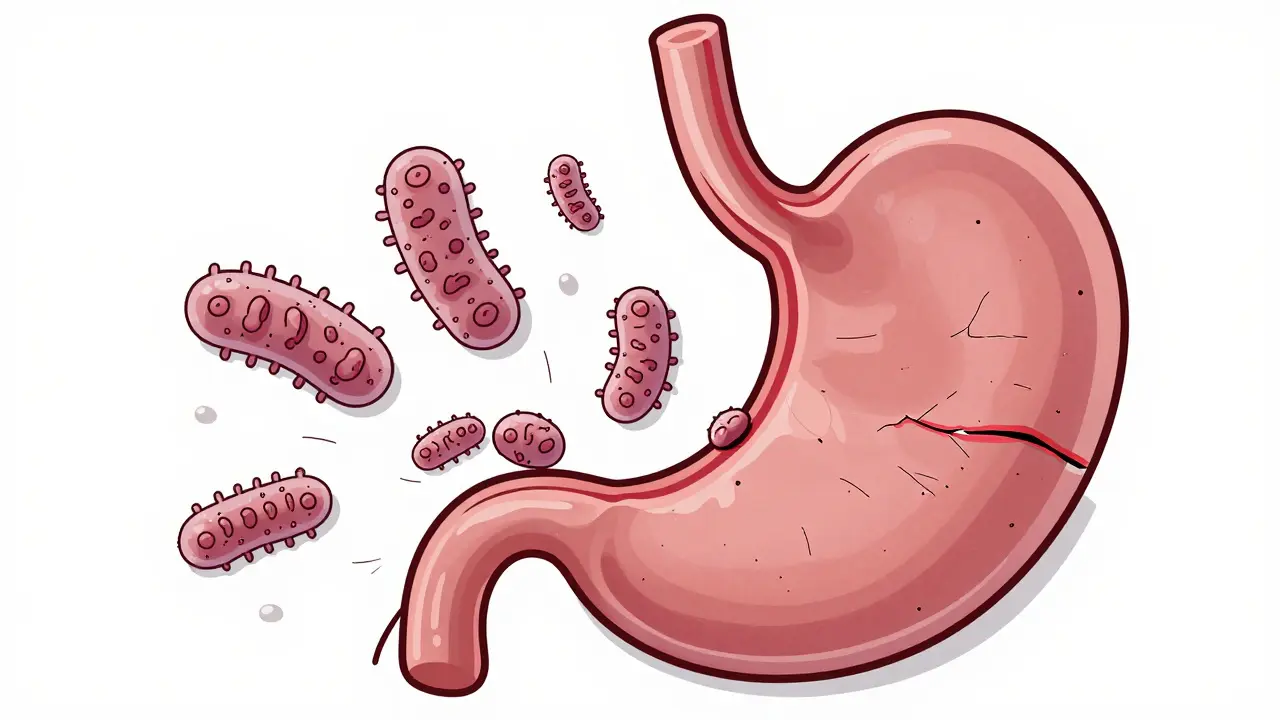
When your stomach feels like it’s on fire after eating, or you’re constantly bloated with nausea that won’t go away, it’s easy to blame stress or spicy food. But if these symptoms stick around, they might be more than just a bad meal. You could be dealing with gastritis - inflammation of the stomach lining. It’s not rare. Around 500 million people worldwide have it. And in most cases, it’s tied to one silent invader: Helicobacter pylori, or H. pylori.
What Exactly Is Gastritis?
Your stomach lining isn’t just skin. It’s a thick, mucus-coated layer that protects your stomach from its own digestive juices - acid strong enough to dissolve metal. When this lining gets irritated or damaged, it swells up. That’s gastritis. It doesn’t always cause pain. In fact, nearly half of people with chronic gastritis feel nothing at all. But when symptoms do show up, they’re hard to ignore: upper belly pain, nausea, vomiting, feeling full too fast, and loss of appetite. There are two main types: erosive and nonerosive. Erosive means the lining has actual breaks or sores - sometimes leading to bleeding. You might notice black, tarry stools or even vomit that looks like coffee grounds. Nonerosive means the damage is deeper, at the cellular level. The lining thins out, loses its protective cells, and may even start changing into something it shouldn’t be. This is especially true in atrophic gastritis, which affects about 30% of people with long-term H. pylori infection.H. pylori: The Hidden Culprit Behind Most Cases
More than 70% of all chronic gastritis cases come from H. pylori. This spiral-shaped bacteria lives in the stomach, burrowing into the mucus layer and avoiding the acid. It’s sneaky. You can carry it for years without knowing. It spreads through contaminated food, water, or even saliva - sharing utensils, kissing, or poor hand hygiene after using the bathroom. The real danger? H. pylori doesn’t just cause discomfort. It’s a major risk factor for stomach ulcers and, over decades, stomach cancer. The bacteria triggers constant low-grade inflammation. Over time, that inflammation can lead to cell changes that turn cancerous. That’s why treating it isn’t just about feeling better - it’s about preventing serious disease. Studies show that removing H. pylori cuts the risk of gastric cancer by half.How Do You Know If You Have It?
Doctors don’t guess. They test. The gold standard is an endoscopy - a thin tube with a camera passed down your throat to look at your stomach. Biopsies (tiny tissue samples) are taken and checked for H. pylori under a microscope. But there are easier, non-invasive options too. The urea breath test is one of the most accurate. You drink a special liquid, then breathe into a bag. If H. pylori is present, it breaks down the urea and releases carbon dioxide you exhale. This test is 95% sensitive and 93% specific - meaning it rarely misses or falsely flags the infection. Stool antigen tests and blood tests are also used. Blood tests can show if you’ve ever been exposed, but they can’t tell if you’re still infected. That’s why breath and stool tests are better for checking if treatment worked.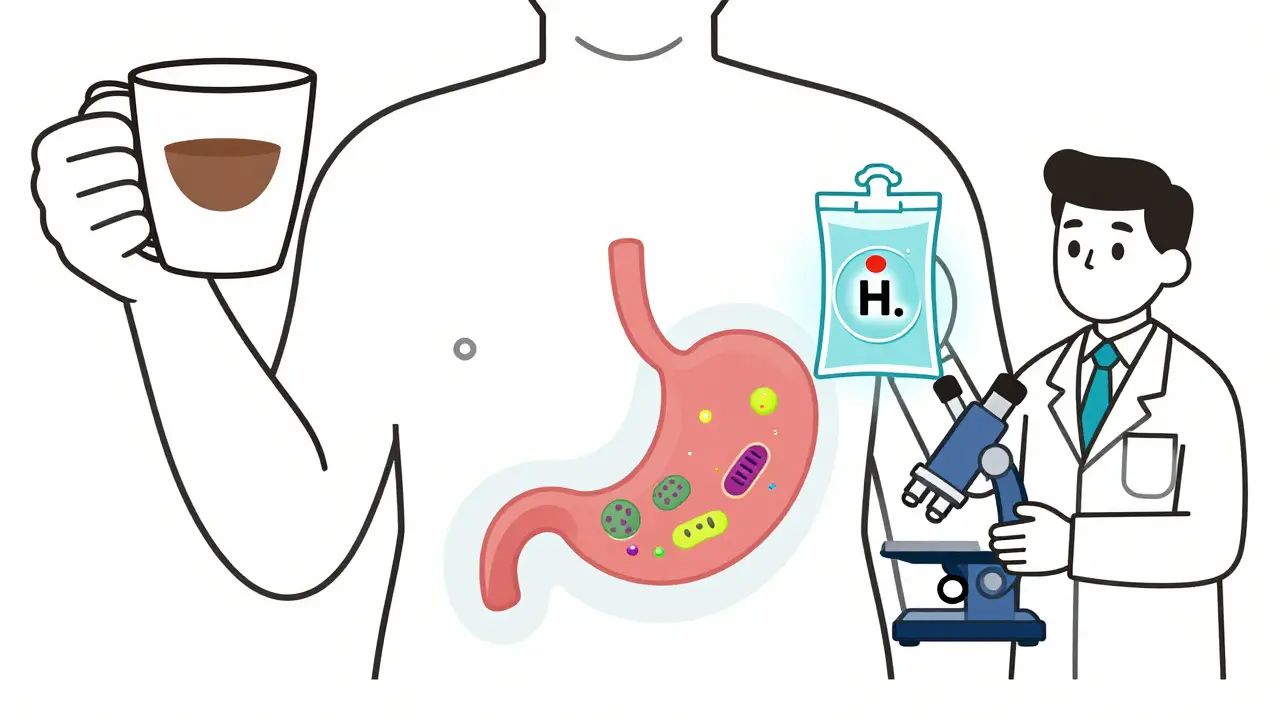
How Is H. pylori Treated?
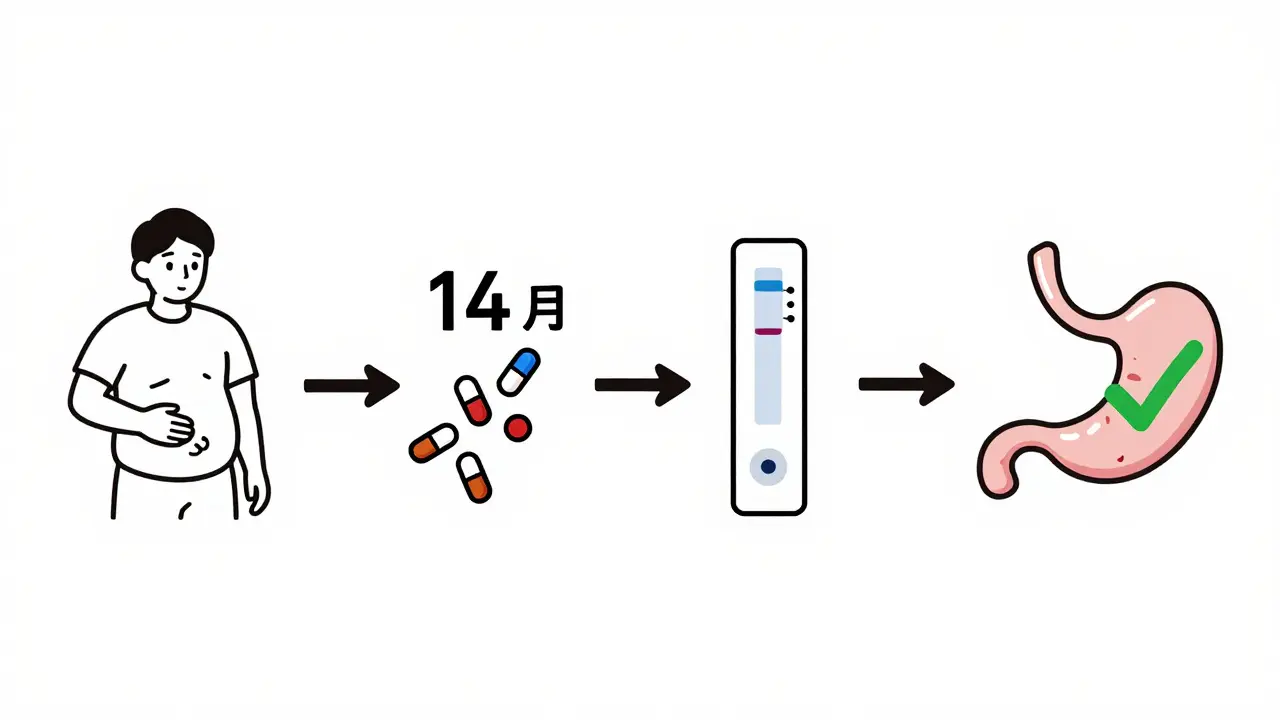
You can’t just take an antibiotic and call it done. H. pylori is stubborn. It hides in the mucus, and it’s learned to resist many drugs. That’s why treatment is always a combo. Standard first-line therapy is called triple therapy: a proton pump inhibitor (like omeprazole or esomeprazole) to shut down acid production, plus two antibiotics - usually amoxicillin and clarithromycin. This works well… if your area has low antibiotic resistance. But in places like the U.S., clarithromycin resistance has jumped from 10% in 2000 to over 35% today. That means triple therapy fails in up to 30% of cases. That’s why newer guidelines recommend tailored treatment. In high-resistance areas, doctors now use quadruple therapy: a PPI, bismuth (like Pepto-Bismol), metronidazole, and tetracycline. This combo hits the bacteria from multiple angles and clears it in 85-92% of cases. Even newer is vonoprazan - a drug approved in 2022 that blocks acid more powerfully than traditional PPIs. In trials, it boosted H. pylori eradication to over 90%, even in patients who failed two previous treatments. It’s not yet widely available everywhere, but it’s changing the game. Treatment lasts 10 to 14 days. No skipping doses. Missing even one pill can let the bacteria survive and become resistant. After treatment, you’ll need a follow-up test - usually a breath test - four weeks later to confirm it’s gone.What About Other Causes of Gastritis?
Not all gastritis is H. pylori. About 25-30% of cases come from NSAIDs - painkillers like ibuprofen, naproxen, or aspirin. Long-term use wears down the stomach lining. If you’re on daily pain meds, your doctor might switch you to acetaminophen or add a PPI to protect your stomach. Alcohol is another big one. More than 30 grams a day (about two standard drinks) doubles your risk. Quitting alcohol can cut symptoms by 60% in just two weeks. Then there’s autoimmune gastritis - rare, but serious. Your immune system attacks the cells that make stomach acid and intrinsic factor (needed to absorb vitamin B12). This leads to B12 deficiency, anemia, and nerve damage. It’s more common in people with thyroid disease or type 1 diabetes. Treatment? Lifelong B12 shots or high-dose supplements.What Can You Do at Home?
Medication helps, but lifestyle changes make a big difference.- Stop drinking alcohol - even cutting back helps.
- Avoid NSAIDs unless your doctor says it’s safe.
- Quit smoking - it slows healing by 35%.
- Eat smaller meals. Large meals stretch the stomach and worsen pain.
- Reduce spicy, acidic, or fried foods. They don’t cause gastritis, but they can irritate an already inflamed lining.
- Manage stress. It won’t cause H. pylori, but it can make symptoms worse.
Why Do Some People Still Feel Bad After Treatment?
You might think, “I took the pills. Why am I still bloated?” One reason: rebound acid hypersecretion. If you’ve been on PPIs for months or years, your stomach overcompensates by making extra acid. When you stop, you get heartburn worse than before. This affects up to 40% of long-term users. The fix? Taper off slowly, not cold turkey. Another reason: incomplete eradication. If you didn’t finish your antibiotics, or if your strain was resistant, the bacteria is still there. That’s why testing after treatment matters. And sometimes, it’s not H. pylori at all. Maybe you have functional dyspepsia - stomach pain with no clear cause. Or celiac disease. Up to 10% of people with celiac also have lymphocytic gastritis. A simple blood test can rule that out.When Should You Worry?
Most gastritis is mild. But some signs mean you need urgent care:- Black, tarry stools (melena)
- Vomiting blood or material that looks like coffee grounds
- Dizziness, rapid heartbeat, or extreme fatigue - signs of anemia from chronic bleeding
- Unexplained weight loss
All Comments
Tom Sanders March 9, 2026
I had gastritis last year. Took the meds, felt better for a week, then boom - back to bloating. Honestly? I think they overhype H. pylori. Could just be my diet. Or stress. Or my cat sleeping on my stomach. Who knows.
Jazminn Jones March 10, 2026
The assertion that H. pylori is the primary etiological agent in chronic gastritis is both reductive and epidemiologically oversimplified. One must consider confounding variables - namely, the epigenetic modulation of gastric mucosal integrity under prolonged NSAID exposure, which, according to recent meta-analyses, exhibits a higher attributable risk than bacterial colonization in Western cohorts.
Stephen Rudd March 11, 2026
You say H. pylori causes cancer? So does smoking. So does sugar. So does sitting on your ass all day. But nobody tells you to get your stomach biopsied every time you eat a donut. This is medical fearmongering dressed up as science. I’ve had H. pylori for 12 years. Still alive. Still pooping. Still not dead. Funny how that works.
Erica Santos March 13, 2026
Oh wow. So the solution to everything is antibiotics? Let me guess - next they’ll tell us to take a pill for being sad. Or for having bad breath. Or for remembering your ex’s birthday. This isn’t medicine. It’s a pharmaceutical marketing scheme wrapped in a lab coat. And don’t even get me started on vonoprazan. That’s just a fancy name for ‘pay more, feel nothing’.
Samantha Fierro March 14, 2026
I want to say thank you for writing this with such clarity. As someone who’s been through multiple rounds of treatment and still struggles with lingering symptoms, this felt like the first article that actually made sense. The part about rebound acid? That’s me. I stopped PPIs cold turkey and nearly cried from heartburn. Tapering slowly changed everything. You’re not alone if you still feel off after treatment - it’s not in your head.
Robert Bliss March 14, 2026
This was super helpful. I didn’t know H. pylori could be passed through kissing. That explains why my girlfriend and I both got sick at the same time. We just thought it was food poisoning. Now I’m gonna make her take the test too. And I’m quitting coffee. And maybe smoking. Maybe. 🤷♂️
Peter Kovac March 14, 2026
The article’s reliance on population-level statistics obscures critical heterogeneity in clinical outcomes. Specifically, the efficacy of quadruple therapy is contingent upon regional resistance patterns, which are not uniformly distributed. Furthermore, the omission of pharmacokinetic variability in proton pump inhibitor metabolism - particularly CYP2C19 polymorphisms - represents a significant oversight in therapeutic guidance.
APRIL HARRINGTON March 15, 2026
I just found out I have H. pylori and I’m crying because I thought it was just my anxiety but now I’m like oh no I’m gonna die from stomach cancer and also I hate that I have to take 6 pills a day and I hate my life and why is this happening to me and also can I still kiss my boyfriend and is he gonna get it too and also I’m gonna start a podcast called Gastritis Queen and it’s gonna be so emotional and I need someone to hug me right now
Leon Hallal March 15, 2026
I’ve been on PPIs for 7 years. Stopped last month. Now I’m in pain 24/7. They never told me about rebound acid. No one warned me. I feel betrayed. This isn’t treatment. It’s a trap.
Judith Manzano March 17, 2026
I’m so glad someone finally explained the difference between erosive and nonerosive. I had no idea my chronic nausea was tied to cellular thinning. I’ve been eating bland food for months and didn’t even know why. This gave me peace. Thank you.
rafeq khlo March 19, 2026
In countries with poor sanitation H. pylori is endemic and treatment is a luxury. You westerners act like this is a new epidemic. In India we have seen this for decades. Your obsession with eradication ignores the socioeconomic reality. You want to cure it? Fix clean water first. Then come talk to me about antibiotics.