Dealing with excessive facial or body hair when you have Polycystic Ovary Syndrome (PCOS) is a common endocrine disorder affecting reproductive-aged women can feel exhausting. It’s not just about shaving more often; it’s about the constant anxiety of visible hair growth in places where most women don’t have it. For the 70-80% of women with PCOS who experience hirsutism is excessive terminal hair growth in androgen-dependent areas like the face, chest, and back, standard cosmetic fixes rarely cut it. That’s where medication comes in. Specifically, a class of drugs called antiandrogens are pharmacological agents that block androgen receptors or inhibit androgen synthesis to reduce hair growth. But here is the hard truth: these drugs are powerful, they come with strict rules, and they aren’t always the first thing your doctor will prescribe. Understanding how they work, which ones are safe, and what to expect can save you months of frustration.
Why Do You Need Antiandrogens for PCOS?
To understand why we use these medications, we need to look at the root cause. In PCOS, your body produces higher levels of androgens are male sex hormones like testosterone that are present in women but in lower amounts. When these levels get too high, they stimulate hair follicles to produce thick, dark, coarse hair-what doctors call terminal hair-in areas typical of male patterns. This isn’t vanity; it’s a biological response to hormonal imbalance.
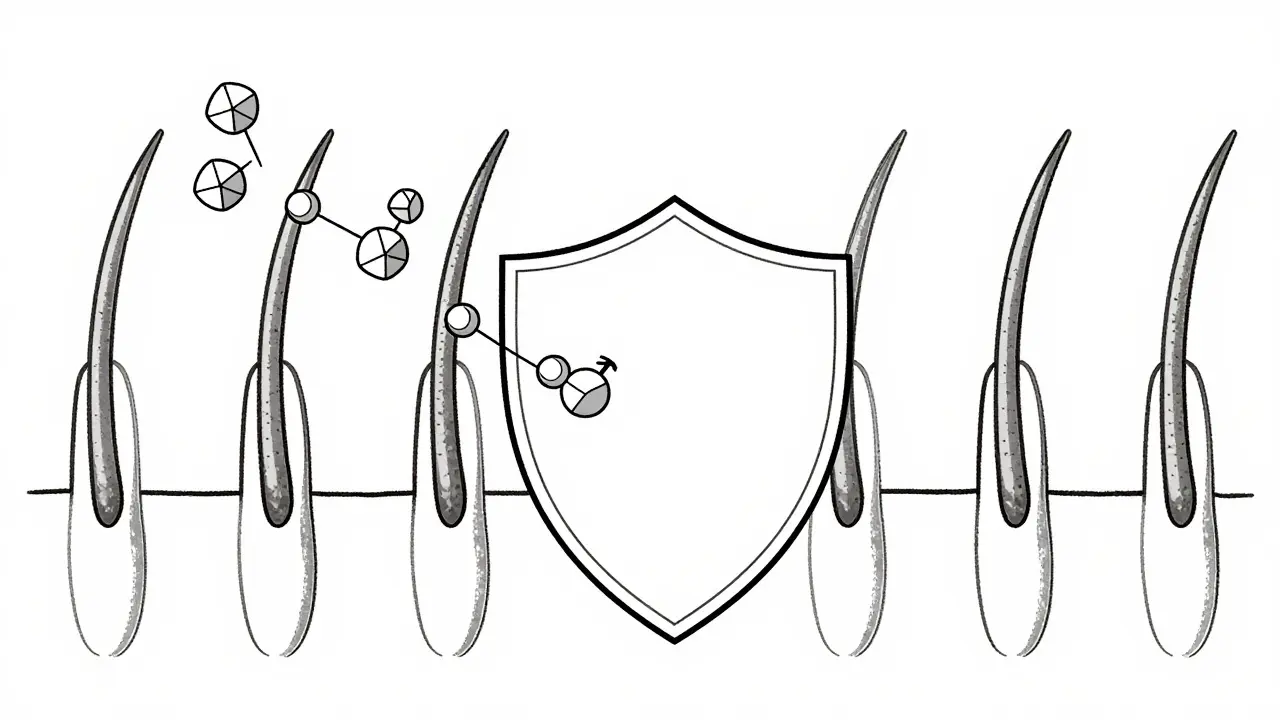
Antiandrogens step in by interrupting this process. They work in two main ways. First, some block the androgen receptors on your hair follicles, meaning even if there is excess hormone floating around, it can’t "dock" and trigger growth. Second, others stop the production of these hormones or prevent testosterone from converting into its more potent form, dihydrotestosterone (DHT) is a potent androgen derived from testosterone that strongly stimulates hair growth in sensitive areas. By targeting this pathway, antiandrogens aim to slow down new hair growth and make existing hair finer and lighter over time.
The Big Rule: Contraception is Non-Negotiable
Before we talk about specific pills, we need to address the most critical safety warning. If you are taking oral antiandrogens for PCOS, you must use effective contraception. This is not optional. Many antiandrogens carry teratogenic risks, meaning they can cause birth defects if a fetus is exposed during early development. For example, finasteride is an oral medication that inhibits 5-alpha-reductase type II to reduce DHT levels carries an FDA Pregnancy Category X rating, indicating known risks to a fetus. Even spironolactone is a diuretic and aldosterone antagonist that also blocks androgen receptors, while categorized as Pregnancy Category B, is generally avoided during pregnancy due to potential feminization of a male fetus.
This is why Combined Oral Contraceptive Pills (COCPs) are birth control pills containing estrogen and progestin used as first-line therapy for PCOS remain the gold standard for initial treatment. COCPs suppress ovarian androgen production and increase sex hormone-binding globulin (SHBG), which binds up free testosterone. The 2023 International Evidence-based Guideline for PCOS, led by researchers at Monash University, clearly states that current evidence does not support using antiandrogens *instead* of COCPs. Instead, antiandrogens are considered secondary options. You might add them if COCPs are contraindicated (for example, if you have a history of blood clots), poorly tolerated, or if you’ve taken them consistently for six months and still see no improvement in hair growth.
Common Antiandrogens Used for Hirsutism
When COCPs aren’t enough or aren’t an option, doctors may turn to specific antiandrogens. Here is a breakdown of the most common ones you’ll encounter, along with how they work and what to watch out for.
| Medication | Typical Dosage | Mechanism of Action | Key Considerations |
|---|---|---|---|
| Spironolactone | 50-200 mg/day | Blocks androgen receptors and inhibits 5-alpha-reductase | Can cause dizziness, menstrual irregularities, and hyperkalemia (high potassium). Requires regular blood tests if kidney function is impaired. |
| Finasteride | 2.5-5 mg/day | Inhibits 5-alpha-reductase type II, reducing conversion of testosterone to DHT | FDA Category X (teratogenic). Black box warning for persistent sexual side effects. Often used off-label for women. |
| Bicalutamide | 25-50 mg/day | Pure androgen receptor antagonist | Less commonly used due to risk of liver toxicity. Requires monitoring of liver enzymes. |
| Eflornithine Cream | 13.9% concentration, twice daily | Topical inhibitor of ornithine decarboxylase, slowing hair growth rate | Non-systemic (safe during pregnancy with caution). Results take 6 months. Expensive ($245+ per month). |
Spironolactone is likely the most prescribed antiandrogen for PCOS-related hirsutism. It starts low, often at 25-50 mg/day, and is titrated up to 100-200 mg/day over several months to minimize side effects like dizziness. A 2023 meta-analysis published in PubMed (PMID 37583655) found that daily use produced significantly greater improvement in hirsutism scores compared to intermittent dosing. However, about 30-40% of users report side effects, ranging from mild fatigue to significant menstrual changes.
Finasteride works differently by stopping the conversion of testosterone to DHT. While widely used for male pattern baldness, its use in women requires careful counseling due to the teratogenic risk. Some patients find it more tolerable than spironolactone, but cost can be a barrier, with cash prices reaching $85/month or more depending on insurance coverage.
Eflornithine hydrochloride cream (brand name Vaniqa) offers a topical alternative. Approved by the FDA in 2001, it doesn’t block hormones systemically but instead slows the actual growth cycle of the hair shaft. Studies show it improves appearance in about 60% of patients after six months. It’s particularly useful for those who cannot take oral medications or want to avoid systemic side effects, though it is notably expensive and requires consistent twice-daily application.
What to Expect: Timeline and Realistic Outcomes
If you’re hoping for overnight results, antiandrogens will disappoint you. Hair growth cycles are slow. Terminal hairs can take months to shed and be replaced by finer vellus hairs. Clinical guidelines and patient reports consistently emphasize that visible results typically require 6 to 12 months of consistent use. Maximum benefits are often seen between 18 and 24 months.
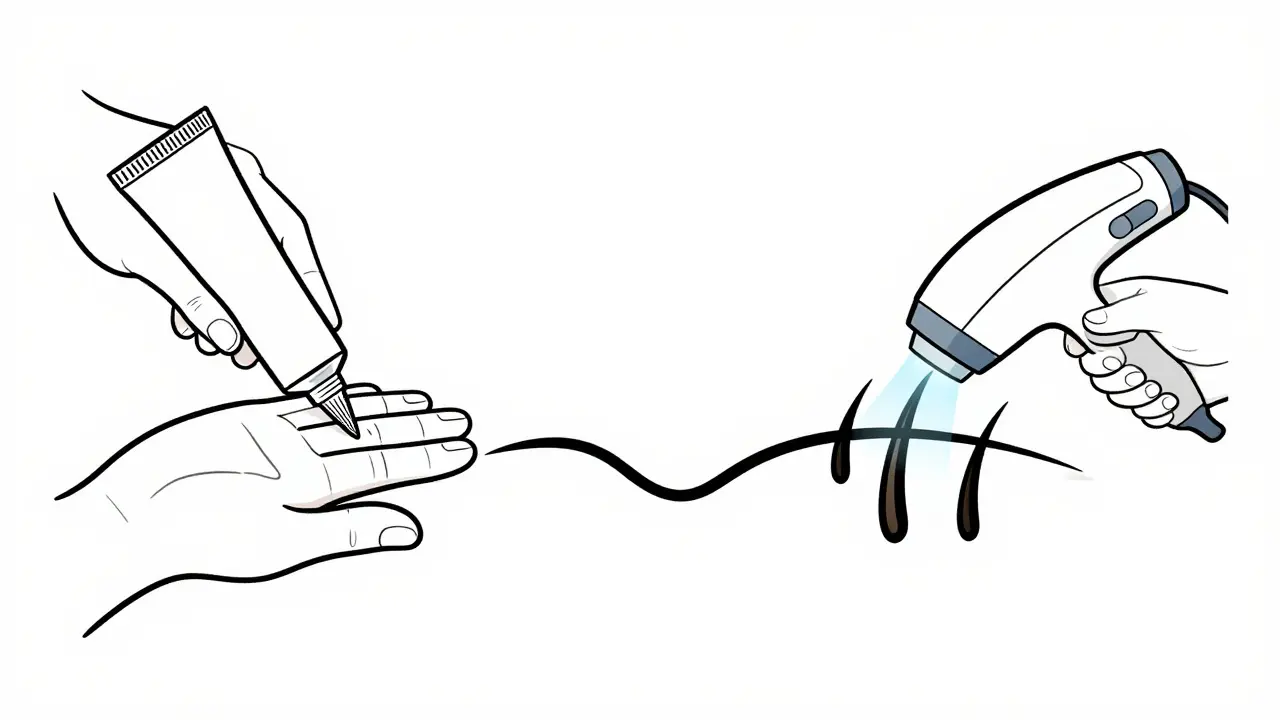
During this waiting period, many women combine medication with mechanical methods like laser hair removal or electrolysis. Interestingly, combining eflornithine cream with laser treatment has been shown to provide 35% greater hair reduction than laser alone. This synergy makes sense: the cream slows new growth, giving the laser more time to target existing follicles effectively.
It’s also important to manage expectations regarding "cure." Antiandrogens do not remove hair permanently. They reduce density and coarseness. If you stop the medication, hair growth will likely return to its previous pattern within a few months. This is why long-term commitment is part of the treatment plan.
Side Effects and Safety Monitoring
No medication is without risks, and antiandrogens are no exception. Beyond the mandatory contraception requirement, you need to monitor for specific side effects based on the drug:
- Hyperkalemia: Spironolactone affects potassium excretion. If you have any kidney issues, your doctor should check your blood potassium levels regularly. Symptoms of high potassium include muscle weakness or irregular heartbeat.
- Liver Toxicity: Older antiandrogens like flutamide and cyproterone acetate have fallen out of favor due to severe liver damage risks. Modern alternatives like bicalutamide still require occasional liver enzyme checks.
- Mood and Libido Changes: Some women report decreased libido or mood swings on spironolactone or finasteride. These are less common but worth discussing with your provider if they arise.
- Lipid Profiles: Combining antiandrogens with COCPs has been linked to poorer lipid profiles in some studies. Regular cholesterol checks are advisable if you’re on combination therapy.
Dr. Helena Teede, lead author of the Monash University study, emphasizes that clinical context matters. "Anti-androgens could be considered... with consideration of clinical context and individual risk factors," she notes. This means your age, family history, kidney function, and personal health goals all play a role in whether these drugs are right for you.
Combination Therapies: Why One Pill Rarely Does It All
In real-world practice, monotherapy (using just one drug) is becoming less common for moderate-to-severe hirsutism. The Endocrine Society’s 2023 PCOS Task Force suggests that combination therapy-such as an antiandrogen plus COCPs plus topical eflornithine-may become the standard for stubborn cases. Why? Because different drugs attack the problem from different angles.
For instance, COCPs lower circulating androgens, spironolactone blocks the receptors, and eflornithine slows growth at the follicle level. Together, they create a multi-layered defense. However, this approach increases complexity and cost. It also requires diligent tracking of side effects. Always start with one agent, assess tolerance, and then consider adding another under medical supervision.
Cost and Accessibility Challenges
Let’s talk money. Healthcare costs vary wildly by region and insurance. In the U.S., generic spironolactone might cost around $46 for a 60-tablet supply, but brand-name eflornithine cream can exceed $245 per month. Finasteride falls somewhere in between but may not be covered by insurance for off-label use in women. These costs can be prohibitive, leading some patients to skip doses or abandon treatment prematurely.
Look into patient assistance programs, generic alternatives, and local pharmacy discounts. GoodRx and similar services can sometimes slash prices significantly. Don’t let cost silence you-talk to your doctor about affordable options. There is no point in prescribing a drug you can’t afford to keep taking.
When to See a Specialist
While primary care providers and OB/GYNs often manage PCOS, complex hirsutism cases may benefit from seeing an endocrinologist or a dermatologist specializing in hair disorders. According to a 2021 survey in the Journal of the American Academy of Dermatology, dermatologists handle 45% of hirsutism cases, while endocrinologists manage 30%. If your general practitioner isn’t achieving results after six months, a specialist review might uncover underlying issues or offer advanced treatments like customized laser protocols.
How long does it take for antiandrogens to work for PCOS hair growth?
You should expect to wait at least 6 to 12 months before seeing noticeable changes in hair thickness and density. Maximum results often take 18 to 24 months of consistent daily use. Patience is key because hair growth cycles are slow.
Can I take spironolactone if I am trying to get pregnant?
No. Spironolactone and other oral antiandrogens are teratogenic and can cause birth defects. You must use effective contraception while taking them. If you are planning pregnancy, discuss stopping the medication with your doctor well in advance, as it takes time for the drug to clear your system.
Is laser hair removal effective for PCOS hirsutism?
Yes, laser hair removal is highly effective, especially when combined with medical therapy like eflornithine cream or oral antiandrogens. Since PCOS causes continuous stimulation of hair follicles, maintenance sessions may be needed more frequently than for non-PCOS patients. Combining laser with eflornithine can improve results by 35%.
Why isn't spironolactone the first choice for treating hirsutism?
Combined Oral Contraceptive Pills (COCPs) are the first-line treatment because they address both hormonal regulation and contraception simultaneously. Antiandrogens like spironolactone are considered second-line options, used when COCPs are ineffective, not tolerated, or contraindicated. This hierarchy ensures safety and addresses the root hormonal imbalance first.
Will my hair grow back if I stop taking antiandrogens?
Yes. Antiandrogens manage symptoms rather than cure the underlying condition. Once you stop taking the medication, androgen levels and receptor activity will return to baseline, and hair growth will likely resume its previous pattern within a few months. Long-term management is usually required.