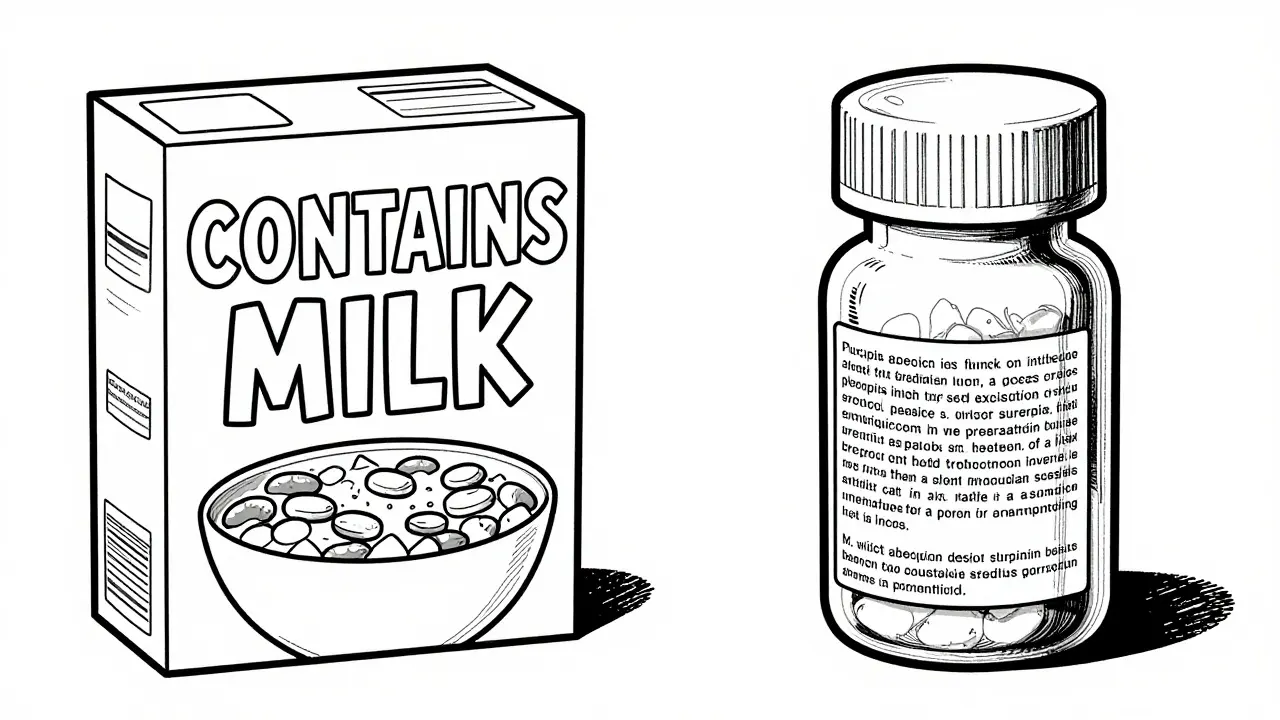
Did you know that while your grocery store cereal box is strictly regulated to list every trace of milk or soy, the pill bottle in your medicine cabinet might not tell you about the lactose or peanut oil inside? It’s a startling gap in consumer protection. For millions of people with allergies, reading prescription labels isn't just about knowing the dosage; it’s a critical safety check for hidden triggers that aren't always obvious.
If you have a food allergy, you are likely an expert at scanning ingredient lists. But when it comes to medications, the rules change. Food labeling laws like FALCPA force manufacturers to shout about allergens. Medication labeling, however, often whispers them-or hides them entirely-in technical jargon under "inactive ingredients." This guide will walk you through exactly how to decode these labels so you can stay safe.
The Critical Difference Between Food and Drug Labels
To understand why checking medicine is harder than checking food, we need to look at the regulations. In the United States, the Food Allergen Labeling and Consumer Protection Act (FALCPA) requires packaged foods to clearly declare nine major allergens: milk, eggs, fish, shellfish, tree nuts, peanuts, wheat, soy, and sesame. These must appear in bold or in a separate "Contains" statement.
Medications do not follow this rule. The FDA does not require standardized allergen declarations on prescription drug labels. Instead, potential allergens are listed as inactive ingredients, also known as excipients. These are substances used to stabilize the drug, improve taste, or help with absorption. They are not the active medicine, but they can still trigger severe reactions. Common culprits include lactose (a milk derivative), sucrose (which may contain traces of egg or insect-derived enzymes), and various oils derived from peanuts or soy.
This regulatory gap means that unlike food, where a warning is mandatory if an allergen is present, a medication label might list "lactose monohydrate" without any bold warning that it contains a milk protein. You have to know what to look for.
Decoding the Prescription Bottle Label
When you pick up your prescription, the sticker on the bottle is your first line of defense. However, space is limited. Most standard prescription labels only list the drug name, strength, quantity, and basic instructions. They rarely list inactive ingredients.
Here is what you should look for on the immediate label:
- Manufacturer Name: Note who made the drug. Generic drugs from different manufacturers can have different inactive ingredients even if the active drug is the same.
- NDC Number: The National Drug Code number allows you to look up specific details online later.
- Warnings Section: Occasionally, major allergens like sulfites or gluten might be flagged here, but do not rely on this.
If the label doesn't list ingredients, don't panic. The information exists; it's just not on the front. Your next step is crucial.
Finding the Full List of Inactive Ingredients
Since the bottle label is often incomplete, you need to access the full prescribing information. There are three reliable ways to do this:
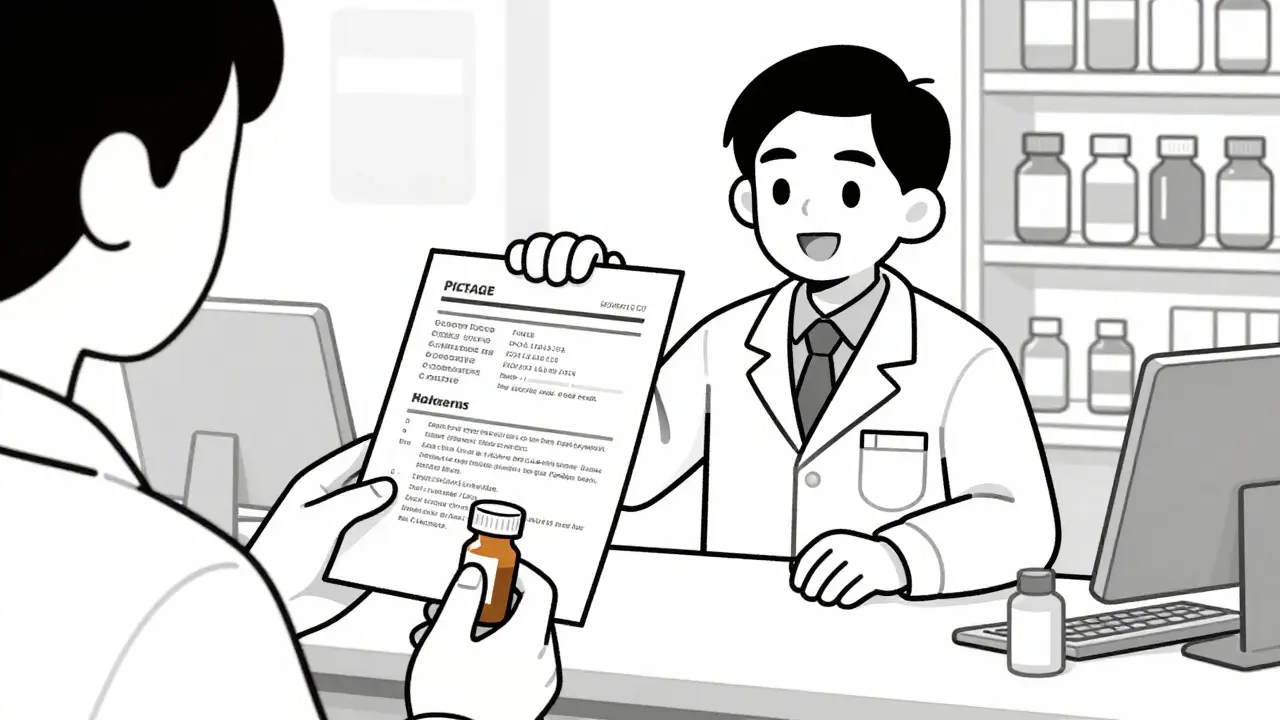
- Ask Your Pharmacist: This is the most direct method. Pharmacists have access to the package insert for every drug they dispense. Ask specifically: "Can you print out or show me the list of inactive ingredients for this specific manufacturer's version of the drug?"
- Check the Patient Package Insert: Some pharmacies provide a paper insert with detailed information. Look for a section titled "Inactive Ingredients" or "Excipients."
- Use Online Databases: Websites like DailyMed (run by the National Library of Medicine) or Drugs.com allow you to search by drug name and manufacturer. Enter the exact brand or generic name found on your bottle to see the full monograph.
Once you have the list, scan for these common allergen-related terms:
- Milk Allergy: Lactose, casein, whey, milk protein concentrate.
- Egg Allergy: Ovalbumin, egg lecithin (often used in vaccines).
- Soy/Peanut Allergy: Soybean oil, arachis oil (peanut oil), hydrogenated vegetable oil (check source).
- Gluten/Celiac Disease: Wheat starch, barley extract, maltodextrin (verify source).
- Sugar Allergies (Rare): Sucrose, dextrose.
The Danger of Generic Substitutions
A significant risk for allergy sufferers is the switch between brand-name and generic drugs, or between different generic manufacturers. The active ingredient-the part that treats your condition-must be bioequivalent. However, the inactive ingredients can vary widely.
For example, one manufacturer might use lactose as a filler in their generic ibuprofen, while another uses microcrystalline cellulose. If you are allergic to milk, the first version could cause a reaction, while the second is safe. This is why you cannot assume that because a drug was safe last month, it will be safe this month if the pharmacy changed suppliers.
Always verify the manufacturer when you receive a new refill. If you notice a different logo or color on the bottle, double-check the inactive ingredients before taking the dose.
Special Cases: Injectables and Vaccines
Injectable medications and vaccines pose unique challenges because they often use stabilizers that are less common in pills. Two frequent concerns are:
- Neomycin: An antibiotic used in some vaccines that can cause contact dermatitis in sensitive individuals.
- Egg Protein: Many flu vaccines are grown in chicken eggs. While modern purification processes remove most egg proteins, those with severe anaphylactic egg allergies should consult their allergist. The CDC generally states that egg-allergic individuals can receive flu shots, but monitoring is advised.
- Latex: Some injection ports or stoppers contain latex. If you have a latex allergy, inform your nurse or doctor before any injection.
For injectables, the packaging usually includes a carton label with more detailed ingredient information than the vial itself. Always ask the administering healthcare provider to review the specific product's patient information leaflet.
Practical Tips for Safer Medication Management
Managing medication allergies requires a proactive approach. Here are actionable steps to integrate into your routine:
- Create an Allergy Card: Carry a card or update your phone's medical ID with your specific allergies. Include both food and medication allergies.
- Inform Every Provider: Tell your primary care doctor, specialist, dentist, and pharmacist about your allergies every time you visit. Don't assume it's in your file.
- Stick to One Pharmacy: Using a single pharmacy helps build a relationship with pharmacists who know your history and can alert you to potential issues with new prescriptions.
- Question "Natural" Flavors: In liquid medications, "natural flavors" can sometimes derive from allergenic sources. Ask for clarification.
- Monitor for Changes: If you start experiencing new symptoms after taking a medication you've used before, stop taking it and contact your doctor. Formulations can change without notice.
What to Do If You Suspect a Reaction
If you believe you have had an allergic reaction to a medication, act quickly:
- Stop Taking the Drug: Unless instructed otherwise by a medical professional.
- Seek Medical Attention: Go to the ER if you experience difficulty breathing, swelling of the face/throat, or widespread hives.
- Document the Event: Keep the medication bottle and note the manufacturer and lot number.
- Report It: You can report adverse events to the FDA's MedWatch program. This helps track safety issues and may prevent others from having similar reactions.
Understanding your medication labels is not just about compliance; it's about control. By taking the time to investigate inactive ingredients, you turn a potential hazard into a manageable part of your health routine.
Are inactive ingredients in medications safe for everyone?
For most people, yes. Inactive ingredients are approved by the FDA as safe for general use. However, for individuals with specific allergies to components like lactose, gluten, or certain oils, these ingredients can trigger mild to severe reactions. It is essential to check the list if you have known sensitivities.
Why doesn't my prescription bottle list all the ingredients?
Prescription bottle labels are designed for quick identification of the drug, dose, and instructions. Due to limited space, they typically omit the full list of inactive ingredients. The complete information is available in the package insert provided by the manufacturer, which your pharmacist can access.
Can generic drugs have different allergens than brand-name drugs?
Yes. While the active ingredient must be the same, manufacturers can choose different inactive ingredients (fillers, binders, colors). This means a brand-name drug might be safe for you, but a generic version from a different company could contain an allergen you react to.
How can I find the inactive ingredients of my medication online?
You can use reputable databases like DailyMed.gov or Drugs.com. Search for your specific medication name and manufacturer. Look for sections labeled "Inactive Ingredients," "Excipients," or "Composition." Ensure you match the manufacturer listed on your prescription bottle for accuracy.
Do I need to worry about gluten in my pills?
If you have Celiac disease or a severe wheat allergy, yes. Some medications use wheat starch as a binder. However, many manufacturers now offer gluten-free formulations. Always ask your pharmacist to check the specific product's status regarding gluten content.