Every year, tens of thousands of children accidentally swallow medications meant for someone else. Seniors mix up pills because they look too similar. Insulin loses its power because it was left on the counter. And half of all households still keep expired drugs in their medicine cabinets-drugs that might not work when you need them most. This isn’t just about clutter. It’s about safety, effectiveness, and peace of mind. A home medication storage checklist isn’t a luxury-it’s a necessity. And building one doesn’t take hours. It just takes clear, practical steps based on real data from health experts.
Start with Where You Store Your Medications
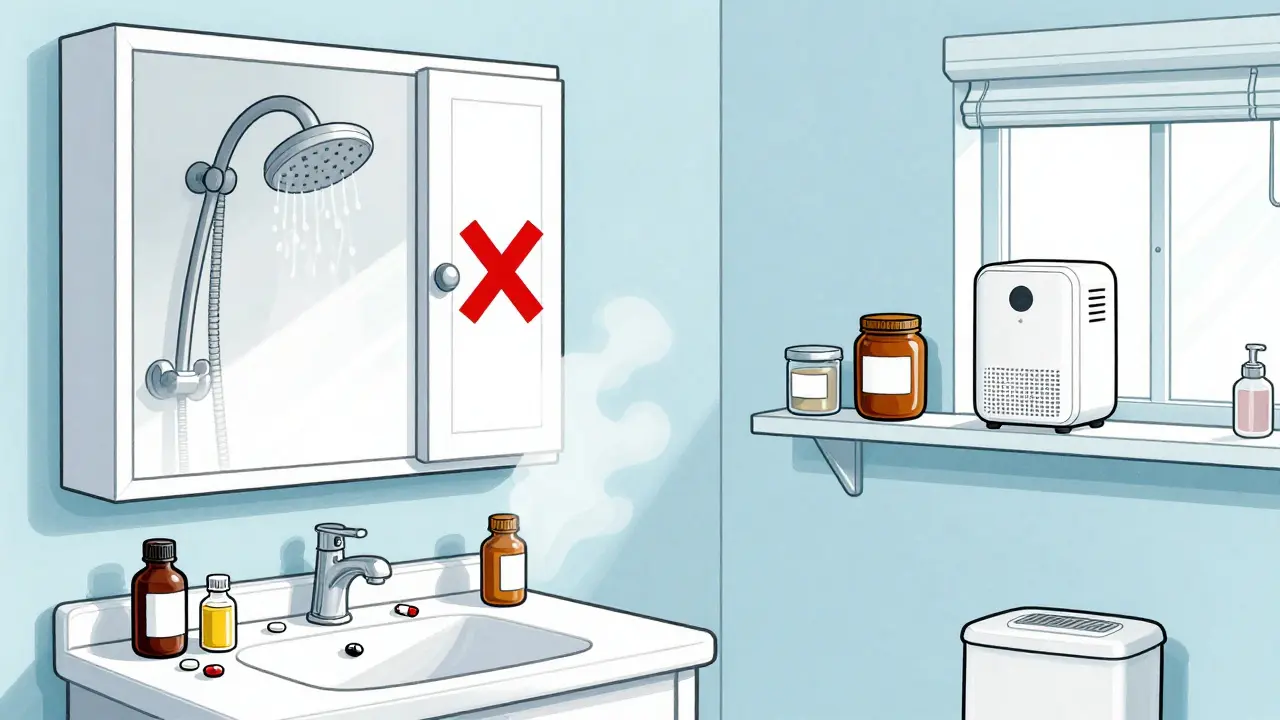
The bathroom cabinet? It’s the worst place. Heat from showers, humidity from steam, and sunlight through the window all break down pills and liquids faster than you think. The U.S. Environmental Protection Agency says humidity above 60% can reduce medicine potency by 30-50%. The Children’s Hospital of Philadelphia found that bathroom temperatures swing 10-15 degrees during a shower-enough to ruin insulin, asthma inhalers, and even antibiotics.
Instead, pick a cool, dry spot with stable temperature. A linen closet, a high shelf in a bedroom dresser, or a locked cabinet in a hallway work best. Keep it away from windows and heat sources like radiators or ovens. The ideal humidity range is 40-50%. If you live in a damp climate, consider a small dehumidifier in the storage area. For light-sensitive medicines-like certain antibiotics or eye drops-use amber jars or store them inside opaque containers. Sunlight can cut potency by 40% in just 30 days.
Separate Medications by Person and Type
Don’t just dump all your pills in one box. Mixing prescriptions from different family members is one of the top causes of accidental overdoses. A 2022 study in the Journal of Patient Safety found that separating medications by person-on different shelves or even just different sides of the same shelf-cuts the chance of someone grabbing the wrong pill by 63%.
Also, group by type:
- Oral meds (pills, liquids)
- Topical (creams, ointments, sprays)
- Injectables (insulin, epinephrine pens)
- Respiratory (inhalers, nebulizers)
This prevents dangerous mix-ups. The FDA documented over 120 cases between 2018 and 2020 where someone used a topical cream as an oral medication because they looked identical. Kaitlyn’s Law in North Carolina requires all medications-including over-the-counter pain relievers and baby lotion-to be kept in original containers with labels. That’s not just good practice-it’s the law in some states.
Lock It Down
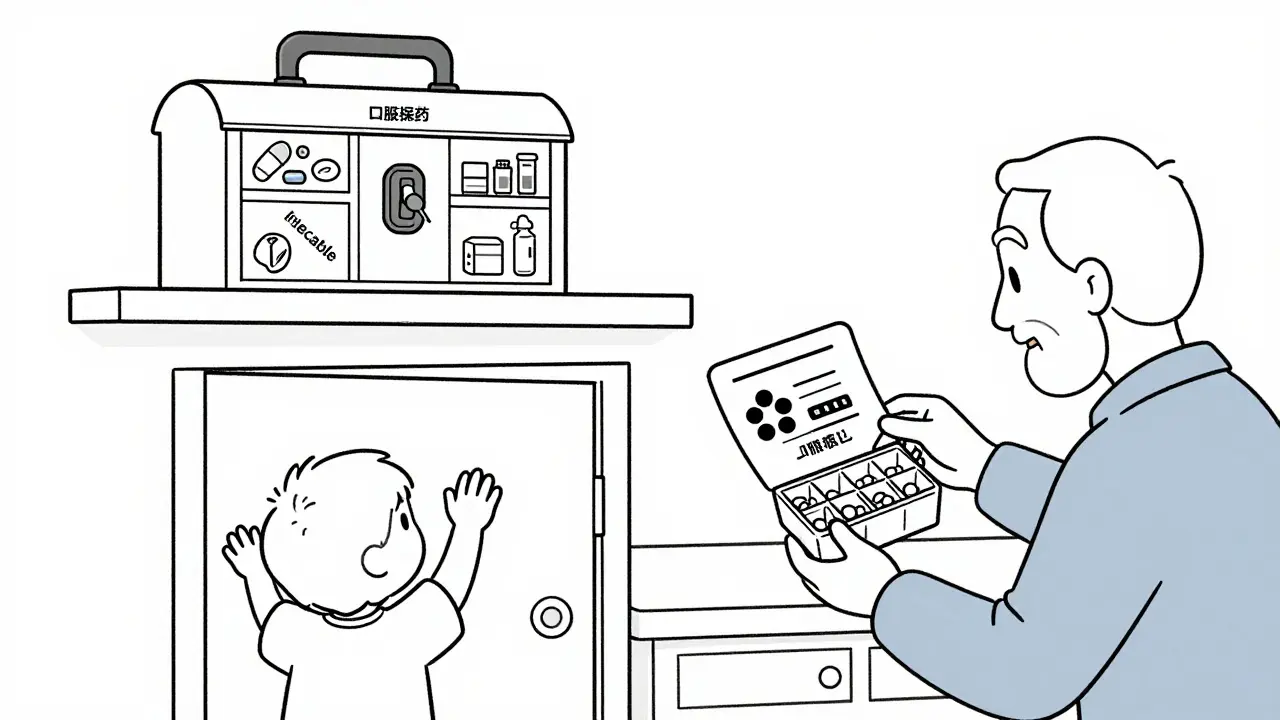
Standard medicine cabinets? They’re barely better than leaving pills on the counter. The Consumer Product Safety Commission tested them and found they stop only 12% of kids from getting in. A 2023 Pediatrics study showed households using dedicated medicine lockboxes saw 92% fewer accidental poisonings in children under five.
Use a lockbox with a combination lock-those are 34% more effective than key locks because keys get lost or left within reach. For households with teens or people recovering from addiction, lock up all controlled substances like opioids, benzodiazepines, or stimulants. BeMedWise reports that 30% of teens who misuse prescription drugs get them from home cabinets. Double-locking (like a locked cabinet inside a locked drawer) is the standard for high-alert meds like warfarin or insulin, especially if someone in the home has memory issues.
Track Expirations Like a Pro
Most people think expired meds are just “less effective.” That’s not the whole story. The FDA says 82% of pills still work one year past their expiration date-if stored right. But at three years, potency drops to 42%. And some meds? They become dangerous. Liquid antibiotics can grow bacteria. Nitroglycerin pills lose their ability to prevent heart attacks. Insulin can clump and stop working.
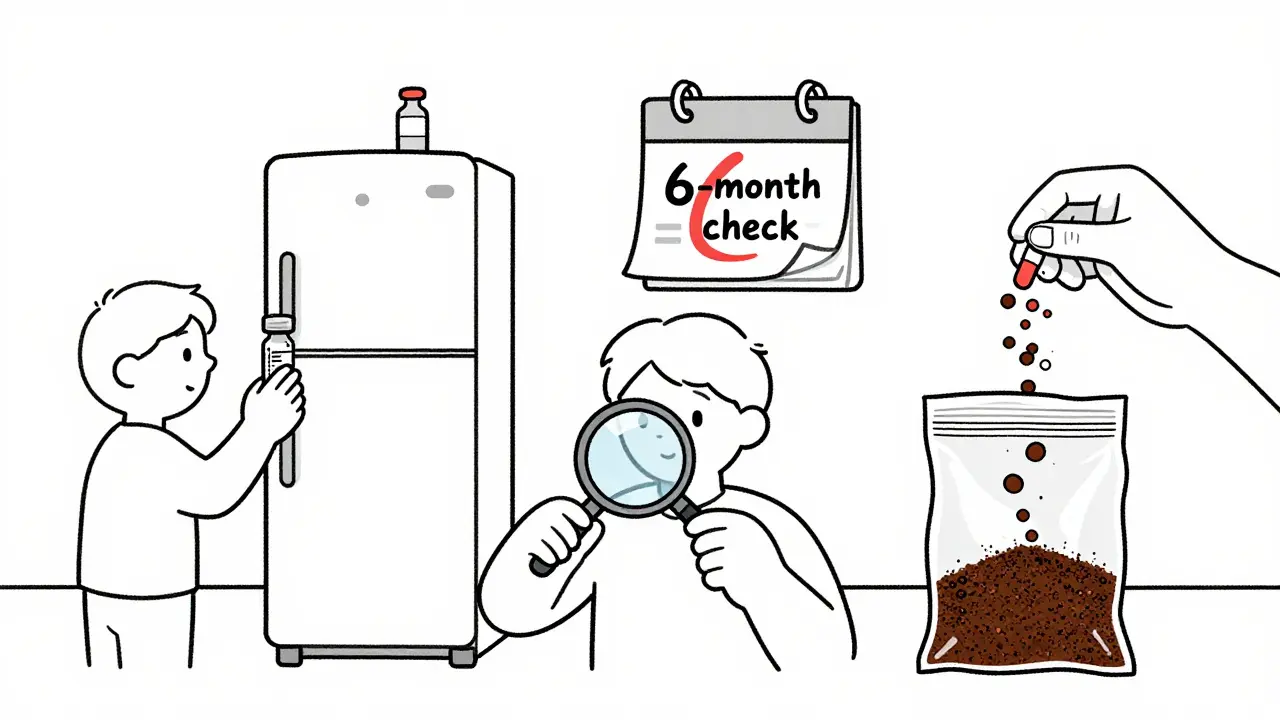
Check your stash every six months. Mark the date you opened multi-dose vials (like insulin or eye drops). Most lose stability after 28 days. The Senior Care Consultant Group says 68% of homes have at least one expired drug. Don’t guess. Look at the label. If it’s faded, smells weird, looks discolored, or has changed texture-throw it out. No exceptions.
Special Rules for Special Medications
Not all meds are the same. Here’s what you need to know:
- Insulin: Refrigerate unopened vials (36-46°F). Once opened, keep at room temperature (up to 86°F) for 14-56 days depending on the type. Store in a cool spot-not the fridge door, where temperatures bounce.
- Inhalers: Keep them in their original plastic case. Moisture can clog the mechanism. Don’t store them in the bathroom. A 2023 BeMedWise study found 22% of inhaler malfunctions were due to humidity.
- Refrigerated meds: Keep them away from food. Cross-contamination is real. A 2020 Canadian study showed separating meds from food reduced accidental exposure by 85%.
- Supplements: Even vitamins and herbal pills go bad. Store them like prescription meds-cool, dry, and labeled.
Build a Routine-Don’t Just Set It and Forget It
A checklist only works if you use it. Set reminders:
- Every six months: Do a full inventory. Coincide it with daylight saving time changes-people are more likely to remember.
- Monthly: Visually inspect all meds. Look for discoloration, crumbling, strange smells.
- Daily: If you store insulin or other refrigerated meds, check the fridge temperature. Keep a log for 30 days. The Senior Care Consultant Group says this keeps 98% of meds stable.
- Every time you get a new prescription: Add it to your list. Remove the old one.
A 2023 Consumer Reports survey of 2,500 households found that families using a written checklist had 89% fewer medication errors than those who didn’t.
Dispose of Expired or Unneeded Meds the Right Way
Never flush pills down the toilet. Don’t throw them in the trash unless you’ve made them unusable. The EPA says 60-80% of pharmaceuticals in U.S. waterways come from flushing or dumping. A 2021 USGS study found traces of drugs in 80% of tested rivers.
Use a drug take-back program. The DEA runs National Prescription Drug Take Back Days twice a year-in April and October. In 2022 alone, they collected over 1 million pounds of meds. Many pharmacies and police stations have permanent drop boxes.
If there’s no take-back option near you:
- Take pills out of their bottles.
- Mix them with something unappealing-used coffee grounds, cat litter, or dirt.
- Put the mix in a sealed plastic bag or container.
- Throw it in the trash.
This cuts accidental ingestion by 76%, according to an FDA study. Never leave meds sitting around waiting to be thrown out. That’s a risk.
Protect Kids and Seniors First
Children under six are the most at risk. The American Academy of Pediatrics says 70% of poisonings happen when meds are left unattended for less than 10 minutes. Store everything at least 4 feet off the ground-and behind three closed doors if possible. A 2022 study found this setup reduced child access by 88%.
For seniors with memory issues:
- Use pill organizers with alarms.
- Label everything in large print.
- Keep only what’s needed for the next 7-14 days.
- Remove all old, unlabeled bottles.
45% of accidental poisonings in seniors come from confusion between similar-looking bottles. A clear, organized system isn’t just helpful-it’s life-saving.
Can I store all my medications in one container?
No. Mixing medications-even if they’re yours-increases the risk of confusion, contamination, and accidental overdose. Always keep them in their original containers with labels. This is required by law in some states and is the safest practice everywhere.
What if I don’t have a lockbox? Can I still keep meds safe?
Yes, but you need to be more careful. Store meds in a high cabinet or drawer that’s out of reach of children and pets. Use child-resistant caps. Never leave meds on counters, nightstands, or in purses. If you have teens, lock up controlled substances in a locked box-even if it’s not a medical-grade lockbox. A simple locked jewelry box works if it’s not accessible to others.
Do I need to check the fridge temperature every day?
If you store insulin, epinephrine, or other refrigerated meds, yes. Temperature swings can ruin them. Use a small thermometer inside the fridge. Record it daily for 30 days, then check weekly. The Senior Care Consultant Group says this keeps 98% of meds stable. If your fridge is old or unreliable, consider a dedicated mini-fridge just for meds.
Are over-the-counter drugs and vitamins part of the checklist?
Absolutely. The FDA and BeMedWise include all medications in storage guidelines-even aspirin, antacids, and multivitamins. They degrade over time, can be mistaken for other pills, and pose risks to children. Treat them the same way you treat prescriptions.
How often should I update my checklist?
Update it every time you get a new prescription, stop a medication, or refill a bottle. Do a full review every six months. Keep a printed copy in a visible spot-like near the storage area-so anyone in the home can check it. Many families find it helpful to do this during daylight saving time changes because it’s a natural reminder.
All Comments
Erica Santos March 9, 2026
Oh wow, a checklist. Because clearly the real problem here is that people don’t have a neatly labeled spreadsheet of their life-saving drugs. Let me grab my colored pens and highlighter-this is clearly the missing piece between my 7-year-old swallowing my blood pressure meds and the FDA’s ‘maybe don’t flush them’ pamphlet. I mean, if only we had a 12-step program for not being dumb, right? 🤦♀️
George Vou March 10, 2026
lol so u mean to tell me the gov dont want us to have our meds in the bathroom? wtf? next theyll say dont put ur toothpaste in the fridge. i heard from a guy on youtube that humidity is a hoax made by big pharma to sell dehumidifiers. also, i think insulin is just a government mind control drug. 😈
Scott Easterling March 10, 2026
I'm sorry... but this is ridiculous. You're telling me people don't know not to store pills in the bathroom? Who are these people? Are they still using dial-up? Also, lockboxes? Please. I keep my meds in a Ziploc in my sock drawer. It's worked for 17 years. Also, expiration dates? Pfft. I've been taking 2012 Advil since 2015. It's basically a vitamin now. 🤷♂️
Mantooth Lehto March 11, 2026
I just cried reading this. 😭 My grandma almost died because we didn’t label her pills. I’ve been terrified ever since. I bought a lockbox, started a color-coded chart, and I check my fridge temp every morning like it’s my job. I even made a spreadsheet. I know it’s obsessive-but I’d rather be a paranoid weirdo than bury someone because we were lazy. 💔💊
Melba Miller March 13, 2026
This is what happens when you let weak-minded Americans run their own homes. We used to have discipline. We used to have order. Now we need a checklist for pills? In America? We used to trust people to know better. But no-now we need a 12-point guide because half the population can’t find the bathroom without a GPS. This is why we’re falling behind. 🇺🇸
Katy Shamitz March 13, 2026
Oh honey, I love this so much! 🥹 I started doing this after my neighbor’s toddler got into her grandma’s diabetes meds. I made little stickers-‘Mom’s Heart Pill’ and ‘Dad’s Allergy Stuff’-and now my whole family checks in every Sunday. It’s so peaceful knowing no one’s going to accidentally take a pill meant for someone else. You’re doing God’s work here. 💕
Nicholas Gama March 15, 2026
Let’s be honest: this is the bare minimum. If you need a checklist to not poison your family, you shouldn’t be in charge of pharmaceuticals. The real issue? People treat medicine like candy. This isn’t a storage problem. It’s a societal failure of cognitive responsibility. And no, a lockbox won’t fix that. 🧠
Mary Beth Brook March 16, 2026
Per FDA guidelines, ambient RH >50% induces hydrolytic degradation of ester-based APIs. Temperature variance >5°C accelerates Arrhenius kinetics, reducing bioavailability. Storage in non-temperature-controlled environments violates USP <671>. This isn’t ‘advice’-it’s pharmacokinetic reality. Your bathroom is a chemical reactor. Stop romanticizing chaos.
Philip Mattawashish March 17, 2026
You think this is about safety? Nah. This is about control. Who decided the bathroom is ‘unsafe’? Who profits from lockboxes? Who benefits from making you paranoid about your own medicine? This checklist? It’s a Trojan horse. They want you dependent on systems, on labels, on ‘experts.’ Real freedom? You know your body. You know your pills. You don’t need a checklist. You need courage.
Tom Sanders March 19, 2026
Bro I just put everything in a shoebox under my bed. Works fine. I mean, I’ve been alive this long, right? I don’t need no fancy checklist. Also, I think the whole expiration thing is a scam. I’ve got a bottle of Tylenol from 2008. Tastes like victory.
Jazminn Jones March 20, 2026
The structural inadequacy of domestic pharmaceutical stewardship in non-clinical environments is a direct consequence of neoliberal disinvestment in public health infrastructure. The reliance on individualized behavioral interventions-such as checklists-represents a pathological misalignment of responsibility, shifting systemic risk onto vulnerable households. One must question: why is the burden of safety not borne by regulatory bodies, rather than the elderly, the ill, or the uneducated? This document is not a solution. It is a symptom.
Stephen Rudd March 21, 2026
You Americans and your checklists. In Australia, we just keep our meds in the kitchen cupboard. We don’t need 12 steps to avoid poisoning ourselves. We have a thing called ‘common sense.’ Also, I once gave my dog my blood pressure pill. He’s fine. Probably better off. You’re overcomplicating everything.
Dan Mayer March 23, 2026
wait so you mean i cant keep my adderall next to my gummy vitamins? but theyre both colorful and i like how they look together? also i think the expiration date is just there so big pharma can sell me more? i mean i took a 2019 ibuprofen last week and i felt great! 🤔
Ray Foret Jr. March 23, 2026
This is actually really helpful! 😊 I was so stressed about my mom’s meds, but now I’ve got a little system going-color-coded labels, fridge thermometer, even a sticky note on the cabinet. It’s not perfect, but it’s a start. You’re right-small steps save lives. Thanks for not making it feel impossible. 🙌💙