The Hidden Risk in Custom Meds
When your child needs medicine that isn't available off the shelf, compounding seems like a miracle solution. It turns into liquid, adds flavor, or removes allergens. But behind the custom bottle sits a complex reality: Compounded Medications do not carry the same approval stamp as standard drugs. While commercially available medicines undergo rigorous testing before hitting the market, compounded versions are created after a prescription is written. For parents, this means you are the final line of defense against potential errors.
I've seen how overwhelming this topic gets for families. One mom told me she felt trapped when her toddler couldn't swallow a pill, so she had to turn to compounding. She didn't realize until later that the concentration wasn't what she expected. Stories like this aren't rare. According to data from the Institute for Safe Medication Practices (ISMP), between 14% and 31% of Pediatric Patients experience medication errors, with dosing mistakes being the most common culprit. These aren't just theoretical risks; they can lead to hospital visits and severe health complications.
Why Kids Need Custom Formulas
Sometimes, standard pills just don't work for little ones. A three-year-old might gag on a capsule, or a neonate might be too small for an adult dose to be safely cut in half. In these scenarios, Licensed Pharmacists step in to mix medicines specifically for that child's needs. They create alcohol-free syrups, dye-free capsules, or precise fractional doses that commercial factories haven't bothered to produce because the market is too small.
However, customization brings its own challenges. A study published in the National Academy of Medicine report highlighted that while we need these drugs for children who cannot swallow pills, the process introduces variables that standard manufacturing eliminates. Standard drugs are made in high volume with automated quality control. Compounds are often made in smaller batches, sometimes manually. The difference is significant: a manual measurement can vary slightly more than a machine-piped dose, and with pediatric patients, even a fraction of a milliliter difference can matter due to their low body mass.
Understanding the Regulatory Gray Zone
You need to understand one hard fact before your child ever takes the first dose: Compounded Medications are not FDA-approved. As stated clearly in the FDA's 2023 guidance, "FDA does not verify the safety, effectiveness or quality of compounded drugs before they are marketed." This distinction is crucial. When you hand over a prescription for a compounded drug, you are trusting a specific pharmacy's protocols, not a government-backed assurance of quality.
This isn't meant to scare you away from necessary treatment, but to set the right expectations. Because these drugs bypass the standard FDA review process, the responsibility shifts toward the patient and the pharmacist to ensure safety. There have been documented instances where quality control failed. We saw this during the fungal meningitis outbreaks linked to contaminated spinal injections years ago, and more recently with compounded semaglutide products where over 900 adverse event reports surfaced, including fatalities. These events remind us that the "custom" nature of these drugs requires extra vigilance.
Vetting Your Compounding Pharmacy
Not all pharmacies are created equal. Some are simply filling prescriptions with minimal oversight, while others follow strict sterile standards. Before handing over your prescription, you need to know who you are working with. Look for accreditation from recognized bodies. In the US, this includes the Pharmacy Compounding Accreditation Board (PCAB) or the National Association of Boards of Pharmacy (NABP).
| Criteria | What to Check | Why It Matters |
|---|---|---|
| Licensing | Verify license with State Pharmacy Board | Ensures basic legal operation standards are met |
| Accreditation | Look for PCAB or USP Chapter 797 Compliance | Marks adherence to industry-wide safety protocols |
| Experience | Ask how long they've compounded pediatric meds | Pediatric dosing requires specialized training |
| Traceability | Can they trace raw ingredient sources? | Prevents contamination and ensures purity |
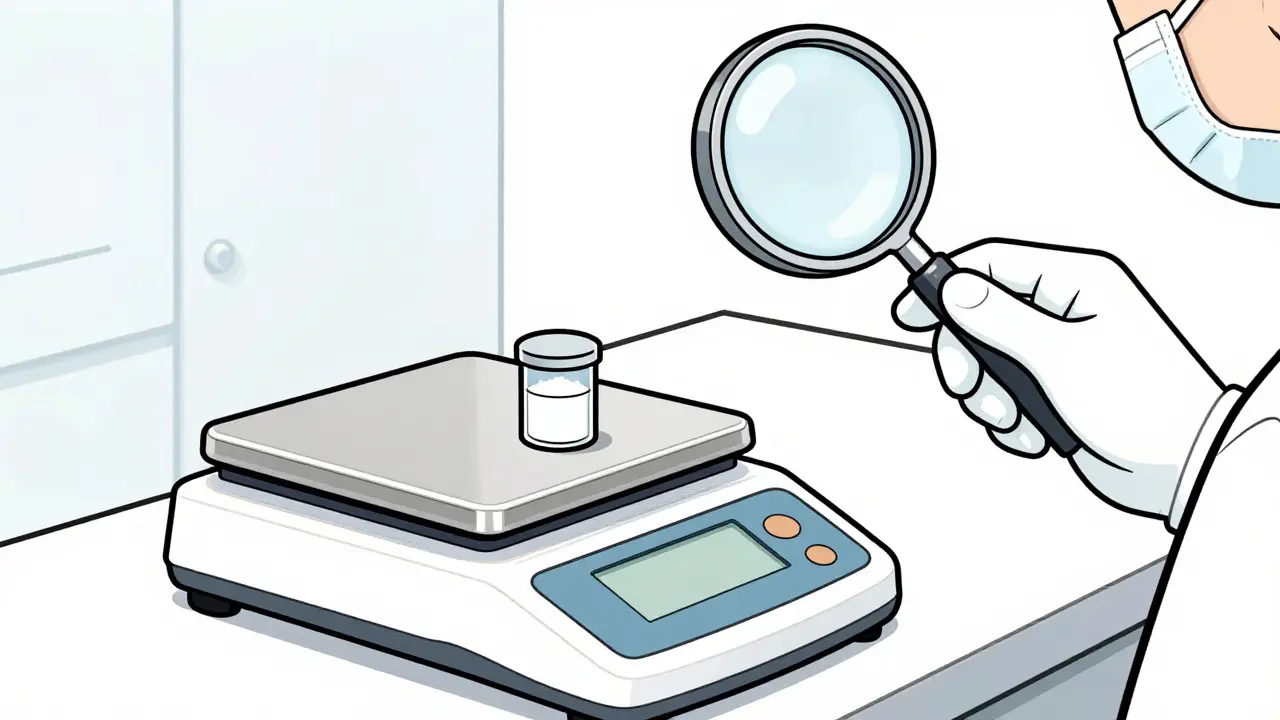
It is also vital to ask about their technology. Many safety advocates, including Dr. Jerry of the Emily Jerry Foundation, push for Gravimetric Analysis. This method involves weighing ingredients on a digital scale rather than using volume measurements (like cups or spoons). Weight is far more precise than volume. Despite this technology existing for decades, adoption remains low-around 7.7% of hospitals utilize it fully according to recent ISMP data. You should ask: "Does your pharmacy use gravimetric weighing for my child's dose?" If they don't, ask why. If they say no, consider finding a pharmacy that does.
Verifying the Medication at Home
Once you get the bottle, your job isn't done. Miscommunication between doctors and pharmacists accounts for nearly 68% of pediatric compounding errors, notes SafeMedicationUse.ca. You become the bridge. Always read the label carefully. Does the concentration match what your doctor ordered?
- Concentration Check: Does the label say 5mg per ml? Or 5mg per 5ml? Confusing units here can lead to accidental overdoses.
- Ingredient List: Check for excipients. Even flavorings can contain sugars or dyes that some sensitive children react to.
- Storage Instructions: Some compounded liquids expire quickly. Unlike factory bottles, compounded meds often have short shelf lives (sometimes only days).
If you notice anything suspicious-a strange color, sediment, or a smell-it is better to throw it out and call the pharmacy immediately than to risk your child's health. Never assume the pharmacy knows what you see in your home environment; describe exactly what you observe.
Safe Administration Techniques
Even if the pharmacy gets the formula right, administration errors still happen. A report from Harvard Medical School noted instances where patients accidentally gave themselves 20 times the appropriate dose due to confusion. To prevent this:
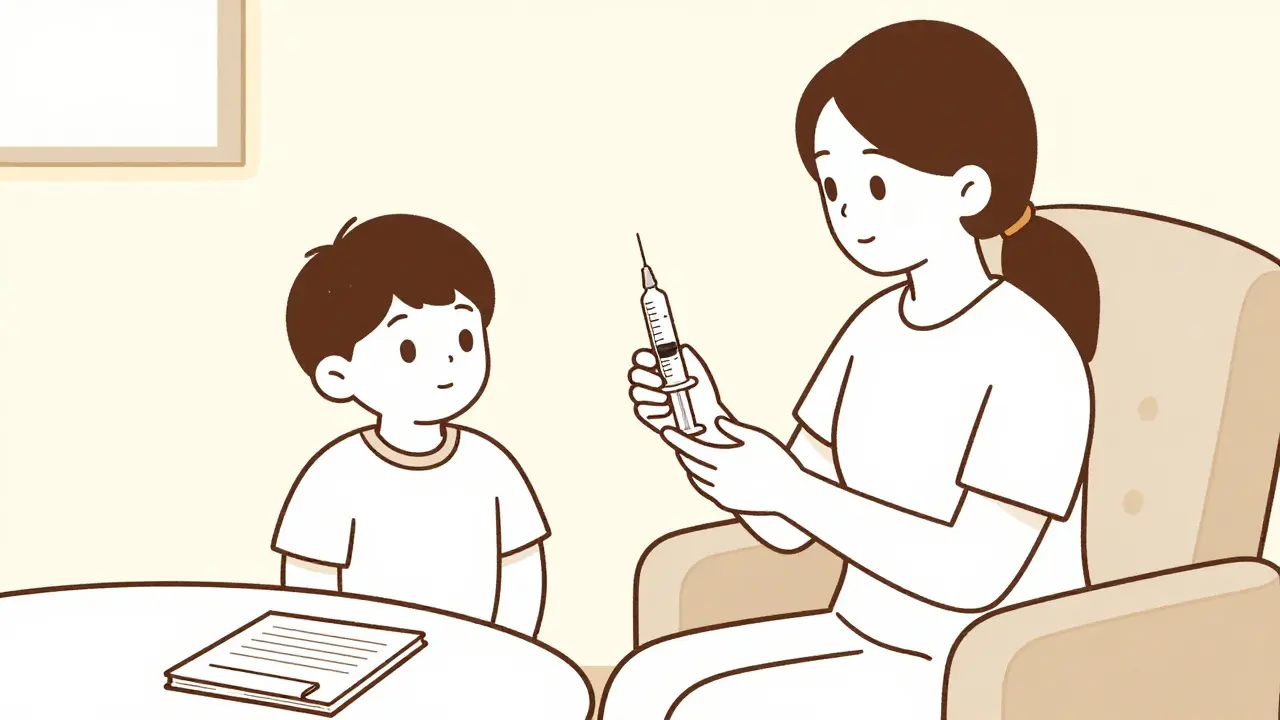
- Use only the syringe or dropper provided by that specific pharmacy. Generic kitchen spoons vary wildly in size and are never accurate enough for medicine.
- Mark the syringe clearly. If your child needs 0.5ml, ensure you measure exactly to that line.
- Double-check calculations. If your child's dose changed, recalculate with a fresh pair of eyes.
Keep a log of every dose. Track when you gave it, how much you gave, and how your child reacted. This record becomes invaluable if a reaction occurs, helping doctors identify whether the issue was the medication itself or a separate illness.
The Bottom Line on Technology and Trends
We are seeing more demand for compounded medications as shortages affect the pharmaceutical supply chain. However, with increased production comes increased risk. Recent reports indicate some facilities producing massive quantities of unapproved drugs, taking advantage of shortages even after they have ended. This mass production dilutes the careful oversight traditionally found in small-scale compounding.
The industry is shifting toward safer practices, driven by legislation like "Emily's Law," which has prompted states to require gravimetric verification. As a parent, you don't need to be a scientist to stay safe, but you do need to be informed. Demand proof of quality, ask about their methods, and never accept vague answers when your child's health is on the line. By verifying accreditation and demanding transparency, you turn the safety protocol back into your hands.
All Comments
Michael Kinkoph March 31, 2026
This entire situation represents a glaring failure of modern oversight! We cannot simply allow unregulated entities to handle our children's lives so recklessly. The FDA stance is clear and absolutely non-negotiable for anyone who values public health! You need to demand accountability from these compounding pharmacies immediately. If they cannot provide proof of gravimetric analysis then you should walk away without hesitation. We owe it to the next generation to hold these institutions to the highest possible moral standards! Do not let your child become a statistic in a system designed for convenience over safety!!!
Calvin H April 1, 2026
Sure, tell me to call the pharmacy instead of sleeping.
Christopher Curcio April 2, 2026
Compounding involves distinct pharmacological principles compared to mass manufacturing. Stability testing becomes the primary concern for parents utilizing these services. Bioavailability varies significantly depending on the excipient matrix used. Pharmacists must understand the solubility parameters of the active ingredient. Inadequate mixing leads to sedimentation which changes dosing accuracy over time. Gravitational settling is a major issue in suspensions without proper preservatives. We need strict adherence to USP Chapter 797 guidelines for sterile preparations. Non-sterile compounds require different handling protocols entirely. Moisture ingress can degrade hydrolytically unstable APIs rapidly. Light exposure might cause photodegradation in certain organic molecules. Packaging materials interact chemically with the formulation in unforeseen ways. Plasticizers leach into liquid forms altering the chemical composition subtly. Parents often overlook the storage temperature requirements specified on labels. Refrigeration cycles can induce crystallization during repeated freezing events. Ultimately the therapeutic index narrows significantly in pediatric populations requiring precision.
RONALD FOWLER April 3, 2026
i think this technical breakdown is incredibly helpful for families trying to navigate the gray areas. its important we stay calm and informed rather than panicked. the distinction regarding sterility really opens eyes about what to ask for. everyone deserves safe medication regardless of how it gets made. trust in our local providers matters most right now. lets keep supporting each other through the vetting process. knowledge is power when protecting vulnerable little ones. thank you for sharing this detailed perspective with us all.
Ruth Wambui April 4, 2026
You see the pattern here because big pharma does not want you questioning supply chains. They hide behind red tape while real solutions get blocked systematically. Compounded meds expose the gaps in their profit-driven models completely. Always verify where ingredients originate before ingesting anything suspicious. Trust your gut instincts when a bottle looks wrong or smells off. Independent verification beats official guidance every single time.
Jonathan Sanders April 6, 2026
Ah yes another conspiracy theory masquerading as helpful advice. People always want to blame invisible cabals for basic incompetence. Maybe the pills were just mixed wrong by accident. Your paranoia is draining the energy out of this useful thread. We do not need theories we need facts from accredited sources. Stop spreading fear mongering nonsense about corporate agendas please.
Angel Ahumada April 7, 2026
The essence of compounding transcends mere chemistry and touches upon the soul of care. We forget the human element involved in creating life saving potions for tiny bodies. It is a ritual of protection gone awry by industrial standards. Why would machines ever replicate the nuance of handcrafted healing. The risk exists but so does the profound necessity for custom solutions. Ignoring this complexity blinds us to the true nature of pharmaceutical artistry.
Debbie Fradin April 8, 2026
Your philosophical rambling ignores the tangible risks of contamination completely. Artistry means nothing when a child ends up in the ICU unnecessarily. We need rigorous standards not poetic fluff about care. The lack of regulation is a direct threat to patient safety outcomes. Stop romanticizing manual labor when precise automation saves lives daily. Reality check please because your view is dangerously naive.
Brian Yap April 9, 2026
Down here in Oz we reckon checking accreditation is a no brainer thing. Everyone knows you gotta ask the right questions before trusting meds. Local laws vary massively depending on where you source these mixes. Better safe than sorry mate when dealing with kid's health issues. Just make sure the lab follows the rules strictly.
Dan Stoof April 10, 2026
That is absolutely spot on regarding regional variances in quality control! Every parent deserves access to the sweetest tasting, safest syrups available! Checking those credentials is like finding a hidden treasure map for safety! Transparency shines bright in a world full of murky practices! We celebrate those pharmacies that go above and beyond for our little warriors!!!
William Rhodes April 11, 2026
We must believe in the potential for perfect solutions despite current flaws! Optimism drives innovation forward even when regulations lag behind progress! Demand excellence from your providers and refuse mediocrity outright! The future belongs to those who question and improve systems relentlessly! Do not let fear paralyze your ability to seek necessary treatments!
Vikash Ranjan April 12, 2026
Optimism is useless when the scale is clearly broken by definition. Your aggressive pushing ignores the systemic corruption embedded in supply chains. Asking for proof rarely yields genuine answers from these facilities. I have seen too many failures to trust your hopeful narrative. The reality is far more dangerous than you suggest. You ignore the data showing high error rates constantly.