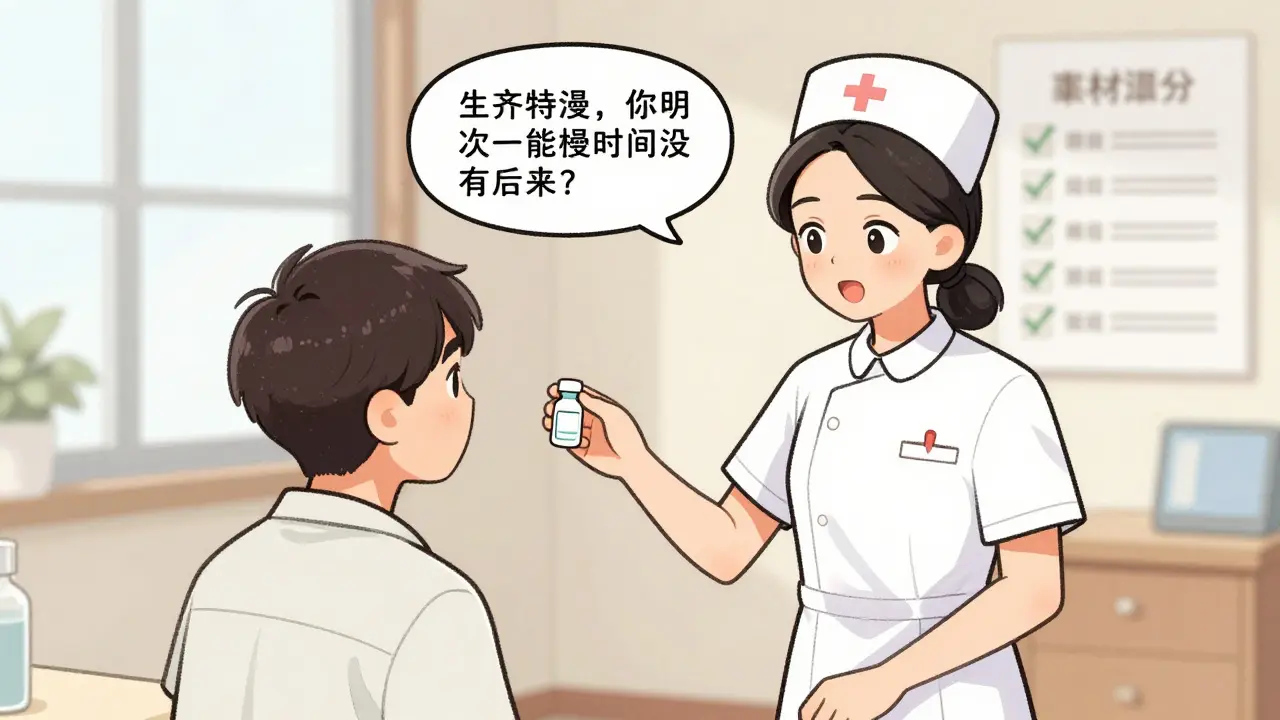
When teaching patients about their condition - whether it’s managing diabetes, understanding heart failure, or using an inhaler correctly - how do you know they really get it? Too often, we assume understanding because a patient nodded along during a 10-minute consultation. But real learning? That’s something you have to measure. And not just with yes-or-no questions. True generic understanding - the kind that lets someone apply knowledge to new situations, make decisions, and stick with long-term care - doesn’t show up on a checklist. It needs to be tracked, observed, and confirmed through smart, consistent methods.
Why Generic Understanding Matters More Than Memorization
Generic understanding means a patient can take what they learned and use it in different contexts. For example, someone who memorizes that "take your blood pressure meds in the morning" might still skip them on weekends. But someone with generic understanding knows why timing matters - how it affects their body’s rhythms, how missed doses raise risk, and how to adjust if their schedule changes. This isn’t about repeating facts. It’s about knowing how to act.A 2021 study from the National Institutes of Health found that patients who demonstrated generic understanding were 60% more likely to follow treatment plans over six months than those who simply passed a quiz. That’s because understanding isn’t stored like a file. It’s built through connection - linking symptoms to actions, side effects to choices, and routines to long-term outcomes.
Direct vs. Indirect Ways to Measure Understanding
There are two main paths to measuring learning: direct and indirect. Direct methods look at what someone actually does. Indirect methods ask what they think they did. One gives you proof. The other gives you guesses.Direct methods include:
- Teach-back: Ask the patient to explain, in their own words, how they’ll take their medication or recognize warning signs.
- Role-play: Have them demonstrate using an insulin pen or checking their pulse - no shortcuts, no props.
- Case scenarios: Present a new situation - "What if you’re traveling and forget your pills?" - and see how they respond.
- Observation: Watch them prepare a meal for a low-sodium diet or use a glucose monitor without prompting.
These aren’t just helpful - they’re essential. A 2023 survey of 142 healthcare educators found that 78% said using structured teach-back methods cut down on readmissions by nearly half in chronic disease programs.
Indirect methods include:
- Post-visit surveys: "How confident do you feel managing your condition?" (Scale 1-5)
- Follow-up calls: "Did you have any questions after your appointment?"
- Feedback forms: "Was the information clear?"
These have value - but they’re not proof. A patient might say they "understand" because they don’t want to disappoint you. Or because they’re tired. Or because they think you’ll give them more time if they say yes. That’s why direct methods should always lead. Indirect ones just help you spot patterns.
The Power of Formative Assessment in Patient Education
Formative assessment isn’t a test. It’s a conversation. It’s checking in as you go, not waiting until the end. In classrooms, teachers use exit tickets - one-minute written responses at the end of class. In clinics, we can use the same idea.Here’s how it works in practice:
- After explaining a new medication, ask: "What’s the one thing you’ll remember tomorrow?"
- After showing how to use a nebulizer: "What part feels confusing?"
- At discharge: "If you feel worse next week, what’s your first step?"
These take 30 seconds. But they reveal more than any 10-page handout. A nurse in Exeter told me last year that after switching to daily 3-question check-ins with heart failure patients, she saw a 40% drop in emergency visits over three months. Why? Because she caught misunderstandings early - like a patient thinking "no salt" meant no tomatoes, or that "drink plenty of water" meant chugging soda.
Formative tools don’t grade. They guide. They let you adjust your teaching on the spot. If three people say they’re confused about timing, you re-explain. If one person gets it but can’t apply it, you role-play. That’s real-time learning.
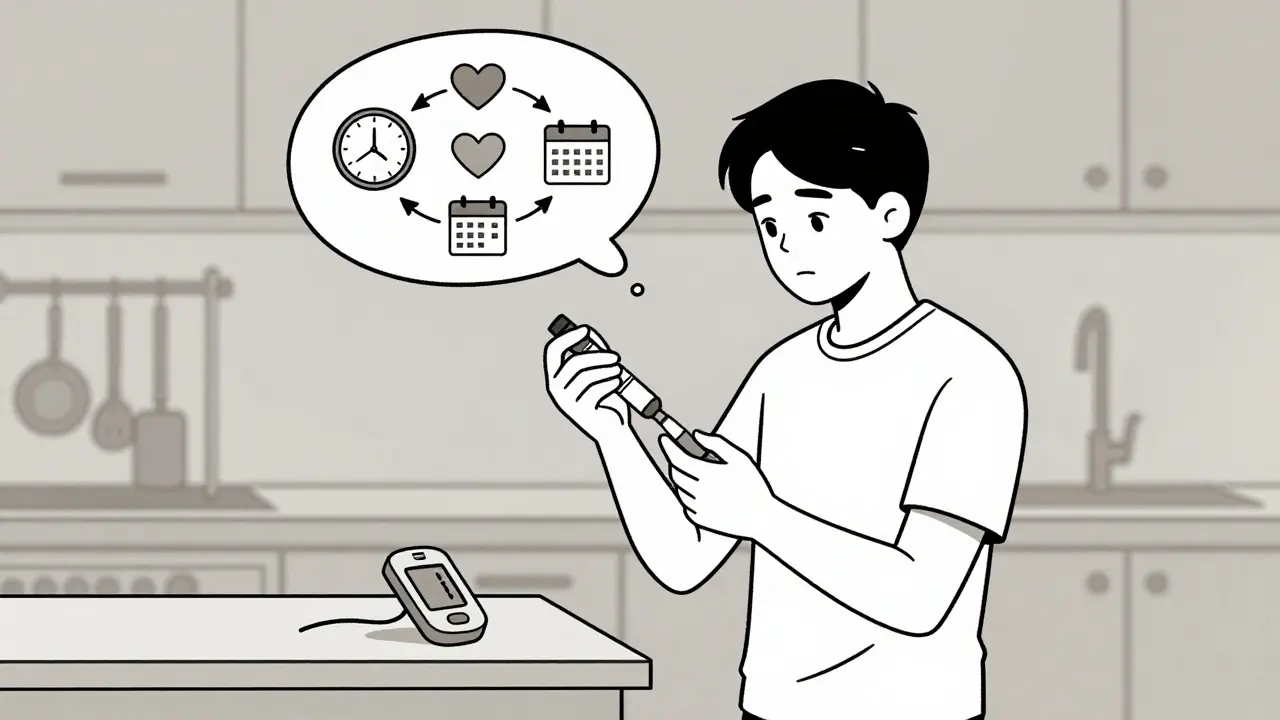
Why Summative Assessments Alone Fail Patients
Summative assessment - the final exam, the discharge quiz, the signed consent form - feels safe. It’s tidy. You check a box. But it’s also too late.Imagine giving a patient a 10-question quiz at the end of a diabetes education session. They score 9/10. You send them home. Two weeks later, they’re back in the ER because they didn’t realize their new meds made them dizzy - and they kept driving.
That quiz didn’t catch the gap. It only measured recall, not application. It didn’t test their confidence, their environment, or their ability to adapt. And that’s the problem with summative-only approaches: they assume understanding = memorization.
A 2022 report from the Association of American Colleges and Universities found that 87% of top institutions now use direct assessment to measure learning - not because it’s easier, but because it’s more honest. The same applies to patient education. If you only measure at the end, you’re measuring luck, not learning.
Building a Realistic Assessment System
You don’t need fancy tech or big budgets to track generic understanding. You need three things: consistency, simplicity, and curiosity.Start with teach-back. Make it part of every visit. Don’t say, "Do you understand?" Say, "Can you show me how you’ll take this?"
Use rubrics. Even simple ones. For example:
| Criteria | Doesn’t Show Understanding | Partial Understanding | Full Understanding |
|---|---|---|---|
| Timing | Incorrect or unclear | Knows morning/night but not why | Explains timing, link to body rhythm, and what to do if missed |
| Side Effects | No mention | Names one side effect | Names two+ and knows what to do |
| Storage | Unknown | Knows fridge, but not why | Explains why refrigeration matters and what happens if not stored properly |
This isn’t grading. It’s mapping. You’re seeing where gaps are - not just if they passed.
Track over time. Don’t assess once. Check in at 1 week, 1 month, 3 months. Use a simple log: "Patient described how to adjust dose when ill - yes/no. Confused about alcohol interaction - yes/no." Patterns emerge. A patient who struggles at week one but improves by month three? That’s progress. A patient who never gets it? That’s a red flag.
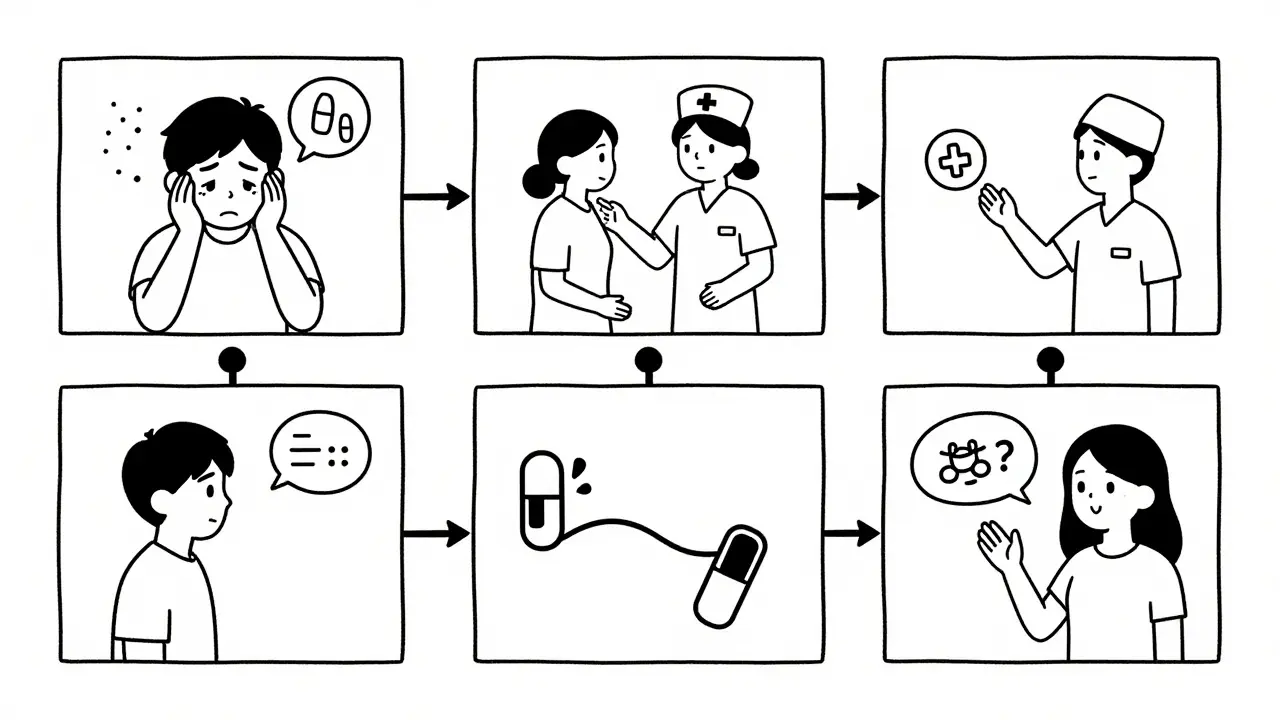
What Doesn’t Work - And Why
Not all "assessment" is helpful. Here are three common mistakes:- Using surveys as proof. A patient saying "I understand" doesn’t mean they can act. Surveys tell you perception, not performance.
- Only using written materials. Handouts are reference tools, not learning tools. You can’t assess understanding from a PDF.
- Assuming language = comprehension. Just because someone speaks fluent English doesn’t mean they grasp medical terms. Use plain language. Always.
And avoid norm-referenced thinking - comparing patients to each other. That’s not helpful. You don’t need to know who’s the best. You need to know who’s at risk.
The Future Is Continuous
The best programs aren’t ones that teach once. They’re ones that check in, adapt, and follow up. Some clinics now use simple apps that send a daily question: "How are you feeling today?" or "Did you take your meds?" - not to punish, but to connect.And AI is coming. Not to replace nurses, but to help. Imagine a system that notices a patient keeps skipping their blood pressure check on weekends - and automatically triggers a video message: "Many people find weekends tricky. Here’s how others handle it."
This isn’t sci-fi. It’s already happening. The global market for patient education tech is growing fast - projected to hit $21 billion by 2027. But the real win isn’t the tool. It’s the shift: from telling to listening. From testing to tracking. From memorization to mastery.
Generic understanding isn’t a goal you reach. It’s a journey you walk with someone. And the only way to know you’re on the right path is to look closely - every step of the way.
All Comments
Katie Putbrese March 24, 2026
Let me tell you something straight - if your patient can’t explain how to take their meds without a cheat sheet, you’re not teaching, you’re just talking. I’ve seen too many folks get discharged with a 10-page pamphlet and a smile. Then they show up in the ER because they thought "no salt" meant no ketchup. No wonder readmissions are through the roof. Teach-back isn’t optional. It’s the bare minimum.
And don’t get me started on surveys. "How confident do you feel?" That’s like asking someone if they can fly a plane after watching a YouTube video. Real understanding isn’t a feeling. It’s a skill. You test it. You watch. You make them do it. No shortcuts.
I run a clinic in rural Ohio. We started doing 3-question teach-backs at every visit. Six months later, our ER visits dropped 42%. Not because we’re geniuses. Because we stopped assuming. We started observing.
If you’re not measuring real behavior, you’re just doing theater. And patients deserve better than theater.
Jacob Hessler March 25, 2026
man i hate when docs act like they’re teachers but dont actually check if u get it. i had a nurse ask me "do you understand?" and i said yes cause i didnt wanna seem dumb. then i took my insulin wrong for 3 weeks. oops.
teach back is the only thing that works. just make em show you. no talkin. just do it. simple.
Amber Gray March 27, 2026
teach-back? lol. yeah right. 🤡
they dont even have time to do that. 10 min visits. 20 patients a day. you think they got time to play "explain your meds like im 5"? nah. they just hand out papers and move on.
also why are we even talking about this? its not like patients care. they just want the pill. period. 🤷♀️
Danielle Arnold March 28, 2026
Oh wow. A whole article about teaching patients to not die. Groundbreaking. Next you’ll tell us water is wet and gravity exists. Did you really need 2000 words to say "don’t just ask if they get it, make them show you"? I’m shocked. 😴
Jesse Hall March 29, 2026
This is so important. I’ve been doing this for 12 years in home health, and I can tell you - the magic isn’t in the tools. It’s in the patience. One lady I worked with thought her diabetes meds were like vitamins - she took them only when she felt "sick." We did role-play for 20 minutes. Showed her how skipping doses made her feel worse over time. She cried. Then she got it.
It’s not about being perfect. It’s about being present. You don’t need fancy tech. Just listen. And then ask: "What’s the one thing you’ll remember?"
And yeah - emojis are allowed here. 👏❤️
Donna Fogelsong March 29, 2026
They’re not teaching patients because they don’t want them to understand. The system is designed to keep people dependent. Pharma, hospitals, insurance - they profit from confusion. That’s why they push surveys and handouts. Because if you actually taught people to manage their own care? No more repeat visits. No more $$$.
And don’t even get me started on "AI tracking." That’s just the next layer of surveillance. They’re not helping you. They’re harvesting your data. You think they care if you take your meds? No. They care if you’re on their platform.
Wake up. This isn’t healthcare. It’s a subscription service.
Sean Bechtelheimer March 31, 2026
ai tracking? lol. they’re using your glucose readings to sell you ads for keto pills. i know this. i got targeted ads for a $300 "diabetes cure" after my last visit. they’re watching. always watching. 🤖👁️
also - who made you the boss of what patients should know? i bet half these "experts" never even had to manage a chronic illness themselves. talk about out of touch.
Seth Eugenne April 1, 2026
Thank you for writing this. I’ve been saying this for years. Patients aren’t dumb - they’re overwhelmed. And we keep treating them like they’re failing when really, we’re failing them.
I work with veterans. One guy thought his heart meds were for his back pain. We did a teach-back. He showed me how he was taking them with coffee. Turns out he thought caffeine made them work better. We laughed. Then we fixed it.
It’s not about perfection. It’s about connection. One conversation. One moment of real listening. That’s what changes outcomes.
And yes - I use emojis. Because sometimes, ❤️ says more than a 500-word report.
Namrata Goyal April 3, 2026
how quaint. you think american healthcare has any real interest in patient autonomy? please. in india, we’ve been doing community health worker models for decades - no tech, no rubrics, just trust and repetition. you westerners are so obsessed with your checklists and AI that you miss the human rhythm of care.
also - who even are you to define "generic understanding"? sounds like another neoliberal buzzword to justify more paperwork. 🤷♂️
Alex Arcilla April 4, 2026
yo namrata - chill. i get where you’re coming from, but this isn’t about american exceptionalism. it’s about making care work better for everyone. i’ve seen teach-back work in rural alabama, in mexican border clinics, even in homeless shelters. it’s not about culture. it’s about clarity.
and yeah - i’m a sarcastic dude, but i’m also a nurse. we don’t need more jargon. we need more doing. not talking. not surveying. just showing. and listening.
also - 🤝❤️
Brandon Shatley April 4, 2026
my wife’s a nurse. she told me about a guy who thought his inhaler was a vape. he’d been using it wrong for 4 years. didn’t know he was supposed to breathe in, not out. no one ever showed him. just handed him the thing and said "use as directed."
so yeah. teach-back. simple. cheap. works.
also - i typoed "inhaler" as "inhaler" twice. i’m tired. but this matters.