Managing Type 2 Diabetes often feels like navigating a maze of pills, injections, and confusing medical jargon. If you’ve been prescribed medication, you’ve likely heard the names metformin, sulfonylureas, or GLP-1 receptor agonists. But what do they actually do? More importantly, which one is right for your body, your lifestyle, and your budget?
The short answer is that there is no single "best" drug. Each class works differently, carries distinct risks, and suits different patient profiles. Metformin remains the gold standard starter therapy due to its safety and low cost. Sulfonylureas are powerful but carry higher risks of low blood sugar and weight gain. GLP-1 agonists offer superior heart protection and weight loss but come with significant costs and gastrointestinal side effects. Understanding these differences helps you have a more informed conversation with your doctor.
Metformin: The Trusted First-Line Defense
When most people start treating Type 2 Diabetes, their doctor prescribes Metformin. It has been around since the 1950s (synthesized in 1922) and was approved by the FDA in 1994. It’s not just old; it’s effective. Metformin belongs to a class called biguanides, and it is currently the only drug in this class available for general use.
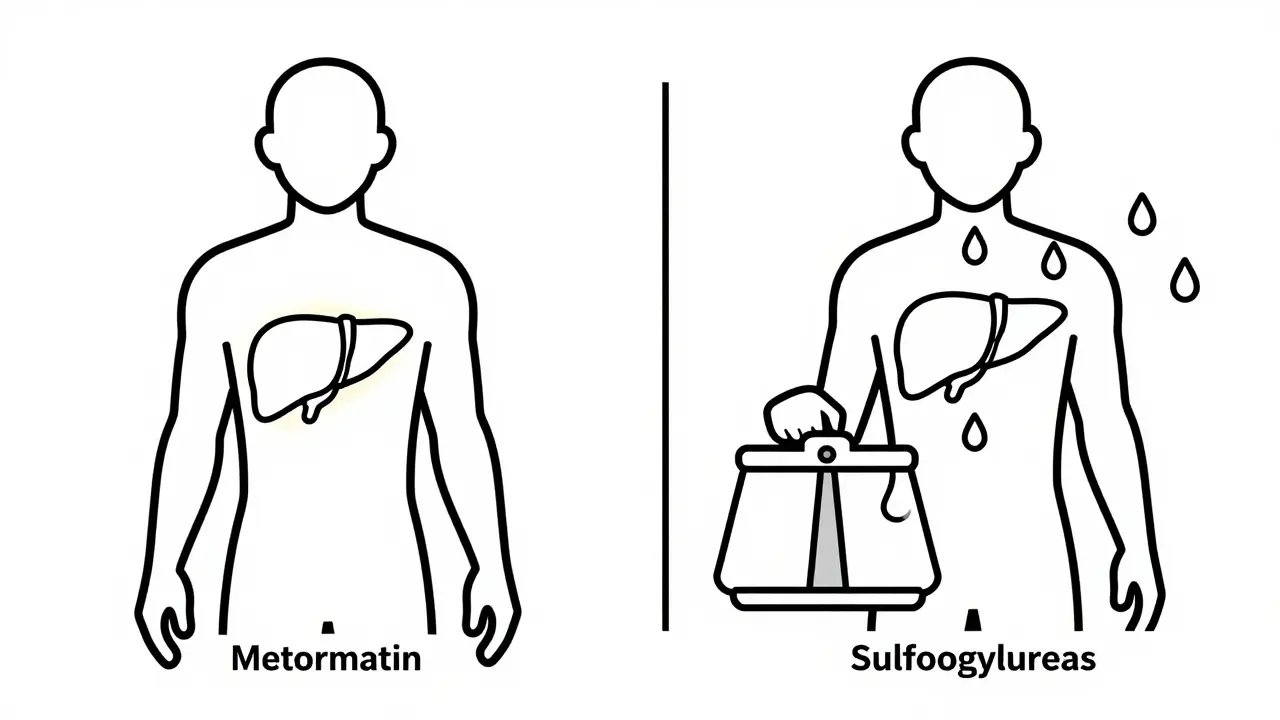
How does it work? Unlike some other drugs that force your pancreas to pump out more insulin, metformin takes a gentler approach. It primarily lowers glucose production in your liver and improves how your muscles respond to insulin. Think of it as making your body more efficient at using the energy it already has, rather than flooding the system with extra fuel.
- Efficacy: Typically reduces HbA1c by 1.0% to 2.0% at maximum doses (usually 2,000 mg per day).
- Weight Impact: Weight neutral. Some patients even lose 2-3 kg over time.
- Hypoglycemia Risk: Very low when used alone. It rarely causes dangerously low blood sugar.
- Cost: Extremely affordable. Generic versions cost between $4 and $10 per month in many regions.
The biggest hurdle with metformin is stomach upset. About 20-30% of users experience diarrhea, nausea, or bloating, especially when they first start taking it. Doctors usually recommend starting with a low dose and increasing it slowly over 2-4 weeks. Taking it with food or switching to an extended-release (ER) formulation can significantly reduce these issues. However, if you have severe kidney disease (eGFR below 45 mL/min/1.73m²), metformin may not be suitable due to a rare risk of lactic acidosis.
Sulfonylureas: Powerful but With Caveats
Sulfonylureas were the first oral diabetes medications ever developed, dating back to the 1940s. Drugs in this class include glipizide, glyburide, and glimepiride. They work by stimulating your pancreatic beta cells to release more insulin, regardless of your current blood sugar levels.
This mechanism makes them potent. They can lower HbA1c by 1.0% to 1.5%, similar to metformin. Because they are generic and inexpensive ($10-$30 per month), they remain a common choice, especially for patients who cannot afford newer therapies or who do not tolerate metformin.
However, the downside is significant. Because they push your pancreas to secrete insulin constantly, they carry a high risk of hypoglycemia (low blood sugar). Studies show that 15-30% of patients experience mild to moderate hypoglycemia annually, and 2-4% face severe episodes requiring emergency care. This risk increases if you skip meals, exercise heavily, or drink alcohol while on these drugs.
Another major drawback is weight gain. Sulfonylureas typically cause patients to gain 2-4 kg because insulin promotes fat storage. Over time, the effectiveness of sulfonylureas can also wane as pancreatic function declines, a phenomenon known as secondary failure. For these reasons, modern guidelines increasingly favor other options unless cost is the primary constraint.
GLP-1 Receptor Agonists: The Modern Powerhouses
GLP-1 receptor agonists represent the newest frontier in diabetes care. Originally discovered through research on incretin hormones in the 1960s, the first drug in this class, exenatide, was approved in 2005. Today, popular options include liraglutide (Victoza), semaglutide (Ozempic, Rybelsus), and dulaglutide (Trulicity).
These drugs mimic a natural hormone called GLP-1, which is released after you eat. They slow down digestion, signal fullness to your brain, and stimulate insulin release only when blood sugar is high. This "glucose-dependent" action means they rarely cause hypoglycemia when used without sulfonylureas or insulin.
- Efficacy: Reduces HbA1c by 0.8% to 1.5%, often outperforming older drugs in long-term control.
- Weight Loss: Significant. Patients typically lose 3-6 kg, with some losing much more.
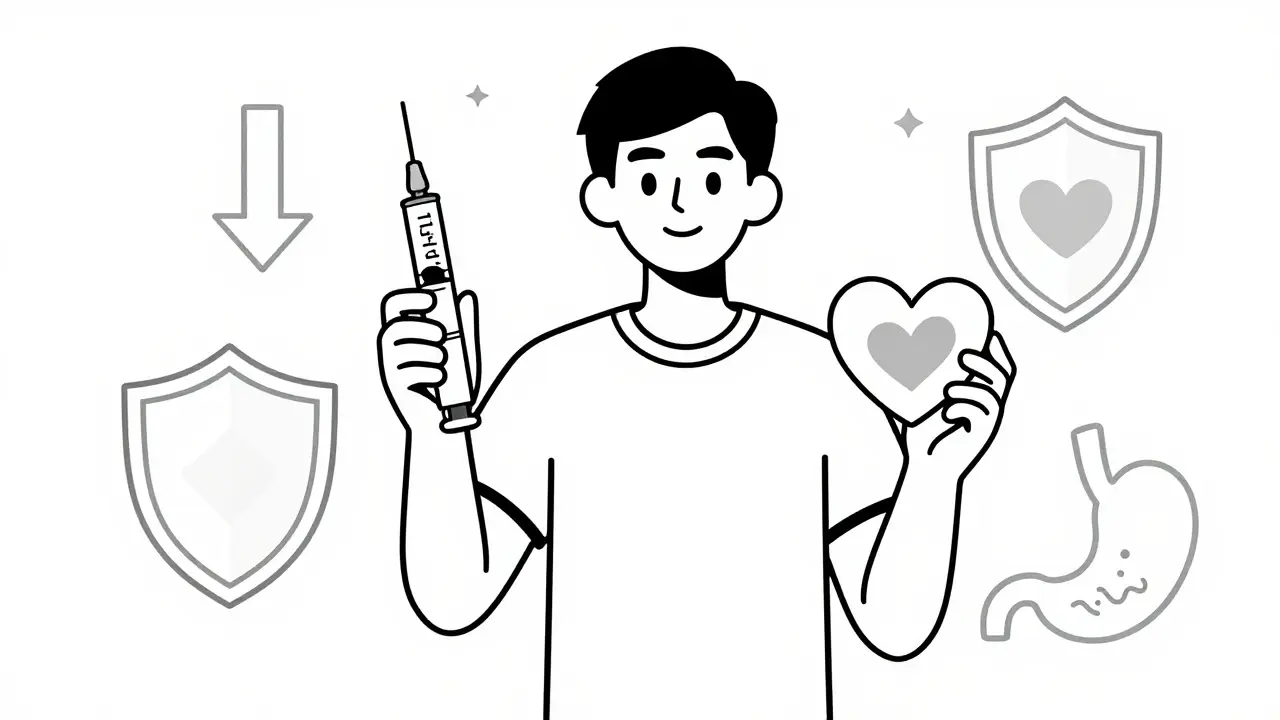
- Cardiovascular Benefits: Proven to reduce the risk of heart attack and stroke. The LEADER trial showed a 13% reduction in major adverse cardiovascular events with liraglutide.
- Administration: Mostly weekly injections, though oral semaglutide (Rybelsus) offers a pill option.
The trade-off is cost and side effects. GLP-1 agonists can cost $700-$900 per month without insurance coverage. Gastrointestinal issues like nausea, vomiting, and diarrhea affect 20-40% of users, particularly during the initial dose escalation phase. Most people adapt within 4-12 weeks, but for some, the side effects are intolerable. Additionally, they are contraindicated in patients with a personal or family history of medullary thyroid carcinoma due to potential thyroid C-cell tumor risks observed in animal studies.
Head-to-Head Comparison
| Feature | Metformin | Sulfonylureas | GLP-1 Agonists |
|---|---|---|---|
| HbA1c Reduction | 1.0 - 2.0% | 1.0 - 1.5% | 0.8 - 1.5% |
| Weight Effect | Neutral / Mild Loss | Gain (2-4 kg) | Loss (3-6+ kg) |
| Hypoglycemia Risk | Very Low | High | Low |
| Cardiovascular Benefit | Neutral | Neutral / Potential Harm | Significant Protection |
| Monthly Cost (Approx.) | $4 - $10 | $10 - $30 | $700 - $900 (without insurance) |
| Primary Side Effects | GI Upset | Hypoglycemia, Weight Gain | Nausea, Vomiting |
Which One Should You Choose?
Your choice depends on your specific health profile, not just your blood sugar numbers. Here is a simple decision framework based on current clinical guidelines from the American Diabetes Association (ADA) and the American College of Physicians (ACP).
Start with Metformin if: You are newly diagnosed, have no significant heart disease, and want a safe, low-cost foundation. It is the preferred initial pharmacologic agent for most people. If you have chronic kidney disease, ensure your eGFR is above 45 before starting full doses.
Consider GLP-1 Agonists if: You have established cardiovascular disease, heart failure, or chronic kidney disease. The ADA strongly recommends these drugs for such patients regardless of whether they are already on metformin. They are also ideal if weight loss is a primary goal and you can manage the higher cost and potential nausea.
Look at Sulfonylureas if: Cost is your absolute limiting factor and you cannot access GLP-1 agonists or DPP-4 inhibitors. They are effective but require strict monitoring for low blood sugar. Avoid them if you have an irregular eating schedule or a history of severe hypoglycemia.
It is also worth noting that combination therapy is common. Many patients take metformin alongside a GLP-1 agonist for maximum benefit. Sulfonylureas are less frequently combined with GLP-1s due to the increased hypoglycemia risk.
Frequently Asked Questions
Can I switch from Metformin to a GLP-1 agonist?
Yes, many patients transition or combine these drugs. If metformin isn't controlling your blood sugar enough, or if you need heart protection, your doctor may add a GLP-1 agonist. In some cases, they might replace metformin entirely, though keeping both is often more effective. Always consult your healthcare provider before changing medications.
Why are GLP-1 agonists so expensive compared to Metformin?
GLP-1 agonists are biologic drugs, meaning they are made from living cells, which makes manufacturing complex and costly. They are also relatively new, with patent protections still in place for many brands. Metformin is a small-molecule chemical drug that has been off-patent for decades, allowing generic competition to drive prices down significantly.
Do GLP-1 agonists really help with weight loss?
Yes. Clinical trials show average weight loss of 3-6 kg, with some patients losing significantly more. This happens because GLP-1 agonists slow gastric emptying and act on brain centers to reduce appetite. This is a key advantage over sulfonylureas, which typically cause weight gain.
What are the signs of hypoglycemia with Sulfonylureas?
Symptoms include shakiness, sweating, rapid heartbeat, confusion, dizziness, and hunger. Severe hypoglycemia can lead to seizures or loss of consciousness. If you experience these symptoms, check your blood sugar immediately and consume fast-acting carbohydrates like glucose tablets or fruit juice. Regular monitoring is crucial when taking sulfonylureas.
Is oral Semaglutide (Rybelsus) as effective as injectable GLP-1s?
Oral semaglutide is highly effective, offering similar HbA1c reductions to many injectable options. It requires strict adherence to dosing instructions (taken on an empty stomach with a small sip of water, waiting 30 minutes before eating). While injection adherence rates are generally higher, oral semaglutide provides a convenient alternative for those who fear needles.