Living with Obsessive-Compulsive Disorder (OCD) often feels like being trapped in a loop of intrusive thoughts and repetitive behaviors that you can’t seem to switch off. While therapy is a cornerstone of treatment, medication plays a critical role for many people in quieting the noise and reducing the intensity of symptoms. The two primary pharmacological pillars for treating OCD are Selective Serotonin Reuptake Inhibitors (SSRIs), which are antidepressants that increase serotonin levels in the brain to regulate mood and anxiety and Clomipramine, a tricyclic antidepressant specifically approved for OCD treatment. Understanding how these medications work, how they differ, and exactly how they should be dosed is essential for anyone navigating this path.
Key Takeaways
- First-Line Treatment: SSRIs are the standard first choice due to better tolerability, though they require higher doses than those used for depression.
- Second-Line Option: Clomipramine is highly effective but carries more side effects; it is typically reserved for cases where SSRIs fail or as an augmentation strategy.
- Dosing Patience: OCD medication takes longer to work. A full trial requires 8-12 weeks at therapeutic doses before judging effectiveness.
- Safety Monitoring: Clomipramine requires careful monitoring of heart rhythm (QTc interval) and blood levels, especially at higher doses.
- Side Effect Management: Initial anxiety spikes are common with both classes but usually subside within 1-2 weeks if managed with slow titration.
Why SSRIs Are the First Choice for OCD
When clinicians prescribe medication for OCD, they almost always start with an SSRI. This isn't just because SSRIs are popular for depression; it’s because decades of clinical trials have proven their efficacy for obsessive-compulsive symptoms while maintaining a manageable safety profile. The American Psychiatric Association (APA) guidelines from 2020 firmly establish SSRIs as the first-line pharmacological treatment.
The most commonly prescribed SSRIs for OCD include Sertraline (Zoloft), Fluoxetine (Prozac), Fluvoxamine (Luvox), and Paroxetine (Paxil). Among these, sertraline accounts for roughly 32% of first-line prescriptions, followed closely by fluvoxamine at 28%. These medications work by blocking the reabsorption of serotonin, a neurotransmitter that helps regulate mood, anxiety, and impulse control. By keeping more serotonin available in the synaptic cleft, SSRIs help dampen the hyperactive neural circuits associated with OCD.
However, there is a crucial catch: the dose required for OCD is significantly higher than the dose used for major depressive disorder. If you take 50 mg of sertraline for depression, you might need 200 mg or even 300 mg to see meaningful improvement in OCD symptoms. This distinction is vital because many patients give up too early, assuming the medication “doesn’t work” when they haven’t yet reached the therapeutic threshold specific to their condition.
Understanding Clomipramine: The Potent Alternative
If SSRIs don’t provide enough relief, the next step in the clinical ladder is often clomipramine. Approved by the FDA in 1989, clomipramine was actually the first medication ever approved specifically for OCD. It belongs to the tricyclic antidepressant (TCA) class, which is older and chemically distinct from SSRIs. Unlike SSRIs, which primarily target serotonin, clomipramine affects multiple neurotransmitters, including serotonin, norepinephrine, and histamine.
Clinical data shows that clomipramine is incredibly potent. In head-to-head trials with adults, its efficacy is roughly equal to that of top-tier SSRIs like fluvoxamine and paroxetine. In pediatric populations, some meta-analyses suggest clomipramine may even outperform certain SSRIs, improving symptom scores by 37%. However, potency comes with a price. Because clomipramine blocks more receptors than SSRIs, it causes a wider range of side effects, including dry mouth, constipation, weight gain, sedation, and cardiovascular concerns like QTc interval prolongation.
Due to this side effect burden, clomipramine is generally reserved as a second-line option. Doctors typically recommend trying two adequate SSRI trials before moving to clomipramine. Alternatively, it is increasingly used as an augmentation agent-added at low doses (25-75 mg/day) to an existing SSRI regimen-to boost effectiveness in partial responders.
Dosing Protocols: Precision Matters
Getting the dose right is arguably the most important factor in successful OCD pharmacotherapy. Under-dosing is the number one reason treatment fails. Below is a breakdown of how these medications are typically titrated.
| Medication Class | Starting Dose | Therapeutic Target Range | Maximum Daily Dose | Titration Speed |
|---|---|---|---|---|
| SSRIs (e.g., Sertraline) | 25-50 mg/day | 150-300 mg/day | 300 mg/day (Sertraline) | Increase by 25-50 mg weekly |
| SSRIs (e.g., Fluoxetine) | 10-20 mg/day | 40-80 mg/day | 80 mg/day | Increase by 10-20 mg weekly |
| Clomipramine (Adults) | 25 mg/day | 100-250 mg/day | 250 mg/day | Increase by 25 mg every 4-7 days |
| Clomipramine (Pediatrics 10+) | 1-3 mg/kg/day | Up to 200-250 mg/day | 200-250 mg/day | Slow titration based on weight |
For SSRIs, clinicians usually start low to minimize initial side effects. For example, a patient might begin sertraline at 25 mg daily. Over the course of 4-6 weeks, the dose is increased by 25-50 mg increments until reaching the therapeutic window. The Stanford OCD Center notes that for fluvoxamine, increases happen every 5-7 days by 50 mg steps, aiming for 300 mg/day if tolerated.
Clomipramine requires even more caution. The standard protocol starts at 25 mg daily. Because of its long half-life (19-37 hours) and significant sedative properties, doctors often advise taking the larger portion of the dose at bedtime. Titration happens slowly, increasing by 25 mg every 4-7 days. Most patients do not see full benefits until they reach at least 100 mg daily, with optimal results often found between 150-250 mg. Elderly patients start much lower, around 10 mg, and rarely exceed 50 mg due to heightened sensitivity to anticholinergic effects.
Timeline for Results: What to Expect
Patience is non-negotiable in OCD medication management. Unlike stimulants for ADHD, which work within hours, psychotropic medications for OCD take weeks to build up in your system and alter neural pathways.
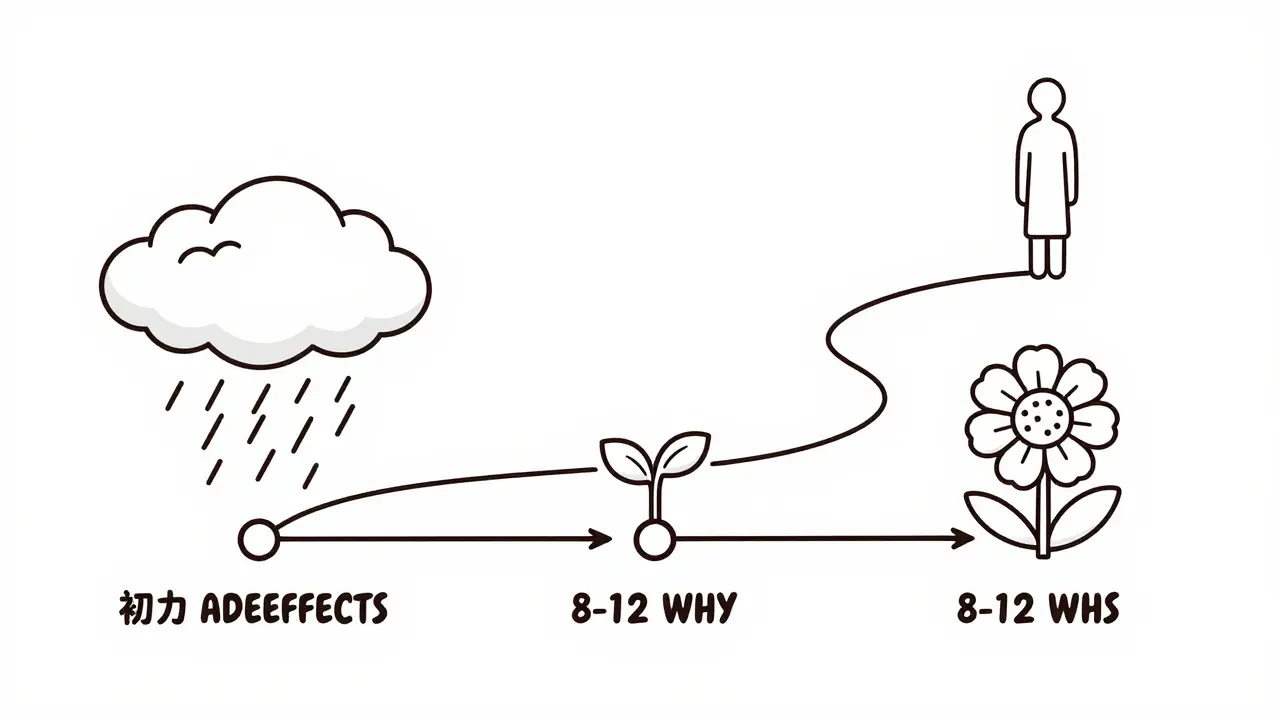
- Weeks 1-2: You may experience side effects like nausea, jitteriness, or increased anxiety before any benefit appears. This is known as the “activation syndrome.” Studies show that 37% of patients stop medication during this phase due to discomfort, but 89% of those who persist see this anxiety resolve.
- Weeks 3-6: Early signs of improvement may emerge, such as slightly less intense obsessions or easier resistance to compulsions. However, this is not yet the full effect.
- Weeks 8-12: This is the critical window. Clinical guidelines state that an adequate trial requires at least 8-12 weeks at a moderate-to-high dose. Only after this period can a clinician determine if the medication is truly ineffective.
To measure progress objectively, clinicians use tools like the Children’s Yale-Brown Obsessive Compulsive Scale (CY-BOCS) or the adult Y-BOCS. A reduction of 25-35% in score is considered clinically significant. If you haven’t seen at least a 25% improvement after 12 weeks at the maximum tolerated dose, it’s time to discuss switching medications or adding augmentation strategies.
Managing Side Effects and Safety
Side effects are the biggest hurdle in OCD treatment. With SSRIs, common complaints include gastrointestinal upset, sexual dysfunction, and insomnia. These often improve over time, but sexual side effects can persist. Switching to a different SSRI (e.g., from paroxetine to fluoxetine) sometimes resolves these issues.
Clomipramine’s side effect profile is more challenging. Anticholinergic effects like dry mouth, blurred vision, and constipation are frequent. One patient forum survey noted that users often needed 5-6 glasses of water hourly to combat dry mouth. Weight gain of 15-25 pounds within six months is also reported at doses above 100 mg. More seriously, clomipramine can affect heart rhythm. Clinicians monitor the QTc interval via electrocardiogram (ECG), especially when doses exceed 150 mg/day. Blood level monitoring is also recommended, with therapeutic plasma levels typically ranging from 220-350 ng/mL for clomipramine and 379 ng/mL for its active metabolite, desmethylclomipramine.
If side effects become unmanageable, do not stop abruptly. Withdrawal from SSRIs and TCAs can cause severe rebound anxiety, dizziness, and “brain zaps.” Always taper under medical supervision.
Future Directions and Augmentation Strategies
Medicine for OCD is evolving. While SSRIs and clomipramine remain the gold standards, new approaches are emerging. Augmentation strategies-adding a second medication to boost the primary drug-are becoming more common. Combining an SSRI with low-dose clomipramine has shown a 35-40% response rate in patients who only partially responded to SSRIs alone.
Research into novel mechanisms is also promising. In 2023, the FDA granted Breakthrough Therapy designation to SEP-363856, a serotonin modulator showing high response rates in treatment-resistant cases. Additionally, clinical trials are exploring psilocybin-assisted therapy combined with SSRIs, with preliminary data suggesting remission rates up to 60% at six months. Transdermal delivery systems for clomipramine are also in development, aiming to reduce peak plasma concentrations and thereby minimize side effects while maintaining efficacy.
How long does it take for OCD medication to work?
It typically takes 8 to 12 weeks at a therapeutic dose to see full benefits. While some mild improvements may occur in the first few weeks, a complete clinical trial requires staying at the target dose for at least two months to accurately assess efficacy.
Are SSRIs safer than clomipramine?
Yes, generally. SSRIs have a more favorable side effect profile and fewer serious risks, such as cardiac arrhythmias. Clomipramine is effective but carries higher risks of anticholinergic side effects, sedation, and heart rhythm changes, requiring more monitoring.
Can I take clomipramine with an SSRI?
This combination is used as an augmentation strategy but must be done with extreme caution. Both medications increase serotonin levels, raising the risk of serotonin syndrome. Doctors will carefully monitor doses and watch for signs of toxicity.
What if my OCD doesn’t improve with medication?
If two adequate SSRI trials fail, clinicians may switch to clomipramine or add augmentation agents like antipsychotics. Cognitive Behavioral Therapy (CBT), specifically Exposure and Response Prevention (ERP), is also highly effective when combined with medication.
Do I need blood tests for OCD medication?
Routine blood tests aren’t always required for SSRIs, but they are recommended for clomipramine. Therapeutic drug monitoring helps ensure plasma levels are in the effective range (220-350 ng/mL) and checks for potential toxicity or interactions.