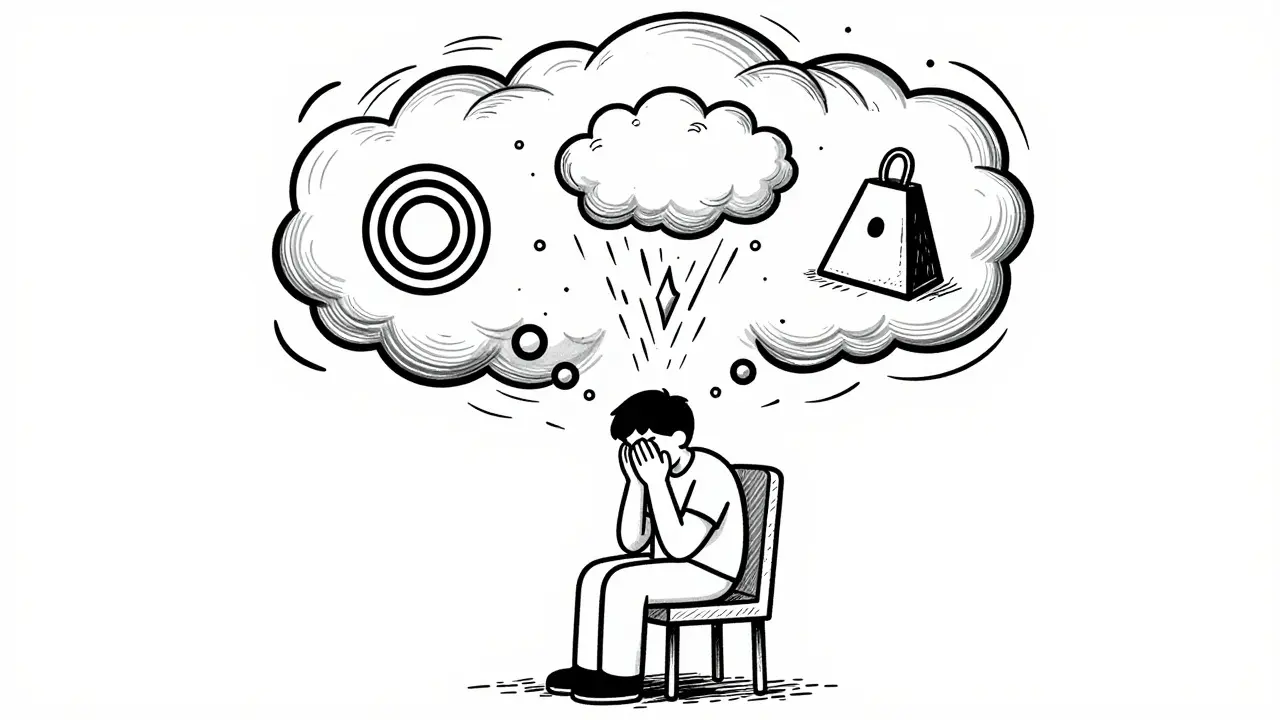
Have you ever noticed that your worry about pain feels just as heavy as the pain itself? You might be dealing with pain catastrophizing, which is an exaggerated negative mental set brought to bear during actual or anticipated painful experience. It’s not just "being dramatic." It is a specific psychological pattern where your brain amplifies the threat of pain, making it feel unmanageable. If you live with chronic discomfort, this cycle can trap you in distress long before the physical sensation even peaks.
The good news is that you don’t have to stay stuck in this loop. Research shows that Cognitive Behavioral Therapy (CBT) is the most effective targeted treatment for reducing pain catastrophizing. By using specific tools to separate your thoughts from your physical sensations, you can lower your distress levels and regain control over your daily life. Let’s look at how these techniques work and how you can start applying them today.
Understanding Pain Catastrophizing and Its Three Dimensions
To fix the problem, we first need to name it correctly. Pain catastrophizing isn't just feeling sad because you hurt. It is a distinct cognitive process defined by three core dimensions, originally identified by researchers like Dr. Michael Sullivan in the 1990s. Understanding these helps you spot them when they start creeping in.
- Rumination: This is when you repetitively focus on your pain symptoms. You might find yourself constantly scanning your body for new twinges or replaying past moments of agony in your head. It’s like a broken record that won’t skip.
- Magnification: Here, you exaggerate the threat value of the pain stimulus. A mild ache suddenly feels like a sign of impending disaster or permanent damage. Your brain turns up the volume on the danger signal.
- Helplessness: This is the feeling that you are completely unable to cope with the pain. You believe nothing you do will help, so you stop trying to manage it effectively.
When these three combine, they create a feedback loop. Neuroimaging studies show that catastrophizing thoughts increase pain perception by activating multi-sensory integrative brain regions, including the dorsolateral and medial prefrontal cortices. In simple terms, your worry literally lights up more areas of your brain associated with suffering, making the pain feel realer and sharper than it physically is.
Why CBT Is the Gold Standard for Breaking the Cycle
You might wonder why talk therapy works for physical pain. The answer lies in how our brains process signals. A systematic review published by the International Association for the Study of Pain (IASP) in 2023 found that CBT had significantly larger effect sizes compared to other treatments when targeting catastrophizing specifically. While multimodal treatments combining CBT with exercise showed strong results, CBT alone was the only effective treatment in active control group analyses for reducing catastrophic thinking.
Dr. Laura Payne from Harvard Medical School explains that CBT works by helping patients recognize how their catastrophic thoughts actually amplify their pain experience. It doesn’t erase the nerve signals, but it changes how your brain interprets them. Instead of seeing pain as a threat to your survival, you learn to see it as an uncomfortable sensation that you can tolerate. This shift reduces the emotional distress that often causes more harm than the physical injury itself.
Practical CBT Tools You Can Use Right Now
You don’t need to wait for a therapist to start practicing these skills. These are evidence-based strategies derived from clinical protocols that you can apply immediately.
1. Self-Monitoring and Labeling
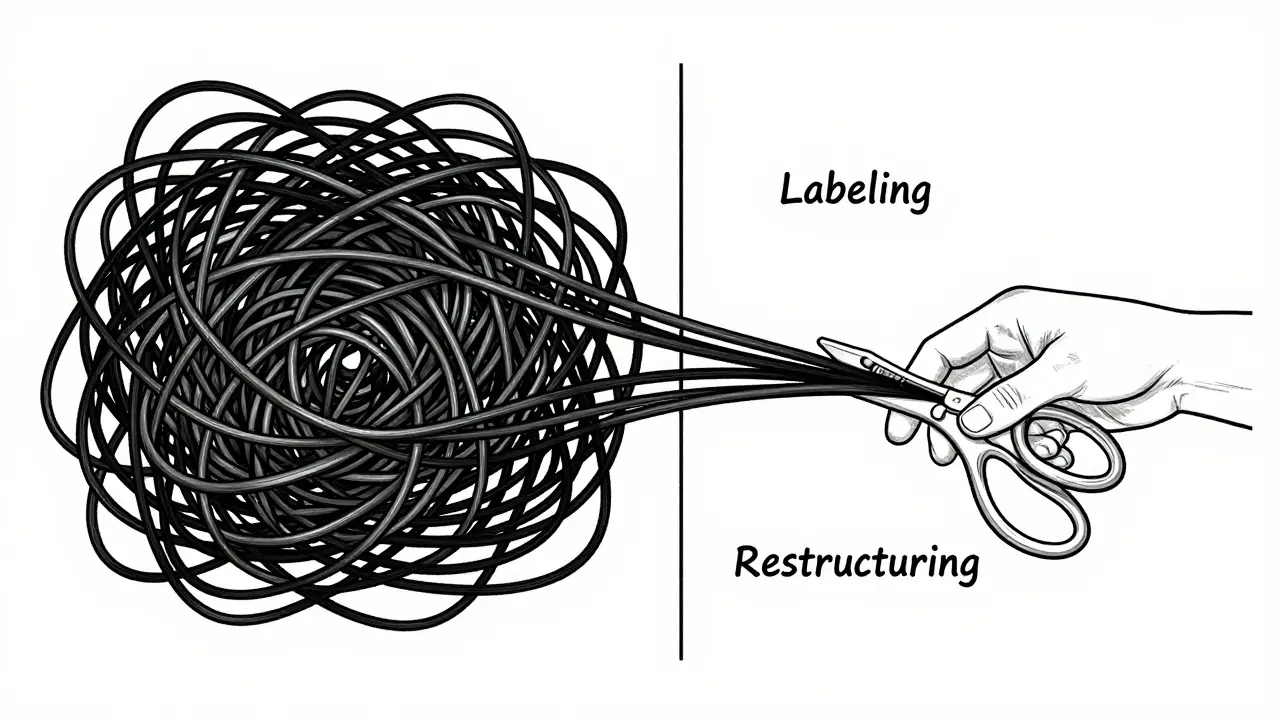
Self-monitoring is a basic element of CBT that involves labeling your experiences into psychosocial aspects. When you feel a spike in pain, pause and ask yourself: "Is this physical pain, or is this my mind worrying about the pain?" Try to categorize your experience. For example, if you think, "This pain will never end," label that thought as catastrophic cognition, not a fact. Studies using network analysis have shown that repeatedly categorizing pain into cognitive and somatic aspects helps "unravel" the tangled mess of distress.
2. Cognitive Restructuring
This technique helps you examine and "unhook" from negative thinking. Identify a negative core belief, such as "I am helpless." Then, challenge it with evidence. Have there been times when you managed to get through a painful day? Write down coping thoughts that are realistic, not overly optimistic. Instead of "I feel great," try "This hurts, but I have handled worse before, and I can take one small step right now."
3. Behavioral Activation
Catastrophizing often leads to avoidance. You stop doing housework or social activities because you fear pain. This avoidance actually increases muscle tension and isolation, which worsens the pain. Behavioral activation encourages you to engage in valued activities despite the pain. Start small. If cleaning the kitchen triggers anxiety, commit to wiping just one counter. Success builds confidence, which directly counters the dimension of helplessness.
Measuring Your Progress: The Pain Catastrophizing Scale
You can’t manage what you don’t measure. The Pain Catastrophizing Scale (PCS) is a standardized 13-item assessment tool used to quantify the severity of catastrophizing thoughts. Developed by Sullivan et al., it uses a 5-point Likert scale (0-4). Total scores range from 0 to 52. A score of 30 or higher indicates clinically significant catastrophizing.
Taking this scale at the beginning of your journey gives you a baseline. Re-taking it after 8-12 weeks of practicing CBT tools provides objective data on your progress. Many patients report that while their physical pain intensity hasn’t dropped dramatically, their PCS score has fallen significantly, meaning they are suffering less mentally. This dissociation between physical sensation and emotional distress is a key goal of treatment.
| Approach | Primary Focus | Efficacy for Catastrophizing | Best For |
|---|---|---|---|
| Cognitive Behavioral Therapy (CBT) | Changing thought patterns and behaviors | High (SMD = -0.84) | Patients with high rumination and helplessness |
| Acceptance and Commitment Therapy (ACT) | Accepting pain without judgment | Moderate | Patients resistant to changing thoughts |
| Multimodal (CBT + Exercise) | Physical and psychological integration | Very High (SMD = -1.0) | Comprehensive long-term management |
| Pharmacology Alone | Symptom suppression | Low/None | Acute flare-ups only |
Navigating Challenges and Expectations
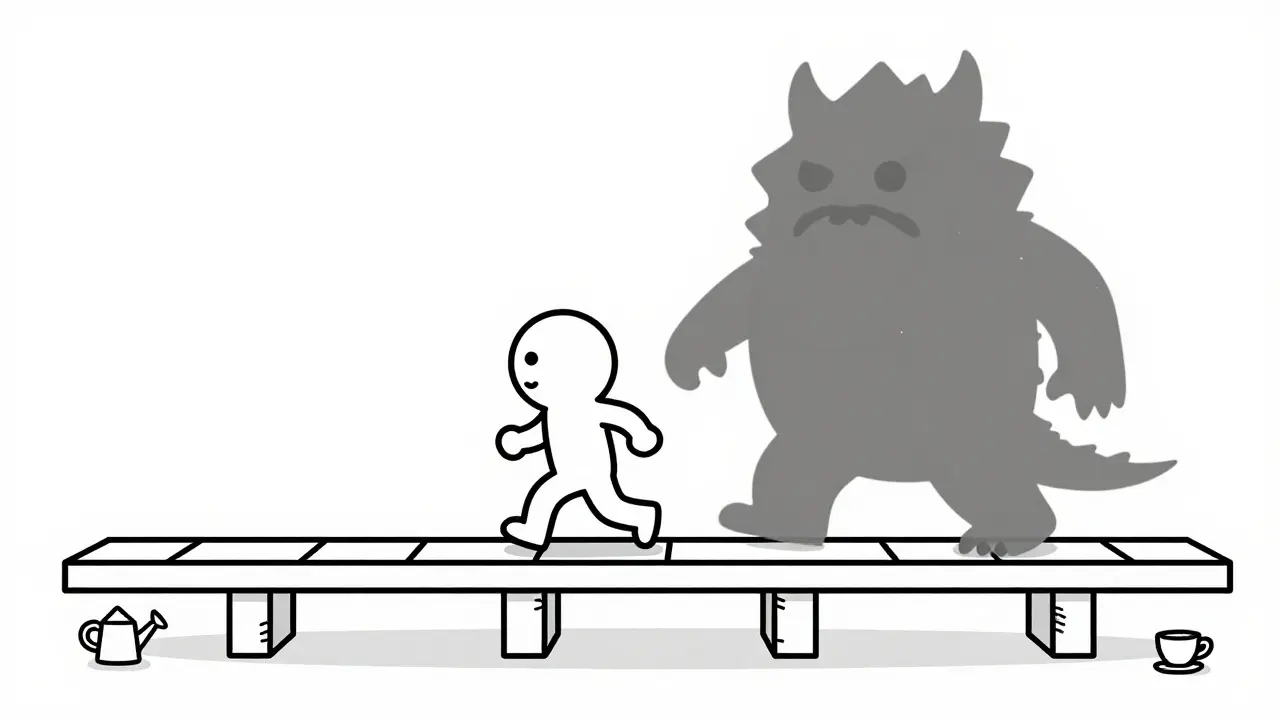
Let’s be honest: doing this work is hard. A common challenge reported by users is the cognitive load required during high-pain episodes. One patient noted, "When my pain is at 8/10, I simply don't have the mental energy to implement CBT techniques." This is normal. On bad days, don’t try to do full cognitive restructuring. Just use the simplest tool: labeling. Say to yourself, "This is a high-pain day, and my brain is worried." That’s enough.
Success takes time. The learning curve requires approximately 3-4 weeks to reliably identify catastrophic thought patterns, with mastery taking 6-8 weeks. Don’t expect immediate relief. However, data from Veterans Affairs healthcare systems shows that 78% of users report significant reduction in pain-related distress after 8-12 weeks of consistent practice. Dropout rates exist, often due to perceived lack of immediate results, so patience is your most important tool.
Digital Tools and Future Directions
Technology is making these tools more accessible. There has been a 200% increase in digital CBT platforms targeting pain catastrophizing since 2020. Apps like Curable and PainScale offer guided exercises that fit into your pocket. The Department of Veterans Affairs is rolling out CBT-based Pain Management Dashboard tools across medical centers, showing promising reductions in PCS scores. Look for apps that offer "micro-interventions"-short, 2-minute exercises designed for moments of acute catastrophizing. These bite-sized practices are easier to maintain than hour-long sessions.
What is the difference between pain catastrophizing and normal worry?
Normal worry is usually proportional to the situation and temporary. Pain catastrophizing is an exaggerated, repetitive, and intense mental set that persists even when there is no immediate threat. It involves three specific components: rumination (obsessive focus), magnification (exaggerating threat), and helplessness (feeling unable to cope). It significantly predicts poor pain outcomes and increased disability.
How long does it take for CBT to reduce pain catastrophizing?
Most structured CBT protocols last 8-12 weeks. Patients typically spend the first 3-4 weeks learning to identify catastrophic thoughts. Significant reductions in distress are often reported after 8 weeks of consistent practice. Mastery of techniques like cognitive restructuring may take 6-8 weeks to become automatic.
Can I do CBT for pain catastrophizing on my own?
Yes, self-help resources and digital apps can be effective, especially for mild to moderate cases. However, working with a trained therapist provides personalized guidance and accountability. Success rates are generally higher with professional support, particularly if you have comorbid conditions like depression or anxiety.
What should I do if I’m too much in pain to use CBT techniques?
On high-pain days, simplify your approach. Avoid complex cognitive restructuring. Instead, use minimal effort techniques like deep breathing or simple labeling (e.g., "I notice I am having a thought about pain"). Accept that some days are harder than others, and prioritize rest. Consistency over time matters more than perfection on any single day.
Is pain catastrophizing a sign of weakness?
Absolutely not. Pain catastrophizing is a learned psychological response, not a character flaw. It is influenced by biology, past experiences, and environmental factors. Recognizing it is a strength because it allows you to address the root cause of your distress rather than just the physical symptom.
All Comments
Tanya KLIMCHUK Klimchuk May 22, 2026
Stop letting your brain bully you into thinking every twinge is a disaster. You have the tools right here to dismantle that catastrophic thinking, so use them. It is not about ignoring pain, it is about refusing to let fear dictate your life. I see too many people sitting on the couch waiting for permission to move, and that is exactly how they lose their strength. Get up, do one small thing, and prove to yourself that you are not helpless. The science is clear, CBT works, so stop making excuses and start doing the work.
Anthony Red May 23, 2026
Man, this hits home hard. I’ve been stuck in that loop for years where my back hurts and then my head starts screaming that I’m broken forever. Just reading about the three dimensions-rumination, magnification, helplessness-made me realize how much of my suffering is actually mental noise. I’m gonna try labeling the thoughts next time I feel that spike. Thanks for breaking it down simply.
Yuvraj Singh May 25, 2026
This is a very comprehensive overview of how cognitive patterns influence physical perception. In my experience working with patients who suffer from chronic conditions, the distinction between somatic pain and catastrophizing anxiety is often blurred for them. The Pain Catastrophizing Scale is indeed a valuable metric because it provides an objective baseline that patients can track over time. Many individuals find relief simply by externalizing the thought process rather than internalizing it as a truth.
Dana Ellington May 25, 2026
Oh my gosh this is exactly what i needed to read today!! I have been feeling so defeated lately like nothing helps and its just gonna get worse forever but seeing that chart made me realize im not alone in this struggle. I am going to download one of those apps mentioned and try the micro interventions because honestly i cant even focus on long sessions when i hurt so bad. Thank you for sharing this it gave me a little spark of hope again 💖
Kris Wong May 26, 2026
They want you to believe it’s all in your head so they don’t have to treat the real cause 🤔 Big Pharma loves keeping you dependent on pills while telling you to ‘think positive.’ Have you noticed how these ‘digital health’ apps collect your data? They are mapping our psychological vulnerabilities to sell us more subscriptions. The ‘science’ is funded by the same corporations that profit from your misery. Wake up! 👁️🗨️
Jeremiah Cassandra May 26, 2026
Ah yes, the magic of ‘thinking differently’ to cure nerve damage. Because clearly, if you just think hard enough, your spine will regenerate itself. 😂 Look, I’m not saying CBT doesn’t help some people manage their distress, but pretending it fixes the underlying biological issue is delusional. If your knee is shattered, no amount of cognitive restructuring is going to knit the bone back together. Context matters, folks.
amit kumar May 27, 2026
Nice post! 👍 I think everyone should know about this. Pain is not just physical, it is also mental. We need to take care of our mind too. Good information for everyone suffering from pain. Keep sharing such useful tips! 🙏✨
Glen Speck May 29, 2026
the idea that we can separate sensation from interpretation is profound yet difficult to practice in the moment. we live in a culture that demands immediate relief which makes the slow burn of behavioral activation feel like failure. but perhaps the discomfort is the point. we must sit with the uncertainty without rushing to label it as danger. it requires a kind of radical acceptance that most of us resist at first
Justina Ingram May 29, 2026
i hate when people say its 'just' in your head bc like yeah it hurts physically but the mental part is exhausting af. i tried the labeling thing once and it felt kinda weird but maybe i need to keep trying. why does my brain have to be so loud tho?? ughhh
victoria catharinaa May 31, 2026
I really appreciate this breakdown. It helps to know that I am not crazy for feeling overwhelmed. The part about helplessness resonated with me so much because I stopped trying to do things because I was scared it would make it worse. I am going to try wiping one counter like you said. Small steps are okay.
Sam Mackellar June 1, 2026
It is important to acknowledge that while Cognitive Behavioral Therapy is effective for many, it is not a panacea for all forms of chronic pain. The individual must approach these techniques with patience and self-compassion. Forcing oneself to engage in activities before being ready can sometimes lead to setbacks. One should proceed with caution and ideally under the guidance of a qualified professional to ensure safety and efficacy.
Danny S June 1, 2026
The government wants you docile and compliant. They teach you to ignore your body’s warning signals so you can go back to work and produce. This ‘CBT’ nonsense is a tool of social control designed to suppress natural human responses to injury. Do not let them gaslight you into thinking your pain is imaginary just because they cannot fix it with their expensive drugs. Stay vigilant. :)
Kathryn Byrd June 3, 2026
I have observed similar patterns in cross-cultural studies regarding pain expression. While the physiological mechanisms remain constant, the cognitive framing varies significantly depending on societal norms around suffering. It is interesting to note how Western medicine prioritizes the elimination of pain, whereas other traditions may view endurance as a virtue. This article focuses heavily on the American model of intervention.
Desirea Gaona June 4, 2026
It is imperative that we recognize the multifaceted nature of pain management. The integration of psychological frameworks with physical rehabilitation offers a holistic approach that addresses both the symptom and the perception. Individuals are encouraged to seek professional support when navigating these complex emotional landscapes. Your well-being is paramount, and taking proactive steps towards understanding your cognitive patterns is a commendable endeavor.
Javier Arauz June 5, 2026
This is weak garbage. Real men deal with pain without whining about it. You need to toughen up and stop acting like victims. Our ancestors didn’t have fancy therapy apps, they just worked through it. This modern sensitivity is destroying our workforce productivity. Get off the couch and earn your keep instead of looking for shortcuts.