When your child is sick, you want relief fast. You go to the pharmacy, get the prescription filled, and usually, you get a generic version of the drug. It’s cheaper, it has the same active ingredient, and it’s supposed to be just as good. But when it comes to kids, that assumption can be risky. Pediatric safety regarding generic drugs involves more than just matching the active chemical; it requires understanding how a child's developing body processes medications differently than an adult's.
The reality is that while generic drugs are safe for most adults, they present unique challenges for children. From immature organ function to differences in inactive ingredients like preservatives and dyes, small changes in formulation can lead to significant side effects or dosing errors in young patients. Understanding these special considerations is crucial for parents, caregivers, and healthcare providers to ensure that treatment helps rather than harms.
Why Children Are Not Small Adults
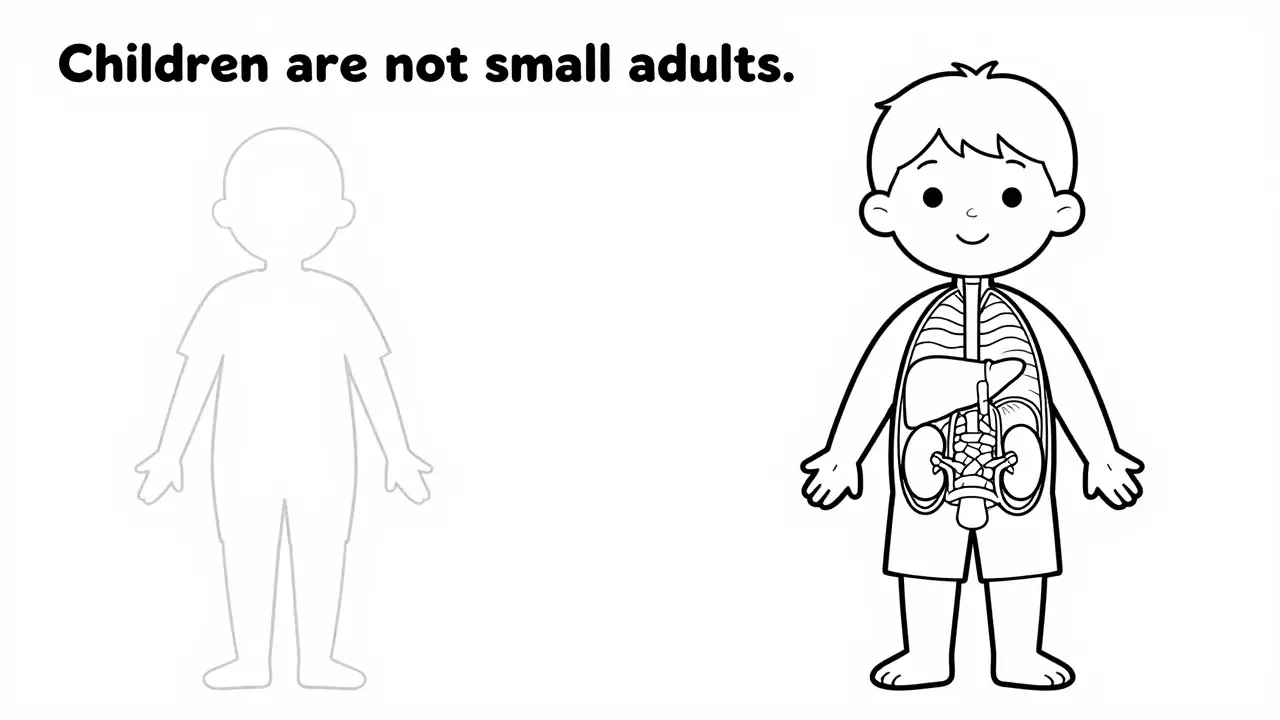
The biggest misconception in pediatric pharmacology is treating children as miniature versions of adults. Their bodies are still developing, which means their organs process drugs at different speeds and with different efficiencies. This is known as pharmacokinetics. For example, a newborn’s liver may not fully metabolize certain drugs, leading to toxic buildup, while their kidneys might excrete others too quickly, rendering the medication ineffective.
This physiological difference makes the choice between brand-name and generic formulations critical. While the Food and Drug Administration (FDA) requires generic drugs to have the same active ingredient as the brand-name version, the inactive ingredients-such as fillers, binders, and preservatives-can vary significantly. In adults, these differences rarely matter. In infants and toddlers, however, they can trigger allergic reactions or adverse effects. Dr. Sarah K. Meadows, a pediatric pharmacology specialist at Children's Hospital of Philadelphia, notes that excipients safe for adults can be harmful to children due to these developmental vulnerabilities.
Consider acetaminophen. Young children are actually less susceptible to acute liver toxicity from this drug compared to adults because they produce glutathione, a protective antioxidant, at higher rates. However, this doesn't mean all generics are created equal. The concentration, taste, and additional ingredients in a generic suspension might affect compliance or cause gastrointestinal distress, which is a major concern for a dehydrated toddler.
The Labeling Gap and Off-Label Prescribing
A startling statistic highlights the core issue: approximately 50% to 75% of drugs used in pediatric medicine have not been adequately studied to provide appropriate labeling information for children. This creates a massive gap in safety data. When doctors prescribe generic drugs for kids, they are often relying on "off-label" use. This means the drug hasn't been specifically tested for that age group, weight range, or condition by the manufacturer.
The Joint Commission reports that prescribing off-label increases the risk of medication errors up to three times compared to adult patients. Why? Because there are no specific pediatric dosing guidelines printed on the bottle. Doctors must calculate doses based on weight and surface area, using adult data as a rough proxy. This calculation-heavy process leaves room for human error. Furthermore, 60% of generic drugs still lack specific pediatric dosing information, compared to only 35% of brand-name drugs, according to a 2021 Government Accountability Office report.
To combat this, the FDA has initiatives like the Pediatric Research Equity Act, which mandates studies for new drugs likely to be used in children. Yet, the backlog remains. Parents should always ask their pharmacist: "Is this dose calculated specifically for my child's weight, and is this generic formulation approved for this age group?" If the answer is unclear, it’s worth seeking clarification or asking if a brand-name alternative with better pediatric data is available.
The KIDs List: A Critical Safety Tool
Not all generic drugs are equally risky. To help clinicians navigate this complex landscape, the Pediatric Pharmacy Association (PPA) developed the KIDs List (Key Potentially Inappropriate Drugs List). This list identifies thousands of drugs with pediatric safety concerns, categorizing them into "avoid" and "caution" recommendations based on evidence strength.
The "avoid" category is reserved for drugs where potential adverse effects are life-threatening or where the evidence against use is strong. For instance, promethazine, a common generic antihistamine, carries a strong recommendation to avoid in children under two years old due to risks of respiratory failure and death. Similarly, trimethobenzamide, a generic antiemetic, should be avoided in all patients 18 years and younger due to the risk of acute dystonic reactions, which are severe muscle spasms.
Topical medications also feature prominently on the KIDs List. Benzocaine, a generic topical anesthetic often found in teething gels, requires avoidance of oral application in children under two due to the risk of methemoglobinemia, a condition that reduces oxygen delivery to tissues. Lidocaine viscous formulations carry similar restrictions due to central nervous system depression risks. These examples show that even over-the-counter generics require careful scrutiny.
| Drug Name | Class | Safety Recommendation | Primary Risk |
|---|---|---|---|
| Promethazine | Antihistamine | Avoid (<2 years) | Respiratory failure |
| Trimethobenzamide | Antiemetic | Avoid (≤18 years) | Acute dystonic reactions |
| Benzocaine | Topical Anesthetic | Avoid oral (<2 years) | Methemoglobinemia |
| Lamotrigine | Anticonvulsant | Caution | Stevens-Johnson syndrome |
| Verapamil | Calcium Channel Blocker | Caution (Infants) | Cardiovascular complications |
Formulation Differences: Taste, Color, and Compliance
You might wonder if the difference really matters if the active ingredient is the same. For adults, it usually doesn’t. For children, it does. Compliance is a huge hurdle in pediatric care. If a generic antibiotic tastes terrible compared to the brand-name version your child was used to, they may refuse to take it. Or worse, they may spit it out, meaning they didn’t get the full dose, leading to treatment failure or antibiotic resistance.
Parent forums reveal consistent patterns. On Reddit’s r/Pediatrics community, 68% of respondents reported issues with generic substitutions. Common complaints included different tastes affecting compliance (42%) and different colors causing confusion (29%). Some parents reported allergic reactions to different preservatives used in generic liquid formulations. For example, a switch from brand-name cetirizine to a generic caused a rash in a five-month-old due to a different preservative agent.
Additionally, narrow therapeutic index drugs like levothyroxine and phenytoin require precise blood levels. Small variations in bioavailability between generic manufacturers can push a child’s levels out of the safe range. Pharmacy technicians intercept 32% of pediatric medication errors related to inappropriate generic substitutions, particularly with these high-risk classes. Always monitor your child closely after any switch in medication brand or manufacturer.
Preventing Dosing Errors at Home
Even with the right generic drug, administration errors are a leading cause of adverse events. The Institute for Safe Medication Practices identifies liquid formulations as the source of 37% of pediatric medication errors. Why? Because measuring liquids accurately is difficult.
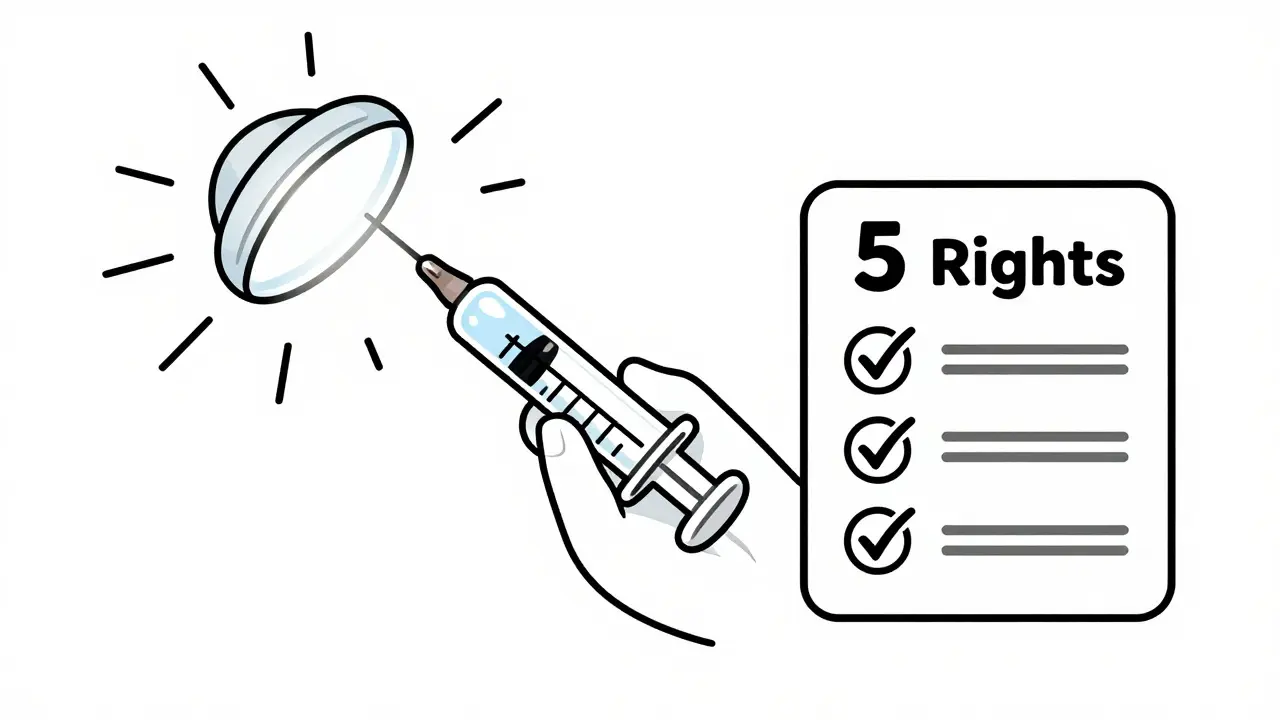
First, never use household spoons. They vary wildly in size. Always use the oral syringe or dosing cup provided with the medication. The MedPak Pediatric Medication Safety Guide states that using oral syringes reduces dosing errors by 50%. Second, follow the "zero rule." Never write a dose with a trailing zero (e.g., 1.0 mg). Write it as 1 mg. This prevents a tenfold overdose if the decimal point is missed. Dr. John N. van den Anker, Chair of Pediatric Clinical Pharmacology at Children's National Hospital, emphasizes this rule as critical for preventing catastrophic errors.
Third, educate the caregiver. The "5 Rights" of medication administration-right patient, drug, dose, route, and time-must be expanded for pediatrics to include right concentration and right device. If you are administering medication, turn on bright lights to see the meniscus in the syringe clearly. Keep a current medication list, including over-the-counter drugs, to avoid interactions. Seventy-eight percent of adverse events are preventable through proper medication reconciliation.
Regulatory Landscape and Future Outlook
The regulatory environment is shifting to address these gaps. The FDA’s 2024 requirement mandates that generic drug manufacturers include pediatric-specific dosing information when available, with full implementation required by December 2025. This is a positive step toward transparency. Additionally, the European Medicines Agency has achieved higher compliance with pediatric investigation plans, suggesting that stricter regulations can drive better safety outcomes.
However, challenges remain. Only 42% of generic manufacturers comply with requests for pediatric studies. As the market grows, with the pediatric pharmaceutical sector valued at $114.7 billion in 2023, pressure will increase on companies to develop child-specific formulations. Industry adoption of pediatric-specific generics is growing at 6.2% annually. Until then, vigilance is key. Healthcare providers are increasingly using tools like the upcoming American Academy of Pediatrics mobile app, which will provide instant access to the KIDs List and dosing calculators, to mitigate risks.
Artificial intelligence is also emerging as a tool for safety, with early studies showing 89% accuracy in predicting age-appropriate dosing for generic drugs. While technology helps, the human element-asking questions, checking labels, and monitoring your child-remains the most important safety net.
Are generic drugs safe for babies?
Generic drugs can be safe for babies, but they require extra caution. Infants under 2 years have immature organ systems that process drugs differently. Always verify that the generic formulation is approved for your baby's age and check for inactive ingredients like preservatives or dyes that might cause allergic reactions. Consult your pediatrician before switching from a brand-name drug to a generic for an infant.
What is the KIDs List?
The KIDs List (Key Potentially Inappropriate Drugs List) is a resource developed by the Pediatric Pharmacy Association. It identifies drugs that pose safety risks to children, categorizing them as "avoid" or "caution" based on clinical evidence. It includes both brand-name and generic drugs and is updated regularly to reflect new safety data.
Can I substitute a brand-name drug with a generic for my child?
In many cases, yes, but not always. For narrow therapeutic index drugs like levothyroxine or phenytoin, substitution can be risky due to slight variations in absorption. For other drugs, inactive ingredients may differ, causing allergies or compliance issues. Always consult your doctor or pharmacist before substituting, especially for children under 2 years old.
How do I measure liquid medication correctly?
Always use the oral syringe or dosing cup provided with the medication. Never use household spoons. Measure the dose at eye level under bright light to ensure accuracy. Follow the "zero rule" by writing doses without trailing zeros (e.g., 1 mg, not 1.0 mg) to prevent dosing errors.
What are off-label prescriptions in pediatrics?
Off-label prescribing occurs when a drug is used for an age group, condition, or dose that has not been specifically approved by the FDA for children. This is common because many drugs lack pediatric-specific labeling. While often necessary, it increases the risk of dosing errors and adverse effects, requiring careful monitoring by healthcare providers.