It happens to almost everyone at some point. You wake up with a sudden flare-up of eczema, a stubborn fungal infection, or acne that refuses to clear up. Your instinct is to reach for the tube of cream sitting in your bathroom cabinet. But then you pause. You’re pregnant. That simple act of applying cream suddenly feels risky. Is it safe? Will it hurt the baby?
The short answer is that most topical medications are significantly safer than their oral counterparts because very little of the drug enters your bloodstream. However, "safer" does not mean "risk-free." Some ingredients can still cross the placenta or pose risks depending on where and how much you apply them. The goal isn’t to avoid all treatment-untreated skin conditions can cause stress and discomfort that also affect your health-but to choose the right ones.
Why Topicals Are Generally Safer Than Pills
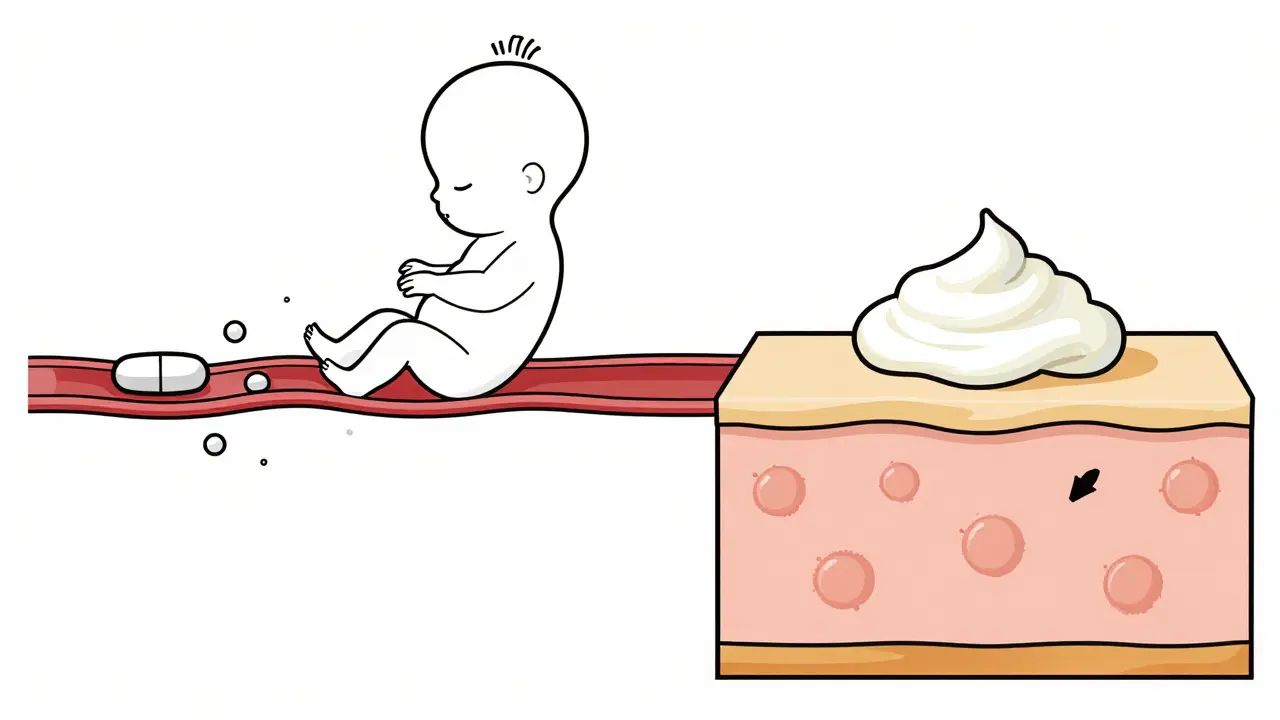
To understand why doctors often prefer creams over pills during pregnancy, we need to look at absorption. When you take an oral medication, it passes through your digestive system and into your blood, circulating throughout your entire body, including the placenta. With topical treatments, the drug stays mostly on the surface of your skin.
According to research published in the Journal of Drugs in Dermatology, systemic absorption from topical dermatologic medications is typically low, often ranging between 1% and 10%. This means that only a tiny fraction of the active ingredient actually reaches your fetus. For example, studies show that topical metronidazole has minimal absorption, making it a preferred choice for rosacea. Similarly, topical antibiotics like erythromycin and clindamycin are widely considered safe because they remain largely localized to the skin.
However, absorption rates aren't uniform across your entire body. The skin on your forearm absorbs about 1% of a topical steroid. In contrast, thinner skin areas like your eyelids, face, neck, armpits, and groin can absorb much higher amounts. This is why applying a potent cream to your face carries more risk than applying the same amount to your arm.
The Absolute No-Go List: Retinoids and More
While many topicals are safe, some must be avoided completely. The most notorious group is retinoids. These are derivatives of Vitamin A used heavily in acne and anti-aging treatments.
- Topical Tretinoin: Often sold under brand names like Retin-A. While oral isotretinoin (Accutane) is famously dangerous and causes severe birth defects, topical tretinoin is also advised against. The American College of Obstetricians and Gynecologists (ACOG) recommends discontinuing these prior to conception. There have been case reports linking first-trimester use to congenital malformations, so the medical consensus is strict avoidance.
- Adapalene: Commonly found in Differin. Like tretinoin, this should be avoided due to limited safety data and its classification as a retinoid.
- Podofilox and Podophyllin Resin: Used for genital warts. These should be avoided due to potential teratogenic effects (birth defects).
If you were using any of these before realizing you were pregnant, don’t panic. Accidental early exposure doesn't guarantee harm, but you should stop immediately and inform your obstetrician. The anxiety is real, but the actual risk from brief, accidental topical use is generally lower than the risk from systemic oral versions.
Safe Options for Common Skin Conditions
You don’t have to suffer through skin issues just because you’re expecting. Here is a breakdown of what is generally considered safe for common problems, based on guidelines from the European Academy of Dermatology and Venereology and recent updates from the American Academy of Family Physicians.
| Condition | Safe / Preferred Options | Avoid / Use Caution |
|---|---|---|
| Acne | Benzoyl Peroxide, Azelaic Acid, Erythromycin, Clindamycin | Tretinoin, Adapalene, Oral Tetracyclines |
| Fungal Infections (Yeast/Ringworm) | Clotrimazole, Miconazole, Nystatin | Econazole (especially in 1st trimester) |
| Eczema / Dermatitis | Low-potency Corticosteroids (Hydrocortisone), Moisturizers | High-potency Steroids (long-term use) |
| Rosacea | Metronidazole, Azelaic Acid | Ivermectin (limited data, consult doctor) |
| Pain / Inflammation | None recommended routinely | NSAIDs (Diclofenac, Ibuprofen) after 30 weeks |
Navigating Corticosteroids: Potency Matters
Corticosteroids are powerful tools for calming inflammation, itching, and rashes. They are not banned during pregnancy, but how you use them matters immensely. The key factor is potency.
For mild cases of eczema or contact dermatitis, low-potency steroids like hydrocortisone 1% are generally considered safe for short-term use. Many pregnant women find relief with these without issue. However, high-potency steroids carry different risks. Research indicates that long-term use of very potent topical corticosteroids can lead to increased systemic absorption, which has been associated with low birth weights and fetal growth restriction.
The recommendation from dermatologists is clear: use the lowest potency effective for your condition, apply it to the smallest area possible, and limit the duration of treatment. If you have severe eczema requiring strong steroids, work closely with both your OB-GYN and a dermatologist to monitor fetal growth.
The NSAID Warning: Timing Is Everything
If you have joint pain or muscle soreness, you might consider topical NSAIDs like diclofenac gel (Voltaren). Unlike oral NSAIDs, which are broadly cautioned against, topical versions have minimal absorption. However, there is a critical time window to watch.
The American Academy of Family Physicians (AAFP) warns that while topical NSAIDs have low absorption, they share similar complications with oral forms if used late in pregnancy. Specifically, after 30 weeks of gestation, NSAIDs can cause premature closure of the ductus arteriosus-a vital blood vessel in the fetal heart. Therefore, if you need pain relief before 30 weeks, a topical NSAID might be an option if your doctor approves. After 30 weeks, avoid them entirely. Stick to acetaminophen (Tylenol) for pain management unless told otherwise by your provider.
Antifungals and Antivirals: Clear Winners
Yeast infections and cold sores are common during pregnancy due to hormonal shifts and changes in immune response. Fortunately, the options here are quite straightforward.
For fungal infections, clotrimazole, miconazole, and nystatin are first-line agents. These are widely available over-the-counter and have a long history of safe use. Avoid econazole, particularly in the first trimester, as data suggests potential risks.
For viral infections like herpes simplex (cold sores or genital herpes), topical acyclovir is considered safe. It helps reduce the duration and severity of outbreaks without significant systemic risk. Trichloroacetic acid is also deemed safe for treating certain viral warts, whereas podophyllin-based treatments are contraindicated.
Understanding the Confusion Around FDA Labels
If you’ve looked up medication safety online, you’ve probably seen letters like Category A, B, C, D, or X. This caused confusion for years. The FDA replaced this categorical system in 2015 with the Pregnancy and Lactation Labeling Rule (PLLR).
The old categories were simplistic. Category B meant animal studies showed no risk, but human studies were lacking. Category C meant animal studies showed risk, but benefits might outweigh risks. The new PLLR requires detailed narrative descriptions of risks, which is much more informative but harder to scan quickly. Unfortunately, many older articles and even some current product labels still reference the old categories. When reading studies, remember that "Category B" doesn't mean "perfectly safe," it just means "no evidence of harm in animals." Always prioritize the latest clinical guidelines over the letter grade on an old label.
Practical Steps for Safe Skin Care
Managing skin health during pregnancy doesn't require guesswork. Follow these practical steps to stay safe and comfortable:
- Consult Before Applying: Never assume an OTC cream is safe. Call your OB-GYN or pharmacist. Services like the InfantRisk Center handle thousands of inquiries monthly and provide expert guidance on specific products.
- Limit Surface Area: Apply medication only to the affected area. Do not slather it over large portions of your body unless directed by a doctor.
- Watch the Clock: Use medications for the shortest duration necessary. Once symptoms improve, taper off rather than stopping abruptly if advised, or switch to non-medicated moisturizers.
- Avoid Sensitive Areas: Be extra cautious with applications near the eyes, groin, and armpits where absorption is higher.
- Stick to Basics: For general maintenance, focus on gentle cleansers, fragrance-free moisturizers, and broad-spectrum sunscreen. Sun protection is crucial, especially if you develop melasma (pregnancy mask), which worsens with sun exposure.
Remember, untreated severe skin conditions can impact your mental health and quality of life. Safety is about balance. By choosing the right topical agents and using them correctly, you can manage skin issues effectively while protecting your baby's development.
Is benzoyl peroxide safe during pregnancy?
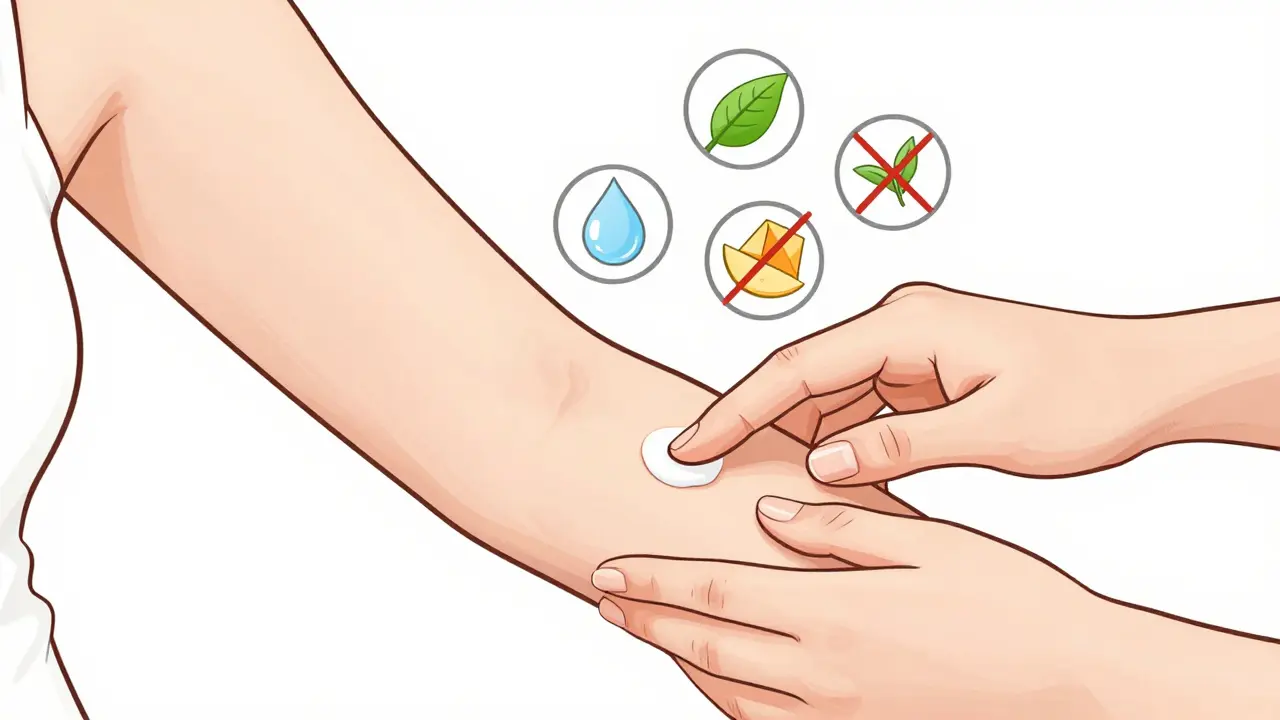
Yes, benzoyl peroxide is generally considered safe for use during pregnancy. It has low systemic absorption and is commonly recommended for treating acne when retinoids must be avoided. However, always patch-test first as pregnancy can make skin more sensitive.
Can I use hydrocortisone cream while pregnant?
Yes, low-potency hydrocortisone (1%) is typically safe for short-term use to treat mild itching, rashes, or eczema. Avoid using high-potency steroids or applying hydrocortisone to large areas of the body for extended periods without medical supervision.
Are antifungal creams safe in the first trimester?
Most antifungal creams like clotrimazole and miconazole are considered safe in the first trimester. Econazole should be avoided during the first trimester. Always confirm with your healthcare provider before starting any new treatment.
What should I do if I accidentally used retinol while pregnant?
Stop using the product immediately. While topical retinoids are advised against due to potential risks, accidental short-term use does not necessarily mean harm will occur. Contact your obstetrician to discuss your specific situation and alleviate anxiety.
Is azelaic acid safe for melasma during pregnancy?
Yes, azelaic acid is widely regarded as one of the safest options for treating melasma and acne during pregnancy. It is classified as FDA Category B and has minimal systemic absorption, making it a preferred choice for dermatologists.