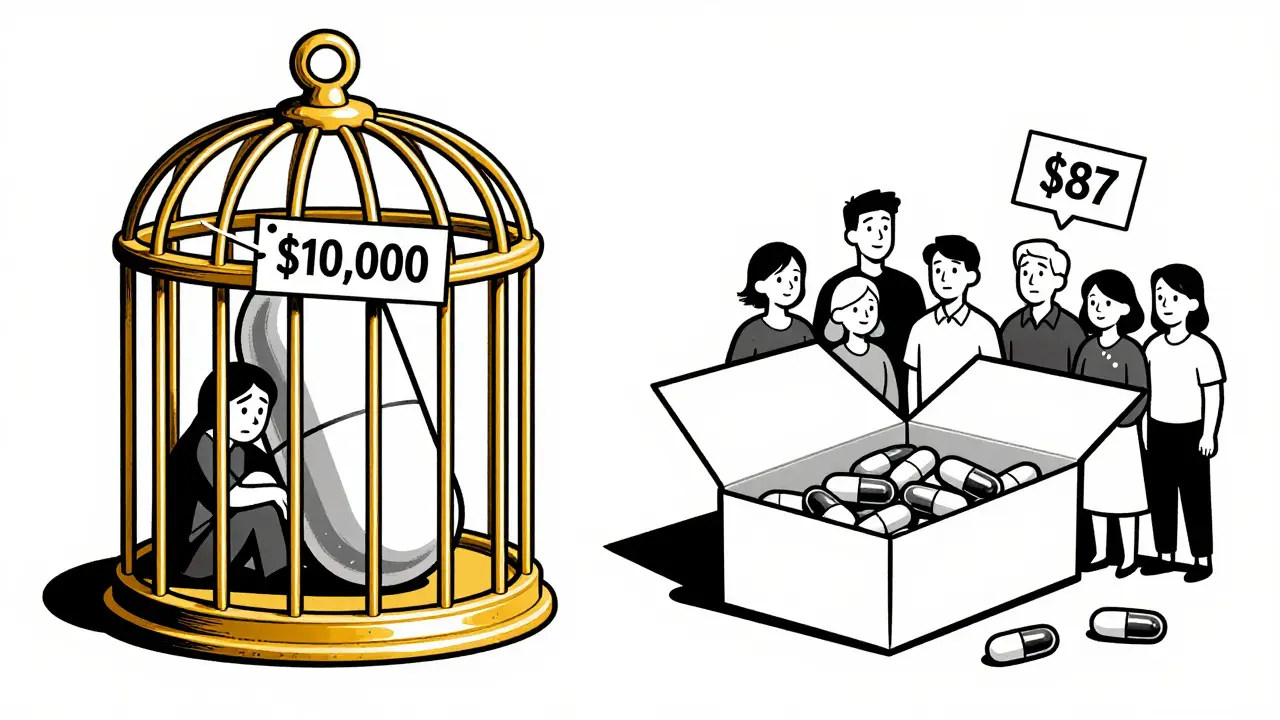
Imagine a life-saving drug costs $10,000 a year. Now imagine that exact same pill costs $87. The difference isn't magic; it's the TRIPS Agreement, an international treaty that dictates who can make medicines and who cannot. For decades, this legal framework has been the battleground between pharmaceutical profits and public health survival. It determines whether a country in Africa, Asia, or Latin America can produce affordable generic versions of patented drugs or if they must pay monopoly prices to big pharma.
If you are trying to understand why some countries have access to cheap HIV meds while others struggle, you need to look at the World Trade Organization (WTO). The TRIPS agreement is not just a boring legal document; it is the gatekeeper of global health equity. This guide breaks down how these rules work, where they fail, and what tools countries actually have to fight back.
The Core Conflict: Patents vs. Public Health
To get straight to the point, the Agreement on Trade-Related Aspects of Intellectual Property Rights (TRIPS) was established in 1995. Its main job is to set minimum standards for intellectual property protection across all WTO member states. For pharmaceuticals, this means companies get a 20-year patent from the date they file their application. During those 20 years, no one else can make, sell, or import that specific drug without permission.
Before TRIPS, countries like India did not grant product patents for medicines. This allowed local factories to produce generic copies immediately after a drug was invented elsewhere. These generics cost only 5% to 10% of the original price. When TRIPS kicked in, that safety net vanished for many nations. The logic was simple: protect innovation by guaranteeing profit. The reality was harsher: millions of people lost access to affordable treatments because the market could not sustain low prices during the patent term.
The tension here is real. On one side, you have the argument that strong patents encourage research and development. On the other, you have the undeniable fact that high prices kill. The UN Secretary-General’s High-Level Panel on Access to Medicines concluded in 2016 that the current system has "institutionalized inequitable access" for three decades. You cannot ignore that statistic when discussing global health policy.
Flexibilities: The Legal Loopholes That Save Lives
It would be wrong to say TRIPS offers zero help. The agreement includes "flexibilities"-legal exceptions designed to protect public health. The most famous of these is the Doha Declaration, adopted in 2001. This declaration explicitly stated that the TRIPS agreement should not prevent members from protecting public health and promoting access to medicines for all. It affirmed that countries facing national emergencies, like HIV/AIDS epidemics, have the right to use these flexibilities.
The primary tool mentioned in the Doha Declaration is Compulsory Licensing. This allows a government to authorize a third party to produce a patented medicine without the consent of the patent holder. In exchange, the government pays "adequate remuneration" to the patent owner, but usually at a fraction of the monopoly price. Think of it as a forced partnership where the public interest overrides private profit.
Another flexibility is parallel importation. This lets countries buy genuine branded medicines from markets where they are sold cheaper than domestically. While less common now due to pricing strategies by manufacturers, it remains a valid option under international law. The key takeaway is that these tools exist on paper. The problem, as we will see, is using them in practice.
The Broken System: Article 31bis and the Rwanda Case
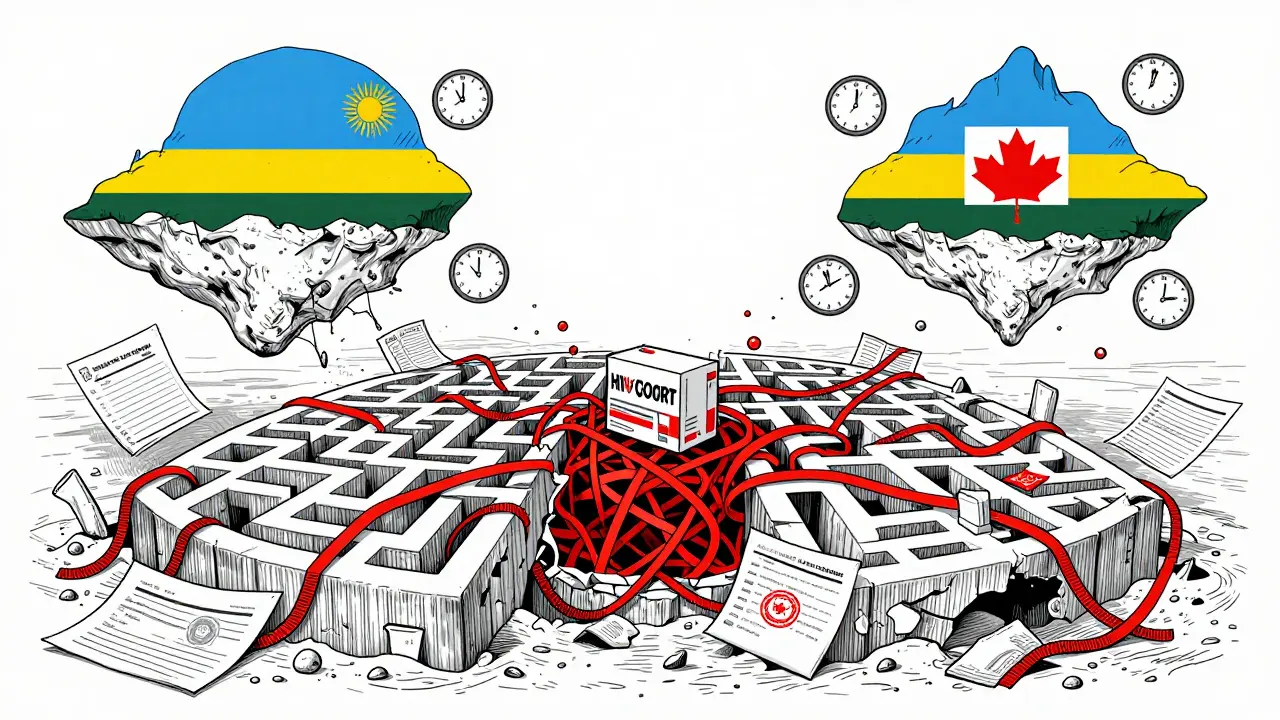
Here is where the story gets complicated. Article 31 of the original TRIPS agreement says compulsory licenses must be "predominantly for the supply of the domestic market." This sounds fine until you realize that many poor countries do not have any pharmaceutical manufacturing capacity. They cannot make the drugs themselves. So, they are stuck.
To fix this, WTO members created a new mechanism called Article 31bis through a protocol amendment that entered into force in 2017. This system allows countries with manufacturing capacity to produce generics specifically for export to countries without such capacity. It seems like a perfect solution, right? Wrong.
The process is incredibly bureaucratic. An importing country must notify the WTO Council at least 15 days before export. The exporting country must issue a license and notify the WTO. Both parties must list the quantity, description, and destination of the product. It requires coordination between two governments and the WTO secretariat. The result? Between 2005 and 2022, this system was used only once.
In 2008, Rwanda needed HIV medication. Canada’s Apotex Corporation agreed to supply it. But it took four years of negotiations, involving Médecins Sans Frontières (MSF) and heavy technical assistance from the UN Development Programme, to finalize the deal. Even then, the price Rwanda paid was 30% higher than if they had domestic manufacturing capability. MSF and Apotex both called the system "unworkable." If a mechanism designed to save lives takes four years to activate, it is fundamentally broken.
| Mechanism | Complexity | Timeframe | Real-World Usage |
|---|---|---|---|
| Domestic Compulsory License | Medium | Months | Used in Brazil, Thailand, South Africa |
| Article 31bis (Export) | Very High | Years (avg 3.8) | Used once (Rwanda-Canada) |
| Voluntary Licensing (MPP) | Low-Medium | Variable | Covers ~44 patented medicines globally |
| Parallel Importation | Low | Weeks | Rarely used due to supply chain controls |

Why Countries Fear Using Their Rights
You might ask, "If compulsory licensing works so well for countries with factories, why doesn’t everyone do it?" The answer is political pressure. The data shows that fear is a major barrier. A study published in the Journal of the International AIDS Society found that 83% of surveyed low- and middle-income countries had never issued a compulsory license. Why? Because they feared trade retaliation.
Let’s look at Thailand. In 2006, Thailand issued compulsory licenses for three essential medicines: efavirenz for HIV, clopidogrel for heart disease, and imatinib for cancer. Prices dropped by 30% to 80%. The US government responded by removing Thailand from its Generalized System of Preferences, costing the Thai economy an estimated $57 million annually in lost exports. That is a direct financial penalty for saving lives.
Brazil faced similar threats. After issuing a compulsory license for efavirenz in 2007, the US Trade Representative placed Brazil on its "Priority Watch List" for two years. The message was clear: use your rights, and we will hurt your broader economy. Between 2007 and 2015, the UN documented 423 instances of trade retaliation threats against countries considering compulsory licensing. This creates a chilling effect that keeps drug prices artificially high.
The Rise of TRIPS-Plus Agreements
Even if a country wants to use TRIPS flexibilities, bilateral trade agreements often block them. These are known as TRIPS-plus provisions. Unlike the WTO agreement, which sets minimum standards, these bilateral deals impose stricter rules. They might extend patent terms beyond 20 years, ban parallel imports, or delay regulatory approval for generics even after patents expire.
As of 2021, 86% of WTO members had implemented TRIPS-plus provisions through bilateral agreements. On average, these extensions add 4.7 years to patent protection. For a developing nation negotiating a free trade deal with the EU or the US, refusing these terms often means losing access to lucrative export markets. This forces countries to choose between economic integration and public health sovereignty. The result is an estimated $2.3 billion in annual savings lost across 34 low- and middle-income countries.
Alternatives: Voluntary Licensing and Patent Pools
Since the legal battles are so difficult, many advocates have turned to cooperation rather than confrontation. The Medicines Patent Pool (MPP) is a prime example. Established by UNITAID and supported by WHO, the MPP negotiates voluntary licenses with patent holders. Companies agree to let generic manufacturers produce their drugs in low-income countries in exchange for reduced royalty fees or upfront payments.
This approach has seen more success than compulsory licensing. By 2022, voluntary licensing facilitated access to HIV/AIDs medications in 118 low- and middle-income countries. However, the scope is still limited. The MPP covers only 44 patented medicines across all disease areas. Furthermore, 73% of these licenses are restricted to sub-Saharan Africa, ignoring disease burdens in other regions. While better than nothing, it relies on the goodwill of patent holders, who can withdraw at any time.
The Future: Waivers and Reform
The COVID-19 pandemic exposed the fragility of the current system. In October 2020, India and South Africa proposed a temporary waiver of certain TRIPS provisions for vaccines and treatments. After intense lobbying, the WTO approved a partial waiver in June 2022, covering only vaccines and excluding therapeutics and diagnostics. Critics argued this was too little, too late, and too narrow.
Looking ahead, the pressure is mounting. The UN High-Level Meeting on Pandemic Prevention in 2024 called for reform of the TRIPS Agreement to ensure timely access during health emergencies. With 58 low- and middle-income countries currently engaged in trade negotiations containing TRIPS-plus clauses, the status quo is unsustainable. Experts project that without significant reform, medicine access gaps will widen to affect 3.2 billion people by 2030.
The path forward likely involves a mix of stronger enforcement of existing flexibilities, expansion of voluntary licensing models, and perhaps a permanent waiver mechanism for pandemics. Until then, the gap between legal rights and actual access remains a critical failure of global governance.
What is the main purpose of the TRIPS Agreement?
The TRIPS Agreement sets minimum standards for intellectual property protection worldwide, including a 20-year patent term for pharmaceuticals. Its goal is to harmonize IP laws to facilitate international trade, but it often restricts access to affordable generic medicines in poorer nations.
Can a country produce generic drugs while a patent is active?
Yes, through mechanisms like compulsory licensing. This allows a government to authorize local production of a patented drug without the patent holder's consent, typically during public health emergencies. However, this requires domestic manufacturing capacity and faces significant political and legal hurdles.
Why hasn't the Article 31bis export mechanism been used more?
The process is extremely complex and slow, requiring multiple notifications to the WTO and coordination between importing and exporting countries. It took four years to complete the single successful case between Rwanda and Canada, making it impractical for urgent health crises.
What are TRIPS-plus provisions?
TRIPS-plus provisions are stricter intellectual property rules included in bilateral or regional trade agreements. They go beyond WTO requirements by extending patent terms, banning parallel imports, or delaying generic approvals, further limiting access to affordable medicines.
How does the Medicines Patent Pool differ from compulsory licensing?
The Medicines Patent Pool secures voluntary licenses from patent holders, meaning companies agree to allow generic production in exchange for royalties. Compulsory licensing is a government mandate that does not require the patent holder's consent, often used when voluntary agreements fail or during emergencies.