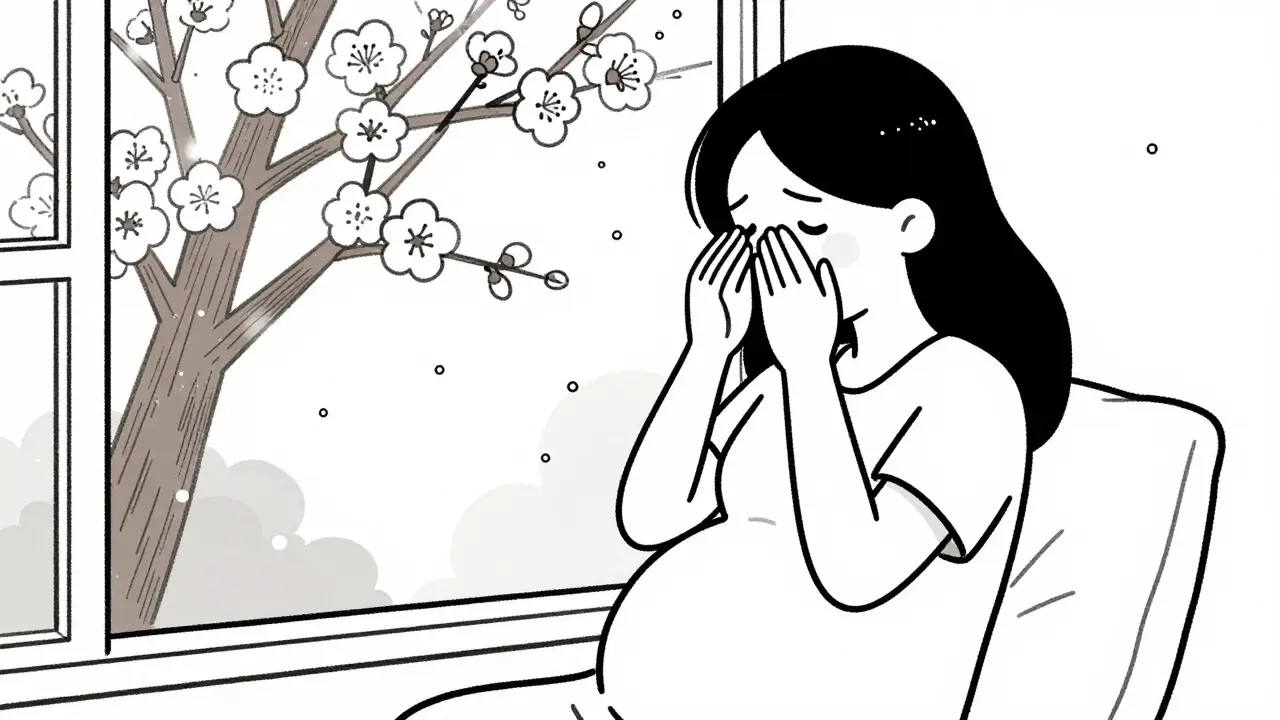
Dealing with sneezing, itchy eyes, and a stuffed nose while pregnant is miserable. You want relief, but you also worry about your baby’s health. This fear often leads to suffering in silence, which isn't ideal either. Untreated allergies can disrupt sleep and worsen asthma, impacting both you and the fetus. The good news? Most common allergy meds are safe if you choose the right ones and time them correctly. It’s not about avoiding all drugs; it’s about picking the safest options for each trimester.
Key Takeaways
- Nasal corticosteroids like budesonide (Rhinocort) are generally considered the safest first-line treatment throughout pregnancy.
- Oral antihistamines such as loratadine (Claritin) and cetirizine (Zyrtec) are widely accepted as safe after the first trimester, with diphenhydramine having the longest safety track record.
- Pseudoephedrine (found in Sudafed) should be avoided during the first trimester due to potential links with birth defects and blood pressure issues.
- Combination products labeled "D" (like Claritin-D) contain decongestants that may pose risks; stick to single-ingredient versions.
- Allergy shots are safe to continue if started before pregnancy but should never be initiated during pregnancy.
Understanding the Risk-Benefit Balance
When you’re pregnant, every pill feels like a gamble. But untreated severe allergies carry their own risks. If you can’t breathe at night, your oxygen levels drop, affecting fetal development. Plus, stress hormones from constant discomfort aren’t great for either of you. Medical guidelines emphasize that the benefit of symptom relief often outweighs the minimal risk of certain medications. The key is precision. Not all allergy meds are created equal, and their safety changes depending on how far along you are.
The American Academy of Allergy, Asthma & Immunology (AAAAI) updated their guidance in 2023, reinforcing that most standard treatments are manageable. They rely on data from over 200,000 participants in large-scale studies. This evidence base helps doctors move away from blanket prohibitions toward specific, trimester-based recommendations. You don’t need to white-knuckle through hay fever season. You just need a plan that aligns with current medical consensus.
Safety by Trimester: What Changes When?
Your baby’s development happens in rapid, distinct phases. The First Trimester is the critical window for organ formation, lasting up to week 12. During this time, healthcare providers usually recommend sticking to non-drug methods whenever possible. Saline rinses, HEPA filters, and keeping windows closed during high pollen counts are your best friends here. If you must take medication, older, well-studied drugs are preferred because we have decades of data on them.
In the Second and Third Trimesters, the fetus is growing rather than forming new organs. This makes the placenta more effective at filtering out some substances, though nothing blocks everything completely. Here, second-generation antihistamines become more commonly prescribed. However, certain decongestants remain problematic even later in pregnancy because they constrict blood vessels, which can affect placental blood flow. Always check with your OB-GYN before switching classes, especially if you have high blood pressure or preeclampsia risks.
Nasal Sprays: The Gold Standard for Relief
If you only use one type of medication, make it a nasal spray. Nasal Corticosteroids are topical, meaning very little gets into your bloodstream compared to pills. This minimizes exposure to the baby while effectively reducing inflammation in your nasal passages. Among these, Budesonide (brand name Rhinocort) has the strongest safety profile. It was previously classified as Category B (no risk in animal studies), and human data supports its safety throughout all three trimesters.
Other options like fluticasone (Flonase) and mometasone (Nasonex) are also considered safe by major health bodies. They work similarly by blocking inflammatory chemicals locally. A crucial distinction exists between steroid sprays and decongestant sprays. Steroid sprays take days to reach full effect and are meant for daily maintenance. Decongestant sprays like oxymetazoline (Afrin) work instantly but can cause rebound congestion if used for more than three days. While short-term use of Afrin is sometimes permitted, many experts suggest avoiding it entirely due to limited safety data in pregnancy.
Oral Antihistamines: First vs. Second Generation
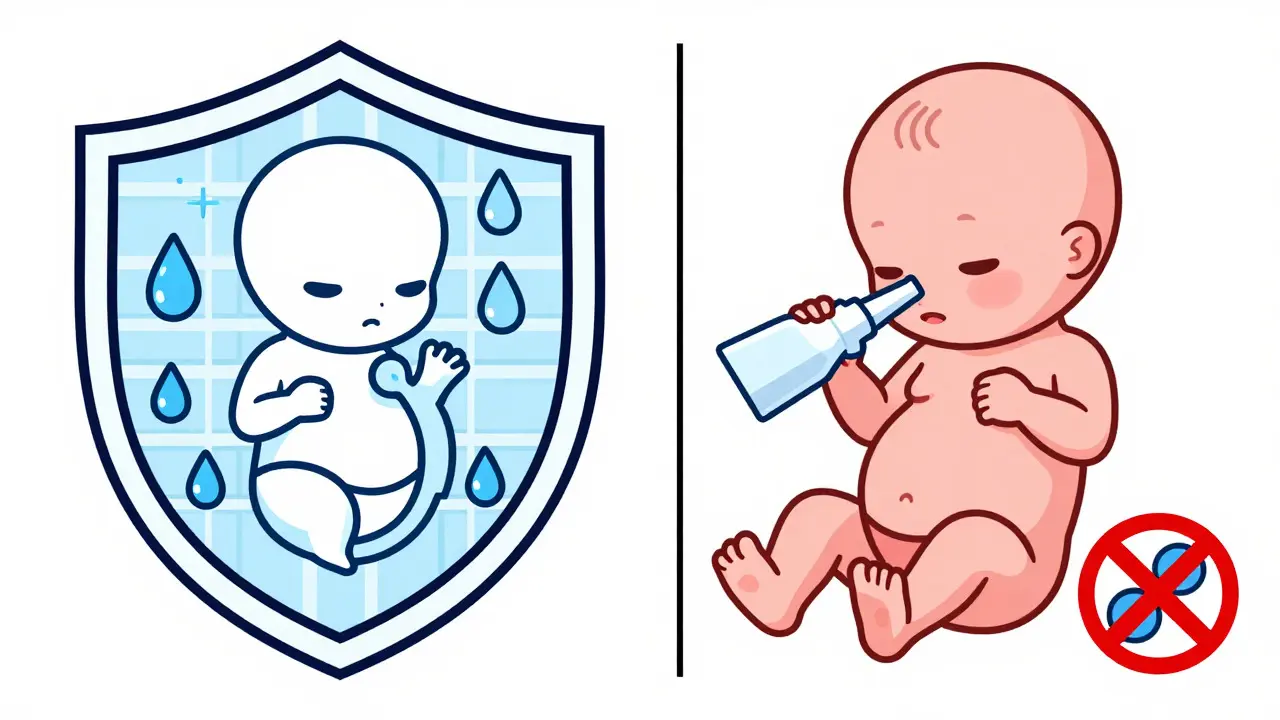
Antihistamines block histamine, the chemical causing your itch and sneeze. There are two main types, and their safety profiles differ slightly.
| Medication Type | Examples | Safety Profile | Side Effects |
|---|---|---|---|
| First-Generation | Diphenhydramine (Benadryl), Chlorpheniramine (Chlor-Trimeton) | Extensive historical data; no increased malformation risk | Significant drowsiness, dry mouth |
| Second-Generation | Loratadine (Claritin), Cetirizine (Zyrtec) | Generally safe; reassuring data but less extensive than first-gen | Minimal sedation, non-drowsy |
| Second-Generation (Caution) | Fexofenadine (Allegra) | Category C (limited human data); use if benefits outweigh risks | Non-sedating |
Diphenhydramine (Benadryl) has been around forever. Because of this long history, doctors feel confident prescribing it. The downside? It crosses the blood-brain barrier easily, making you sleepy. For many pregnant women, this is actually a plus if allergies keep them awake at night. Just be careful driving or operating machinery.
Loratadine and Cetirizine are newer, non-drowsy options. Studies involving thousands of pregnancies show no link to birth defects. They are often preferred for daytime use so you can function normally. Fexofenadine (Allegra) is another popular choice, but it carries a stricter warning label due to fewer human studies. Many clinicians still consider it safe, but they might prefer Loratadine or Cetirizine first.
The Danger Zone: Decongestants and Combination Drugs
This is where most people get tripped up. Look at the box. Does it say "D"? Like Claritin-D or Zyrtec-D? That "D" stands for a decongestant, usually pseudoephedrine or phenylephrine. These ingredients shrink swollen tissues in your nose by narrowing blood vessels. In a pregnant body, vasoconstriction isn’t always welcome. Pseudoephedrine has been associated with a small increase in gastroschisis (a birth defect of the abdominal wall) when used in the first trimester. It can also raise your blood pressure, which is risky if you’re prone to hypertension.
Mayo Clinic guidelines suggest that pseudoephedrine might be okay in the second or third trimester for short periods, but only if you don’t have high blood pressure. Phenylephrine, found in many cold and flu combos, has even less supporting safety data. It’s generally better to skip combination products. Buy plain Claritin and manage congestion separately with saline sprays or steam inhalation. This gives you control over exactly what enters your system.
Non-Medication Strategies That Actually Work
You don’t have to rely solely on pills. Environmental controls reduce the load on your immune system, potentially lowering the dose of medication you need. Start with Nasal Saline Irrigation. Using a neti pot or squeeze bottle with distilled water flushes out pollen and mucus mechanically. It’s drug-free and highly effective for congestion. Ensure you use sterile water to avoid rare infections.
Indoor air quality matters too. Run a HEPA filter in your bedroom to capture dust mites and pet dander. Keep windows shut during peak pollen times (usually early morning and late afternoon). Shower and change clothes immediately after coming indoors to wash off pollen. These steps seem basic, but they significantly reduce symptom severity. Some women find that combining these habits with a low-dose antihistamine keeps them comfortable without needing stronger drugs.
Special Considerations: Asthma and Immunotherapy
About 8% of pregnant individuals have asthma, which often coexists with allergies. Controlling asthma is vital because poor oxygen exchange harms the fetus. Inhaled corticosteroids for asthma are considered safe throughout pregnancy. Do not stop taking them out of fear; uncontrolled asthma poses a greater risk than the medication. Oral steroids might be needed for severe flare-ups, but these require close monitoring by your doctor.
What about allergy shots? If you were already receiving immunotherapy before getting pregnant, you can likely continue. Your body is already accustomed to the allergens. However, starting allergy shots during pregnancy is generally discouraged. The risk of an allergic reaction to the injection itself could stress the fetus. Wait until after delivery to begin this treatment unless your specialist advises otherwise.
Frequently Asked Questions
Is Benadryl safe to take every day while pregnant?
Yes, diphenhydramine (Benadryl) is generally considered safe for daily use during pregnancy. It has the most extensive safety data among antihistamines. However, it causes significant drowsiness, so many women switch to non-drowsy alternatives like loratadine for daytime use and reserve Benadryl for nighttime symptoms.
Can I use Flonase while pregnant?
Yes, fluticasone propionate (Flonase) is considered safe for use during pregnancy. Nasal corticosteroids have minimal systemic absorption, meaning very little drug reaches the fetus. Budesonide (Rhinocort) is often cited as the preferred option due to robust data, but Flonase is also widely recommended by obstetricians and allergists.
Why should I avoid Sudafed in the first trimester?
Sudafed contains pseudoephedrine, a decongestant that constricts blood vessels. Studies suggest a potential link between first-trimester use and gastroschisis, a birth defect affecting the abdominal wall. Additionally, it can raise maternal blood pressure, which is undesirable during early pregnancy. It is typically avoided until the second trimester and then used cautiously.
Are natural remedies safer than medication?
Not necessarily. "Natural" doesn't automatically mean safe or tested. Herbal supplements lack rigorous regulation and safety data in pregnancy. Proven non-drug methods like saline irrigation and HEPA filtration are safe and effective. Stick to evidence-based approaches rather than unverified herbal teas or extracts unless cleared by your provider.
What if my allergies trigger asthma attacks?
Treat the asthma aggressively. Uncontrolled asthma reduces oxygen supply to the baby. Inhaled rescue inhalers (like albuterol) and controller steroids are safe and necessary. Do not withhold asthma medication due to pregnancy fears. Consult your pulmonologist or OB-GYN to adjust your regimen if allergies worsen your breathing.
Next Steps and Troubleshooting
If you’re currently managing allergies while pregnant, start by auditing your medicine cabinet. Check every label for hidden decongestants. Switch to single-ingredient products. Introduce a saline rinse routine today-it’s free and immediate. If symptoms persist despite environmental controls, discuss starting a nasal steroid spray with your provider. Remember, consistency matters more than potency. Daily prevention beats reactive treatment.
All Comments
fred eden August 30, 2026
oh wow this is so helpful 🥺 my wife was stressing out about her allergies all through the first trimester and i felt so useless because i didnt know what she could take. knowing that rhinocort is safe makes me feel way better for next time if we decide to try again 💖
Tobi Oyewole August 31, 2026
It is prudent to acknowledge that while the medical consensus provides a framework, individual physiological responses vary significantly.
We must respect the autonomy of the pregnant individual in making these decisions, guided by their specific healthcare provider. The distinction between risk and benefit is not merely mathematical but deeply personal and contextual.
Sarah Kinch September 2, 2026
ugh finally someone says it. everyone acts like taking any pill will kill the baby but untreated asthma is literally dangerous. also benadryl makes you feel like a zombie which is ironic since pregnancy already does that lol. stop gatekeeping relief.
Venkatesan V.K. September 2, 2026
The article presents a coherent summary of current guidelines. However, it fails to adequately address the long-term neurodevelopmental outcomes associated with prolonged antihistamine use, which remain a subject of ongoing debate in pharmacovigilance circles.
Patrick van der Velde September 3, 2026
It is rather amusing how the masses blindly follow pharmaceutical recommendations without considering the inherent toxicity of synthetic compounds. One should prioritize holistic environmental controls over chemical intervention whenever possible. The reliance on 'safe' drugs reflects a societal failure to understand true health.
Vivek Chaturvedi September 3, 2026
good info. pseudoephedrine is definitely bad news early on. stick to saline and budesonide. simple as that.
Lolo Del September 4, 2026
Hey there! Great breakdown. Just a friendly reminder that 'natural' doesn't always mean safe. I've seen too many people pop herbal supplements thinking they're harmless, only to find out later they interact with blood pressure meds or have unknown teratogenic effects. Always check with your doc!
Pearl Richardson September 6, 2026
The data presented is reassuring yet one cannot ignore the potential for undisclosed adverse events in large-scale studies. 🤔 It is highly probable that pharmaceutical companies downplay minor side effects to maintain market share. We must remain vigilant against corporate narratives regarding drug safety. 😐
larry williams September 7, 2026
I want to offer some encouragement to those currently navigating this challenging period because it is completely understandable to feel anxious about every single choice you make during pregnancy.
Remember that you are doing an incredible job just by seeking information and caring so deeply about your child's well-being. You don't need to be perfect; you just need to be informed and supported by your medical team. Take it one day at a time and trust your instincts alongside your doctor's advice.
Stephen Horn September 8, 2026
The assertion that nasal corticosteroids are universally safe ignores the subtle endocrine disruptions documented in recent longitudinal cohorts. Furthermore, the dismissal of decongestants lacks nuance regarding dose-dependent thresholds. One must question the integrity of guidelines influenced by industry-funded research bodies.
Gurjit Singh September 8, 2026
This is correct. Many patients suffer unnecessarily due to fear mongering. Stick to evidence based medicine. Do not self medicate with random herbs.
hareesh kumar September 9, 2026
omg wait hold up!! are u saying we can actually breathe?? i thought i was gonna die from congestion last winter and my dr just said 'wait it out' like wtf??? also why did nobody tell me about the neti pot thing earlier?? i feel like ive been suffering for no reason and now im mad but also relieved?? its complicated!!! 😱😩🤯
Eryn Manchego September 11, 2026
love this vibe really. keeping windows shut + hepa filters is such a game changer for reducing the allergen load. it’s wild how much difference environmental tweaks make before you even touch a med. stay chill and keep breathing easy ✨
Crystal Torres September 12, 2026
This resource effectively categorizes the risk profiles for various medications. It is crucial for expectant mothers to differentiate between the safety standards of first-generation versus second-generation antihistamines. Please ensure you consult your obstetrician before initiating any new treatment protocol.