| Effect Area | Common Symptoms | Scientific Impact |
|---|---|---|
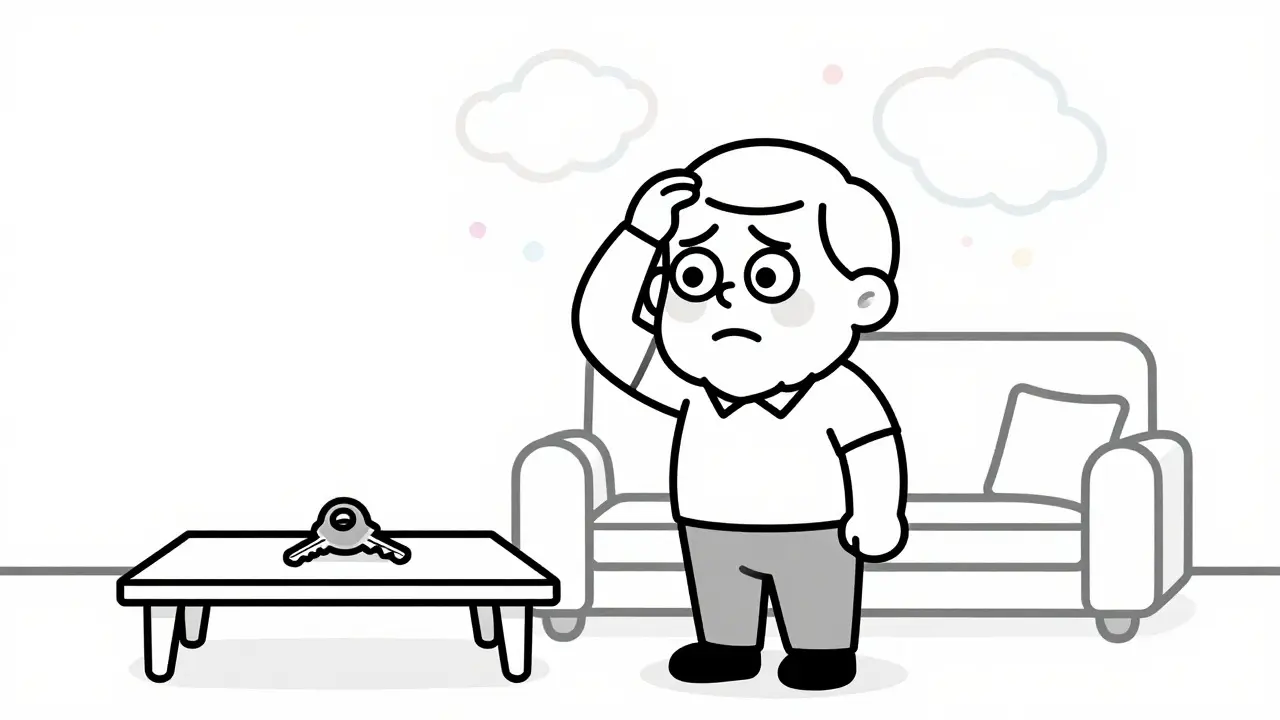
| Cognition | Confusion, memory loss, "brain fog" | Reduced glucose metabolism in the hippocampus |
| Oral Health | Constant thirst, difficulty speaking | Significant reduction in salivary flow |
| Brain Structure | Long-term atrophy | Larger ventricular volumes on MRI |
How These Drugs Affect Your Brain
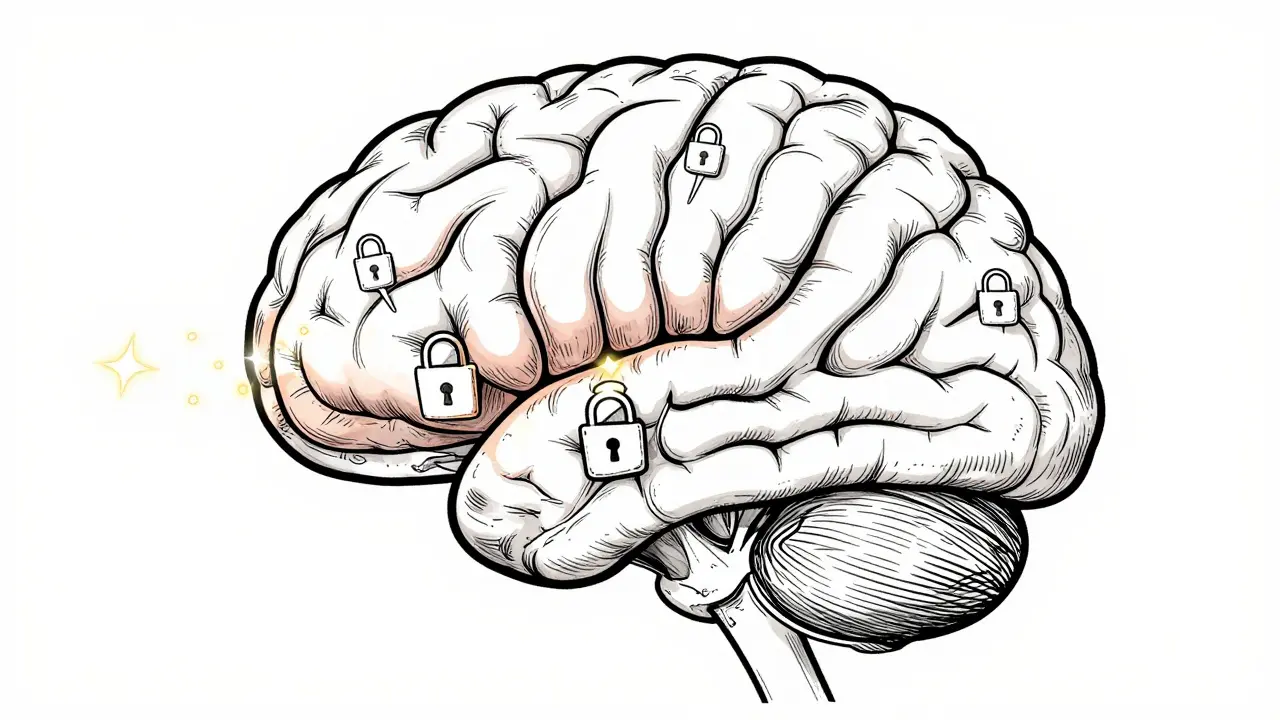
To understand why these medications cause memory issues, we have to look at Acetylcholine. Think of it as the brain's primary "learning and memory" chemical. Anticholinergics work by blocking the receptors that this chemical needs to attach to. Specifically, they target Muscarinic Receptors. While there are five types (M1 through M5), the M1 receptors are the ones heavily concentrated in the prefrontal cortex and hippocampus-the parts of your brain responsible for executive function and episodic memory. When these receptors are blocked over a long period, the brain doesn't just slow down; it can actually shrink. Research has shown that people using high-burden anticholinergics experience an additional 0.5% to 1.2% of annual brain atrophy. This isn't just a theory; PET scans show an 8-14% drop in glucose metabolism in the hippocampus. In plain English: the memory center of your brain is getting less fuel and losing physical volume.The ACB Scale: Measuring Your Risk
Not all drugs in this class are created equal. Doctors use the Anticholinergic Cognitive Burden (ACB) scale to grade how likely a drug is to mess with your head. The scale runs from 0 to 3.- Score 0: No anticholinergic activity.
- Score 1: Low risk; generally considered safe for most older adults.
- Score 2-3: High risk; strongly discouraged for those over 65.
The Struggle with Chronic Dry Mouth
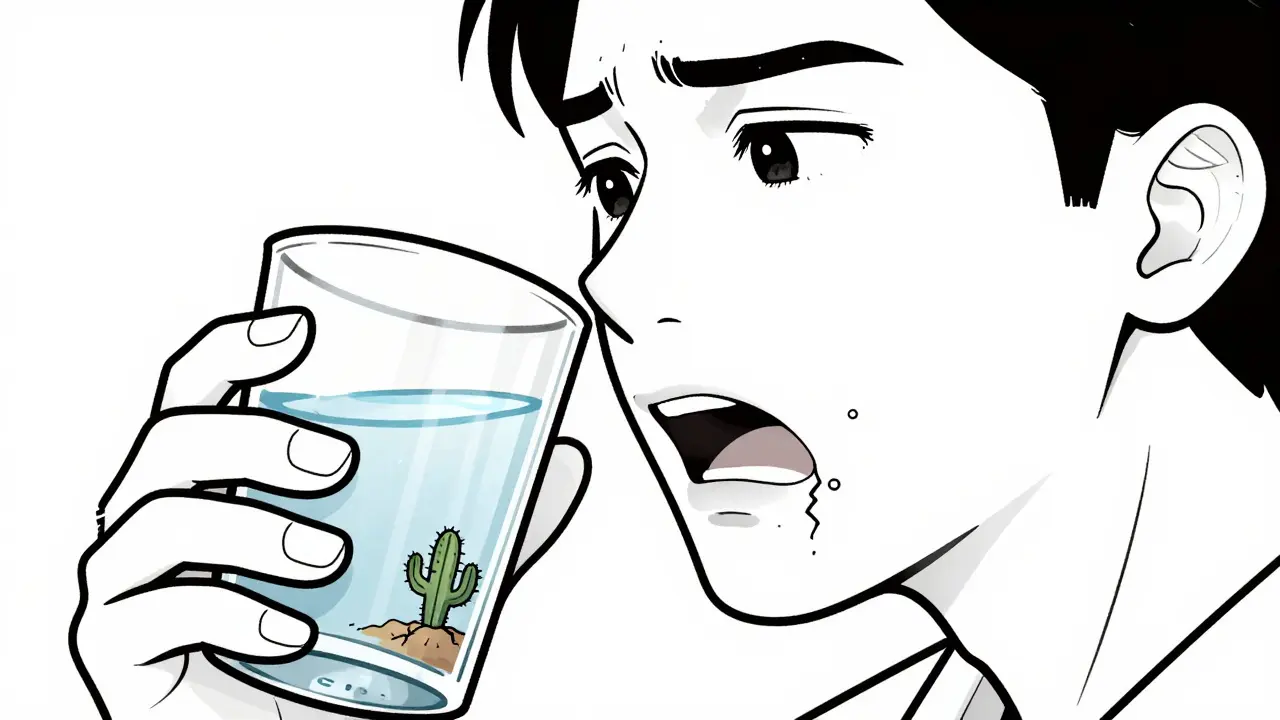
While the cognitive risks are the most dangerous, the most annoying side effect is undoubtedly xerostomia, or severe dry mouth. Because acetylcholine also triggers salivary glands, blocking it effectively turns off the faucet in your mouth. This isn't just a "thirsty" feeling. Many patients report having to drink 2-3 liters of water a day just to keep their mouth moist. Some even find it difficult to speak during conversations because they lack the necessary lubrication. This creates a vicious cycle: dry mouth leads to poor oral hygiene, which increases the risk of tooth decay and gum disease, as saliva is essential for neutralizing acids and washing away food particles.Comparing Common Medications and Alternatives
If you're using these drugs for an overactive bladder, you have options. Many people stick with generics like oxybutynin because they cost about $15 a month, whereas newer options can be significantly more expensive. However, the trade-off is cognitive health.| Drug | ACB Score | Cognitive Risk | Approx. Monthly Cost |
|---|---|---|---|
| Oxybutynin | 2-3 | High | $15 (Generic) |
| Tolterodine | 1-2 | Moderate | Variable |
| Mirabegron | 0 | None | $350 |
Managing the Side Effects
If you absolutely must stay on an anticholinergic-for instance, if you have Parkinson's disease where abrupt stopping can be dangerous-you can still mitigate the damage. For the dry mouth, sugar-free gum can boost saliva production by 30-40%. For more severe cases, saliva substitutes like Xerolube or prescription medications like pilocarpine can help restore flow. Regarding the brain, the key is monitoring. The Montreal Cognitive Assessment (MoCA) is a great tool for tracking mental baseline. If you're over 65, you should be having your cognitive function checked every six months to ensure the drug isn't causing permanent damage.When to Talk to Your Doctor
If you notice a pattern of "sudden confusion" or find that your short-term memory is slipping, don't just blame it on old age. Check your medicine cabinet. The Beers Criteria, a gold-standard list for geriatric care, flags dozens of medications-including diphenhydramine (Benadryl) and amitriptyline-as potentially inappropriate for older adults. Ask your doctor these three questions:- What is the ACB score of this medication?
- Is there a "cognitive-sparing" alternative available for my condition?
- Can we create a plan to taper this dose down over time?
Can stopping these drugs reverse memory loss?
In some cases, yes. If the cognitive impairment is purely a result of the drug's chemical block, you may see an improvement in clarity after the medication leaves your system. However, if the drug has led to structural brain atrophy (shrinkage), that physical loss of tissue is generally permanent.
Are over-the-counter sleep aids dangerous?
Many common OTC sleep aids and allergy meds, like diphenhydramine, are potent anticholinergics. Using these nightly for years can significantly increase your risk of dementia, especially in patients over 65.
Why does my doctor still prescribe these if they are risky?
Because they work. For some, the benefit of stopping incontinence or controlling tremors outweighs the risk of dry mouth or mild confusion. It's all about the individual risk-benefit analysis.
What is the most dangerous anticholinergic for cognition?
Scopolamine typically shows the most severe cognitive effects, with significant declines in attention and working memory tasks according to clinical meta-analyses.
How do I know if my dry mouth is from medication?
If the dryness started shortly after beginning a new medication and isn't improved by drinking more water, it's likely a drug side effect. Look for "drying" effects in the medication's pamphlet.
All Comments
Betty Kawira April 27, 2026
Been seeing this a lot in my practice lately. A lot of folks don't realize that their 'senior moments' are actually just a chemical reaction to something they're taking for a totally different issue. It's super important to check those ACB scores because switching from something like oxybutynin to a beta-3 agonist can literally clear the fog for some people. Also, for the dry mouth, try those xylitol melts, they work way better than just chugging water all day because they actually stimulate the glands instead of just wetting the surface.
Kali Murray April 28, 2026
wow didnt know benadryl did this 😵💫 gotta be careful 🌸
Kevin Taggart April 28, 2026
i take a sleep aid every nite... hope its not to late to stop :(
Betty Kawira April 29, 2026
Just talk to your doc about a taper plan! Don't just quit cold turkey if you've been on them for years, but definitely bring up the ACB scale. Most doctors are happy to switch you to something safer if you show them you've done the research.
Abhishek Charan April 29, 2026
While the data presented is technically accurate, one must wonder why the correlation is blindly accepted as causation without discussing the comorbidities of the elderly population!!! 🙄 It is simply naive to ignore the baseline cognitive decline that occurs regardless of pharmaceutical intervention!!! 📈
Ryan Wilson May 1, 2026
Typical pharmaceutical racket. They feed you a cheap generic that rots your brain for decades, then they swoop in with a 'miracle' drug like Mirabegron that costs a goddamn fortune just to keep your mind intact. It's a predatory cycle where the poor literally pay with their cognitive function while the wealthy buy their sanity back from Big Pharma. Absolutely disgusting how we prioritize a few bucks in a monthly budget over the physical structure of the hippocampus.
Dale Kensok May 3, 2026
The reduction in glucose metabolism is merely a symptom of a deeper synaptic failure. If we examine the pharmacokinetic profile of these ligands, it's obvious that the competitive inhibition at the M1 receptor is an inevitable consequence of suboptimal molecular targeting. The pleiotropic effects are a failure of current drug design paradigms. We are essentially using a sledgehammer to crack a nut, and the resulting cortical atrophy is the predictable entropy of such a crude chemical intervention.
Stephen Johnson May 3, 2026
It makes you think about the trade-offs we make in the second half of our lives. We trade a bit of memory for a bit of comfort, or a bit of mental clarity for a dry night's sleep. Perhaps the goal isn't total eradication of symptoms, but finding a balance where we remain present in our own lives. It's a quiet tragedy when a medicine meant to help someone live better actually steals the essence of who they are.
Jonathan Hall May 4, 2026
I find it absolutely appalling that we are even debating this because the clinical evidence is overwhelmingly clear, and yet people still try to play devil's advocate about comorbidities when the actual physiological atrophy is visible on an MRI scan, which is just a blatant disregard for patient safety in the name of some misplaced intellectual curiosity regarding the nuances of aging!
Darrin Oneto May 4, 2026
man this is some heavy stuff. my old man’s been acting real hazy lately and he’s on some bladder meds... might be time for a trip to the clinic to shake things up and get him off the junky stuff 🤘
lalit adesara May 5, 2026
West is blind. We follow these 'scales' while ignoring holistic wisdom. Pure foolishness.
Thomas Jorquez May 5, 2026
I have noticed that some of the newer generic alternative's are actually quite effective without the extreme dry mouth issues, though the docctors often stick to what they know best regardless of the patient experience.