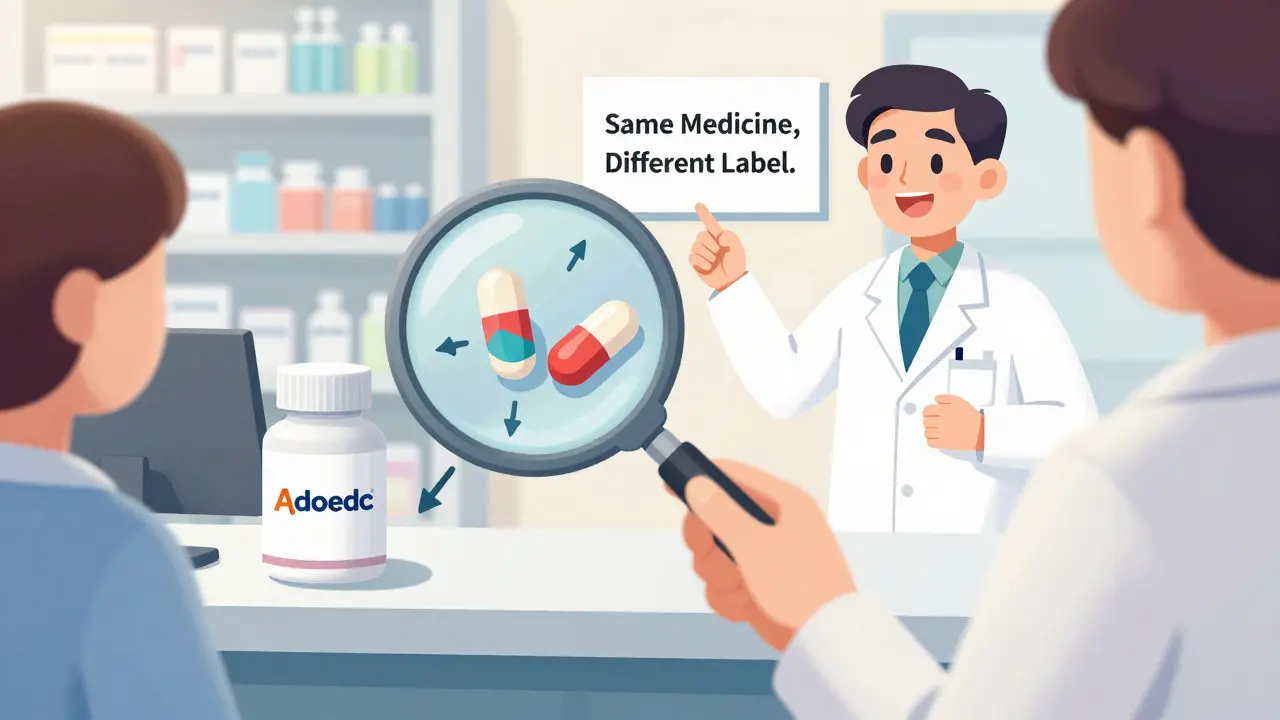
When your prescription runs out and you head to the pharmacy, you might see a new pill that looks different but has the same name as your old one. That’s not a mistake - it could be an authorized generic. These aren’t your typical generic drugs. They’re the exact same medication as the brand-name version, made by the same company, with the same ingredients, the same factory, and the same quality control. The only difference? No brand name on the label. And because of that, they often cost less.
But here’s the thing: not every brand-name drug has an authorized generic. And if you’re trying to save money, knowing which ones do can make a real difference in your out-of-pocket costs. So which drugs actually offer this option? Let’s break it down.
What Exactly Is an Authorized Generic?
An authorized generic is a brand-name drug that’s sold without the brand name on the bottle. It’s not a copy. It’s not a look-alike. It’s the real thing - same active ingredient, same inactive ingredients, same manufacturing process. The FDA defines it clearly: "An approved brand name drug that is marketed without the brand name on its label. Other than the fact that it does not have the brand name on its label, it is the exact same drug product as the branded product."
Unlike traditional generics, which go through their own approval process (called an ANDA), authorized generics use the original brand’s New Drug Application (NDA). That means they skip the bioequivalence tests because they’re literally the same pill, just repackaged. This matters, especially for drugs where even tiny changes in inactive ingredients - like fillers or dyes - can affect how your body responds.
For example, if you’re taking levothyroxine for thyroid issues, switching from one generic to another can cause your thyroid levels to swing. That’s because traditional generics may use different inactive ingredients. But an authorized generic? It’s the same as the brand. No surprises.
How Are Authorized Generics Different from Regular Generics?
Think of it this way: traditional generics are like a close cousin. They have the same active ingredient, but they might use different binders, coatings, or colors. Sometimes, those differences cause side effects or make the drug less effective for certain people.
Authorized generics? They’re identical twins. Same formula. Same manufacturing line. Same quality standards. The only thing that changes is the label.
Here’s a quick comparison:
| Feature | Authorized Generic | Traditional Generic |
|---|---|---|
| Active Ingredient | Identical to brand | Identical to brand |
| Inactive Ingredients | Identical to brand | May differ |
| Manufactured By | Brand company or licensed partner | Third-party generic manufacturer |
| Approval Path | Uses brand’s NDA | Requires ANDA |
| Appears in FDA Orange Book | No | Yes |
| Bioequivalence Testing | Not required | Required |
For patients on narrow therapeutic index drugs - like warfarin, levothyroxine, or phenytoin - this difference isn’t just technical. It’s life-changing. A 2020 study in US Pharmacist found that patients switching from a traditional generic to an authorized generic of levothyroxine reported better symptom control and fewer lab adjustments. Why? Because their body didn’t have to adjust to new fillers or coatings.
Which Drugs Have Authorized Generics?
The FDA updates its official Listing of Authorized Generic Drugs regularly. As of October 2025, there are over 200 active authorized generics on the list. Here are some of the most common ones you’re likely to encounter:
- Colchicine - Authorized generic of Colcrys (used for gout). Made by Prasco Laboratories.
- Methylphenidate ER - Authorized generic of Concerta (ADHD treatment). Made by Watson/Actavis.
- Celecoxib - Authorized generic of Celebrex (pain and inflammation). Made by Greenstone Pharmaceuticals.
- Levothyroxine - Authorized generic of Unithroid (thyroid replacement). Made by Jerome Stevens Pharmaceuticals.
- Albuterol sulfate - Authorized generic of ProAir HFA (asthma inhaler). Made by Teva. Launched in 2019 after patent expiry.
- Empagliflozin - Authorized generic of Jardiance (diabetes medication). Added to the FDA list in October 2025.
These aren’t random picks. They’re drugs where consistency matters. Gout, ADHD, asthma, diabetes - these are conditions where even small changes in how the drug is absorbed can affect outcomes. That’s why manufacturers and doctors favor authorized generics for these.
Not every drug has one. In fact, only about 10% of brand-name drugs have authorized generic versions. The reason? It’s a business decision. Brand companies use authorized generics as a way to compete with traditional generics - often launching them right as the 180-day exclusivity period for the first generic hits the market. In 70% of cases, the authorized generic enters during that window to capture market share before prices drop too far.
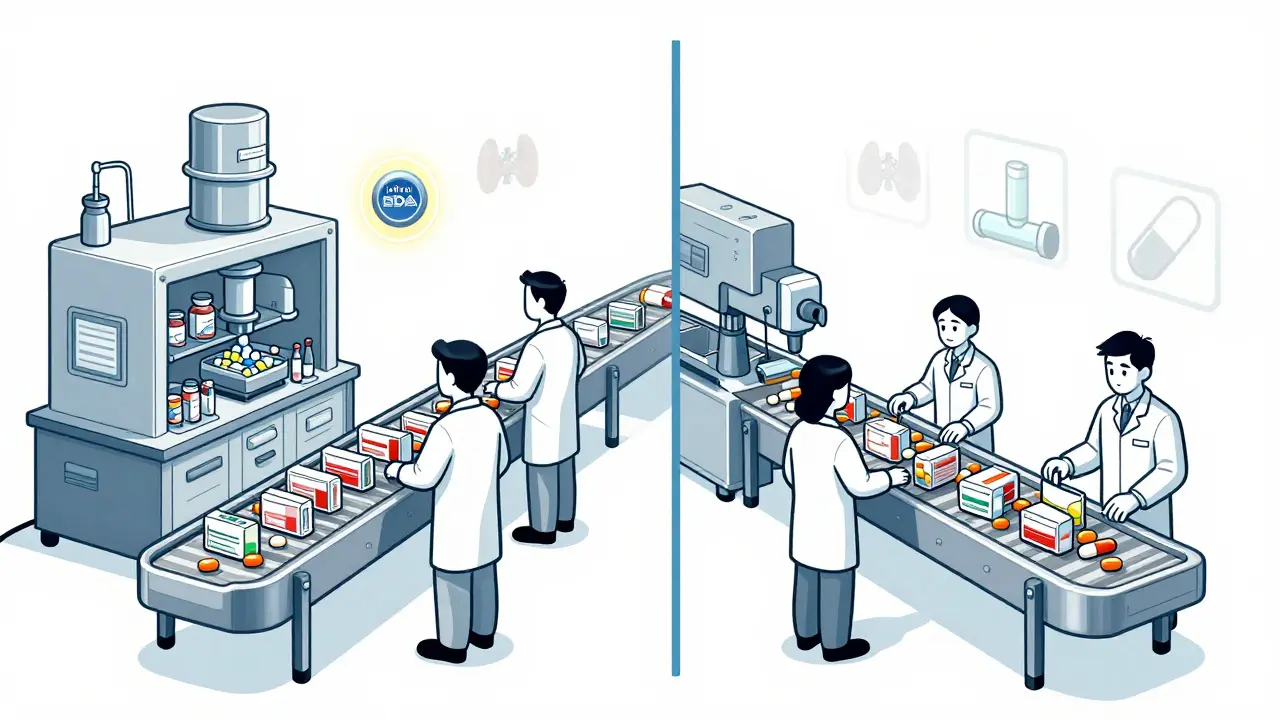
Why Don’t All Drugs Have Authorized Generics?
It’s not about whether they can make one. It’s about whether they want to.
Brand manufacturers often hold patents for years, then let generics in. But instead of letting the price crash, they sometimes launch their own authorized generic - at a lower price - to keep control of the market. This strategy helps them keep revenue from patients who still trust the brand, while also offering a cheaper option.
But here’s the catch: research from Health Affairs shows that in markets with authorized generics, prices drop 15% less in the first year after patent expiry than in markets without them. In other words, authorized generics can slow down price competition. That’s why some policymakers are watching them closely.
Still, for patients, the trade-off can be worth it. If you’ve had trouble with traditional generics - nausea, dizziness, unstable lab results - an authorized generic might be the solution.
How to Find Out If Your Drug Has an Authorized Generic
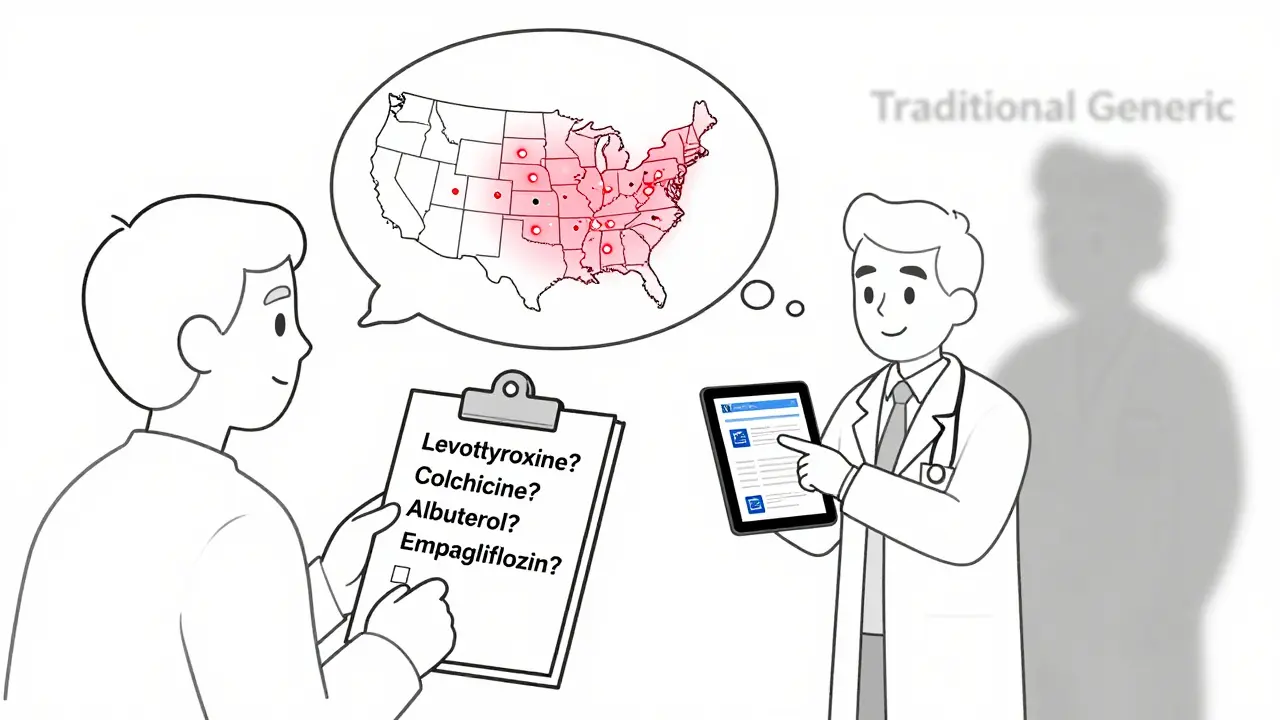
The easiest way? Ask your pharmacist. They can check the pharmacy system. Authorized generics appear under the generic name but with a manufacturer code that flags them as "authorized."
Or, go directly to the FDA’s official list: Listing of Authorized Generic Drugs (updated October 10, 2025). It’s the only source that confirms which drugs have been officially authorized.
Also, check your prescription label. If the manufacturer is the same company that makes the brand-name version - like Teva making the authorized version of ProAir HFA - that’s a strong clue.
Some pharmacies automatically substitute authorized generics if they’re available and your insurance allows it. But if you prefer the brand or want to avoid an authorized generic, you can ask your doctor to write "dispense as written" on the prescription.
What You Should Know Before Switching
Here’s the biggest mistake people make: they assume a different-looking pill means it’s a different drug. That’s not true with authorized generics. The color, shape, or imprint on the pill might change - but the medicine inside? Exactly the same.
Pharmacists are trained to explain this. The American Pharmacists Association recommends saying: "Even though this pill looks different, the medicine inside is chemically identical to what you’ve been taking. It’s safe to switch."
If you’ve had bad reactions to generics before - especially for thyroid, seizure, or blood thinner medications - ask your doctor if an authorized generic is an option. It might be the missing piece.
What’s Next?
The number of authorized generics is growing. In 2025 alone, 17 new ones were added to the FDA list. Analysts predict a 5-7% annual increase through 2027. More drugs will likely follow - especially those with high costs and narrow therapeutic windows.
For now, if you’re on a brand-name drug and you’re paying more than you should, ask: "Is there an authorized generic for this?" You might be surprised how easy it is to save money - without changing the medicine you trust.
All Comments
Scott Conner February 9, 2026
so like... if my levothyroxine looks different now but says teva on the bottle, am i still getting the same stuff? idk just asking lol
Randy Harkins February 11, 2026
Yes. Absolutely. I switched to the authorized generic for my Concerta last year and my focus didn’t drop a beat. Same pill, different label. I used to stress about every little change-color, shape, even the smell-but once I learned the science behind it, I realized I was fighting ghosts. The FDA doesn’t lie. If it’s authorized, it’s the real deal. No need to panic. Just save the cash and keep living.
Tasha Lake February 11, 2026
Authorized generics are fascinating from a regulatory standpoint. Since they piggyback on the NDA rather than filing an ANDA, they bypass bioequivalence testing entirely-because they’re not ‘equivalent,’ they’re identical. This is huge for narrow therapeutic index drugs where even 5% variation in dissolution can trigger clinical instability. The fact that they’re manufactured on the same line, with the same excipients, means pharmacokinetic profiles are indistinguishable from the brand. That’s not marketing-it’s pharmacology.
Chelsea Cook February 12, 2026
Oh wow, so the reason my doctor won’t let me switch to just any generic for my Jardiance is because they’re scared I’ll turn into a zombie? 😂 I thought it was just them being extra. Turns out it’s because the fillers in regular generics might make me hallucinate my bank account. Thanks for the clarity, internet. I’m saving this.
Tatiana Barbosa February 13, 2026
My endo switched me to the authorized generic for levothyroxine after I had three TSH spikes in six months. I was convinced it was stress, diet, sleep-turns out it was the talc in the generic. Authorized version? Stable for 14 months now. No more 8 a.m. panic attacks before labs. If you’ve ever felt ‘off’ on a generic, ask for this. It’s not a luxury-it’s a medical necessity for some of us.
John Sonnenberg February 14, 2026
Let me get this straight. The same company that makes Celebrex... makes a pill that’s chemically identical... but calls it something else... and sells it cheaper... and the FDA says it’s okay? This isn’t capitalism. This is a psychological experiment. Who thought this up? And why do I feel like I’ve been lied to my whole life?
Tricia O'Sullivan February 14, 2026
As someone who has been managing chronic pain for over a decade, I can say with certainty that authorized generics have been a quiet revolution. I no longer dread the pharmacy counter. No more ‘Oh, this looks different’ moments. I trust the process. I trust the science. And I trust that my insurer isn’t trying to nickel-and-dime me into non-compliance. Thank you for sharing this information-it deserves far more attention.
John McDonald February 15, 2026
My mom’s on albuterol and she was terrified to switch because the inhaler felt ‘weird.’ Took her 3 weeks to adjust-just because the plastic casing was different. But once she realized the medicine inside was the same, she started saving $80/month. She’s now telling all her friends. This isn’t just about money-it’s about dignity. No one should feel like they’re taking a ‘lesser’ version of their medicine. They’re not. They’re getting the same thing. Period.
PAUL MCQUEEN February 16, 2026
So let me get this. The brand company makes the generic version of their own drug to stop other generics from undercutting them? That’s not competition. That’s a monopoly with a wink and a nod. And we’re supposed to cheer because we get to pay $20 instead of $30? The system is rigged. And this is just another layer of the scam.
Karianne Jackson February 17, 2026
OMG I JUST SWITCHED TO THE AUTHORIZED GENERIC FOR COLCHICINE AND MY GOUT FLARES ARE GONE??? I WAS SO SCARED BUT NOW I’M CRYING I’M SO HAPPY
Lyle Whyatt February 17, 2026
Look, I’m not a doctor, I’m not even a pharmacist-I’m just a guy who’s been on five different generics for his blood pressure med and ended up in the ER twice because his BP went haywire. Then his doctor said, ‘Try the authorized version.’ I did. Six months later, I’m stable. My BP is normal. My anxiety is down. My wife says I’m not yelling at the TV as much. I didn’t even know this was a thing. If you’ve ever had a weird reaction to a generic, don’t assume it’s you. Ask your pharmacist. Ask your doctor. It might be the difference between surviving and suffering.
glenn mendoza February 19, 2026
It is with considerable scientific and ethical gravitas that I acknowledge the significance of authorized generics within the pharmaceutical landscape. The regulatory integrity afforded by the utilization of the original New Drug Application, coupled with the fidelity of manufacturing processes, ensures that therapeutic equivalence is not merely presumed, but demonstrably actualized. For patients requiring pharmacokinetic consistency, particularly those with conditions governed by narrow therapeutic indices, the availability of authorized generics represents not merely a cost-saving measure, but a clinically imperative intervention. One must commend the FDA for its rigorous oversight in maintaining the integrity of this classification.
Susan Kwan February 19, 2026
Wow, so the drug company makes the generic version so they can still make money while pretending to be nice? Brilliant. I bet they’re also donating to orphanages and feeding puppies. /s
Jessica Klaar February 21, 2026
I’m from the U.S., but my sister lives in Ireland and she just told me they don’t even have authorized generics here. She’s been stuck with inconsistent generics for her epilepsy meds. She’s had seizures because of fillers. I’m sending her this article. This isn’t just a U.S. issue-it’s a global one. We need more transparency. More education. More access. This isn’t a luxury. It’s a right.
Random Guy February 22, 2026
so like... if i take the authorized generic... does that mean my insurance will stop covering the brand? like... is this a trap? i feel like i just got played