
You’ve just been diagnosed with an autoimmune condition. Your joints ache, your skin flares, or your energy levels have plummeted because your immune system is attacking healthy tissue. The doctor hands you a prescription for corticosteroids, synthetic medications that mimic cortisol to rapidly suppress inflammation and immune activity. You take the first pill, and within days, the pain vanishes. It feels like a miracle drug. But then you start hearing whispers about "moon face," brittle bones, and weight gain. Why do doctors prescribe these powerful drugs if they come with such a heavy baggage? The answer lies in a delicate balancing act between immediate survival and long-term quality of life.
The Fast-Acting Fire Extinguisher
Think of an autoimmune flare-up as a house fire. Your immune system has gone rogue, sending inflammatory cells to attack your own organs. Corticosteroids are the fire extinguisher. They don’t rebuild the house (that’s what lifestyle changes and other meds might do later), but they put out the flames fast. This speed is their superpower. Unlike newer biologics or immunosuppressants like methotrexate, which can take weeks or months to reach full effectiveness, corticosteroids work in hours or days. According to experts at Johns Hopkins, this rapid onset makes them the go-to choice for acute crises, such as severe asthma attacks, lupus flares, or vasculitis where organ damage is happening right now.
The mechanism is straightforward yet profound. These drugs bind to receptors on almost every cell in your body. Once attached, they tell the cell’s DNA to stop producing inflammatory proteins like cytokines and enzymes like cyclooxygenase-2. Essentially, they hit the mute button on the alarm bells your body is ringing. For conditions like rheumatoid arthritis or inflammatory bowel disease, this means swelling goes down, pain eases, and function returns quickly. Dr. Eric Topol, a leading researcher, notes that while their toxicity profile requires careful management, no other class of anti-inflammatory agents is quite as potent in the short term.
Who Needs Them and Who Doesn’t?
Not all autoimmune diseases respond to steroids, and using them when they won’t help exposes you to risks without rewards. They are highly effective for systemic issues where inflammation is widespread, such as Systemic Lupus Erythematosus (SLE), Rheumatoid Arthritis (RA), and certain types of vasculitis. In aggressive cases like Wegener's granulomatosis or Goodpasture's syndrome, high-dose pulses of methylprednisolone are often combined with stronger drugs like cyclophosphamide to save kidney function or lung capacity.
However, there are clear boundaries. Research published in PMC indicates that corticosteroids are generally ineffective for four specific conditions: adult advanced Type 1 diabetes, Hashimoto's thyroiditis, Graves' disease, and advanced primary biliary cholangitis. Why? Because in these cases, the damage to the secreting cells is already done, or the mechanism isn't primarily driven by the type of inflammation steroids target. Early-stage Type 1 diabetes might see some benefit, but once the beta cells are gone, steroids won't bring them back. Understanding whether your specific diagnosis falls into the "responsive" or "non-responsive" category is the first step in deciding if this medication belongs in your toolkit.
The Price of Peace: Short-Term Side Effects
While the relief is sweet, the initial side effects can be jarring. Most patients notice changes within the first few weeks. Insomnia is common because steroids mimic cortisol, the hormone that keeps you alert during the day. Taking your dose in the morning rather than the evening helps align with your natural rhythm and reduces sleep disruption. Mood swings, anxiety, or even euphoria can occur as the brain chemistry shifts. Increased appetite leads to weight gain, often concentrated around the abdomen and face-a phenomenon colloquially known as "moon face."
These early symptoms are usually reversible. Once the dose is lowered or the course ends, sleep patterns normalize, mood stabilizes, and appetite returns to baseline. However, ignoring these signals can lead to poor adherence. Patients often feel too good on the medication to worry about side effects, or too uncomfortable to continue. Communication with your healthcare provider about managing these temporary hurdles is key to staying on track until the disease is under control.

The Long Game: Chronic Use Risks
If you require corticosteroids for more than three months, the conversation shifts from temporary discomfort to structural health risks. The Australian Prescriber highlights three major concerns for long-term users: osteoporosis, cataracts, and adrenal insufficiency. Steroids interfere with how your body uses calcium and vitamin D, leading to bone density loss. This increases fracture risk significantly, even in younger patients. Regular bone density scans and preventive measures like calcium supplementation or bisphosphonates are often recommended alongside long-term therapy.
| Medication | Potency Relative to Hydrocortisone | Duration of Action | Common Uses |
|---|---|---|---|
| Hydrocortisone | 1x | Short (8-12 hours) | Addison's disease, mild allergic reactions |
| Prednisone | 4-5x | Intermediate (12-36 hours) | Rheumatoid arthritis, asthma, lupus |
| Methylprednisolone | 5x | Intermediate (12-36 hours) | Severe flares, IV pulses for vasculitis |
| Dexamethasone | 25-30x | Long (36-72 hours) | Cerebral edema, cancer-related inflammation |
Eye health is another silent casualty. Prolonged use raises the risk of posterior subcapsular cataracts, which can impair vision significantly. Unlike age-related cataracts, these can develop relatively quickly in steroid users. Regular eye exams are non-negotiable if you’re on chronic therapy. Additionally, steroids can elevate blood sugar levels, potentially triggering steroid-induced diabetes or worsening existing insulin resistance. Monitoring glucose levels becomes part of the routine for many patients.
Adrenal Suppression and Tapering
Your body naturally produces cortisol via the hypothalamic-pituitary-adrenal (HPA) axis. When you flood your system with synthetic steroids, your body senses enough cortisol is present and stops making its own. This is called adrenal suppression. If you stop taking the medication abruptly, your body can’t ramp up production fast enough, leading to an adrenal crisis-a dangerous drop in blood pressure and blood sugar. This is why tapering off steroids is critical. You can’t just quit cold turkey after long-term use.
Guidelines suggest that therapy lasting less than three weeks or doses below 10 mg of prednisone daily are unlikely to cause significant HPA suppression. However, anyone showing Cushingoid features (the physical signs of excess steroid exposure) likely has suppressed axes. Doctors typically reduce the dose slowly over weeks or months, allowing the adrenal glands time to wake up and resume normal function. Skipping this step can land you in the emergency room.
Minimizing Damage: Modern Strategies
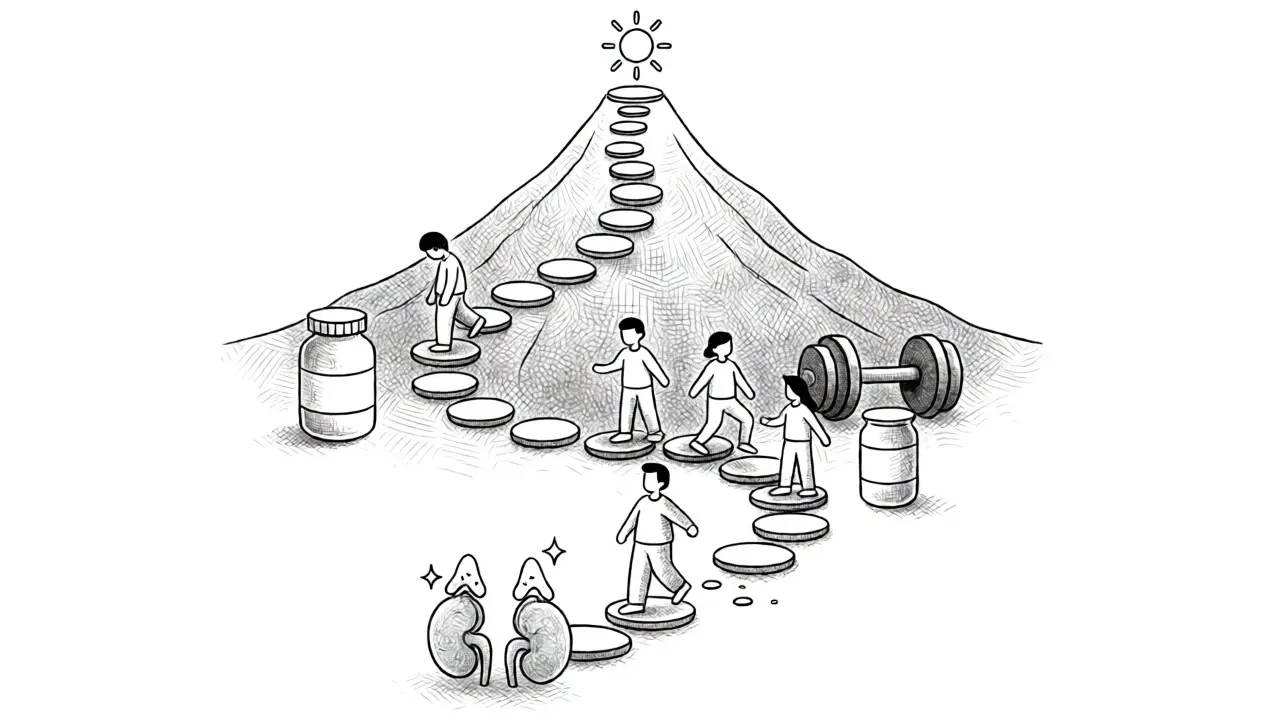
The goal in modern rheumatology and immunology is not necessarily to eliminate steroids entirely, but to use the minimum effective dose for the shortest possible time. This is where combination therapies shine. Pairing low-dose steroids with steroid-sparing agents-like methotrexate, azathioprine, or biologics like rituximab-allows doctors to lower the steroid dose while keeping the disease in remission. For instance, studies show that combining rituximab with steroids improves response rates in certain blood disorders compared to steroids alone, extending the period patients stay symptom-free.
Lifestyle adjustments also play a huge role. Weight-bearing exercises help combat bone loss. A diet rich in calcium and vitamin D supports skeletal health. Limiting sodium intake helps manage fluid retention and blood pressure spikes. Using topical formulations instead of oral pills whenever possible (like creams for eczema or inhalers for asthma) drastically reduces systemic side effects. The Frontiers in Immunology notes that new research is exploring GILZ protein-based pharmaceuticals, which aim to replicate the anti-inflammatory benefits of steroids without the metabolic downsides, offering hope for future treatments.
Frequently Asked Questions
Do corticosteroids cure autoimmune diseases?
No, they do not cure the underlying disease. They suppress the immune response and reduce inflammation, which controls symptoms and prevents organ damage. Remission is possible, but stopping treatment often leads to flares unless other maintenance therapies are in place.
How long is considered long-term use?
Generally, use exceeding three months is considered long-term. At this stage, risks like osteoporosis, cataracts, and adrenal suppression become significant, requiring proactive monitoring and preventive care.
Can I stop taking steroids if I feel better?
Never stop abruptly. Doing so can cause an adrenal crisis because your body has stopped producing its own cortisol. Always follow a tapering schedule prescribed by your doctor to safely wean off the medication.
Why do steroids make me gain weight?
Steroids increase appetite and alter metabolism, causing the body to store fat differently, particularly in the face, neck, and abdomen. They also cause fluid retention. Managing diet and exercise can help mitigate this, though some redistribution may persist while on higher doses.
Are there alternatives to oral steroids?
Yes, depending on the condition. Biologics, DMARDs (disease-modifying antirheumatic drugs), and targeted therapies offer ways to control disease without systemic steroids. Localized treatments like injections or inhalers also reduce systemic exposure.
All Comments
Mary Tait September 4, 2026
This is the most accurate description of the medical establishment's approach to autoimmune patients I have ever read. They treat us like lab rats with a fire extinguisher that also burns down the house. It is infuriating how they ignore the long-term devastation while praising the immediate relief. We deserve better than being sacrificed for their convenience.
Jim Bisesi September 5, 2026
ugh... another article telling me my life is hard because i took meds. 🙄
Louis Tarro September 6, 2026
I truly appreciate the nuance here, though it breaks my heart to see such detailed warnings about adrenal suppression. Many folks out there are suffering in silence, unaware that their fatigue isn't just 'in their head' but a direct result of HPA axis shutdown. It’s a brutal trade-off, really. We give up our bone density and mental stability for a few weeks of not screaming in pain. The empathy required from doctors should be immense, yet often feels lacking when they just hand over the prescription pad without discussing the tapering nightmare ahead. It’s a colorful mess of biology and bureaucracy.
Shu Chowdhury September 7, 2026
the part about moon face really hit home
i remember crying in the bathroom after my first flare treatment
it’s so weird how your body betrays you twice
once by attacking itself and then by holding onto every gram of water
glad someone wrote this down clearly
Rebecca Makayla Crane September 8, 2026
Oh, darling, please. 😒 This is hardly groundbreaking insight. Any second-year med student knows that corticosteroids are a blunt instrument. The real issue isn't the drugs themselves, but the sheer incompetence of practitioners who fail to transition patients to biologics fast enough. 🙄 It’s almost embarrassing how many people still think prednisone is a viable long-term strategy. It’s like using a sledgehammer to crack a nut while ignoring the fact that you’re destroying the table. 💅🏼✨
Amy B September 9, 2026
I’ve been on low-dose prednisone for two years now and honestly? The weight gain is the least of my worries compared to the mood swings. One day I’m euphoric and cleaning the whole house, the next I’m sobbing because I dropped a spoon. It’s wild. But yeah, the tapering process is terrifying. I’m always scared I’ll flare up if I drop too fast. Do you guys find that diet changes help with the fluid retention at all?
Rob Alderman September 10, 2026
The comparison to a fire extinguisher is apt, albeit simplistic. What fails to be addressed is the socioeconomic disparity in access to steroid-sparing agents. For the affluent, biologics are an option; for the rest, steroids remain the default due to cost and insurance hurdles. This creates a two-tiered system of health outcomes based solely on wallet size. A rather tragic reality of modern pharmacology.
Aurelio Haney September 11, 2026
Finally, someone states the obvious: Steroids are poison we drink for peace. :/ If you aren't monitoring bone density monthly, you're playing Russian roulette with your skeleton. Most docs are lazy and just prescribe the pill. Wake up!
Kimberley Odish September 12, 2026
The analysis lacks rigor regarding the specific metabolic pathways affected by dexamethasone versus prednisone. Furthermore, the assertion that lifestyle adjustments can mitigate bone loss is dangerously optimistic given the profound impact on osteoblast function. Patients are misled into thinking exercise alone will suffice, which is empirically false in high-dose scenarios. This oversimplification contributes to poor adherence and subsequent fractures. It is frankly negligent to suggest otherwise without citing longitudinal data on bisphosphonate efficacy in this specific cohort.
Adam Viruet September 13, 2026
Wait... hold on. Stop right there!!! Are we seriously pretending that 'lifestyle changes' fix adrenal suppression??? NO!!! That is absolute nonsense!!! You cannot eat your way out of HPA axis failure!!! And don't get me started on the 'fire extinguisher' metaphor... it's cliché... SO Cliché!!! Why does everyone use it??? It implies control... but there IS NO CONTROL... only damage mitigation... and even that is debatable!!!
Evelyn Reed September 13, 2026
interesting take on the hpa axis feedback loop. usually people miss the nuance between exogenous suppression and endogenous recovery timelines. the variance in individual metabolism makes generic tapering schedules kinda flawed imo. personalized medicine would be ideal but insurance hates it. bummer.
Falgun R Patel September 15, 2026
It is important to remember that healing is not linear. While the side effects are daunting, the immediate reduction in inflammation allows the body to begin its own repair processes. Think of it as buying time. Time is the most valuable resource in autoimmune management. We must support each other through the tapering phases, knowing that the goal is remission, not just symptom masking. Stay strong, friends. 🌱
Somnath Thombre September 15, 2026
hey hey! dont be so negative!! yes the side effects suck but being able to walk without pain is AMAZING!! 🙌 keep pushing thru the tough days! u got this!! 💪
Pramay Dattani September 16, 2026
this is basic info. why do we need articles for this?? in india we know steroids work but cause issues. simple logic. stop overcomplicating it with fancy words. just take the meds or dont. easy.