Decongestant Safety Checker
Is this decongestant safe for you?
This tool helps you determine if a decongestant is safe based on your blood pressure control and health conditions. The information is based on the latest medical guidelines.
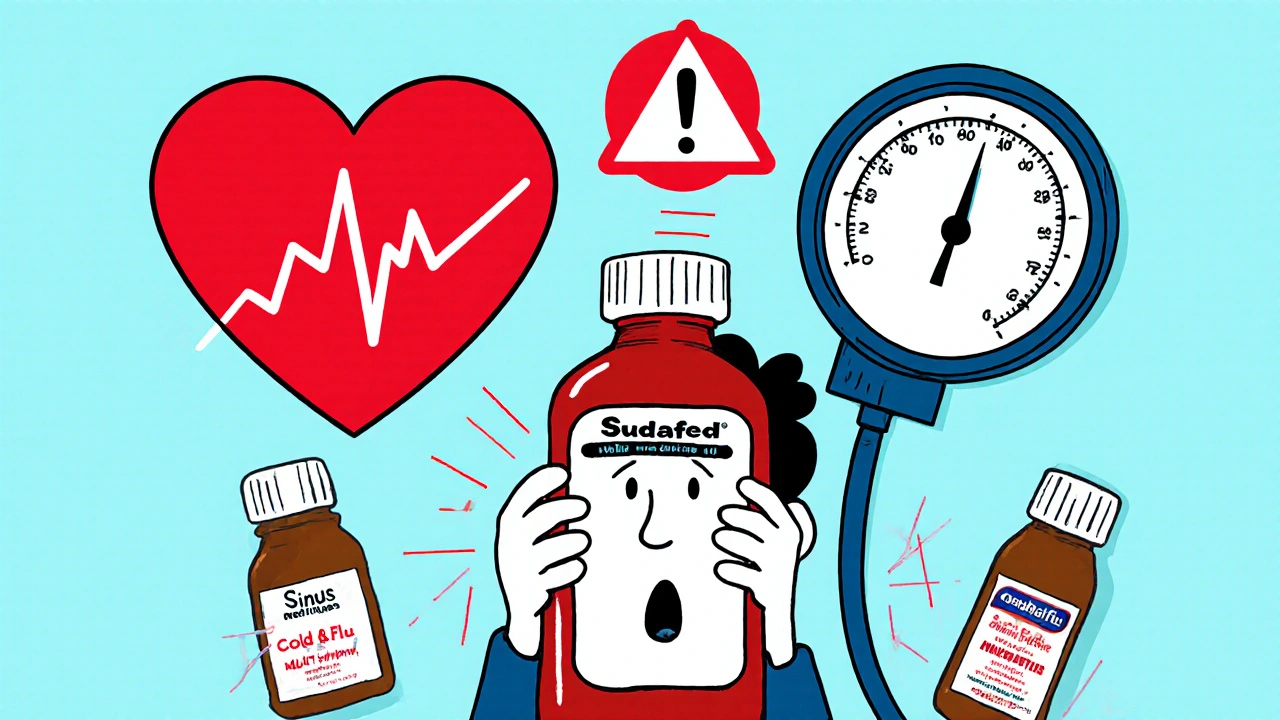
Many people reach for decongestants when they have a stuffy nose - it’s quick, easy, and available right on the shelf. But if you have high blood pressure, that little bottle could be hiding a serious risk. You might not realize it, but common cold and flu medicines like Sudafed, Advil Multi-Symptom, or Mucinex Sinus Max all contain ingredients that can push your blood pressure higher - sometimes dangerously so. This isn’t just a theoretical concern. Real people, including those who think they’re being careful, end up in the ER because they didn’t know what was in their medicine.
How Decongestants Work - and Why They’re Dangerous for High Blood Pressure
Decongestants like pseudoephedrine and phenylephrine work by shrinking swollen blood vessels in your nose. That’s why your nose clears up. But here’s the catch: those same drugs don’t just target your nasal passages. They tighten blood vessels all over your body. That means your heart has to pump harder to push blood through narrower arteries. The result? Your blood pressure rises.
It’s not a big jump for everyone. Most people with well-controlled hypertension might see a small increase - maybe 2 to 5 mmHg. But for about 5 to 10% of people with high blood pressure, the rise can be sharp and sudden. That’s enough to trigger headaches, dizziness, chest pain, or even a heart attack or stroke in vulnerable individuals.
The problem is worse with immediate-release forms, like tablets you take every 4 to 6 hours. They spike blood pressure faster than extended-release versions. And it doesn’t take much - a single 60 mg dose of pseudoephedrine has been shown to raise systolic pressure in clinical studies. Even small doses in children have caused dangerous spikes, as seen in a documented case where a 5-year-old’s blood pressure climbed to 135/80 after taking phenylephrine for just four days.
Which Decongestants Are the Biggest Risk?
Not all decongestants are the same. Here are the main ones to watch out for:
- Pseudoephedrine - Found in Sudafed, Claritin-D, Zyrtec-D, and many multi-symptom cold products. This is the most studied and most likely to raise blood pressure.
- Phenylephrine - Now the most common decongestant in OTC products after pseudoephedrine was moved behind the counter. Still carries risk, especially in higher doses or with prolonged use.
- Ephedrine - Rare in modern OTC products, but still found in some weight-loss or energy supplements. Highly dangerous for people with heart conditions.
- Naphazoline and Oxymetazoline - These are nasal sprays like Afrin. While they act locally, overuse can lead to systemic absorption and blood pressure spikes.
Even if you avoid Sudafed, you might still be taking these without knowing. Many cold, flu, and allergy medicines combine decongestants with pain relievers, antihistamines, or cough suppressants. Check the label. Look for the words “congestion,” “sinus,” or “multi-symptom.” If you see any of the names above in the active ingredients, that’s your red flag.
Who’s at Highest Risk?
It’s not just anyone with high blood pressure. Certain people face much higher danger:
- Those with uncontrolled hypertension - If your blood pressure is still above 140/90 despite medication, avoid decongestants entirely.
- People with heart disease, including past heart attacks, arrhythmias, or heart failure - Decongestants can trigger dangerous heart rhythms.
- Those with Prinzmetal angina - A rare form of chest pain caused by artery spasms. Decongestants can make these spasms worse.
- Patients taking MAO inhibitors like Nardil or Parnate - Combining these with decongestants can cause a life-threatening surge in blood pressure.
- People on tricyclic antidepressants - These can also interact badly, leading to rapid heart rate and high pressure.
Even if you don’t have any of these conditions, if you’re over 65 or managing multiple chronic illnesses, your body may handle these drugs differently. That’s why your doctor needs to be involved - even if you feel fine.

What About Blood Pressure Medications?
Decongestants don’t just raise pressure on their own. They can also make your blood pressure pills less effective. Beta-blockers, ACE inhibitors, and diuretics all work to lower your pressure - but a decongestant can undo that work in hours. You might think your meds are working because you’re taking them daily, but if you’ve been using a cold medicine, your numbers could be climbing without you knowing.
Some people don’t notice the change until they feel their heart racing or get a pounding headache. Others only find out when they check their pressure at home - and see a 20 or 30 point spike. That’s why monitoring your blood pressure more often during cold season is critical if you’re using any OTC medicine.
What Can You Use Instead?
You don’t have to suffer with a stuffy nose. There are safer options:
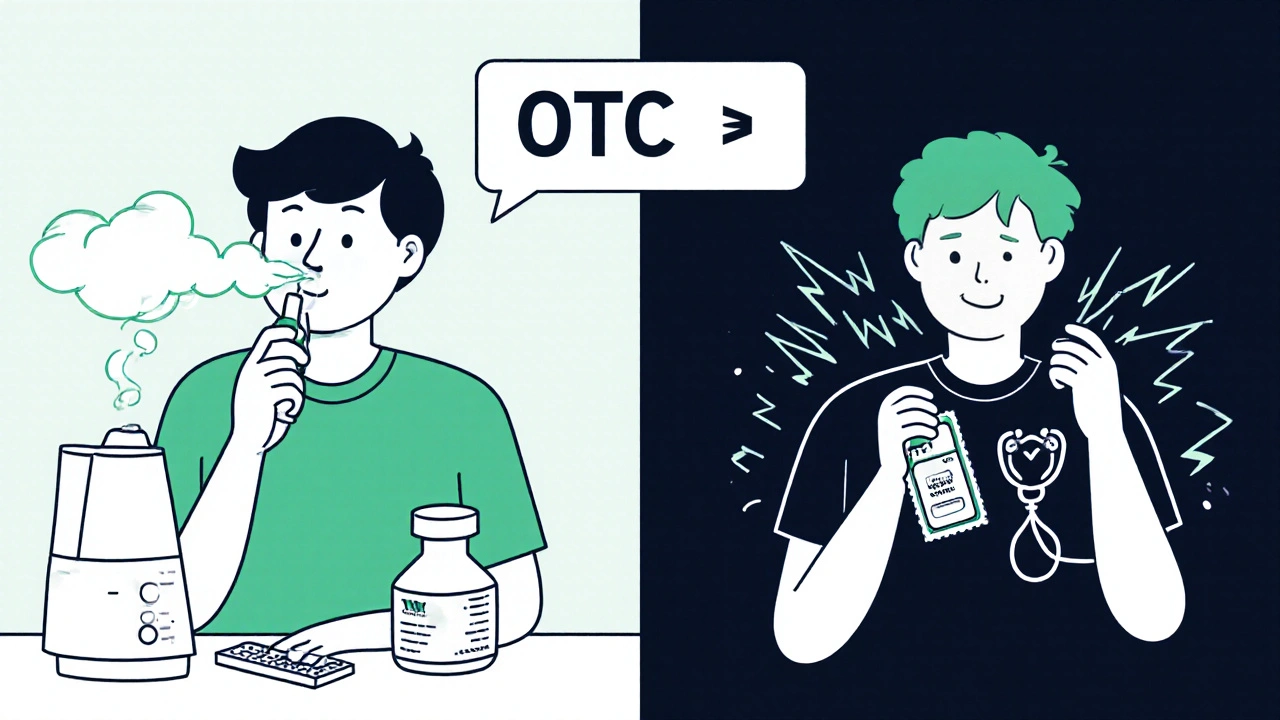
- Saline nasal sprays - These are just salt water. They flush out mucus and irritants without affecting your blood pressure.
- Steam inhalation - A hot shower or bowl of hot water with a towel over your head can open up your sinuses naturally.
- Humidifiers - Keeping the air moist helps reduce swelling in nasal passages.
- Antihistamines without decongestants - Like Claritin or Zyrtec (not the D versions). These help with allergy-related congestion without the vasoconstriction.
- Nasal strips - These physically open your nasal passages at night. No chemicals involved.
Even these alternatives should be discussed with your doctor if you have other conditions like glaucoma or prostate issues. But compared to decongestants, they’re low-risk.
What Pharmacists Know - And Why You Should Talk to Them
In the U.S., pseudoephedrine is kept behind the counter because of its potential for misuse and health risks. That means you have to ask for it, show ID, and answer questions. Pharmacists are trained to screen for high blood pressure, heart disease, and other red flags. They’re supposed to tell you if it’s unsafe.
But here’s the problem: many people don’t even ask. They grab a box labeled “Cold & Flu” and assume it’s fine. Pharmacists report spending 3 to 5 minutes per customer during cold season just explaining what’s in these products. That’s time they’re not spending on other patients.
And it’s not just pseudoephedrine. Phenylephrine is everywhere now - and many pharmacists say patients don’t realize it’s still a risk. The warning labels changed from “Do not use if you have high blood pressure” to “Ask your doctor if you have high blood pressure.” That shift means you’re expected to take responsibility - but most people don’t know how.
How to Read Labels Like a Pro
Here’s a quick cheat sheet for reading OTC medicine labels:
- Look for “decongestant” or “for congestion” in the product name.
- Check the “Active Ingredients” section - not just the brand name.
- Watch for these words: pseudoephedrine, phenylephrine, ephedrine, naphazoline, oxymetazoline.
- Avoid anything labeled “sinus,” “congestion,” “multi-symptom,” or “nighttime cold.”
- Check sodium content - some liquid cold medicines contain salt as a preservative, which can also raise blood pressure.
Examples of products to avoid: Tylenol Cold & Flu, Advil Cold & Sinus, Benadryl Allergy Plus Congestion, Mucinex Sinus-Max, DayQuil, NyQuil Cold & Flu.
If you’re unsure, take the bottle to your pharmacist. They’ll tell you in under a minute if it’s safe.
The Bottom Line
Decongestants aren’t off-limits for everyone with high blood pressure - but they’re not safe for most, either. If your pressure is controlled, talk to your doctor before using one. If it’s uncontrolled, skip them entirely. There’s no shame in asking for help. Your heart isn’t worth the risk of a quick fix.
And remember: just because it’s sold over the counter doesn’t mean it’s harmless. Millions of people with high blood pressure don’t realize they’re putting themselves at risk every time they pick up a cold medicine. Don’t be one of them. Read the label. Ask your pharmacist. Choose safer options. Your blood pressure - and your heart - will thank you.
Can I take pseudoephedrine if my blood pressure is controlled?
If your blood pressure is well-controlled (below 140/90) and you have no other heart or kidney issues, your doctor may allow a single low dose of extended-release pseudoephedrine. But you must monitor your blood pressure closely before and after taking it. Never take it without talking to your doctor first.
Is phenylephrine safer than pseudoephedrine?
No. While phenylephrine was once thought to be safer, recent studies show it still raises blood pressure - sometimes just as much as pseudoephedrine. It’s now the most common decongestant in OTC products, but it’s not a safe alternative for people with high blood pressure.
Can I use nasal sprays like Afrin if I have high blood pressure?
Short-term use (no more than 3 days) of oxymetazoline nasal sprays like Afrin is usually okay for most people with controlled hypertension. But overuse can cause rebound congestion and systemic absorption, which may raise blood pressure. Always check with your doctor before using.
What should I do if I accidentally took a decongestant and feel unwell?
If you feel your heart racing, get a severe headache, feel dizzy, or have chest pain after taking a decongestant, stop taking it immediately. Check your blood pressure. If it’s above 180/110 or you’re having symptoms, call emergency services. Don’t wait. This could be a medical emergency.
Are there any decongestants that are safe for high blood pressure?
There are no OTC decongestants that are completely safe for people with high blood pressure. The safest options are non-medicated: saline sprays, steam, humidifiers, and nasal strips. If you absolutely need medication, talk to your doctor about prescription alternatives that don’t affect blood pressure.
All Comments
Monica Lindsey November 30, 2025
Wow. Someone finally said it. People think OTC means ‘safe for everyone’ and then wonder why they end up in the ER. No, your nose isn’t that important. Stop being lazy and use a humidifier.
Jennifer Wang December 1, 2025
It is imperative to underscore that the pharmacological mechanism of alpha-adrenergic agonism, as exhibited by pseudoephedrine and phenylephrine, induces peripheral vasoconstriction, thereby elevating systemic vascular resistance and consequently increasing arterial blood pressure. This effect is both dose-dependent and clinically significant in patients with pre-existing hypertension, particularly when comorbid cardiovascular pathology is present.
stephen idiado December 3, 2025
Phenylephrine is a placebo decongestant anyway. FDA should ban it. The whole industry is a scam. You’re not getting relief-you’re getting a blood pressure spike and zero sinus clearance. Pharma won.
Subhash Singh December 3, 2025
May I inquire whether the clinical studies referenced in the article accounted for inter-individual variability in CYP2D6 metabolism, which may significantly modulate the pharmacokinetics of pseudoephedrine? Additionally, has any research been conducted on the pharmacodynamic interaction between phenylephrine and angiotensin receptor blockers?
Geoff Heredia December 4, 2025
THIS IS ALL A GOVERNMENT COVER-UP. They want you to buy expensive prescription meds instead of letting you use Sudafed. They’re also hiding that nasal sprays cause brain damage. I know a guy who got a stroke after using Afrin. He’s now a government informant. Don’t trust the FDA. They’re in bed with Big Pharma.
LINDA PUSPITASARI December 4, 2025
OMG YES this is so important 😭 I had no idea my cold medicine was making my BP spike 😣 I switched to saline spray and I feel so much better already 🙏 also pls tell your grandma this she still uses NyQuil every winter 💔
gerardo beaudoin December 5, 2025
I used to take Sudafed every time I got a cold. Then I checked my BP one day and it was 170/100. I stopped. Used steam and saline. Didn’t die. My BP’s back to normal. Just read the label. It’s not that hard.
Joy Aniekwe December 5, 2025
Oh, so now we’re supposed to trust pharmacists? The same people who sold me three different ‘safe’ cold meds last year and then acted like it was my fault I had a panic attack? 😌
Latika Gupta December 6, 2025
I’m so glad someone finally talked about this. I’ve been avoiding all OTC meds for years because I’m scared. But I don’t know what to use instead. Can you recommend a brand? Or should I just suffer? I’m scared to ask my doctor.
Sullivan Lauer December 8, 2025
Let me tell you something, folks. I’ve been managing hypertension for 14 years. I’ve been through every cold season, every flu wave, every sneeze that made me want to scream. And let me tell you-every single time I reached for that little bottle of Sudafed, I felt like I was cheating death. I didn’t just get a stuffy nose-I got a racing heart, a pounding skull, and panic so thick I could taste it. I’ve cried in front of my bathroom mirror after checking my BP and seeing 180/110 because I thought I’d killed myself with a cold medicine. But here’s the thing: I didn’t give up. I switched. I started using saline rinses, humidifiers, steam, nasal strips. I even bought a $20 neti pot. And guess what? I’m still alive. My BP is stable. My heart doesn’t feel like it’s trying to escape my chest. You don’t need a miracle drug. You just need to care enough to read the label. Your life isn’t worth a quick fix. Don’t be the person who says ‘I didn’t know.’ You know now. And that’s the first step to staying alive.
Sohini Majumder December 9, 2025
ok but like… why is phenylephrine even still a thing?? 😭 i mean like… it’s literally just sugar water with a fancy name?? and why do i have to be a detective just to buy medicine?? i just wanna sneeze and not die?? 💀
gerardo beaudoin December 11, 2025
That’s exactly why I started reading labels. I used to think ‘multi-symptom’ meant ‘helps everything.’ Turns out it just means ‘helps everything except your blood pressure.’