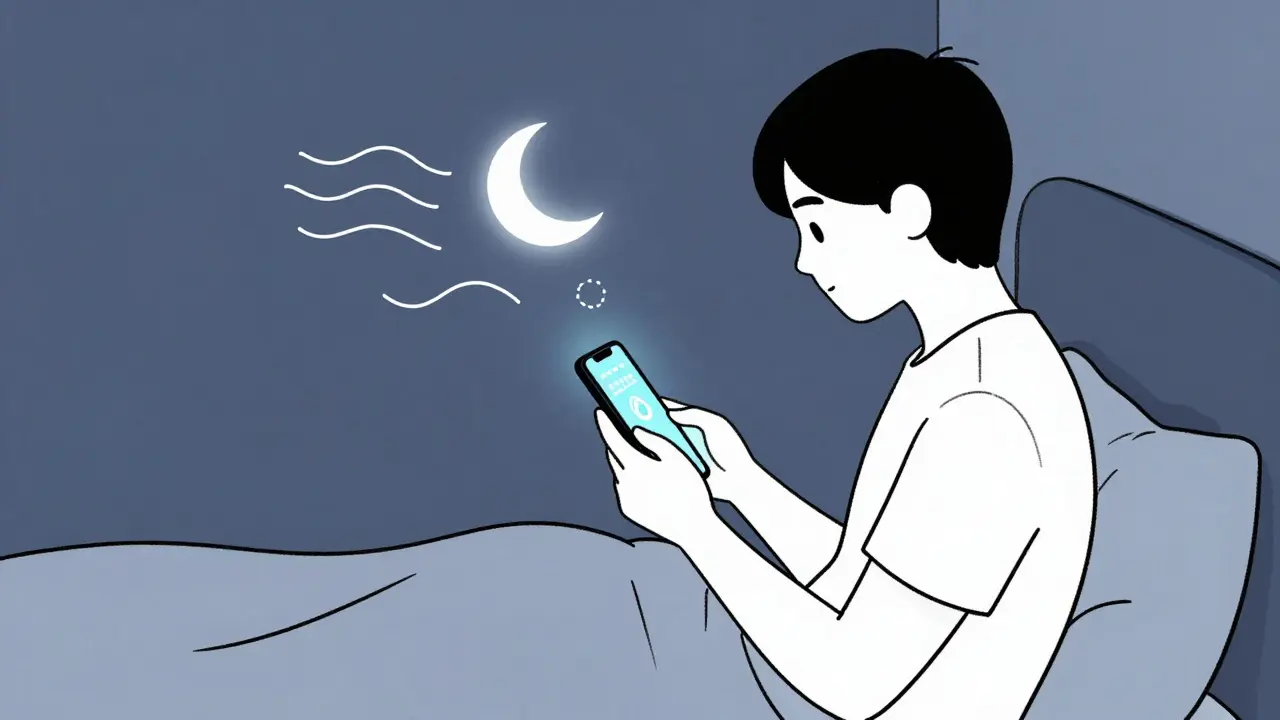
More people than ever are turning to their phones for mental health support. Whether it’s a guided meditation before bed, a chat with an AI therapist, or a weekly video call with a licensed counselor, digital tools are reshaping how we handle anxiety, depression, and stress. But with so many apps and services available, how do you know which ones actually help-and which ones might be putting your data at risk?
What’s Really in These Mental Health Apps?
There are over 20,000 mental health apps out there. Some help you track your mood. Others lead you through breathing exercises. A few connect you to real therapists via video or text. But not all of them are built the same.Apps like Calm and Headspace focus on mindfulness. Calm has over 100 million downloads, and Headspace claims 65 million users. They’re easy to use-open the app, pick a 5-minute session, and you’re done. No login, no pressure. But here’s the catch: the free versions often lock away the best content. After a few weeks, you’re stuck seeing the same basic meditations while the deeper programs sit behind a $70/month paywall.
Then there are apps like Wysa and Youper, which use AI to simulate cognitive behavioral therapy (CBT). Wysa has been tested in 14 clinical studies. Youper has published 7 peer-reviewed papers. That means they’re not just guessing what works-they’ve been tested on real people. But even these aren’t magic. A 2025 study found that only 29.4% of young people stick with digital mental health tools past the first month. Why? Because they don’t feel like they’re getting real help. Or worse-they feel ignored when they need it most.
Enterprise apps, used by companies to support employees, are more advanced. Some track stress levels through typing patterns or voice tone. Others give HR teams anonymous reports on team wellbeing-without revealing who’s struggling. One company reported a 50% drop in mental health-related sick days after rolling out a full wellness platform. But these tools are expensive and usually only available through employers.
Teletherapy: Real Therapists, Screen to Screen
If you’re looking for something deeper than a chatbot, teletherapy might be your answer. Services like BetterHelp and Talkspace connect you to licensed therapists via text, voice, or video. You can message your therapist anytime, and they’ll reply within 24 hours. It’s convenient. It’s private. And it’s expensive.Most plans cost between $60 and $90 a week. That’s more than a weekly coffee habit-but less than a single in-person session in many cities. On Trustpilot, BetterHelp has a 3.8 out of 5 rating. The good? Users love the therapist matching system. 78% of positive reviews mention how well they were paired. The bad? 63% of negative reviews complain about the cost. Many say they started strong but quit after a few months because they couldn’t afford it.
And here’s something most people don’t realize: teletherapy isn’t always covered by insurance. In the U.S., some plans include it. In the U.K., the NHS offers limited digital therapy options, but waitlists are long. In Germany, it’s different. The government approves certain apps as “DiGA” (Digitale Gesundheitsanwendungen), meaning doctors can prescribe them-and your public health insurance pays for them. Nearly a quarter of all approved DiGA apps are for depression. That’s a big deal. It means Germany treats digital mental health like real medicine.
Privacy: Your Thoughts Aren’t Just Data
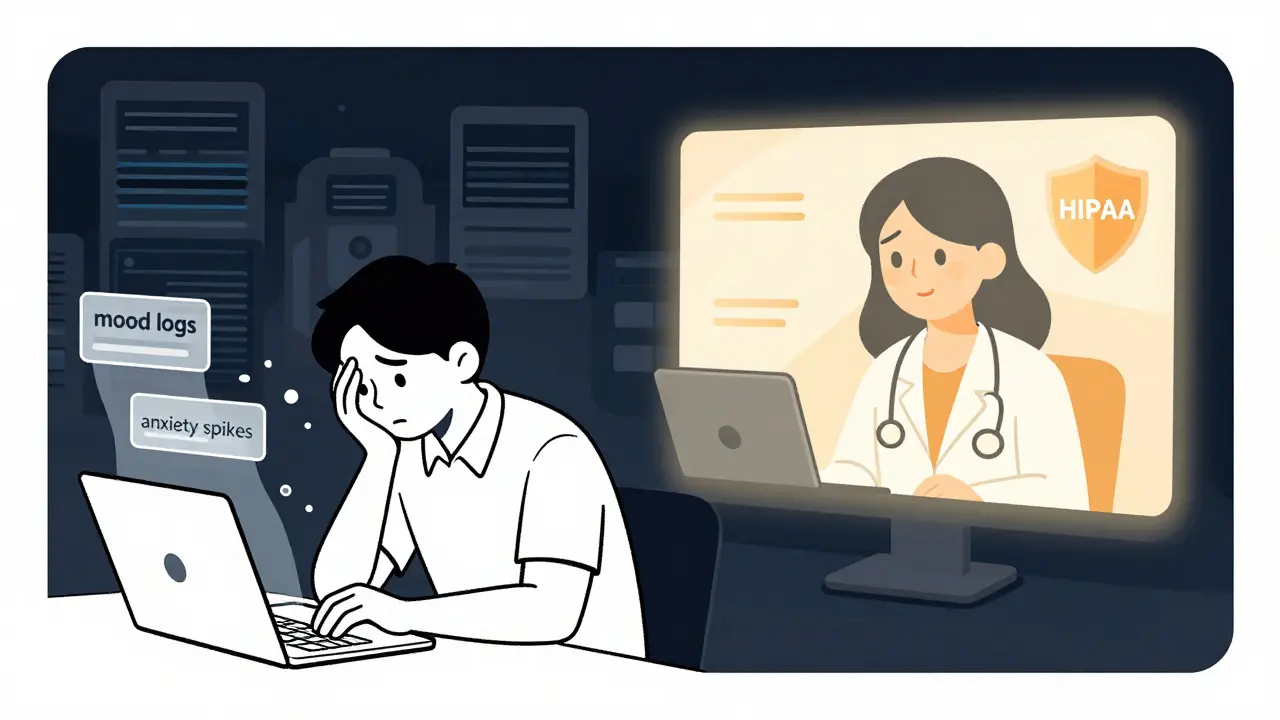
This is the part no one talks about enough. When you use a mental health app, you’re sharing your deepest thoughts. Your panic attacks. Your suicidal ideation. Your sleepless nights. And most apps don’t treat that information like sacred.A 2025 review of 578 mental health apps found that 87% had serious privacy flaws. Some sell your data to advertisers. Others store it on unencrypted servers. A few even share your mood logs with third-party analytics companies. One app was found to be sending user journal entries to Facebook’s ad network. That’s not a glitch. That’s a business model.
Even apps that say they’re “HIPAA-compliant” or “GDPR-certified” aren’t always safe. Compliance doesn’t mean they can’t sell your data-it just means they’re following the bare minimum legal rules. And if you’re using a free app, you’re almost certainly the product.
Here’s how to check: Look at the privacy policy. Not the summary. The full thing. If it says they “may share your information with partners for marketing purposes,” walk away. If it doesn’t mention encryption, walk away. If you can’t find a clear answer about who owns your data, walk away.
There are exceptions. Apps like 7 Cups and Sanvello have stronger privacy practices. Sanvello, for example, doesn’t sell data and allows users to delete everything with one click. But these are rare. Most apps are built for growth, not protection.
Why Most People Quit
You download an app. You use it for a week. You feel better. Then life gets busy. You forget to open it. A month later, you remember-and the app feels empty. That’s not your fault. It’s how most apps are designed.Research shows that 70% of users stop using mental health apps within 30 days. Why? Three reasons:
- App fatigue-too many notifications, too many features, too little clarity.
- Unmet expectations-you expected a therapist, got a chatbot.
- Usability issues-the app crashes, the interface is confusing, the sessions are too long.
One Reddit user wrote: “Downloaded 5 apps during lockdown. Stuck with Calm for 3 months. Then stopped because the free version became too limited.” That’s the story for millions.
The apps that survive are the ones that feel personal. The ones that adapt. The ones that remember you didn’t just log in-you were having a bad day. AI that learns your patterns, suggests content based on your mood, and nudges you gently-not aggressively-is more likely to keep you engaged.
What Works Best? The Hybrid Model
The most effective digital mental health tools aren’t just apps. They’re hybrids.Imagine this: You use an app to track your mood every morning. It notices you’ve been down for three days straight. It suggests a short CBT exercise. Then it asks if you’d like to book a 20-minute video call with a counselor-right now, or later today. You say yes. You talk. You feel heard. You close the app with a sense of relief.
This model-combining self-guided tools with live human support-has a 43% higher completion rate than apps or therapy alone. It’s not about replacing therapists. It’s about supporting them. And it’s the future.
By 2027, experts predict 65% of mental health apps will have direct links to licensed professionals. That’s a game-changer. It means digital tools won’t just be distractions-they’ll be gateways to real care.
How to Choose the Right Tool
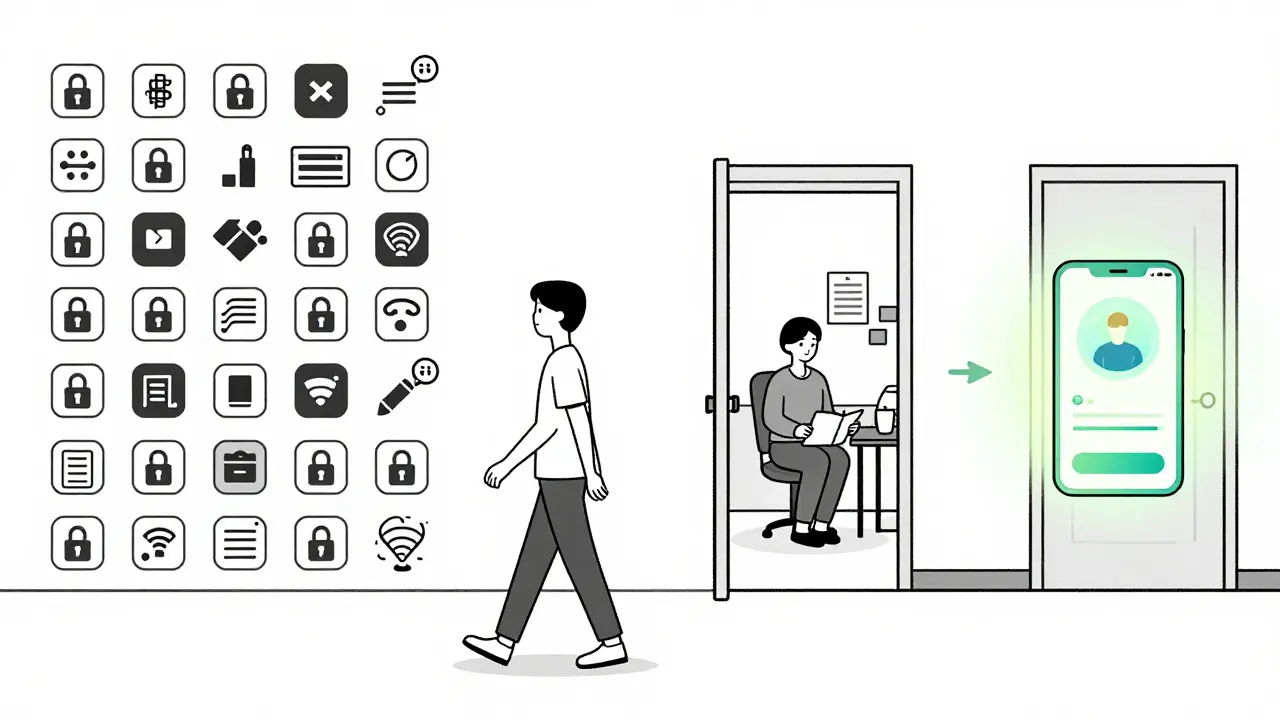
Not all apps are created equal. Here’s how to pick one that’s safe and useful:- Check for clinical backing-Look for apps that cite peer-reviewed studies. Wysa, Youper, and Sanvello are good examples.
- Read the privacy policy-If it’s longer than two pages and you can’t understand it, skip it.
- Look for transparency-Does the app say who owns your data? Can you delete it? Can you opt out of data sharing?
- Avoid free apps with hidden paywalls-If the good stuff is locked behind a subscription, ask yourself: Is this helping me-or just making money?
- Ask your doctor-If you’re struggling, talk to a healthcare provider. They may know of approved, reimbursable options in your area.
And remember: no app can replace a human therapist if you’re in crisis. If you’re thinking about hurting yourself, call a crisis line. In the U.K., that’s Samaritans at 116 123. It’s free. It’s confidential. And it’s always open.
Where Is This All Headed?
The digital mental health market is booming. It’s worth $7.5 billion in 2024 and could hit $17.5 billion by 2030. Investors are pouring money into AI-driven tools. Governments are starting to regulate them. But growth doesn’t mean quality.Only 15-20% of today’s apps will survive by 2030. The rest will vanish-either because they’re too flimsy, too invasive, or too expensive. The ones that stick around will be the ones that treat mental health like health-not a feature, not a trend, not a product.
The future isn’t about having a therapist in your pocket. It’s about having a system that supports you-when you need it, how you need it, and without selling your secrets along the way.
Are mental health apps actually effective?
Some are, but not all. Apps backed by clinical studies-like Wysa, Sanvello, and Youper-have shown measurable benefits for anxiety and mild depression. However, studies also show that 70% of users stop using mental health apps within 30 days. Effectiveness depends on the app’s design, how well it matches your needs, and whether it connects you to real human support when necessary.
Can teletherapy replace in-person therapy?
For many people, teletherapy works just as well as in-person sessions, especially for anxiety, depression, and stress management. However, it’s not a substitute for crisis care. If you’re experiencing severe symptoms, suicidal thoughts, or trauma, in-person therapy or emergency services are still the safest option. Teletherapy is best used as a consistent, accessible support-not a last resort.
Are mental health apps safe for my data?
Many are not. A 2025 review found that 87% of mental health apps have serious privacy vulnerabilities. Some sell your mood logs to advertisers. Others store data on unsecured servers. Always check the privacy policy. Look for apps that clearly say they don’t share your data, use end-to-end encryption, and let you delete your account permanently. If it’s free, assume your data is being used to make money.
Why do I keep quitting mental health apps?
You’re not alone. Most people stop because apps are poorly designed for long-term use. They overwhelm you with notifications, lock useful content behind paywalls, or don’t feel personal enough. The apps that work best adapt to your mood, offer gentle reminders, and connect you to human support when needed. If an app feels like a chore, it’s not helping-it’s adding stress.
Is there a free, trustworthy mental health app?
Yes, but options are limited. Apps like 7 Cups offer free peer support from trained listeners, and the NHS in the U.K. provides free digital CBT tools through its website. Some open-source apps, like Moodfit, are transparent about data use and don’t require subscriptions. But most “free” apps make money by selling your data. Always verify privacy practices before trusting any app-even if it’s labeled “free.”
Can I get mental health apps prescribed in the UK?
Not yet in the same way as in Germany, where approved apps (DiGA) can be prescribed and covered by public insurance. In the U.K., the NHS offers some free digital therapy programs, like SilverCloud, but they’re not widely promoted or easily accessible. Most people pay out-of-pocket. However, some GPs are beginning to recommend approved apps as part of treatment plans-especially for mild to moderate anxiety and depression.
All Comments
Jason Silva December 22, 2025
Bro, I swear these apps are just government mind-control tools disguised as meditation. Calm? More like CALM-AND-SURVEILLANCE. They track your breathing to predict when you're about to revolt. 😈📱
Theo Newbold December 22, 2025
87% of apps have privacy flaws? That's not a bug, it's the business model. The data is the product. You're not paying for therapy-you're paying to be profiled. ROI for these companies is 900% on user emotional data. No wonder they're booming.
Jay lawch December 24, 2025
In India, we have no such luxury. We have chai, family, and silence. You westerners think you can fix trauma with a 5-minute app? You think your algorithm knows your soul better than your grandmother's stare? The West commodifies pain and calls it innovation. Meanwhile, real healing happens in villages where no one logs in. This is not progress-it is colonization of the psyche.
Christina Weber December 26, 2025
Actually, the article is well-researched and properly cites peer-reviewed studies, unlike your baseless conspiracy theories. Also, 'Calm-and-surveillance' is not a real term. Please use accurate terminology when discussing clinical data. And no, emojis don't add credibility. 😒
Cara C December 26, 2025
I used Sanvello for a year after my dad passed. It didn't fix me, but it kept me from falling off the edge. The real win? When it noticed I hadn't logged in for 4 days and gently asked, 'Hey, you okay?' Not a sales pitch. Just a nudge. That's the kind of tech we need.
Michael Ochieng December 26, 2025
I'm from Kenya and we don't have access to most of these apps, but I've seen how they help my cousin in Chicago. The hybrid model? That's the future. Tech + human touch. Not either/or. We need more of this in low-resource areas-not less. Maybe open-source apps funded by NGOs could bridge the gap?
Jerry Peterson December 28, 2025
I work in HR and we rolled out a corporate wellness platform last year. Employee engagement with mental health resources went from 12% to 68%. The key? No tracking. No reports to managers. Just anonymous, opt-in tools. Privacy isn't optional-it's the foundation. If you're collecting data, you owe users transparency.
Orlando Marquez Jr December 29, 2025
It is imperative to note that regulatory compliance does not equate to ethical data stewardship. The distinction between GDPR adherence and genuine user autonomy remains profoundly underexamined in the digital mental health sector. One must interrogate not merely legality, but moral responsibility.
Jackie Be December 30, 2025
I downloaded 12 apps and cried 11 times because they all said 'you got this!' but never asked what I actually needed. Then I found 7 Cups and some stranger on the internet said 'me too' and I didn't feel alone anymore. Free. Real. No ads. Just humanity.
John Hay January 1, 2026
If you're using a free app, you're the product. End of story. Stop being fooled. The only safe app is one you pay for and can delete forever. And if your therapist is a bot? You're not healing. You're being processed.
Meina Taiwo January 1, 2026
In Nigeria, we use WhatsApp groups. Someone shares a voice note saying 'I'm not okay.' Others reply with prayers, songs, or just 'I'm here.' No app needed. Just people.