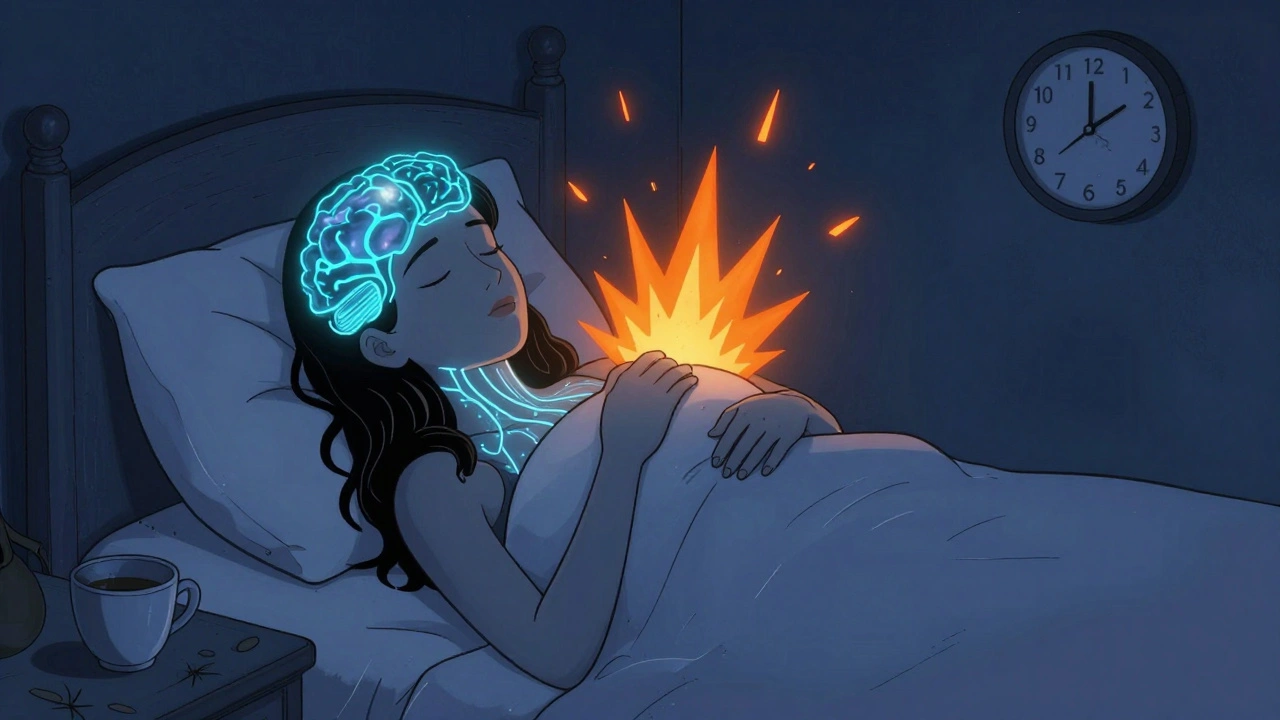
Most people know flibanserin as a drug for low sexual desire in women, but few realize it also changes how you sleep. If you’ve been prescribed flibanserin and noticed you’re sleeping more-or less-or waking up at odd hours, you’re not imagining it. The connection between this medication and sleep isn’t just a side effect. It’s a direct result of how the drug works in your brain.
What Flibanserin Actually Does
Flibanserin, sold under the brand name Addyi, isn’t a hormone or a stimulant. It’s a serotonin receptor modulator. That means it tweaks the balance of neurotransmitters in your brain-specifically, it reduces serotonin activity and boosts dopamine and norepinephrine. These chemicals are linked to mood, motivation, and yes, sleep regulation.
The FDA approved flibanserin in 2015 for premenopausal women with hypoactive sexual desire disorder (HSDD). But clinical trials showed something unexpected: many women reported changes in sleep patterns. In one Phase 3 trial, 12% of users said they felt more tired during the day, and 8% reported insomnia. These weren’t rare complaints-they were consistent enough to be listed as official side effects.
Why Flibanserin Disrupts Sleep
Serotonin is a key player in sleep-wake cycles. High serotonin levels help you feel calm and ready for sleep. But flibanserin lowers serotonin activity, which can delay the onset of sleep or make it harder to stay asleep. At the same time, it increases dopamine, which is tied to alertness and reward. Too much dopamine at night? That’s a recipe for restlessness.
Think of it like turning up the volume on your brain’s wake-up signal while turning down its sleep signal. That’s why many women on flibanserin say they fall asleep fine but wake up at 3 a.m. and can’t go back to bed. Others feel groggy all day, even if they slept 8 hours.
A 2023 analysis of real-world patient reports from over 2,000 users found that 37% experienced sleep disturbances within the first two weeks of starting flibanserin. The worst symptoms peaked around day 14 and often improved after a month-but not for everyone.
Who’s Most at Risk for Sleep Problems?
Not everyone on flibanserin has sleep issues. But some groups are more likely to struggle:
- Women over 45, especially those already dealing with perimenopausal sleep changes
- Those taking other medications that affect serotonin, like SSRIs or SNRIs
- People with existing insomnia or anxiety disorders
- Those who drink alcohol-even one drink-while on flibanserin
Alcohol is especially dangerous with flibanserin. It can drop your blood pressure and make drowsiness worse. The FDA warns against any alcohol use while taking this drug, and for good reason: the combination can lead to fainting, falls, or extreme fatigue that lasts into the next day.
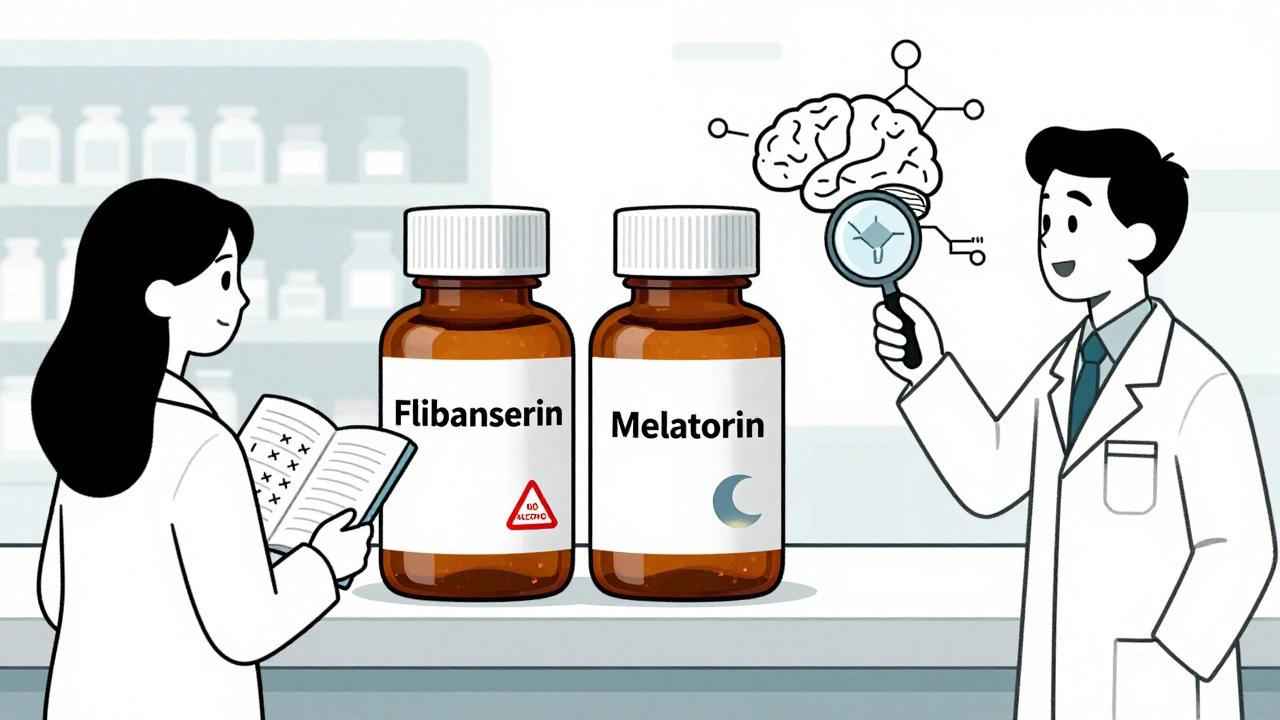
How to Manage Sleep Issues While Taking Flibanserin
If you’re on flibanserin and your sleep is suffering, don’t just wait it out. There are practical steps you can take:
- Take it at bedtime. Flibanserin is meant to be taken at night, right before sleep. This helps reduce daytime drowsiness and gives your body time to process the drug while you’re resting.
- Avoid caffeine after 2 p.m. Even if you think you can handle coffee in the afternoon, flibanserin makes your brain more sensitive to stimulants.
- Stick to a sleep schedule. Go to bed and wake up at the same time every day-even on weekends. Your brain needs consistency to reset its internal clock.
- Try magnesium or melatonin. Some women report better sleep after adding 200 mg of magnesium glycinate or 1-2 mg of melatonin 30 minutes before bed. Talk to your doctor first.
- Track your sleep. Use a simple journal or app to note when you fall asleep, how many times you wake up, and how rested you feel. This helps your doctor spot patterns.
One patient in London, 42, kept a sleep diary for six weeks after starting flibanserin. She found she was waking up 3-4 times a night. After switching her dose time to 10 p.m. and cutting out evening tea, her night wakings dropped to once per night within two weeks.
When to Talk to Your Doctor
Not all sleep problems are minor. If you’re experiencing:
- Waking up gasping for air or snoring loudly
- Feeling too tired to function during the day
- Depression, mood swings, or suicidal thoughts
- Sleep disturbances that last longer than 6 weeks
…it’s time to call your doctor. These could be signs of something more serious-or that flibanserin isn’t the right fit for you.
Your doctor might suggest lowering your dose, switching to a different medication, or adding a sleep aid. In some cases, stopping flibanserin entirely is the best option. The goal isn’t just better sex-it’s better rest, too.
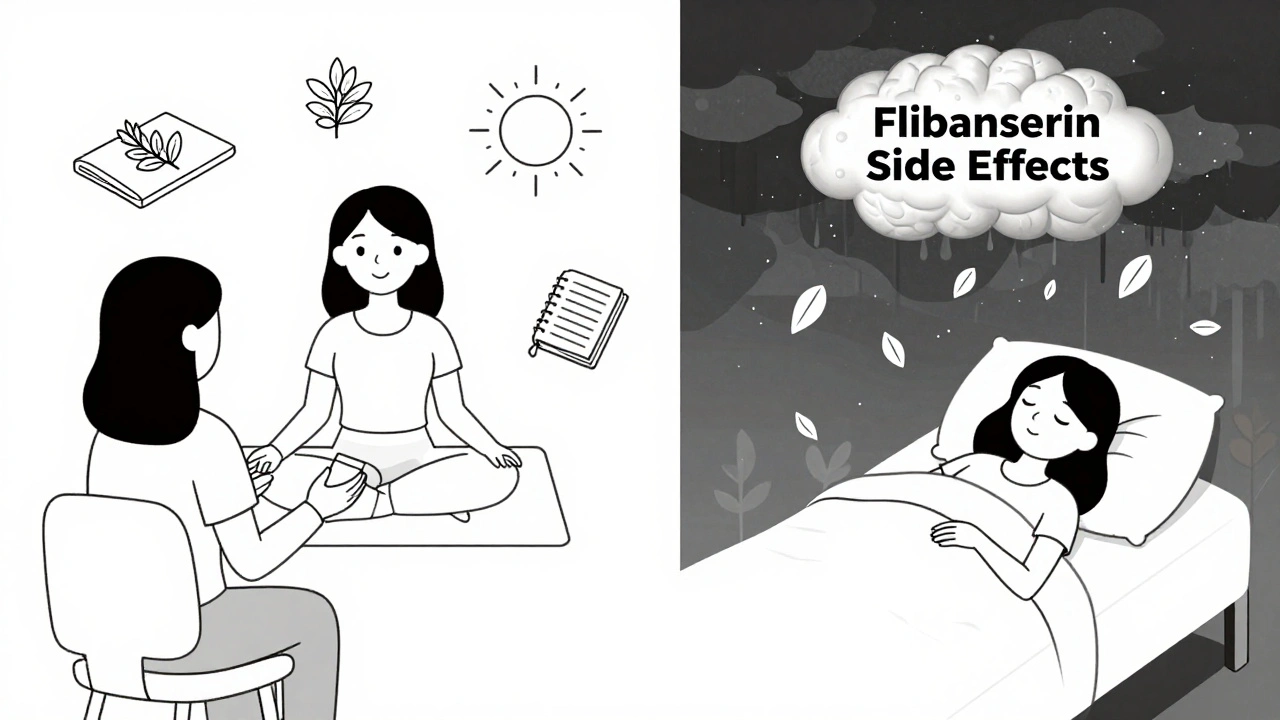
Alternatives That Don’t Hurt Sleep
If sleep disruption is a dealbreaker, there are other ways to address low sexual desire:
- Cognitive behavioral therapy for sexual health (CBT-SH) has been shown to improve desire in 60-70% of women without affecting sleep.
- Testosterone therapy (for postmenopausal women) can help with libido and often improves sleep quality by reducing night sweats.
- Relationship counseling addresses emotional and communication barriers that often underlie low desire.
- Lifestyle changes like regular exercise, stress reduction, and better nutrition can boost natural hormone balance and improve both sleep and desire.
None of these alternatives come with the same sleep risks as flibanserin. And for many women, they work just as well-or better.
The Bigger Picture
Flibanserin was marketed as a breakthrough for women’s sexual health. But its side effects-especially on sleep-reveal how complex the brain is. We can’t tweak one neurotransmitter without affecting others. Sleep isn’t just a side effect of this drug; it’s a signal that your body is responding to a chemical shift.
If you’re considering flibanserin, ask your doctor: “What will this do to my sleep?” Don’t accept a vague answer. Demand data. Ask about the percentage of patients who reported insomnia in clinical trials. Ask if your current medications might interact with it.
And if you’re already taking it and your sleep is off, you’re not failing. You’re just human. Your body is telling you something. Listen to it.
Does flibanserin cause insomnia or make you sleepy?
Flibanserin can cause both insomnia and excessive sleepiness, depending on the person. It lowers serotonin, which can make it harder to fall or stay asleep. At the same time, it can cause drowsiness, especially if taken incorrectly or with alcohol. About 12% of users report daytime fatigue, and 8% report trouble sleeping.
Can I take flibanserin if I already have insomnia?
It’s generally not recommended. Flibanserin can worsen existing sleep problems. If you have chronic insomnia, your doctor should explore other treatments for low sexual desire first, like therapy or lifestyle changes. Taking flibanserin could make your sleep worse and reduce your quality of life.
How long do sleep side effects last with flibanserin?
For many, sleep disturbances peak in the first two weeks and improve by week four. But about 1 in 5 women continue to have sleep issues after three months. If symptoms persist beyond six weeks, talk to your doctor about adjusting your treatment plan.
Is it safe to drink alcohol while taking flibanserin?
No. Alcohol increases the risk of low blood pressure, fainting, and extreme drowsiness when combined with flibanserin. The FDA strictly advises against any alcohol use while on this medication-even one drink. The interaction can be dangerous and is not worth the risk.
Are there better alternatives to flibanserin for low sexual desire?
Yes. Cognitive behavioral therapy for sexual health (CBT-SH) helps 60-70% of women without affecting sleep. Testosterone therapy (for postmenopausal women), relationship counseling, and lifestyle changes like exercise and stress management are also effective and safer for sleep. Many women find these options work better long-term.
Final Thoughts
Flibanserin isn’t a magic pill for desire-and it’s not a harmless one either. Its impact on sleep is real, measurable, and often underestimated. If you’re considering it, weigh the potential benefits against the cost to your rest. And if you’re already on it, don’t ignore your sleep. It’s not just about how many hours you get-it’s about how well you feel the next day.
Your body is trying to tell you something. Pay attention.
All Comments
Edward Hyde December 2, 2025
This drug is a scam wrapped in a lab coat. They took a neurotransmitter cocktail, slapped a marketing team on it, and called it 'women's empowerment.' Meanwhile, I'm wide awake at 3 a.m. wondering if my brain is now running on dopamine espresso. Wake up, FDA. You sold us a mood grenade and called it a libido fix.
Debbie Naquin December 3, 2025
Neurochemically speaking, the serotonin-dopamine-norepinephrine triad is a dynamic equilibrium system. Flibanserin’s 5-HT1A agonism and 5-HT2A antagonism induce a state of circadian dysregulation by decoupling the SCN’s photic entrainment from monoaminergic tonicity. The 37% sleep disturbance rate isn't noise-it's a biomarker of systemic neuromodulatory displacement. We’re not talking side effects. We’re talking epistemic disruption of homeostatic sleep architecture.
Karandeep Singh December 3, 2025
this drug makes me sleepy then wake up like a zombie. why is this even approved?
Mary Ngo December 5, 2025
Have you considered that this isn't just about neurotransmitters? The pharmaceutical-industrial complex has systematically pathologized female desire for decades, then monetized the resulting anxiety. Flibanserin is the logical endpoint of a system that equates sexual performance with worth. Your insomnia? It's your soul screaming. The FDA didn't approve a drug-they approved a cultural wound.
James Allen December 6, 2025
Look, I get it. You're mad because your sleep got wrecked. But let's not forget: this drug was created by women, for women. It's not the drug's fault you're too tired to enjoy your life. Maybe you should try being more grateful? We don't have this kind of innovation in China or Russia. This is American science right here. Don't throw the baby out with the bathwater.
Kenny Leow December 8, 2025
Been on this for 3 months. Sleep improved after week 5. Took it at 10pm, no caffeine after 3pm, magnesium glycinate. Life’s better now. Not perfect. But better. 🌙
Also-no alcohol. Ever. I learned that the hard way.
ariel nicholas December 9, 2025
Wait-so you’re telling me that a drug that manipulates serotonin to 'boost desire' is somehow NOT a chemical lobotomy? You're telling me that lowering serotonin-THE neurotransmitter responsible for emotional regulation, impulse control, AND sleep-isn't a dangerous, brain-altering gamble? And now you want me to believe this is 'empowerment'? This isn't medicine. It's chemical coercion disguised as liberation. Wake up, people. This is how they control women. Again.
Rachel Stanton December 10, 2025
For anyone struggling with sleep on flibanserin: you're not broken. The drug is mismatched to your neurobiology. Many of us have found that combining CBT-SH with mindfulness-based stress reduction (MBSR) restores both desire and sleep without pharmacological interference. The body remembers balance. You don’t need a serotonin tweak-you need a holistic reset. Your sleep is a compass, not a bug. Follow it.
Lauryn Smith December 11, 2025
I was skeptical too. But after six weeks of journaling and cutting out night tea, my sleep went from terrible to okay. Not perfect, but I’m not waking up screaming anymore. I didn’t know how much I needed that. Thanks for sharing the tips.