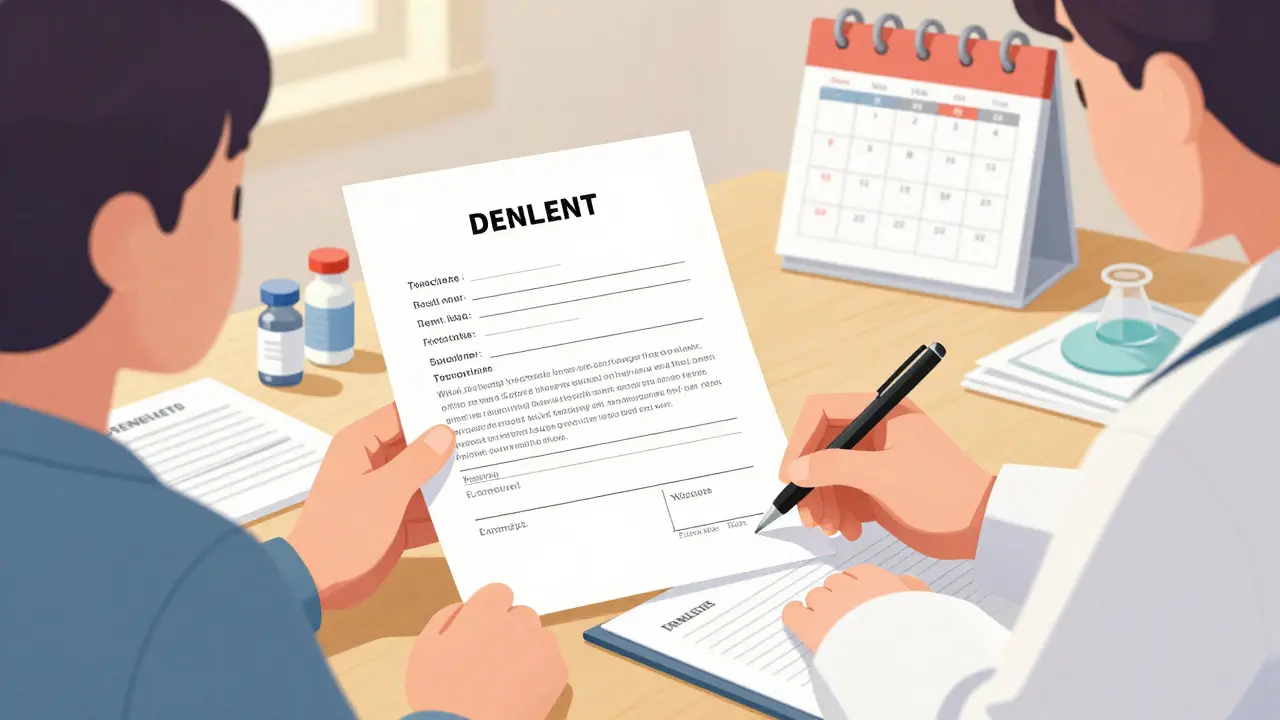
When your doctor prescribes a brand-name medication and your insurance denies coverage, it’s not just a paperwork issue-it’s a health risk. You might be taking insulin, a biologic for rheumatoid arthritis, or a seizure medication that generics simply don’t work for. And when your insurer says no, they don’t always explain why. That’s where the appeal process comes in. It’s not easy, but it’s your right. And with the right steps, you can win.
Why Brand-Name Medications Get Denied
Insurance companies don’t deny brand-name drugs because they’re harmful. They deny them because they’re expensive. Most plans have a list of approved drugs called a formulary. If your medication isn’t on it, or if the insurer thinks a cheaper generic or biosimilar will work just as well, they’ll deny coverage. In 2022, the Centers for Medicare & Medicaid Services found that 63% of all prior authorization denials were for brand-name drugs. That’s not random-it’s policy.Here’s the real issue: sometimes, generics just don’t cut it. For people with autoimmune diseases, epilepsy, or type 1 diabetes, switching to a generic can cause dangerous side effects, hospital visits, or even life-threatening reactions. But insurers often don’t ask for proof. They just say no. That’s why your appeal needs to be more than a request. It needs to be a clinical case.
The Two-Stage Appeal Process
There are two official steps to fight a denial: internal appeal and external review.Internal appeal is your first move. You file this directly with your insurance company. By law, they must respond within 30 days for new prescriptions and 60 days if you’re already taking the medication. For urgent cases-like needing insulin or a life-saving biologic-they have just 4 business days to decide. If they say no again, you move to step two.
External review is where things change. An independent third party-usually a state agency or a federally approved organization-looks at your case. No bias. No corporate pressure. Just medical facts. According to the National Association of Insurance Commissioners, external reviews succeed 58% of the time for brand-name drug denials. That’s more than double the success rate of internal appeals.
What You Need to Win: The Medical Necessity Letter
This is the single most important document in your appeal. Without it, you’re just asking. With it, you’re proving.Your doctor must write a letter of medical necessity. It’s not a form. It’s not a note. It’s a detailed clinical argument. GoodRx analyzed over 1,200 appeal cases and found that 78% of approvals involved a strong letter from the prescribing physician. Only 22% succeeded when patients tried alone.
Here’s what the letter must include:
- Your full diagnosis and treatment history
- Specific examples of how generic alternatives failed-like severe side effects, hospitalizations, or loss of control
- Lab results or clinical data showing why the brand-name drug is necessary
- How the medication affects your daily life-ability to work, care for family, avoid emergency visits
- The exact name of the drug, dosage, and prescribing physician’s contact info
- The prior authorization denial number from your Explanation of Benefits (EOB)
Keck Medicine of USC says the best letters don’t say “I think this is better.” They say, “Patient X had 12 hypoglycemic episodes in three months on generic insulin. Switching to brand-name insulin reduced episodes to one. HbA1c dropped from 9.2 to 6.8.” That’s evidence. That’s persuasive.
How to Get the Letter Fast
Doctors are busy. They won’t write this on a whim. You need to ask early and clearly.Call your doctor’s office the same day you get the denial. Say: “I need a letter of medical necessity for my appeal. It’s urgent. Can you help?” Most offices have a template. Some even have a dedicated staff person for appeals. Ask if they can email it to you within 48 hours. If they say no, ask for the billing department-they often handle these requests.
According to the American Medical Association, 82% of physicians who use standardized templates complete these letters in under 72 hours. If your provider is slow, you can request an urgent review. Mention you’re on a life-sustaining medication. That triggers faster processing.
What to Do After the Denial Letter
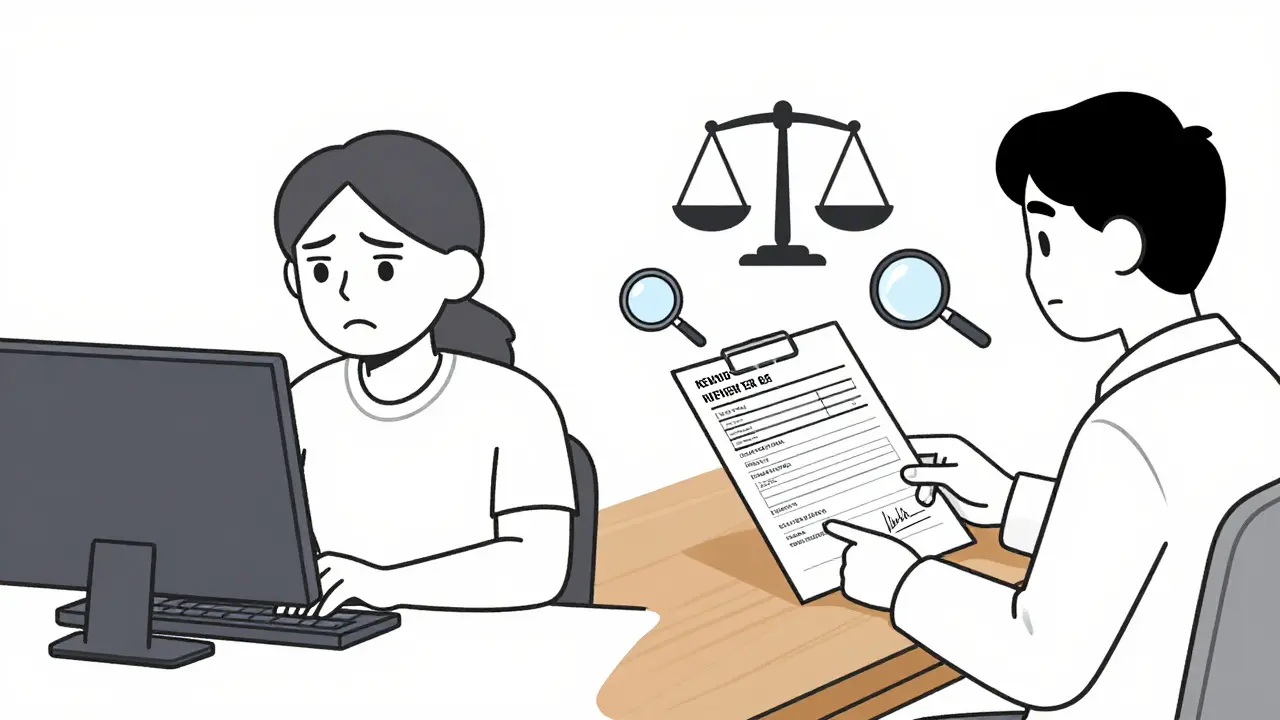
Once you have the letter, file your appeal immediately. Don’t wait. The longer you wait, the more likely you are to run out of time.Follow these steps:
- Find your denial letter. It should be in your online portal or mailed within 15 days of the decision.
- Locate the Explanation of Benefits (EOB). It must list the reason for denial. Write down the exact code or phrase they used.
- Attach your doctor’s letter, your prescription history, and any lab results.
- Send it certified mail or upload it through your insurer’s portal. Keep a copy.
- Call the customer service line every 3 days. Ask for a case number and the name of the reviewer. Document every call.
Kantor & Kantor found that appeals with documented follow-up calls were processed 28% faster. Insurance companies don’t like being chased. They’ll move your case up the queue.
When the Internal Appeal Fails
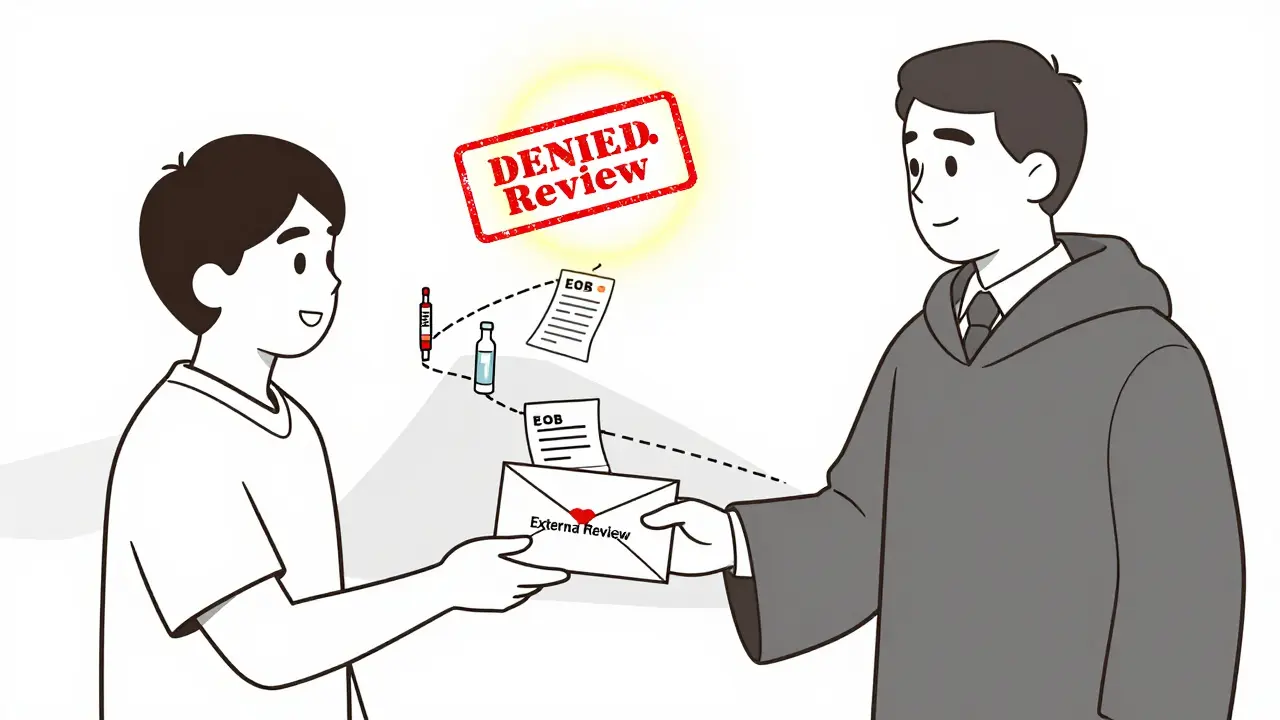
If your insurer says no again, it’s time for external review. This is where you get real help.For non-ERISA plans (most Medicaid, Medicare, and state-regulated plans), contact your state’s insurance commissioner. For ERISA plans (which cover 61% of Americans), you must file with the U.S. Department of Health and Human Services. Both have online forms. Fill them out. Attach everything you sent before. Add a short cover letter saying: “I have exhausted internal appeals and request an independent external review under federal law.”
External reviews take 30 to 60 days. But when they approve, your insurer must cover the drug immediately. No delays. No back-and-forth. And if they still refuse? You can sue. But only after the external review. That’s the law.
Real Stories: What Works
One man in Ohio appealed a denial for his daughter’s brand-name insulin after she had three diabetic ketoacidosis episodes on a generic version. His doctor’s letter included glucose logs, ER visit records, and a statement from her endocrinologist. The external review approved it in 22 days. Another woman in Texas spent six months fighting a denial for a brand-name migraine drug. Her neurologist wrote a 5-page letter detailing 17 failed trials with generics. She hired an attorney. The appeal succeeded. But it cost $2,500.Here’s the truth: you don’t always need a lawyer. But you always need a doctor. And you always need proof.
What to Avoid
Don’t:- Wait more than 30 days to start the appeal
- Send a generic letter like “I need this drug”
- Use emotional language without clinical data
- Assume your pharmacist can help-pharmacists can’t override denials
- Ignore the EOB. The denial reason is written there.
Do:
- Start the day you get the denial
- Get the doctor’s letter-no exceptions
- Call the insurer weekly
- Save every email, letter, and phone log
- Ask about patient assistance programs while you wait
Drugmakers like Eli Lilly and Novo Nordisk offer bridge programs. If you’re denied, they may give you free medication for up to 12 months while your appeal is pending. Ask your doctor or pharmacist. Don’t wait to run out.
What’s Changing in 2026
New rules are coming. The Biden administration’s 2023 Executive Order forced insurers to improve appeal timelines. The 2023 Consolidated Appropriations Act requires Medicare Part D plans to show real-time coverage info before prescriptions are filled. That means fewer surprises.But the biggest change? AI. Insurers are starting to use AI to review prior authorizations. Some systems now flag cases where patients have documented treatment failures. That’s good news-if your data is in the system.
Still, ERISA plans remain tricky. They’re governed by federal law, not state rules. And if you go to court, you won’t have a jury. Just a federal judge. That’s why having a strong appeal file matters more than ever.
Final Advice
You’re not fighting the system. You’re using the system. The law is on your side. But you have to act. Fast. And with evidence.Don’t accept “no” as final. Don’t assume your doctor will handle it. Don’t wait until you’re out of pills. Start today. Call your provider. Ask for the letter. File the appeal. Track every step. And if you get stuck, reach out to the Patient Advocate Foundation or your state’s health ombudsman. They help people like you every day.
Brand-name medications aren’t luxuries. For many, they’re lifelines. And you have the right to fight for them.
What should I do if my insurance denies my brand-name medication?
First, get the exact reason for the denial from your Explanation of Benefits (EOB). Then, contact your prescribing doctor immediately to request a letter of medical necessity. This letter must include your diagnosis, failed attempts with alternatives, clinical evidence, and how the brand-name drug affects your health. File your internal appeal within 30 days, and follow up weekly. If denied, proceed to external review with your state insurance commissioner or the U.S. Department of Health and Human Services, depending on your plan type.
How long do I have to appeal a medication denial?
For most private insurance plans, you have up to 180 days from the date of denial to file an internal appeal. Medicare plans allow 120 days, and Medicaid timelines vary by state. For urgent cases-such as needing insulin or a life-sustaining drug-you can request an expedited review, which requires a decision within 4 business days. External reviews must be filed within 60 days after the internal appeal is denied.
Can my doctor help me appeal?
Yes-and they’re your most important ally. Over 78% of successful appeals involve direct involvement from the prescribing physician. Your doctor must write a detailed letter of medical necessity that includes clinical data, prior treatment failures, and specific reasons why generics or biosimilars won’t work. Many offices have templates for this. Ask for it in writing and follow up if it’s not sent within 3 business days.
What’s the difference between internal and external review?
Internal review is handled by your insurance company’s own staff. Success rates are low-only about 39% for brand-name drugs. External review is handled by an independent third party, not your insurer. Success rates jump to 58%. External reviews are legally binding: if they approve, your insurer must cover the drug immediately. You can request external review only after your internal appeal is denied.
Are there free resources to help with appeals?
Yes. The Patient Advocate Foundation offers free case management for people struggling with insurance denials. State insurance commissioners’ offices provide free appeal guidance. Drugmakers like Eli Lilly and Novo Nordisk offer bridge programs that provide free medication while you appeal. You can also contact your local Area Agency on Aging or nonprofit health advocacy groups-they often have trained counselors who help with appeals at no cost.
All Comments
Sarah B February 8, 2026
This is why we need to stop letting corporations dictate healthcare. If your life depends on a drug they don't want to pay for, you're screwed. No fluff. No mercy. Just fight.
Tola Adedipe February 9, 2026
I've been through this twice. The letter of medical necessity is everything. My rheumatologist wrote one that included my CRP levels before and after switching. They approved it in 11 days. Don't let them gaslight you.
Mark Harris February 10, 2026
Yo if you're reading this and you're stuck on insulin or something life-saving, stop scrolling. Call your doc right now. No excuses. They have templates. They know how. Just ask. I did. Got it in 3 hours. You can too.
Marcus Jackson February 11, 2026
Most people don't realize external review isn't optional. It's your legal right. And 58% approval rate? That's not luck. That's systemic failure on the insurer's end. The system works if you know the rules. Most don't.
Natasha Bhala February 11, 2026
i just got approved for my biologic after 6 months of begging. doctor wrote the letter. i called every 3 days. kept every email. no drama. just persistence. you got this. even if you feel like giving up. keep going
Paula Sa February 12, 2026
It's strange how we treat medicine like a commodity when it's clearly a human right. The fact that someone has to jump through hoops just to stay alive says more about our society than it does about insurance policies. But still, the steps here? Solid. Practical. Necessary.
Heather Burrows February 13, 2026
I'm tired of people acting like this is some heroic battle. It shouldn't be this hard. If you need a drug to live, you should just get it. End of story. But since we live in a broken system, yeah, do what the article says. But don't celebrate it. It's a failure.
Ritu Singh February 14, 2026
In India, we have similar struggles with access, but the difference is we don't have the infrastructure to fight back. This guide is gold. I'm sharing it with my sister in Mumbai who's fighting for her son's epilepsy medication. Knowledge is power, and this is power.
Mayank Dobhal February 15, 2026
My wife got denied for her MS drug. We hired a lawyer. Cost $5k. Won. But the real win? The insurer had to cover it retroactively. That’s $18k in saved meds. Don’t be cheap. Get help if you can.
Jesse Lord February 16, 2026
I used to think insurance was just bureaucracy. Now I know it’s a maze designed to break you. But this guide? It’s the map. Print it. Stick it on your fridge. Send it to your doctor. Don’t wait. The system won’t wait for you.
Jesse Lord February 16, 2026
Also - if your doctor says 'I don’t have time' - tell them you’ll go to their office in person with a printed copy of this article. They’ll write it. Guaranteed.