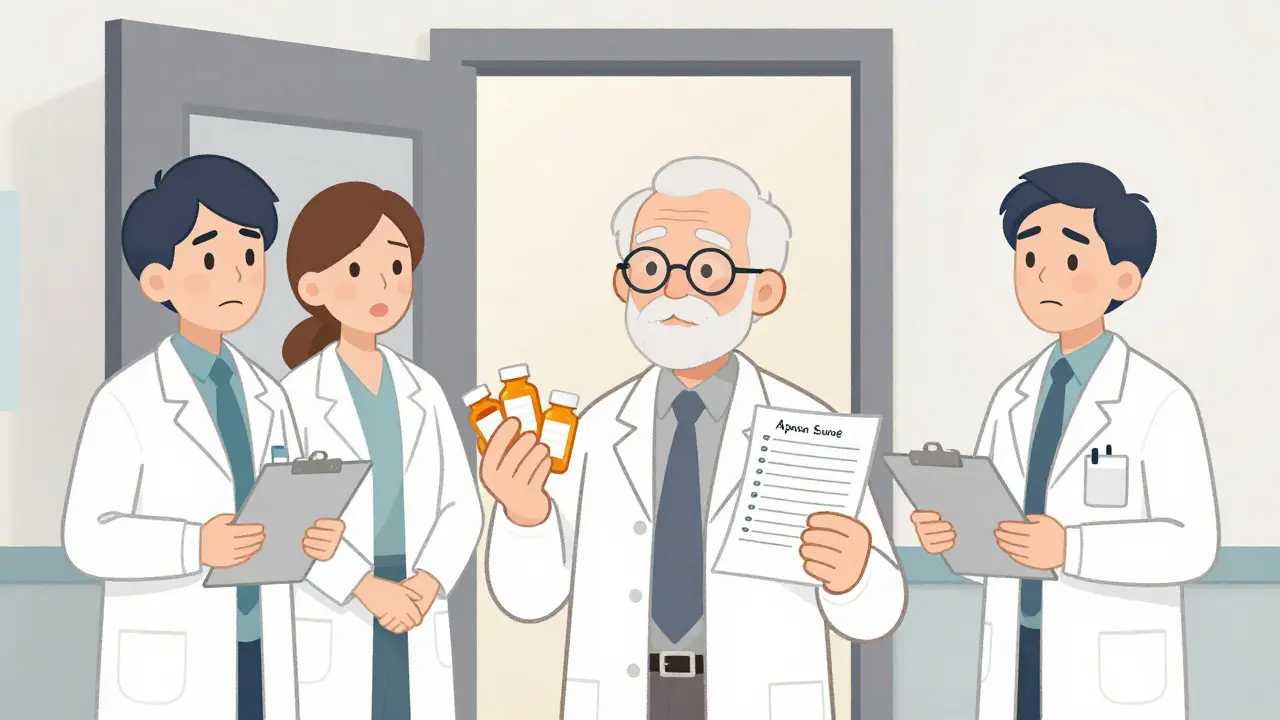
Every year, thousands of older adults in the UK end up in hospital because they’re taking two pills that do the same thing-without knowing it. It’s not a mistake by the doctor. It’s not laziness. It’s a system gap. You see a cardiologist for your heart, a rheumatologist for your joints, and your GP for your blood pressure. Each one writes a prescription. None of them see what the others wrote. And suddenly, you’re on two different blood pressure meds, or two different types of painkillers that both raise your risk of internal bleeding. This is called therapeutic duplication. And it’s more common than you think.
Why This Happens to Seniors
People over 65 are the most at risk. Why? Because they’re more likely to have multiple chronic conditions. One study found that the average senior takes five or more prescription drugs a day. Add in over-the-counter pain relievers, vitamins, and herbal supplements-and you’ve got a medication list longer than your grocery list. Specialists focus on one part of your body. They don’t always ask about everything else you’re taking. And even if they do, they might not remember what your GP prescribed last month.Here’s a real example: A 72-year-old man in Exeter was seeing his GP for high blood pressure. His GP prescribed metoprolol. A few weeks later, he saw a cardiologist for chest discomfort. The cardiologist, unaware of the metoprolol, prescribed bisoprolol-a drug in the exact same class. Both lower heart rate and blood pressure. Together, they dropped his blood pressure so low he passed out at home. He ended up in A&E. No one knew why until his daughter pulled out his pill bottles and showed the pharmacist.
This isn’t rare. A 2022 survey found that 68% of pharmacists see at least one case of duplicate medication every week. And 42% say the main reason? Lack of communication between doctors.
What You Can Do Right Now
You don’t have to wait for your doctor to fix this. You can protect yourself with three simple, powerful actions.- Keep a live, updated list of every medication you take. Not just prescriptions. Include over-the-counter pills like ibuprofen or aspirin, supplements like fish oil or vitamin D, and even herbal teas like St. John’s Wort. Write down the name, dose, and why you take it. Example: “Metoprolol 50mg daily-for high blood pressure.”
- Bring your pill bottles to every appointment. Don’t rely on memory. Don’t say “I think I take two pills a day.” Show the actual bottles. Pharmacists and doctors can read the labels, check expiration dates, and spot duplicates instantly. If you’re too busy to write a list, just bring the bottles. It’s the fastest, most accurate way.
- Use one pharmacy for everything. This isn’t just convenient-it’s lifesaving. When you use the same pharmacy, their system flags duplicates automatically. If your GP prescribes something your pharmacist already has on file, the computer will scream: “Wait-this is the same kind of drug as the one already being taken.” Most pharmacies have this built-in. But only if they have your full record.
One woman in Plymouth switched to using just her local pharmacy after her husband nearly had a stroke from overlapping blood thinners. She said, “Now I know if something’s wrong before I even get to the doctor.”
Ask the Right Questions at Your Appointment
When a specialist gives you a new prescription, don’t just say “thank you.” Ask these three questions:- “Is this new medicine replacing something I’m already taking?” Sometimes, doctors assume you’ve stopped an old drug. You haven’t. That’s how duplication starts.
- “Why am I taking this? What condition is it for?” If you’re on two drugs for the same problem-say, two different diuretics for fluid retention-you need to know why. Maybe one is for your heart, the other for your kidneys. But maybe they’re both just for the same thing. Only you can ask.
- “Can we cut something out?” You don’t need five pills if three do the job. Studies show that simplifying medication regimens improves outcomes and reduces side effects. Ask your doctor to review your list every six months.
One 78-year-old woman in Devon had been on four different painkillers for arthritis. After asking her GP to review everything, they found two were duplicates. She stopped one. Her stomach pain disappeared. Her energy improved. She didn’t need more pills-she needed fewer.
How Your Pharmacist Can Be Your Secret Weapon
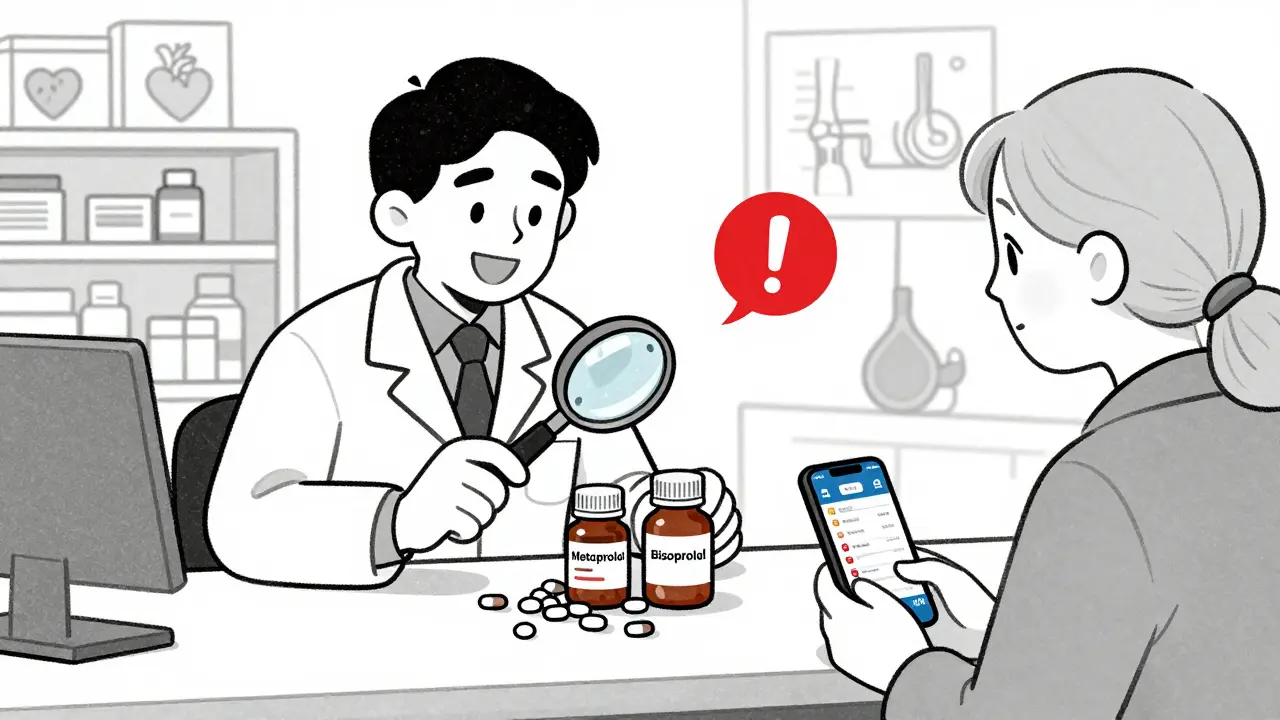
Pharmacists aren’t just the people who hand you your pills. They’re trained to spot duplicates, interactions, and errors. But they can’t help if they don’t have the full picture.When you pick up a new prescription, say: “I’m on several medications. Can you check if this one conflicts with anything else I take?” Most pharmacists will do this for free. Some even offer free medication reviews. Ask for one. Bring your list. Bring your bottles. Let them sit with you for 15 minutes. They’ll find things your doctor missed.
In 2023, a study in the U.S. showed that patients who got a face-to-face review from a pharmacist after hospital discharge had 30% fewer emergency visits. That’s not magic. That’s just someone paying attention.
Technology Can Help-But Only If You Use It
There are apps now that let you take a photo of your pill bottle and store it digitally. Some even sync with your GP’s system. In the UK, the NHS app lets you view your prescription history. But here’s the catch: you have to use it. Set a reminder every month to open the app and check your list. Update it when you start or stop something.Some hospitals are using AI tools to scan patient records and flag duplicates before a doctor even writes a prescription. One pilot at Mayo Clinic boosted detection rates by 143%. But these tools won’t help you if your GP doesn’t use the same system as your cardiologist. So don’t wait for technology to save you. Use it to help yourself.
What to Do If You Think You’re on Duplicates
If you suspect you’re taking two drugs that do the same thing:- Don’t stop taking anything on your own. Some drugs need to be tapered.
- Call your GP or pharmacist. Say: “I think I might be on two medicines for the same thing. Can you check?”
- Bring your list and bottles to your next appointment.
- Ask for a medication review. Many GP practices offer this for free.
If your doctor says, “It’s fine,” but you still feel off-get a second opinion. Your health isn’t a guess. It’s your life.
Why This Matters More Than You Think
Taking extra pills doesn’t make you healthier. It makes you sicker. Studies show that the more medications you take, the worse your outcomes. Duplicates cause dizziness, falls, kidney damage, internal bleeding, and confusion. In seniors, these side effects can lead to hospitalization, loss of independence, and even death.But here’s the good news: almost all duplicate prescriptions are preventable. You don’t need a perfect system. You just need to be informed. You don’t need to be a medical expert. You just need to ask questions. You don’t need to remember everything. You just need to bring your pill bottles.
There’s no magic pill. But there is a simple habit: know what you’re taking. Speak up. Bring your bottles. That’s how you stay safe.
How do I know if I’m taking duplicate medications?
Look at the names and uses of your medications. Two drugs from the same class-like metoprolol and bisoprolol-are both beta-blockers used for high blood pressure. If you’re taking both, that’s duplication. Use a free online drug checker like the NHS medicines list or ask your pharmacist. Bring your pill bottles to your GP and ask: “Are any of these doing the same job?”
Can over-the-counter drugs cause duplication?
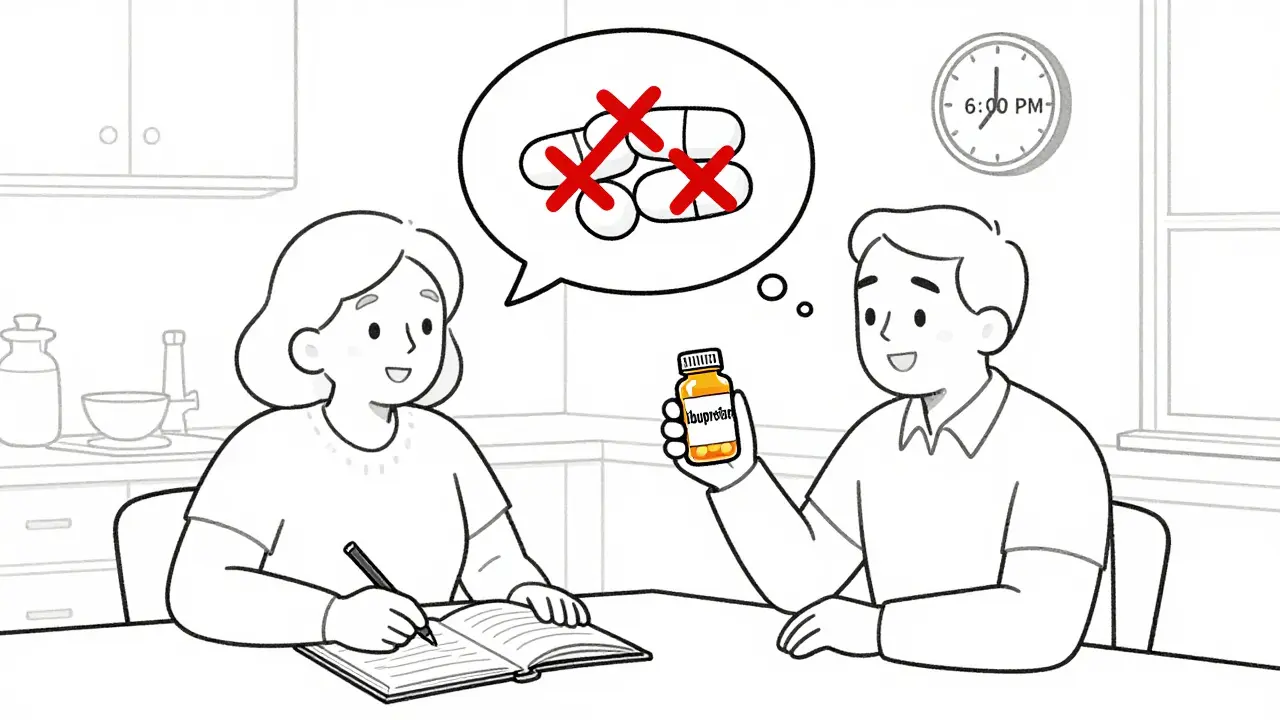
Absolutely. Many OTC painkillers like ibuprofen, naproxen, and aspirin are NSAIDs. If you’re taking one for arthritis and your doctor prescribes another for inflammation, you’re doubling your dose. Same with sleep aids-many contain diphenhydramine, which can cause confusion in seniors. Always include OTCs and supplements on your list.
Should I tell every specialist about all my medications?
Yes-even if they only treat one part of your body. A cardiologist needs to know if you’re on blood thinners. A rheumatologist needs to know if you’re on kidney-affecting drugs. Every provider should have your full list. Don’t assume they’ll check. Bring your list or bottles every time.
What if my doctor says the duplicate is intentional?
Ask why. Sometimes, doctors use two drugs on purpose-for example, one for heart rate, another for blood pressure. But they should explain this clearly. If they can’t, or if you’re experiencing side effects like dizziness or fatigue, ask for a second opinion. Never take two similar drugs without understanding exactly why.
How often should I review my medications?
At least every six months, or after any hospital stay or new specialist visit. Ask your GP for a “medication review.” Many practices offer this for free. Use this time to cut unnecessary pills, update your list, and ask if any drugs can be stopped.
Next Steps
Start today. Grab a notebook or open a note on your phone. Write down every pill, patch, liquid, and supplement you take. Include the dose and reason. Then, bring it to your next doctor’s appointment-even if it’s just for a flu shot. Ask your pharmacist to review it. If you’re on more than five medications, schedule a formal medication review with your GP. Don’t wait for a problem to happen. Prevent it.Your health isn’t a puzzle you solve alone. It’s a team effort. But you’re the captain. Keep your list. Bring your bottles. Speak up. That’s how you stay safe.
All Comments
Duncan Careless December 31, 2025
i never thought about bringing my pill bottles to appointments… i just hand over the list i typed up. but honestly? i’ve got 7 different med bottles sitting on my nightstand and half of ‘em are expired. maybe i should just show up with the whole shoebox.
Joe Kwon December 31, 2025
Therapeutic duplication is a systemic pharmacovigilance gap exacerbated by fragmented EHR interoperability. The real issue isn’t patient compliance-it’s siloed clinical data streams. We need HL7 FHIR integration across primary, specialty, and pharmacy networks. Until then, patient-held med reconciliation tools are the only viable bridge.
Nicole K. January 2, 2026
This is why people shouldn’t be allowed to see multiple doctors without a case manager. My aunt took 14 pills a day until she collapsed. No one was watching. Someone should be held accountable.
Fabian Riewe January 2, 2026
Love this post. Seriously. I’m a nurse and I see this all the time. One guy came in with 5 different blood pressure meds-none of them the same, but all doing the same job. He didn’t even know. Just told me his doc said ‘take it.’ I showed him the labels side by side and he just stared. Then he laughed and said, ‘So… I’ve been overdosing on myself?’
Bring the bottles. It’s that simple. And if your pharmacist doesn’t offer a free med review, find one who does. They’re the unsung heroes of this whole mess.
Amy Cannon January 4, 2026
It is with profound concern that I observe the alarming prevalence of therapeutic duplication among geriatric populations, particularly within the context of fragmented healthcare delivery systems in both the United Kingdom and the United States. The absence of centralized pharmacological record-keeping constitutes a critical failure in patient safety infrastructure. I have personally witnessed, in my capacity as a retired clinical pharmacist, elderly patients consuming multiple agents from the same pharmacological class-often without the cognizance of their primary care providers. The integration of interoperable electronic health records, coupled with mandatory medication reconciliation protocols at every point of care transition, is not merely advisable-it is an ethical imperative. Furthermore, the utilization of patient-held medication lists, while commendable, remains insufficient without institutional support and standardized documentation formats. I urge policymakers, clinicians, and caregivers alike to treat this not as an isolated issue, but as a systemic crisis demanding coordinated, multi-stakeholder intervention.
Himanshu Singh January 5, 2026
my grandpa had this problem… he was takin’ two diffrent pills for blood preshur and he kept fainting. i found out when i was cleanin’ his drawer. i cried. now he uses one pharmacy and i help him update his list every week. it’s not hard, just gotta care.
Jasmine Yule January 7, 2026
Why are we still having this conversation in 2024? 😤 I’m so tired of people saying ‘just bring your bottles’ like it’s a magic fix. No-THE SYSTEM IS BROKEN. Doctors don’t talk to each other. Pharmacies don’t talk to hospitals. And patients? We’re the ones getting hurt. This isn’t about responsibility-it’s about negligence. If you’re a doctor and you don’t check the full med list before prescribing, you’re not just careless-you’re dangerous. 🚨
Lisa Dore January 8, 2026
Just wanted to say thank you for writing this. My mom is 81 and on 11 meds. I’ve been her pill organizer for years, but I never knew about the pharmacist review thing. We’re scheduling one next week. I feel like I’ve been doing this all wrong… until now. You made me feel like I’m not alone in this. 💛