Imagine waking up at 14,000 feet with a pounding headache, nausea, and shortness of breath. You reach for your bag, but your acetazolamide is expired, or your insulin has frozen solid in the cold night air. In remote mountain regions like the Himalayas or Andes, emergency medical care can be 24 to 72 hours away. This is why proper preparation for medication management in high-altitude environments isn't just a nice-to-have; it's a survival skill. Whether you are heading to Mount Kailash or Everest Base Camp, getting your meds right before you leave can mean the difference between completing your journey and facing a life-threatening crisis.
Key Takeaways
- Acetazolamide (Diamox) is the primary prevention drug for Acute Mountain Sickness, typically dosed at 125 mg twice daily starting one day before ascent.
- Severe altitude illnesses like HAPE and HACE require specific rescue drugs: nifedipine for lung fluid and dexamethasone for brain swelling.
- Temperature extremes degrade medications quickly; insulin loses potency below 32°F (0°C), and glucometers become inaccurate in freezing conditions.
- Carry a physician's letter for controlled substances and pack all meds in original, labeled containers to avoid customs issues.
- Pre-trip medical consultation is critical, as 83% of serious altitude complications are preventable with proper screening.
Understanding the High-Altitude Medical Landscape
High-altitude trekking has evolved from niche adventure into a major global industry, with the Everest Base Camp route alone attracting 40,000 to 50,000 visitors annually. However, the environment poses unique physiological challenges. Above 8,000 feet (2,438 meters), the body struggles to extract enough oxygen from the thin air. This leads to Acute Mountain Sickness (AMS), which affects 25% to 85% of travelers depending on how fast they ascend. If untreated, AMS can progress to two deadly conditions: High Altitude Pulmonary Edema (HAPE), where fluid fills the lungs, and High Altitude Cerebral Edema (HACE), where fluid accumulates in the brain.
The Wilderness Medical Society has established clear protocols for these scenarios because local health camps often lack resources. A 2013 survey found that 89% of health posts along pilgrimage routes were missing essential drugs like acetazolamide or corticosteroids. This gap means you cannot rely on finding help locally. You must be self-sufficient. Understanding that your medication kit is your primary line of defense changes how you pack and plan.
Core Medications for Altitude Prevention and Treatment
Your medical kit needs three tiers of medication: prevention, treatment, and rescue. Here is what belongs in each tier and why.
- Prevention: Acetazolamide (Diamox)
This carbonic anhydrase inhibitor forces your body to breathe faster, helping you acclimatize. The standard protocol is 125 mg twice daily, starting one day before your trip and continuing for three days after reaching peak altitude. Note that about 67% of users experience increased urination and tingling in their fingers and toes. These side effects are normal signs the drug is working. Avoid this if you have a severe sulfa allergy, which affects 3-6% of the population. - Treatment: Nifedipine
If you develop symptoms of HAPE (persistent cough, extreme fatigue, blue lips), nifedipine extended-release 20 mg every 12 hours helps relax blood vessels in the lungs. It is not a preventive measure but a critical rescue tool when descent is delayed. - Rescue: Dexamethasone
This potent steroid treats HACE. Symptoms include confusion, loss of coordination, and altered consciousness. The recommended dose is an initial 8 mg, followed by 4 mg every 6 hours. This buys time for evacuation but does not cure the condition-descent is still required.
| Medication | Primary Use | Standard Dosage | Key Side Effects |
|---|---|---|---|
| Acetazolamide | AMS Prevention | 125 mg BID | Frequent urination, tingling extremities |
| Nifedipine | HAPE Treatment | 20 mg ER q12h | Headache, flushing, low blood pressure |
| Dexamethasone | HACE Rescue | 8 mg load, then 4 mg q6h | Insomnia, mood changes, stomach upset |
Managing Chronic Conditions in Remote Settings
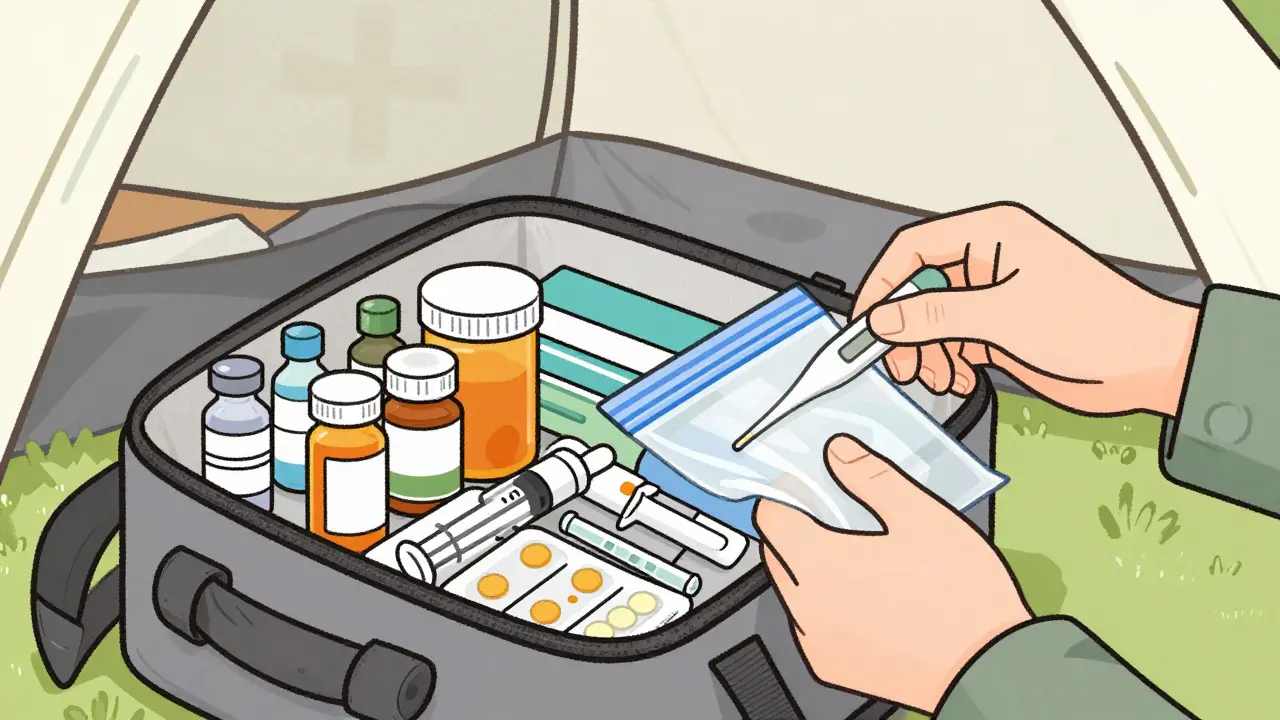
If you manage diabetes, asthma, or hypertension, your medication strategy becomes more complex. Temperature is the enemy here. Insulin degrades rapidly in the cold; studies show potency drops by 25% within 24 hours if exposed to temperatures below 32°F (0°C). You need insulated pill boxes or specialized travel cases that maintain a range of 59-77°F (15-25°C). Keep insulin against your body heat at night rather than in an external pack.
For those using electronic devices like glucometers, be aware that accuracy suffers in the cold. Error rates can jump to 18% at 14°F (-10°C). Warm the device in your pocket for 10 minutes before testing. Similarly, inhalers for asthma should be kept warm, as cold air can trigger bronchospasm independent of medication failure. Carry backup inhalers and consider a spacer device, which works more effectively in low-pressure environments.
Don't forget gastrointestinal issues. Diarrhea affects approximately 60% of trekkers due to water quality changes. Pack azithromycin (500 mg daily for 3 days) for bacterial infections and loperamide for symptom control. Oral rehydration salts are non-negotiable, as dehydration worsens altitude sickness symptoms significantly.
Storage, Packaging, and Legal Compliance
Packing medications correctly is as important as choosing the right ones. Always keep prescriptions in their original pharmacy-labeled containers. Customs officials in many countries, including Nepal and India, may question unlabeled pills. For controlled substances like opioids or certain stimulants, you may need documentation from the Drug Enforcement Administration (DEA) or equivalent international bodies. A signed letter from your physician detailing your diagnosis, dosage, and duration of use is essential.
Protect your meds from moisture and crushing. Use waterproof zip-lock bags inside hard-shell cases. Check expiration dates meticulously; expired antibiotics lose efficacy, and expired acetazolamide may not provide adequate protection. If you are traveling through multiple countries, verify transit rules. Some nations restrict quantities of liquid medications or require notarized translations of labels.
Pre-Trip Consultation and Final Checks
Do not skip the pre-travel health check. Visit a travel medicine specialist or your primary care provider 4-6 weeks before departure. They can assess your fitness for altitude, update vaccinations, and prescribe the correct doses based on your weight and history. According to the Himalayan Rescue Association, 83% of serious altitude-related complications are preventable through this simple step.
Before you fly, run through this checklist:
- Are all medications in original, labeled bottles?
- Is there a spare supply of critical meds (like Diamox) in case the main pack gets lost?
- Do you have a copy of your prescription list in your carry-on bag?
- Have you tested your glucose meter or BP cuff in cold conditions at home?
- Does your group leader know where the emergency meds are stored?
Frequently Asked Questions
Can I take Diamox if I am allergic to penicillin?
Not necessarily. Acetazolamide contains a sulfonamide group, so cross-reactivity is possible with sulfa allergies. Penicillin allergies are different, but you should consult a doctor to rule out any contraindications before starting the regimen.
How much water should I drink to prevent altitude sickness?
Aim for 4 to 5 liters per day. Dehydration thickens your blood and makes it harder for your body to adapt to lower oxygen levels. Monitor your urine color; it should be pale yellow. Dark urine indicates you need to hydrate more.
What if I run out of medication halfway through the trek?
This is a common risk, affecting 47% of medication-related issues reported by trekkers. Always carry a buffer supply. If you do run out, descend immediately if symptoms appear, as medication is a bridge to safety, not a permanent fix. Local pharmacies in base camps often stock basic analgesics but rarely specialty altitude drugs.
Do I need a hyperbaric bag for my trek?
For individual hikers, usually no, as they are heavy and expensive. However, if you are leading a group or trekking in extremely remote areas without helicopter access, a Gamow Bag can simulate descent by increasing pressure around the patient. It is a valuable asset for guides and expedition leaders.
Are over-the-counter painkillers safe at high altitude?
Ibuprofen is generally preferred over aspirin for headaches because it has anti-inflammatory properties. Avoid excessive alcohol, as it causes dehydration and masks worsening symptoms. Tylenol (acetaminophen) is also safe but does not reduce inflammation.