Imagine getting a bill for your monthly medication that looks more like a mortgage payment. For patients dealing with complex conditions like cancer, rheumatoid arthritis, or multiple sclerosis, this is reality. These treatments, known as specialty medications, are high-cost pharmaceutical products used to treat complex, chronic conditions, often requiring special handling or administration. They might cost over $1,000 a month. While they make up only about 2% of all prescriptions written, they account for roughly half of total pharmacy spending. With the market growing from $48 billion in 2010 to over $200 billion in 2022, understanding how to manage these costs is no longer optional-it’s essential for financial survival.
Understanding the True Cost of Specialty Drugs
To cut costs, you first need to understand why they are so expensive. Unlike standard pills you pick up at a corner pharmacy, specialty drugs often require refrigeration, sterile preparation, or clinical supervision. Many are injectables or infusions that must be administered by a professional. This complexity drives up the price tag. According to data from Prime Therapeutics, annual growth rates for these drugs average between 10% and 12%, far outpacing traditional medication costs. Employers face an average spend of $34.50 per member per month on these drugs alone. The core challenge isn't just the price; it's the disproportionate impact on overall healthcare budgets. When you know where the money is going, you can start targeting specific areas for savings without compromising care quality.
Leveraging Formulary Management and Prior Authorization
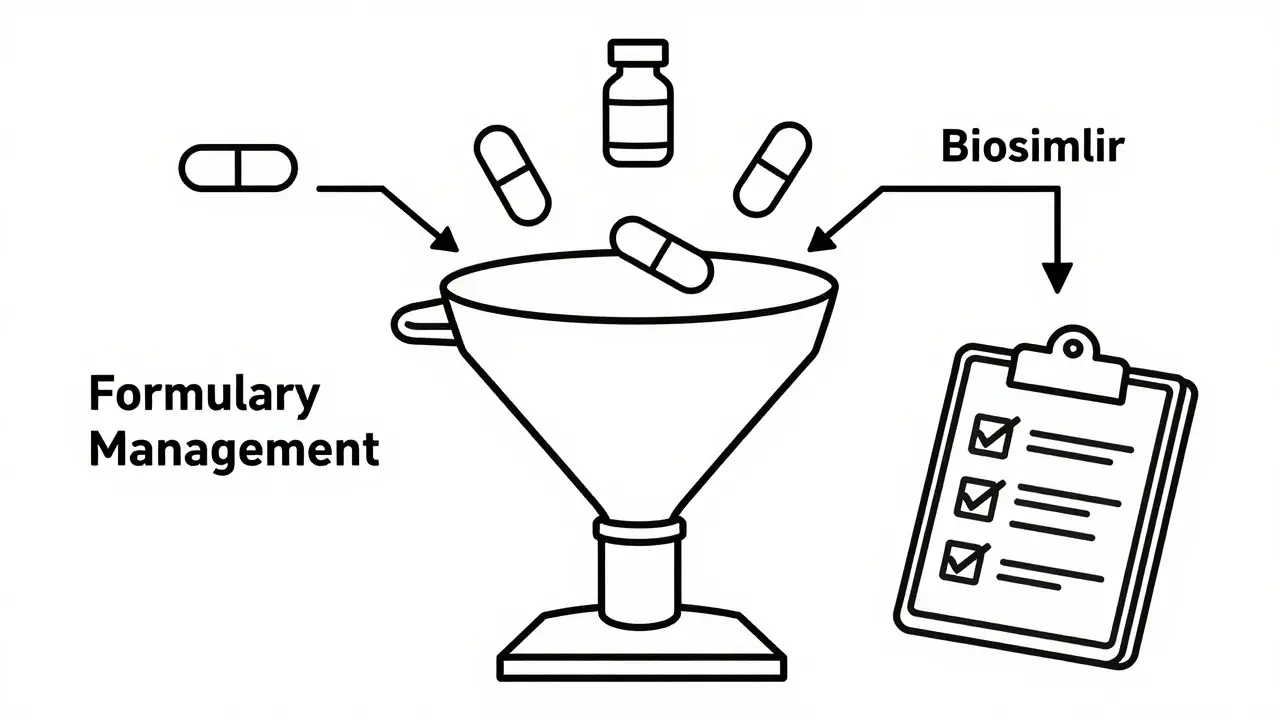
One of the most effective ways to control spending is through strict formulary management. A formulary is simply a list of approved drugs covered by your insurance plan. By implementing clinical edits, such as prior authorization requirements, insurers ensure that high-cost drugs are prescribed appropriately. For example, Excellus BlueCross BlueShield reported saving $13.64 per member per month on GLP-1 weight loss drugs by using structured prior authorization processes compared to national standards. This doesn't mean denying care; it means ensuring the right drug is chosen for the right patient. Step therapy protocols, which require trying lower-cost alternatives first, also play a crucial role. If you're navigating this system, ask your provider if there are evidence-based guidelines or preferred drug products that offer similar therapeutic outcomes at a lower cost. CVS Health demonstrated potential savings of approximately $20 per member per year through these evidence-based approaches.
The Power of Narrow Pharmacy Networks
You might prefer the convenience of your local pharmacy, but when it comes to specialty meds, limiting your options can save you significant money. Narrow or exclusive pharmacy networks involve contracting with a smaller number of specialized providers. CarelonRx reports that limiting networks typically results in 10-15% lower contractual rates while improving clinical service quality. Why? Because these specialized pharmacies handle volume efficiently and have deeper relationships with manufacturers. The Children's Hospital Association documented that preferred CVS specialty pharmacy networks achieved 10% savings on $1.3 billion in gross drug spend over three years. Yes, switching pharmacies can be inconvenient initially, with some employers noting increased call center volume during transitions. However, patients using preferred networks often report higher satisfaction with clinical support services, rating them 8.7 out of 10 compared to 7.2 for non-preferred networks. The trade-off is usually worth it for the long-term savings and better care coordination.
| Strategy | Potential Savings | Implementation Challenge |
|---|---|---|
| Narrow Pharmacy Networks | 10-15% lower rates | Patient resistance to switching |
| Biosimilar Adoption | Up to 50% less than reference biologics | Prescriber familiarity |
| Treatment Setting Optimization | 40-50% reduction | Coordination across care settings |
| Prior Authorization | $13.64 PMPM (example) | Administrative burden |
Embracing Biosimilars for Significant Savings
If you're on a biologic drug, ask your doctor about biosimilars. These are highly similar versions of original biological products. Quantum Health reports that FDA-approved biosimilars cost, on average, 50% less than their reference biologic counterparts. The potential industry-wide savings are massive-$180 billion over five years. As of October 2023, there were 42 FDA-approved biosimilars available. Despite this, adoption rates remain below 30% in many categories due to prescriber hesitation. Hospitals that implemented transition programs saw 20-30% cost reductions for equivalent therapeutic outcomes. The key here is education. Don't assume the brand name is the only option. Ask your specialist: "Is there a biosimilar alternative that offers the same efficacy and safety profile?" The answer could halve your out-of-pocket costs.
Optimizing Treatment Settings: Where You Get Treated Matters
Where you receive your infusion or injection significantly impacts the final bill. Quantum Health identified 220 specialty drugs where hospital-based administration wasn't clinically necessary. Shifting these treatments to lower-cost settings like medical offices or home administration resulted in a 48% cost reduction in 91% of eligible cases. Prime Therapeutics echoes this, reporting 40-50% cost reductions when moving infusion services from hospital outpatient departments to physician offices. Hospitals charge facility fees that add substantial markup. If your treatment allows for office-based or home infusion, advocate for that change. It requires coordination, but the financial relief can be dramatic. Ensure your insurer has fair fee schedules across all sites of care to incentivize these moves.

Maximizing Financial Assistance and Rebates
Don't leave money on the table. Manufacturer copay assistance programs can reduce your out-of-pocket costs to zero, but they often don't count toward your deductible or out-of-pocket maximums. This creates a 'cliff' where you pay full price once you hit certain thresholds. Copay maximizer programs solve this by preventing non-needs-based assistance from counting against your limits. Additionally, Prescription Benefit Managers (PBMs) can negotiate rebates that reduce net costs by 5-8% annually. Make sure your employer or insurer is maximizing these rebate potentials. For individuals, check resources like NeedyMeds or the manufacturer's website directly for patient assistance programs. These funds exist to help, but you have to apply for them.
Implementing Changes: What to Expect
Changing how you manage specialty drug costs takes time and effort. Implementing narrow networks or new formulary rules typically requires 6-9 months of planning. This includes contract negotiations, member communication, and provider education. Expect some friction. Twenty-two percent of employers noted increased call center volume during network transitions. Physicians may complain about administrative burdens from prior authorizations-54% reported this according to ASHP. However, 98% of reviewed specialty drug requests still received approval in proactive management studies, showing that access isn't necessarily blocked. The goal is to eliminate wasteful spending, not deny care. Successful programs use real-time data to intervene early, integrating with electronic health records to flag issues before bills pile up.
Future Trends and Regulatory Shifts
The landscape is shifting. The Inflation Reduction Act introduced Medicare drug price negotiations, influencing private market strategies. Experts rate grouping originator biologics and biosimilars under the same reimbursement code as highly feasible and impactful, with CMS testing this approach. Value-based contracting is gaining traction, with a 45% year-over-year increase in arrangements tying drug costs to actual therapeutic outcomes. By 2027, specialty drug spending is projected to reach $350 billion. However, comprehensive management programs could slow growth from 10-12% to 5-7% annually, potentially saving billions industry-wide. Staying informed about these regulatory changes helps you anticipate shifts in coverage and pricing.
What exactly are specialty medications?
Specialty medications are high-cost drugs used to treat complex, chronic conditions like cancer, rheumatoid arthritis, and multiple sclerosis. They often require special handling, such as refrigeration, or specialized administration methods like injections or infusions, and need close monitoring by healthcare professionals.
How much can biosimilars save me?
Biosimilars are highly similar to original biological products and typically cost about 50% less than their reference biologics. Adopting biosimilars can lead to significant individual and systemic savings, with potential industry-wide savings estimated at $180 billion over five years.
Why should I use a narrow pharmacy network?
Narrow pharmacy networks limit choices to a few specialized providers who negotiate better rates. This strategy typically results in 10-15% lower costs and often provides superior clinical support services, leading to better patient adherence and outcomes despite fewer location options.
Does changing where I get my infusion really lower costs?
Yes. Moving infusion treatments from hospital outpatient departments to physician offices or home settings can reduce costs by 40-50%. Hospitals charge higher facility fees, so optimizing the treatment setting is one of the most effective ways to cut expenses without affecting clinical quality.
What is prior authorization and does it delay care?
Prior authorization is a process where insurers approve a prescription before it's filled to ensure appropriateness. While it adds administrative steps, studies show that 98% of requests are still approved. It prevents inappropriate use and saves money, with minimal impact on timely access to necessary medications.