When you’re tearing down walls or packing up your life for a new home, your medications shouldn’t be an afterthought. A pill bottle left on a dusty shelf, insulin sitting in a hot car, or a bottle of painkillers tossed into a box with tools - these aren’t just careless mistakes. They’re risks to your health, your family’s safety, and even the environment. You don’t need a fancy safe or a pharmacy degree to keep your meds secure. You just need to know what to do - and when.
Why Medications Are Vulnerable During Moves and Renovations
Most people don’t think about their pills until they’re missing or broken. But medications aren’t like books or dishes. They’re sensitive. Heat, moisture, and light can make them useless - or worse. A study by Consumer Reports found that exposure to humidity, like from a steamy bathroom, can cause pills to break down faster, leading to inaccurate dosing. Insulin, thyroid meds, and some antibiotics can lose potency in minutes if left in a hot garage or unairconditioned van. And then there’s access. During renovations, kids, pets, or even cleaning crews might wander into rooms where meds were once locked away. The EPA reports that 55% of Americans take prescription meds regularly. That means in nearly every home, there’s something that could be dangerous if found by the wrong person. A single opioid pill can be deadly to a child. A missed dose of blood pressure medicine can send someone to the hospital.What Temperature and Conditions Medications Need
Most pills, capsules, and liquids need to stay between 59°F and 77°F (15°C-25°C). That’s room temperature - not hot, not cold. Avoid places like:- Bathrooms (too humid)
- Windowsills (sunlight degrades drugs)
- Garages or attics (heat swings can ruin meds)
- Car interiors (even on a mild day, temps can hit 120°F)
Where to Store Medications During Renovations
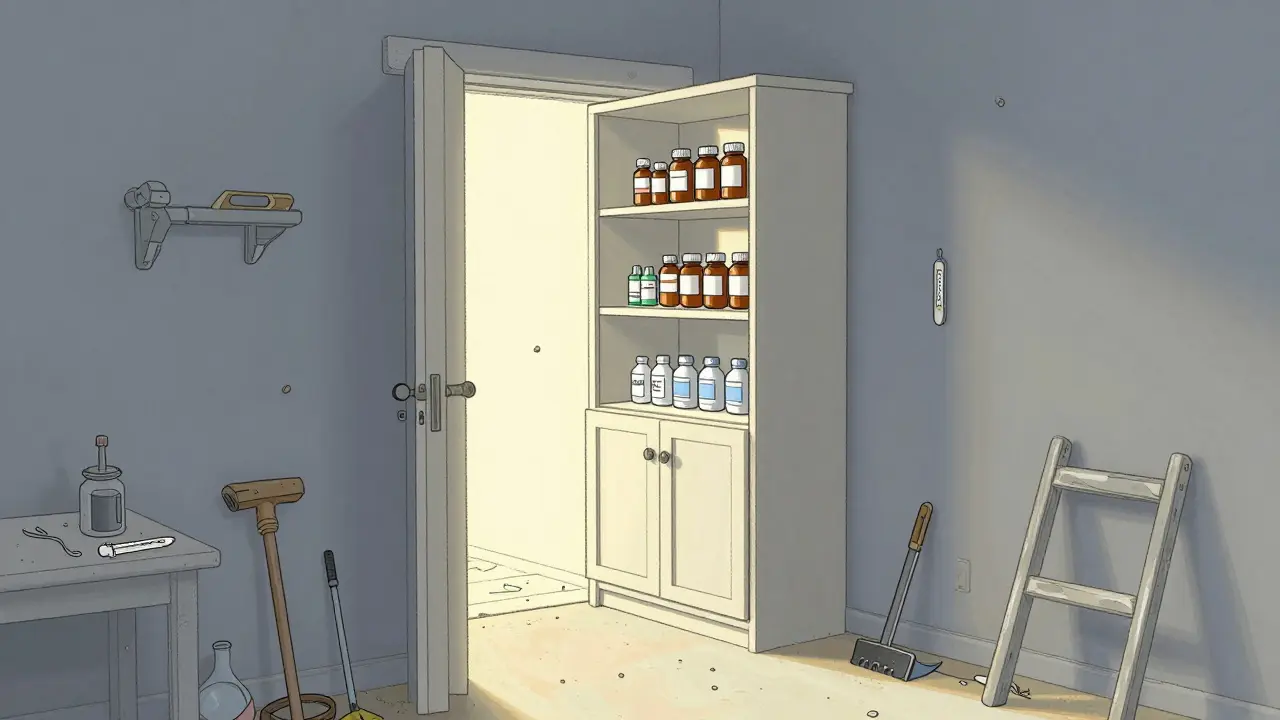
If you’re renovating one part of your house, pick a room that’s untouched. A spare bedroom, a finished basement, or even a clean closet in the kitchen work well. Here’s how to set it up:- Use a locked cabinet, drawer, or small safe. A gun safe, fireproof box, or even a lockable tool chest will do - as long as it’s not in the renovation zone.
- Keep meds in their original bottles. No dumping pills into ziplock bags. Labels have expiration dates, dosage info, and your name - all critical if you need emergency care.
- Place them on a high shelf, out of reach of kids and pets. Even if you think your child can’t climb, renovations mean new climbing surfaces - ladders, boxes, furniture.
- Use a small thermometer to check the spot. If it gets above 80°F, move it.
- Label the container: "MEDICATIONS - DO NOT TOUCH". Simple, but it works.
How to Pack Medications for a Move
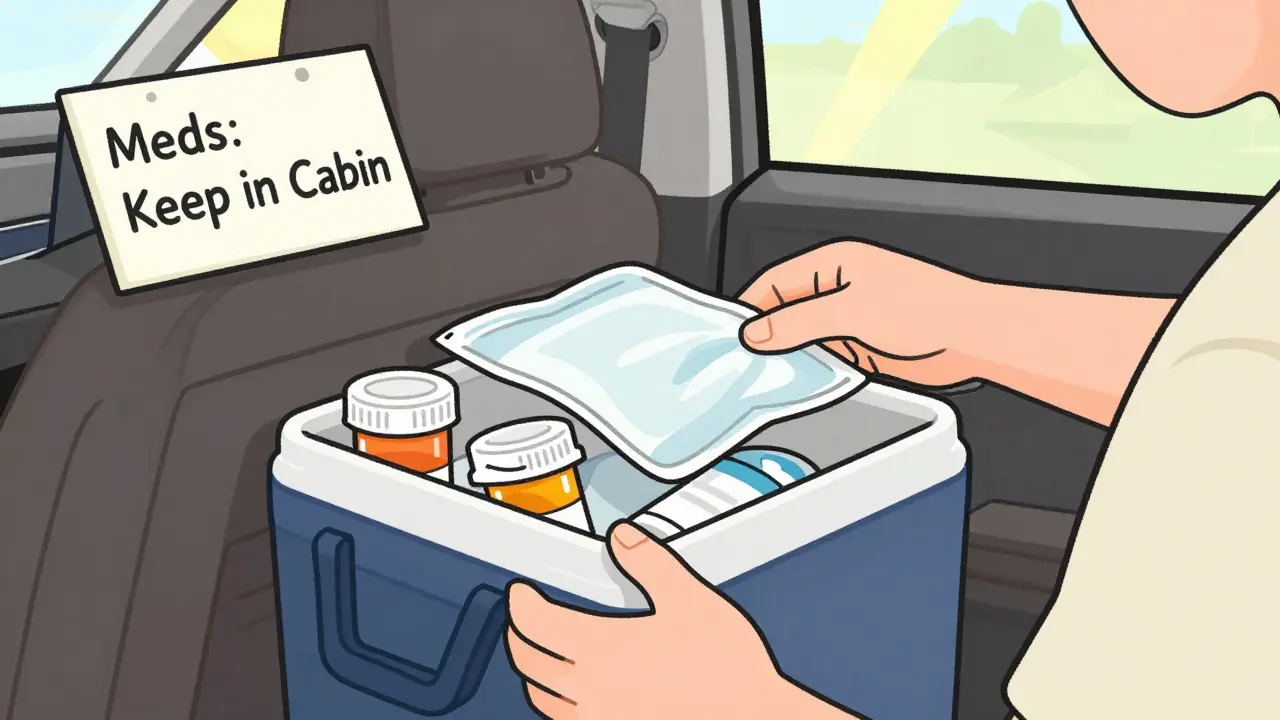
Packing meds is not the same as packing socks. Treat them like fragile electronics.- Keep them in original containers. No exceptions.
- Use a small, insulated cooler for refrigerated meds. Add a cold pack - but don’t let it freeze the meds. Wrap the pack in a towel first.
- For non-refrigerated meds, use a sealed plastic bin with a lid. Add silica gel packs to absorb moisture.
- Never pack meds in checked luggage. Always carry them with you in your personal bag. Airlines don’t guarantee temperature control in cargo holds.
- Bring a printed list of all meds, dosages, and prescribing doctors. If your bag gets lost, you’ll still have the info.
What to Do With Old or Unwanted Medications
Before you move, go through your medicine cabinet. Toss expired, broken, or unused pills. But don’t just throw them in the trash. The EPA and FDA recommend drug take-back programs first. Pharmacies, hospitals, and some police stations offer drop boxes. In the UK, you can return unwanted meds to any pharmacy - no questions asked. They’re incinerated safely. If no take-back is available, here’s how to dispose of them safely:- Remove pills from bottles.
- Mix them with something unappetizing - used coffee grounds, cat litter, or dirt.
- Seal them in a plastic bag.
- Put the bag in your regular trash.
Special Cases: Insulin, Controlled Substances, and Kids’ Meds
Some meds need extra care. Insulin: Keep it cool. Use a portable insulin cooler if you’re moving in hot weather. Never let it freeze. If you suspect it’s been compromised, get a new one. Controlled substances (opioids, ADHD meds, benzodiazepines): These are high-risk for theft or misuse. Store them in a locked box. If you’re moving, carry them with you. Don’t let movers pack them. Keep them in your carry-on. Children’s medications: Even if your kids are away during the move, keep their meds secure. A neighbor’s child might be visiting. A curious toddler might find a bottle labeled "cherry-flavored." Lock it up.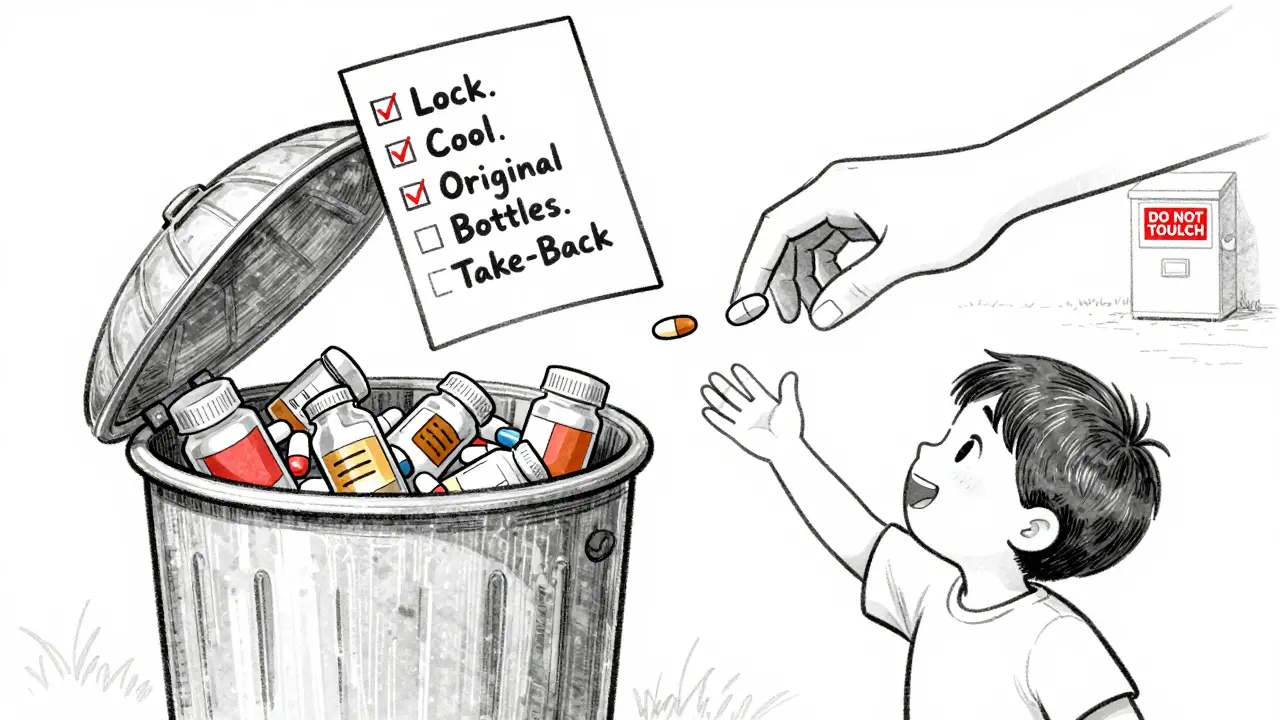
What to Do After You Move
Once you’re settled, don’t just dump your meds back into the old cabinet. Take a moment to:- Check expiration dates.
- Confirm storage location is still cool, dry, and locked.
- Update your meds list if anything changed during the move.
- Dispose of any empty bottles or packaging. Don’t leave them lying around.
Common Mistakes to Avoid
- Putting meds in a box labeled "BATHROOM ITEMS" - then storing it in a hot garage.
- Assuming "it’s just a few pills, it won’t matter" - one pill can be enough to harm a child.
- Using old pill organizers as primary storage - they’re for daily use, not long-term.
- Waiting until the last minute to sort meds - you’ll forget something important.
- Leaving meds in a car overnight while you sleep.
Final Checklist
Before you start renovating or packing:- ✔️ Make a list of all meds, including OTC and supplements.
- ✔️ Check expiration dates.
- ✔️ Find a locked, temperature-safe spot for temporary storage.
- ✔️ Pack refrigerated meds in a cooler with a cold pack.
- ✔️ Keep all original bottles.
- ✔️ Dispose of unwanted meds at a pharmacy or take-back site.
- ✔️ Carry meds with you during the move - never in a moving truck.
- ✔️ After moving, confirm your new storage spot is safe and secure.
Can I store my medications in the kitchen during a renovation?
Only if it’s a clean, dry, locked cabinet away from the renovation zone. Avoid countertops - they get dusty, cluttered, and are easy for kids or pets to reach. A high cabinet in the kitchen is better than a bathroom or garage, but make sure it’s not near the stove or sink.
What if I don’t have a locked cabinet?
Use a small lockbox, a locked tool chest, or even a locked drawer in a dresser. A gun safe works too. The goal isn’t to buy expensive gear - it’s to prevent access. A simple padlock on a plastic bin will do if it’s out of reach and not in a high-traffic area.
Should I bring my meds with me when I move, or let movers pack them?
Always carry them yourself. Movers don’t track temperature, don’t know what’s in your boxes, and may leave items in hot trucks or unsecured storage. Keep your meds in your personal bag or carry-on. If you’re flying, keep them in your hand luggage.
Can I throw expired pills in the trash?
Only if you mix them with something unappealing - like coffee grounds or cat litter - and seal them in a plastic bag. Never dump pills loose in the trash. For controlled substances like opioids, flush only if the label says to. Otherwise, take them to a pharmacy drop box - it’s free and safe.
How do I know if my insulin has gone bad?
You can’t tell by looking. If it’s been frozen, exposed to extreme heat, or left out past its expiration, don’t risk it. Even if it looks clear, it may not work. When in doubt, get a new vial. Insulin is too critical to gamble with.
All Comments
Juan Reibelo January 23, 2026
Okay, I just finished moving last month, and I can't believe I didn't think about this sooner. I left my mom's blood pressure meds in the garage for three days while we packed. Thank you for the reminder - I'm never doing that again. I bought a cheap lockbox from Walmart and now everything's in there, labeled, and out of reach. Seriously, this post saved me from a potential disaster.
Sharon Biggins January 25, 2026
you're so right about the insulin thing!! i had no idea it could go bad so fast. i just moved and i'm keeping mine in the fridge in the bedroom, wrapped in a towel with a cold pack. i even put a little note on it: 'do not touch this is life or death'. my dog is a menace. 🐶❤️
John McGuirk January 26, 2026
they don't want you to know this but the pharmaceutical companies are fine with you storing meds in garages because it makes you buy more. they know you'll panic when your pills turn to dust and you'll just refill. they profit from your ignorance. the government won't tell you this. don't trust the FDA. check the label. if it says 'store below 77F' - they're lying. it's really 68F. i know because i read the fine print.
Michael Camilleri January 27, 2026
you people treat meds like fragile glass while your kids are playing with power tools in the same house. if you're too lazy to lock up your pills then you don't deserve to be healthy. this isn't rocket science. if your child gets into your opioids you didn't raise them you raised a liability. stop acting like this is a novel concept. it's basic parenting. and if you're moving and think a moving company should handle your prescriptions you're not just irresponsible - you're dangerous.
lorraine england January 28, 2026
so glad you mentioned the original bottles! i used to dump everything into those little plastic organizers and then forgot what was what. now i keep the bottles and just use the organizer for daily doses. also - silica gel packs are magic. i put one in every box with meds. it's like a tiny moisture ninja. 💪
Phil Maxwell January 29, 2026
honestly i just put mine in my backpack and carried it with me the whole time. didn't even think twice. but now that you mention it - yeah, the trunk thing is wild. i had a friend whose insulin got ruined because they put it in the back of the rental van. he ended up in the ER. so yeah. carry it. always.
Shelby Marcel January 30, 2026
wait so if i mix my expired pills with coffee grounds its ok? what if i just use my cats litter? my cat is like a tiny dictator and he hates when i touch his litter. but if i mix pills in it... is that still gross? 🤔
Josh McEvoy January 30, 2026
my ex left her anxiety meds in the bathroom during the move. i found them in a soggy box next to a moldy towel. i threw them in the trash. she cried for a week. i didn't care. that's what you get when you treat your meds like trash. 🤷♂️💀
Heather McCubbin January 31, 2026
you think this is bad wait till you find out how the government tracks your meds through the pharmacy system. they know exactly how many pills you're taking. they're building a database. you think that's for your safety? no. it's for control. they want to know when you run out so they can push more. don't let them win. lock it up. but also... be aware.
Shanta Blank February 1, 2026
my neighbor's kid got into his grandpa's fentanyl patches during a renovation. kid was 4. dead in 20 minutes. the dad? he was too busy painting the ceiling. no one told him to lock it up. no one warned him. now the kid's dead. and the dad? he drinks now. this isn't just advice. it's survival. don't be that guy. lock it. now.
Tiffany Wagner February 1, 2026
i just moved and i put all my meds in a ziplock bag inside my purse. i didn't even think about temperature. now i'm kinda nervous. should i get a cooler? i don't have one. maybe i'll just keep it with me all the time?
Chloe Hadland February 1, 2026
thank you for this. i have a toddler and i was terrified of this exact thing. i bought a little lockbox from Target for $12 and now i feel way better. also - i put a sticker on it that says 'magic pills for grownups' so he doesn't touch it. he thinks it's a treasure chest. it's weird but it works.
Dolores Rider February 2, 2026
they're watching. they know you're storing meds in your kitchen. they're watching your house. your fridge. your lockbox. don't think you're safe. they're tracking your meds. they're tracking your moves. they're tracking your pain. they want to know when you're vulnerable. lock it up. but don't trust the system. nothing is safe.