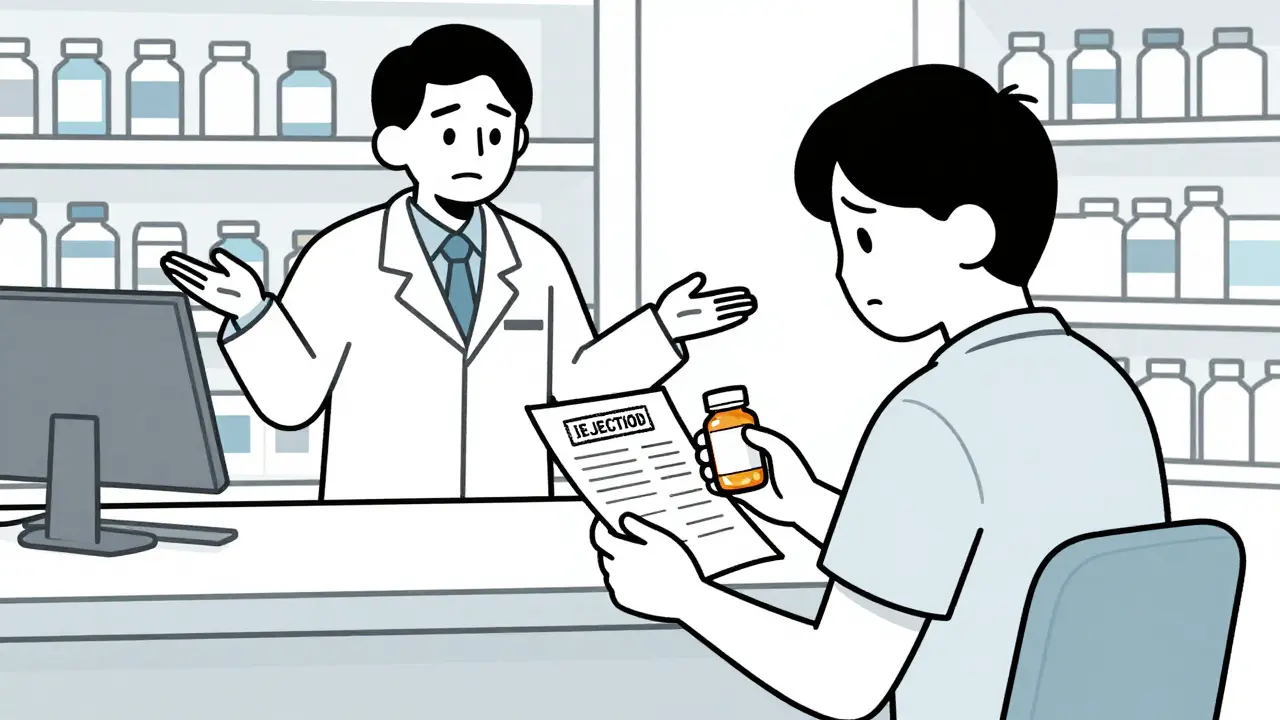
Imagine this: you’ve been taking a generic version of your prescription for months. It’s worked fine-until it hasn’t. Maybe you feel slightly off, or your doctor notices your blood work isn’t as stable as it used to be. You hear that the brand-name version might be more consistent, so you ask your pharmacist to switch you back. But instead of a simple swap, you hit a wall. Insurance denies it. The pharmacy says they can’t fill it without a special code. Your doctor is busy and doesn’t have time to fight the paperwork.
You are not alone. While generic medications are drugs with the same active ingredient as brand-name drugs but lower costs safe and effective for most people, some patients experience issues with inactive ingredients or subtle differences in how their bodies absorb the drug. Switching back to the brand-name medication is the original patented drug developed by the manufacturer is possible, but it requires specific steps, medical justification, and patience. This guide breaks down exactly how to do it safely, legally, and without breaking the bank.
Why Would You Need to Switch Back?
First, let’s address the elephant in the room: generics are rigorously tested. The FDA requires strict bioequivalence standards ensuring generics perform similarly to brands mandates that a generic must deliver the same amount of active ingredient into your bloodstream within a similar timeframe as the brand. Specifically, the generic must fall within an 80% to 125% range of the brand’s performance metrics (known as AUC and Cmax).
So why switch? For 99% of patients, the answer is cost savings. But for a small percentage, the difference matters. Here are the three main reasons doctors approve a switch back to brand:
- Inactive Ingredients: Generics can use different fillers, dyes, or binders. If you have sensitivities to lactose, gluten, or certain dyes found in the generic but not the brand, you may experience allergic reactions or digestive issues.
- Narrow Therapeutic Index (NTI) Drugs: These are medications where a tiny change in dosage or absorption can lead to serious side effects or treatment failure. Examples include Warfarin (blood thinner), Levothyroxine (thyroid hormone), and Phenytoin (anti-seizure). For these drugs, the FDA tightens the equivalence window to 90%-111%. Even then, consistency is key.
- Therapeutic Failure: If your condition worsens on the generic despite correct dosing, your doctor may suspect the generic formulation isn’t working for your specific physiology.
Dr. Aaron Kesselheim from Harvard Medical School notes that while generics are equivalent for most, patients with conditions like epilepsy or inflammatory bowel disease may need the consistency of the brand formulation to avoid setbacks.
The Cost Barrier: What You’re Up Against
Before you start the process, understand the financial reality. Brand-name drugs typically cost 3 to 5 times more than generics. In 2023, the average monthly price for brand-name cardiovascular meds was over $450, compared to roughly $112 for generics.
Insurance companies are designed to keep costs low. They will automatically deny a brand-name request if a generic exists. To get coverage, you need what’s called a Prior Authorization (PA). This is a formal approval from your insurer stating that the brand is "medically necessary." Without this, you pay out-of-pocket. With it, your copay might remain the same as the generic, or increase slightly depending on your plan’s tier structure.
| Factor | Generic Medication | Brand-Name Medication |
|---|---|---|
| Active Ingredient | Identical to brand | Original formula |
| Inactive Ingredients | May vary (dyes, fillers) | Consistent formulation |
| Bioequivalence Range | 80%-125% (standard) | Reference standard |
| Cost | $10-$150/month avg | $300-$600+/month avg |
| Insurance Coverage | Automatic | Requires Prior Authorization |
Step-by-Step: How to Execute the Switch
Do not just go to the pharmacy and ask for the brand. The pharmacist likely cannot override insurance rules without a doctor’s order. Follow these steps carefully.
- Document the Issue: Keep a log. Did you get a rash? Are your thyroid levels fluctuating? Note dates and symptoms. Vague complaints like "I don’t feel right" often get denied. Specific clinical evidence wins.
- Contact Your Prescriber: Explain the situation. Ask them to write "Dispense as Written" (DAW) or "Brand Medically Necessary" on your new prescription. In electronic systems, this is often a checkbox labeled "DAW-1" or "No Substitution."
- Prepare for Prior Authorization: Your doctor’s office will submit a PA form to your insurance. This form requires a clinical justification. For example: "Patient experienced INR instability on generic warfarin; brand required for stable anticoagulation."
- Wait for Approval: This takes time. Medicare Part D plans can take up to 72 hours for urgent cases, but non-urgent requests often take 1-2 weeks. Do not stop taking your medication during this wait unless instructed by your doctor.
- Verify the Pharmacy: Not all pharmacies stock every brand name, especially older ones. Call ahead to ensure they have the specific brand (e.g., Synthroid, not Levoxyl) in stock.
Navigating Insurance Denials and Appeals
If your initial Prior Authorization is denied, don’t give up. According to industry data, nearly 64% of appeals are successful when proper documentation is provided. Here is how to strengthen your appeal:
- Laboratory Evidence: Include recent blood tests showing instability on the generic.
- Peer-to-Peer Review: Ask your doctor to request a phone call between their office and the insurance company’s medical director. Doctors can argue clinical nuance better than forms.
- State Laws: Some states require pharmacists to notify prescribers if a patient has adverse effects from a generic substitution. Check your state’s regulations via the National Conference of State Legislatures website.
If insurance continues to deny coverage, you can pay out-of-pocket and look for patient assistance programs. Many brand manufacturers offer coupons or co-pay cards that reduce the cost significantly, even if insurance won’t cover it.
Safety Tips During the Transition
Switching medications always carries a slight risk. When moving from generic to brand, keep these safety tips in mind:
- Monitor Closely: For NTI drugs, schedule a follow-up appointment within 7-10 days of the switch. Blood work should be rechecked to ensure stability.
- Don’t Double Dose: Ensure you know the exact strength. Sometimes brand and generic packaging looks different, leading to confusion.
- Inform All Providers: Make sure your dentist, specialist, and primary care provider know you are now on the brand name. Update your records at every clinic.
- Watch for "Authorized Generics":** Some brand companies sell their own version under a generic label. This is chemically identical to the brand but cheaper. Ask your pharmacist if this is an option-it might solve the issue without the high cost.
When NOT to Switch Back
Not every complaint warrants a switch. Dr. Jerry Avorn from Brigham and Women’s Hospital points out that 99.7% of generic switches are therapeutically equivalent. If your issue is minor-like a pill being slightly larger or a different color-switching back may not help and could strain your relationship with your doctor and insurer. Save the effort for genuine medical necessity.
Can I switch from generic to brand without telling my doctor?
Technically, you can ask a pharmacist, but they will likely refuse to dispense the brand if your insurance requires a generic first. More importantly, you should never change your medication regimen without medical oversight, especially for chronic conditions. Your doctor needs to document the reason for the switch to ensure continuity of care.
How long does prior authorization take?
It varies by insurer and urgency. For non-urgent cases, expect 1-2 weeks. For urgent cases (where lack of medication poses immediate health risks), insurers often guarantee a decision within 72 hours. Always check with your doctor’s office for status updates.
What if my insurance permanently denies the brand?
You have options. You can file an external review with your state’s department of insurance. Alternatively, look for manufacturer co-pay assistance programs, which can reduce the out-of-pocket cost to match your generic copay. In some cases, paying cash may still be cheaper than your brand copay if you use discount services like GoodRx.
Are authorized generics a good alternative?
Yes. Authorized generics are made by the brand-name company but sold under a generic label. They contain the exact same formulation as the brand but cost less. Ask your pharmacist if an authorized generic is available for your medication-it’s a great middle ground.
Does switching back affect my Medicare Part D coverage?
Medicare Part D plans generally require you to use generics. Switching to brand may push you into a higher cost-sharing tier. However, if medically necessary, the plan must cover it after prior authorization. Be aware that frequent switches could impact your overall annual spending, potentially affecting whether you hit the catastrophic coverage threshold.