When you’re traveling with insulin, vaccines, or other temperature-sensitive medications, a hot car or freezing airport tarmac can turn your life-saving drugs into useless waste. It’s not just about discomfort-it’s about safety. Medications don’t react well to extremes. Insulin can clump. Vaccines can lose potency. Antibiotics can become ineffective-all without any visible warning. And if you’re flying, driving across the country, or even just picking up a prescription on a 90°F summer day, you’re already in the danger zone.
Know Your Medication’s Temperature Needs
Not all medications need the same care. The first thing you must do is check the label or ask your pharmacist what temperature range your drug requires. There are three main categories:- Ambient (15°C-25°C): Most pills, capsules, and some creams. These are less sensitive. Keep them out of direct sunlight and don’t leave them in a hot car for hours.
- Refrigerated (2°C-8°C): Insulin, certain biologics, some antibiotics, and most vaccines. These are the most common medications people mess up during travel.
- Cryogenic (below -150°C): Only for specialized treatments like certain mRNA vaccines or blood products. Rare for personal use, but if you’re on one, you’re likely already working with a medical team.
For example, insulin starts breaking down after just 30 minutes above 25°C. A 2023 study found that insulin exposed to 35°C for 2 hours lost over 15% of its potency. That’s not a small drop-it’s enough to cause high blood sugar and serious health risks.
Hot Weather: Don’t Let Your Car Turn Into an Oven
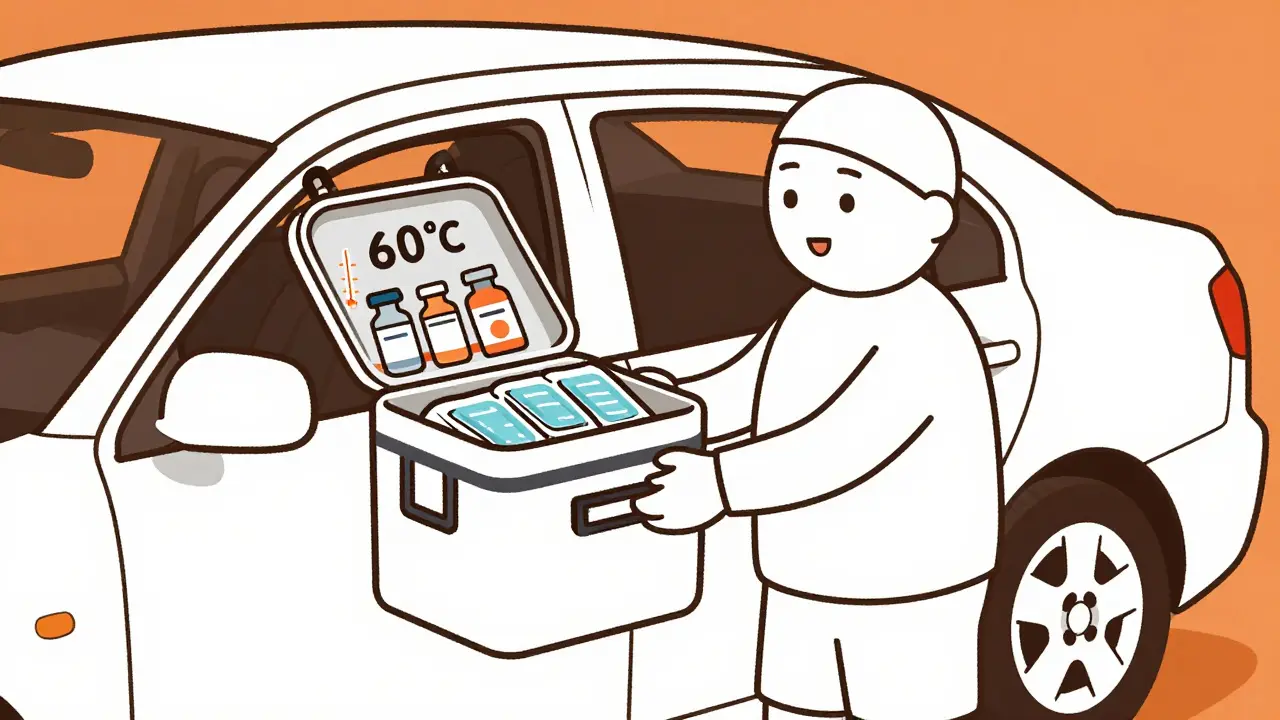
Summer heat is the #1 enemy of refrigerated medications. A car parked in the sun can hit 60°C-even if it’s only 30°C outside. That’s hotter than an oven. And if you’re picking up a prescription after work and leave it on the passenger seat? You’ve just ruined it.Here’s what works:
- Use an insulated cooler bag with frozen gel packs. A standard lunch bag with two ice packs can keep insulin at 2°C-8°C for up to 8 hours in 32°C heat.
- Never leave medication in the car. Even in the glovebox. Even for 10 minutes. If you’re stopping for gas or food, take it with you.
- Use a temperature-monitoring device. Simple ones cost under £20 and show you the max temperature reached. More advanced ones sync to your phone and alert you if it gets too hot.
- When flying, always carry medications in your hand luggage. Checked baggage can sit on hot tarmacs for hours.
One patient in Exeter shared that her insulin became cloudy after her husband left it in the car during a 45-minute grocery run in July. The pharmacy confirmed it was degraded. She had to use a backup pen and ended up in A&E with high blood sugar. It was avoidable.
Cold Weather: Freezing Is Just as Dangerous
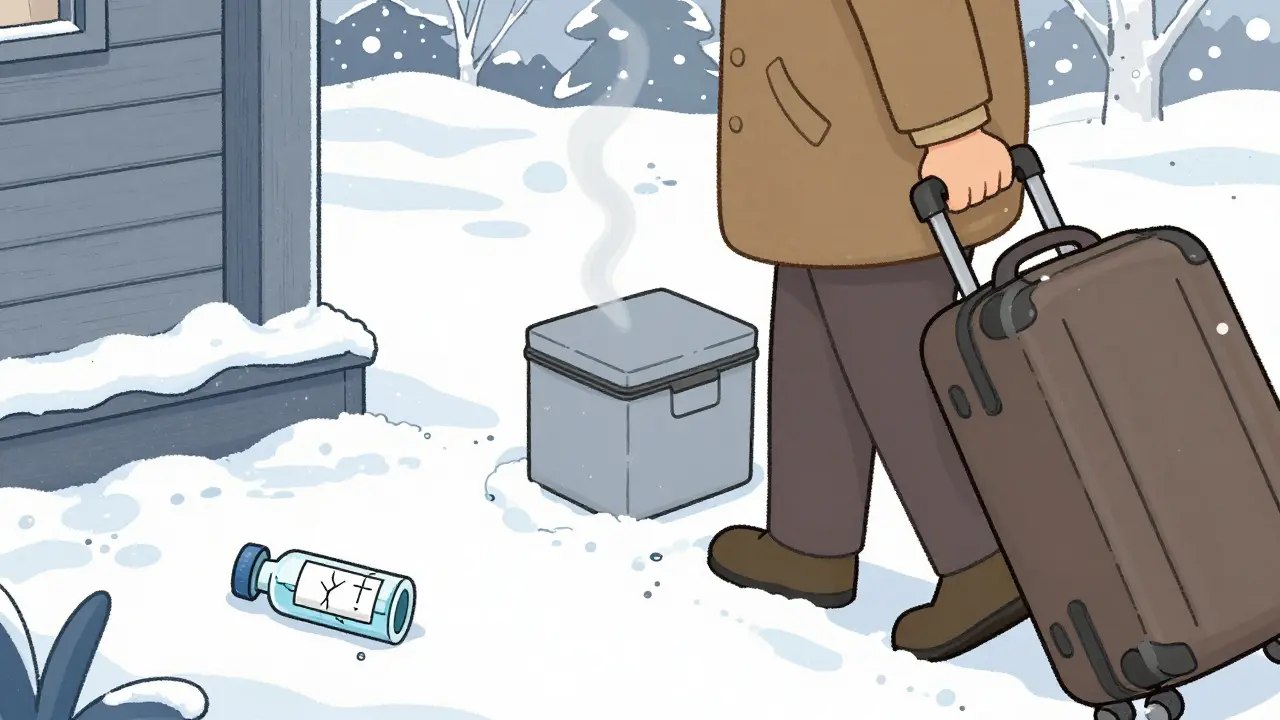
Most people think cold is safe. It’s not. If your medication freezes, it can break down just like heat exposure. Insulin freezes at around -4°C. Once frozen, even if it thaws, the structure changes. It won’t work right.Winter travel brings its own risks:
- Medications left in unheated cars overnight can freeze.
- Delivery drivers leaving packages on porches in sub-zero temperatures.
- Airports with unheated baggage holds.
How to protect against cold:
- Use insulated packaging with heat packs-not ice packs. Some travel cases come with reusable heat cells that activate when you need them.
- Keep refrigerated meds close to your body. A jacket pocket or purse next to your torso stays warmer than a bag on the floor.
- If you’re mailing medication, use a courier that offers temperature-controlled shipping. Royal Mail’s standard service is not enough.
- Ask your pharmacy to ship with thermal packaging. Most now offer it for free if you ask.
A logistics manager at Pfizer reported a 17% spike in temperature excursions during the 2022-2023 winter because transport vans weren’t designed for extreme cold. The same applies to your personal shipments.
Traveling by Plane? Do This
Air travel is tricky. Temperatures in cargo holds can swing from freezing to hot. That’s why airlines and regulators require all temperature-sensitive meds to be in carry-on luggage.Here’s your checklist:
- Keep meds in your hand luggage. Always.
- Bring a copy of your prescription or a letter from your doctor. Security may ask.
- Use a TSA-approved travel cooler. Brands like TempAid 2.0 or MedKits are designed for air travel and maintain 2°C-8°C for 48 hours.
- Don’t put ice packs directly against the medication. Wrap them in a towel first. Direct contact can cause freezing.
- Notify the airline in advance if you’re carrying a large quantity. Some require a medical note.
One user on Reddit said his insulin vials cracked after being stored in the overhead bin during a 12-hour flight. The cabin pressure and cold caused the glass to weaken. He didn’t notice until he was overseas. He had to fly home early.
What Packaging Actually Works?
Not all coolers are created equal. Here’s what professionals use:| Type | Temperature Range Maintained | Duration | Cost | Best For |
|---|---|---|---|---|
| Insulated Lunch Bag + Gel Packs | 2°C-8°C | 6-8 hours | £10-£20 | Day trips, short flights |
| Active Cooling Case (e.g., TempAid 2.0) | 2°C-8°C | 48 hours | £120-£180 | Long trips, international travel |
| Passive Insulated Box (Pharmacy Shipment) | 2°C-8°C | 72 hours | Free (with prescription) | Mail-order meds |
| Reusable Heat Packs | 15°C-25°C | 12 hours | £15 | Cold weather, ambient meds |
For most people, a simple insulated bag with gel packs is enough. For frequent travelers or those on insulin pumps, the active cooling cases are worth the investment. They’re heavier, yes-but they’ve saved lives.
Documentation Matters More Than You Think
The FDA and WHO both say: if you can’t prove your medication stayed in range, it’s considered spoiled. Even if it looks fine.Always:
- Keep temperature logs if you’re using a monitor.
- Save receipts from pharmacy shipments that include thermal packaging.
- Carry a doctor’s note explaining why you need the medication and its storage needs.
- For international travel, check the destination country’s rules. Some require pre-approval for insulin or injectables.
One pharmacist in Bristol told me about a patient who lost her entire 3-month supply of a biologic drug because she didn’t have documentation. Customs seized it. She had to wait 10 days for a replacement-while on a waiting list for a new prescription.
What to Do If Your Medication Gets Too Hot or Too Cold
If you suspect your medication was exposed to extreme temperatures:- Don’t use it. Even if it looks normal.
- Call your pharmacist. They can often tell you if it’s still safe based on exposure time and temperature.
- If it’s insulin and it’s cloudy, clumpy, or has particles-throw it out.
- If it’s a vaccine or injectable and you’re unsure, get a replacement. The risk isn’t worth it.
There’s no way to reverse damage from heat or cold. Once it’s done, you can’t fix it. No refrigeration, no shaking, no waiting-it’s gone.
Final Tips for Real-World Scenarios
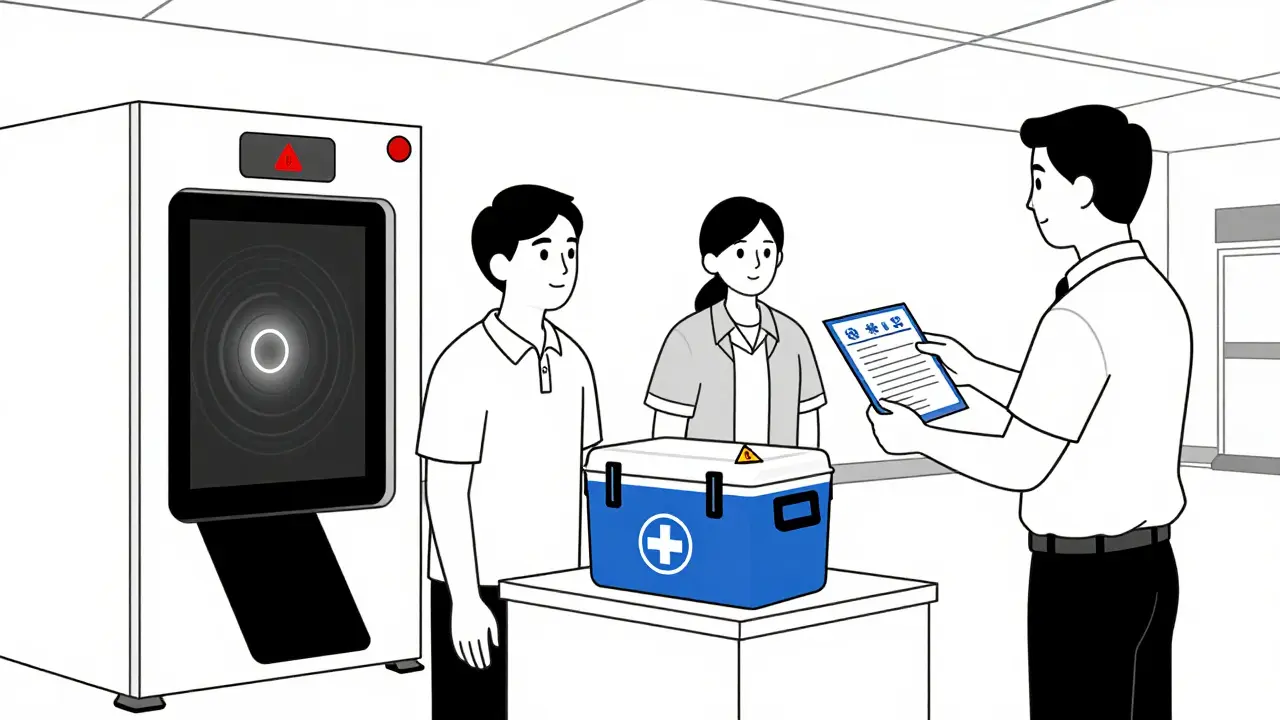
- At the airport: Ask for a hand-check of your cooler. Don’t let it go through X-ray if it’s a sensitive device.
- On a road trip: Keep meds in the cabin, not the trunk. Use a window shade if parked in sun.
- At a hotel: Don’t leave meds on the mini-fridge. Most hotel fridges are too cold or too warm. Use a portable cooler instead.
- When ordering online: Always select temperature-controlled shipping. Don’t assume it’s included.
- For children or elderly: Use a wrist-worn cooler or attach the pack to their clothing with a Velcro strap.
Climate change is making extreme weather more common. What was once rare-like a 40°C heatwave in June-is now normal. Your medication transport plan needs to be just as flexible.
When in Doubt, Replace It
The biggest mistake people make? Trying to save money by using a questionable dose. A vial of insulin costs £50. A hospital visit for diabetic ketoacidosis costs £2,000. The math is simple.If you’re unsure whether your medication is still good, get a new one. Talk to your doctor. Ask your pharmacy for a backup. Don’t gamble with your health.
Can I leave my insulin in the car for a few minutes?
No. Even 10 minutes in a parked car on a 25°C day can push the internal temperature over 40°C, which can degrade insulin. Always take it with you. If you must leave it, use a thermal bag and keep it in the shade-but never in the trunk or glovebox.
Do I need a doctor’s note to fly with insulin?
Not always, but it’s strongly recommended. Some countries require it. Security may ask. A simple letter from your doctor stating you have diabetes and require insulin for medical use avoids delays and questions. Keep it in your carry-on with your meds.
Can I use regular ice packs with my insulin?
Yes, but never let the vials touch the ice directly. Wrap the ice packs in a towel or cloth first. Direct contact can freeze insulin, which ruins it. Use gel packs designed for medical use-they’re safer and last longer.
What happens if my vaccine freezes?
If a vaccine freezes, it’s likely damaged and no longer effective. mRNA vaccines, like those for COVID-19, are especially sensitive. Once frozen, even if thawed properly, they lose potency. Never use a frozen vaccine. Contact your provider for a replacement.
Is it safe to mail my medication?
Only if the pharmacy uses temperature-controlled shipping. Standard postal services are not reliable. Look for services that use insulated boxes with cold packs and tracking. If you’re unsure, ask the pharmacy to confirm their packaging meets WHO and IATA standards.
All Comments
Kunal Majumder January 10, 2026
Just got back from a road trip across Rajasthan with my insulin, and let me tell you - that insulated lunch bag trick saved my life. I threw two gel packs in with a towel wrap, kept it in my lap the whole time, and never cracked open the bag. No cloudiness, no drama. Seriously, if you're on insulin and you're not doing this, you're playing Russian roulette with your pancreas.
chandra tan January 11, 2026
In India, we don’t have fancy TempAid gadgets, but we’ve been doing this for decades - wrap the vial in a cloth, put it in a small thermos, and tuck it inside your kurta pocket. Body heat keeps it stable, and no one even notices. My uncle’s been on insulin for 30 years and never had a spoiled dose. Sometimes the old ways are the best ways.
Ted Conerly January 12, 2026
Let’s cut through the noise: if you’re flying with insulin and not using a TSA-approved cooler, you’re not just being careless - you’re putting your life on the line. The fact that people still leave meds in checked luggage is baffling. Airlines don’t care about your health. Your pharmacy doesn’t care. Only you do. Stop outsourcing your safety. Buy the $150 cooler. It’s cheaper than an ER visit.
Saumya Roy Chaudhuri January 12, 2026
OH MY GOD. I just read this and I’m shaking. My cousin’s husband died last year because he thought "it looked fine" after leaving insulin in the car for 20 minutes. 20 MINUTES. He had a vial that was "just cloudy" and he used it anyway. He went into DKA and they couldn’t revive him. This isn’t advice - this is a survival manual. If you’re not taking this seriously, you’re a danger to yourself and everyone around you. Stop being lazy. Get a cooler. Now.
anthony martinez January 13, 2026
Interesting how the article assumes everyone has access to £120 cooling cases. In rural America, people are choosing between insulin and groceries. Maybe next time, suggest alternatives like keeping meds in a sock inside your pants? Real people need real solutions, not luxury gear.
Mario Bros January 13, 2026
Biggest tip I’ve learned: never trust hotel mini-fridges. They’re either too cold (freezing your insulin) or too warm (turning it to soup). I carry a tiny insulated pouch with a gel pack in my backpack at all times. Even when I’m just running to the store. It’s not extra - it’s non-negotiable. Life > convenience.
neeraj maor January 14, 2026
Let’s be real - this whole guide is corporate propaganda. The real reason they push all these expensive coolers is because Big Pharma wants you to buy new vials every time you travel. They know you’ll panic and replace it even if it’s fine. I’ve kept insulin in my pocket for weeks in 40°C heat and it worked fine. The science is rigged. Don’t fall for the fear marketing.
Dwayne Dickson January 16, 2026
While the intent of this guide is laudable, the operational framework presented lacks sufficient nuance regarding international regulatory compliance. The implicit assumption that ambient storage thresholds are universally applicable disregards the ICH Q1A(R2) stability guidelines, which mandate context-specific validation protocols for biologics. Furthermore, the reliance on passive cooling devices without documented thermal mapping constitutes a non-compliant deviation from WHO Annex 9. One must question whether anecdotal evidence from Exeter or Bristol constitutes an evidence-based standard of care.
Faith Edwards January 17, 2026
It’s truly astonishing that we live in a world where a person must spend $180 on a glorified lunchbox just to keep a life-saving drug from turning into a science experiment. But then again, why should we be surprised? We’ve turned healthcare into a luxury sport, where only the affluent can afford to stay alive. The fact that a diabetic must carry a TSA-approved thermal case like it’s a designer handbag speaks volumes about the moral bankruptcy of our system. I, for one, am ashamed.
Ritwik Bose January 18, 2026
Thank you for this thoughtful, meticulously researched guide. 🙏 I especially appreciate the emphasis on documentation - too many people overlook how vital a doctor’s note is when crossing borders. I’ve personally had my insulin cleared at customs in Dubai and Singapore because I had the letter printed and laminated. It’s not just about safety - it’s about dignity. You deserve to travel without being treated like a criminal for carrying medicine. Keep advocating. 💙