When you need a brand-name medication and there’s no generic version available, the cost can be overwhelming. Some drugs cost over $10,000 a month. For many people, that’s more than their rent or mortgage. But there’s a lifeline: patient assistance programs (PAPs). These are free or low-cost medication programs run by drug manufacturers, nonprofits, and sometimes states. They exist specifically for situations like this - when there’s no cheaper alternative. The problem isn’t that they don’t exist. It’s that most people don’t know how to use them, or they give up after the first roadblock.
What Patient Assistance Programs Actually Do
PAPs don’t just offer discounts. They often cover 100% of the cost of your medication. If your drug costs $15,000 a month and you qualify, you could pay $0. This isn’t theoretical. In 2022, these programs helped over 1.2 million people in the U.S. with brand-name drugs that had no generic version. That includes life-saving treatments for cancer, rare diseases, HIV, and autoimmune conditions like lupus or MS. The catch? You have to qualify. Most programs require proof that your income is below 400% of the Federal Poverty Level. For a single person in 2023, that’s $60,000 a year. Some programs are even stricter - only accepting people below 200% FPL, which is $30,000. You also need a valid prescription and usually proof that you’re uninsured or underinsured. If you have Medicare, you can’t use manufacturer copay help - but you might still qualify for nonprofit PAPs.Why PAPs Are the Only Real Option When No Generic Exists
You might think: “Why not just use GoodRx?” GoodRx is great for generics. It can save you 50% on common drugs like metformin or lisinopril. But when there’s no generic? GoodRx barely helps. For brand-name drugs with no alternative, GoodRx averages only 8% savings. That’s not enough. If your drug costs $500,000 a year - like Soliris for a rare blood disorder - an 8% discount still leaves you paying $460,000. That’s not affordable. That’s impossible. PAPs, on the other hand, are designed for exactly this scenario. Drug companies set them up because they know these medications have no competition. Without PAPs, patients would simply stop taking them. That’s bad for health outcomes and bad for the companies too - because if people can’t take the drug, they won’t buy it. So manufacturers have an incentive to help. That’s why 85% of PAPs are run by the drug makers themselves.How to Start: The First Three Steps
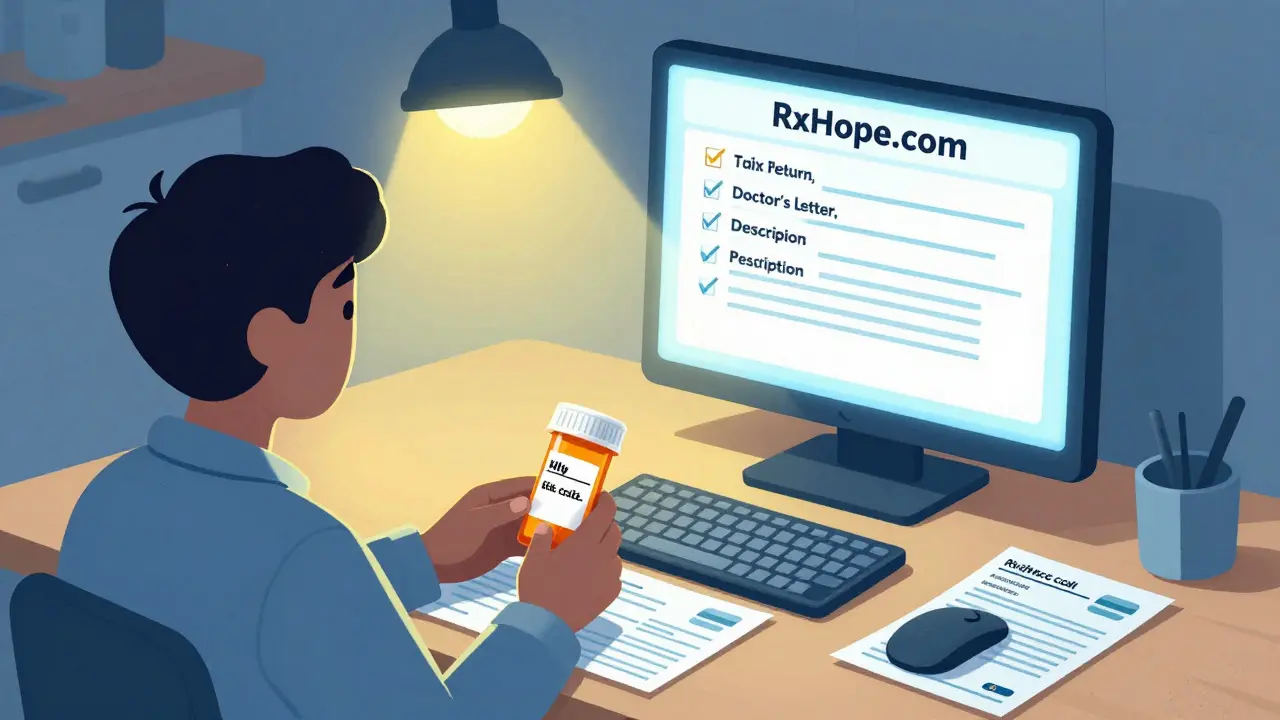
Step one: Know your drug. Write down the exact name - brand and generic if it has one. If there’s no generic, that’s your signal to look for PAPs. Step two: Find the right program. Go to RxHope.com. It’s a free tool that checks over 90% of manufacturer PAPs. Just enter your drug name, income, and insurance status. It tells you instantly which programs you might qualify for. Step three: Get your documents ready. Most programs need three things: a copy of your most recent tax return or W-2, your prescription from your doctor (on letterhead), and proof of insurance status. If you’re uninsured, a signed letter from your doctor saying you don’t have coverage will work. If you’re on Medicare, you’ll need to look for nonprofit PAPs - not manufacturer ones. The Patient Access Network Foundation and the Chronic Disease Fund are two major nonprofits that help people on Medicare.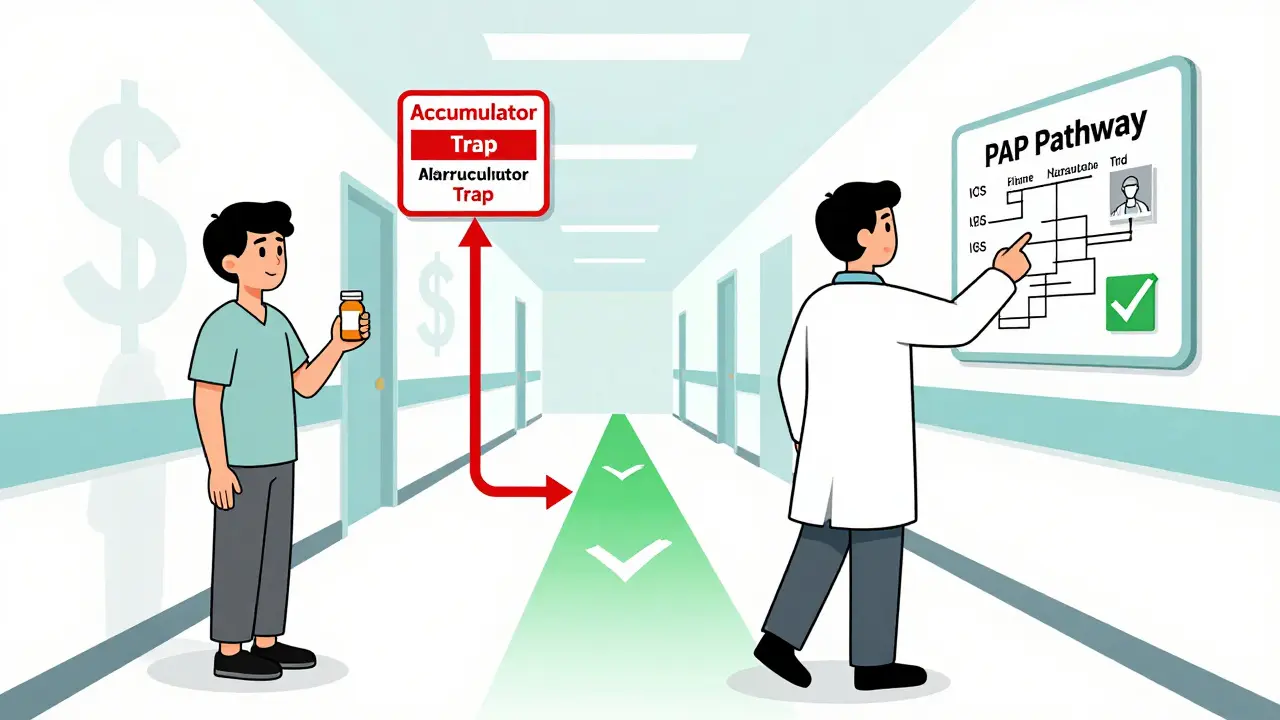
The Hidden Trap: Accumulator Adjustments
Here’s where most people get burned. If you have commercial insurance - not Medicare - your insurer might have an “accumulator adjustment” policy. That means even if a PAP pays your drug bill, that money doesn’t count toward your deductible or out-of-pocket maximum. So you’re still paying thousands out of pocket just to hit your plan’s cap. For example: You’re on a plan with a $8,700 deductible. Your drug costs $12,000 a month. A PAP covers $12,000. Sounds great, right? But your insurer says, “That $12,000 doesn’t count.” So you still have to pay $8,700 before your insurance kicks in. That’s $20,700 you paid in one month. This happens in 78% of major insurance plans. It’s legal. It’s common. And it’s devastating. The fix? If you’re on commercial insurance, ask your doctor or pharmacist if your plan uses accumulator adjustments. If yes, look for nonprofit PAPs. They’re not tied to your insurer, so their help counts. Or, if you’re eligible for Medicaid, switch to it - Medicaid doesn’t use accumulators.Who Can Help You Navigate This?
You don’t have to do this alone. Most hospitals and cancer centers now have medication access specialists - people whose only job is to help patients get PAPs. They’re trained to fill out forms, call insurance companies, and fight denials. If your doctor’s office doesn’t mention them, ask. Say: “Do you have a medication access navigator or patient advocate?” If your clinic doesn’t have one, contact the Patient Advocate Foundation. They offer free case management. They’ll help you fill out applications, call drug companies, and even appeal denials. Their success rate for appeals is over 60%. That means if you get rejected, you’re not done. You just need to ask again - the right way.Real Stories: What Happens When It Works - and When It Doesn’t
One man in Ohio had chronic myeloid leukemia. His drug, Tasigna, cost $14,000 a month. No generic. He was working part-time. He couldn’t afford it. He applied to Novartis’s PAP. It took three weeks. He filled out 11 hours of paperwork. But once approved, his monthly cost dropped to $0. He kept his job. He stayed on treatment. He’s alive today. Another woman in Texas had multiple sclerosis. She had employer insurance. Her PAP covered her drug. But her insurer didn’t count it toward her deductible. She ended up paying $21,000 in one year just to hit her out-of-pocket max. She had to take out a loan. She almost quit her medication. Only after switching to a nonprofit PAP - one that wasn’t blocked by her insurer - did her costs finally drop. The difference? One person understood the accumulator trap. The other didn’t. Knowledge saved her life.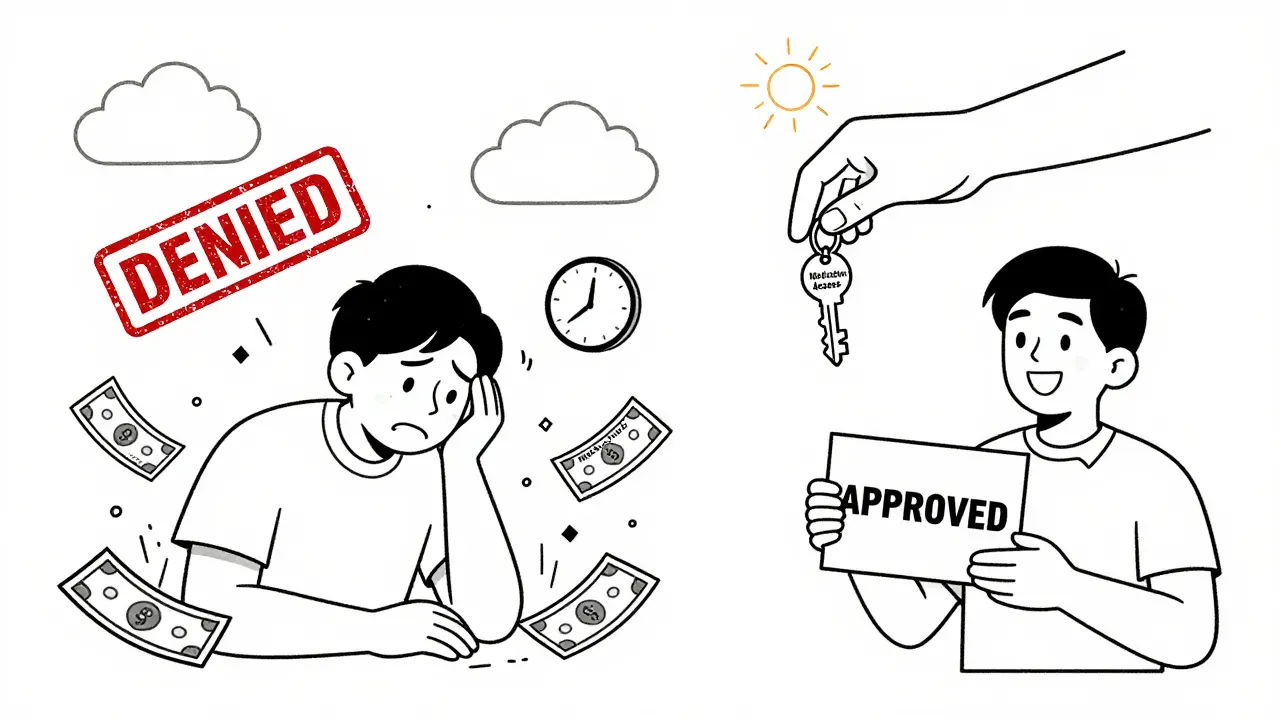
What to Do If You’re Rejected
Rejection is common. Nearly 40% of initial PAP applications get denied - usually because a form was missing or income documents were outdated. Don’t give up. Most denials are fixable. First, read the denial letter. It should say why. Was it income? Missing signature? Insurance proof? Then fix it. Resubmit. You can usually reapply after 30 days. If you’re still stuck, call the program directly. Sometimes a phone call with a case manager can unlock approval. If you’re on Medicare and got rejected by a manufacturer program, try the Patient Access Network Foundation. They help people with income up to 500% FPL. They don’t care about your insurance type. They just want to make sure you get your drug.What’s Changing in 2026
The rules are shifting. Since January 2025, Medicare Part D beneficiaries can’t get manufacturer copay help. That means more people are turning to nonprofit PAPs. Drug companies are also trying to simplify things. Eli Lilly’s “Simple Bridge” program for insulin cuts the application from 17 steps to just five. Approval now takes under 48 hours. Hospitals are getting better too. Epic, the biggest electronic health record system, now has a built-in PAP tool. Doctors can check eligibility while writing the prescription. That’s a big step forward. But the big problem remains: drug prices are still rising. And PAPs are funded by those same companies. If prices keep going up, the programs might not be able to keep up. That’s why experts say PAPs are a necessary bandage - not a cure.Final Advice: Don’t Wait Until You’re in Crisis
The sooner you apply, the better. Processing times vary. Manufacturer programs take 7-10 days. Nonprofits take 2-3 weeks. If you wait until your prescription runs out, you might go without your drug. That’s dangerous. Start today. Write down your drug name. Check RxHope. Call your doctor’s office and ask for help. Gather your tax documents. Don’t assume you don’t qualify. Many people think they make too much - but 400% FPL is higher than most people realize. And if you’re on Medicare, don’t give up. Nonprofits are waiting to help. PAPs aren’t perfect. They’re complicated. They’re inconsistent. But when there’s no generic, they’re often the only thing standing between you and financial ruin - or worse.Can I use a patient assistance program if I have Medicare?
Yes, but not through drug manufacturers. Since January 2020, Medicare rules block manufacturer copay assistance for Part D drugs. However, nonprofit organizations like the Patient Access Network Foundation and the Chronic Disease Fund still help Medicare patients. These programs have different rules - often based on income, not insurance type - and can cover your full drug cost if you qualify.
What if my insurance says the PAP payment doesn’t count toward my deductible?
This is called an accumulator adjustment, and it’s very common. It means your PAP payment doesn’t reduce your out-of-pocket costs under your insurance plan. You still have to pay your deductible or out-of-pocket maximum. The solution is to switch to a nonprofit PAP, which isn’t subject to accumulator rules. Or, if possible, switch to Medicaid - Medicaid plans don’t use accumulators.
How much income do I need to make to qualify for a PAP?
Most manufacturer PAPs require income below 400% of the Federal Poverty Level, which was $60,000 for a single person in 2023. Some programs are stricter, requiring income under 200% FPL ($30,000). Nonprofit PAPs often go higher - up to 500% FPL ($75,000). Always check the specific program’s guidelines. You might qualify even if you think you make too much.
Do I need to reapply every year?
Yes, most PAPs require annual reapplication. You’ll need to submit updated income documents and a new prescription. Some programs send reminders, but don’t rely on them. Mark your calendar for 60 days before your current approval expires. Missing the deadline can mean a gap in treatment.
Can my doctor help me apply?
Yes, and they should. Most hospitals and clinics now have medication access specialists or patient navigators whose job is to help with PAP applications. Ask your doctor’s office if they have one. If they say no, call the drug manufacturer directly - they often have patient support lines that can guide you through the process.
What if I’m denied and can’t afford my medication?
Don’t stop taking your medication. Contact the Patient Advocate Foundation - they offer free case management and can help you appeal denials. You can also reach out to local charities, religious organizations, or state pharmaceutical assistance programs. Some states offer emergency aid for life-saving drugs. Even if you’re denied once, try again. Many approvals come after the second or third attempt.
All Comments
Stacy Thomes January 22, 2026
This article literally gave me chills. I was just told my drug costs $18,000 a month and I thought I was done for. I applied to RxHope last night-got approved for a PAP in 48 hours. I’m crying right now. You’re not alone. You can do this. I’m rooting for you.
Dawson Taylor January 23, 2026
The structural inequity embedded in pharmaceutical pricing is a failure of market logic, not individual circumstance. Patient assistance programs, while benevolent, function as palliative measures within a system that commodifies survival. One must question the moral legitimacy of a regime wherein access to life-sustaining pharmacology is contingent upon charitable intervention.
Oladeji Omobolaji January 24, 2026
Man, this is wild. In Nigeria, we just buy what we can afford or go without. But this? Paying $15k a month just to stay alive? That’s not healthcare. That’s a trap. I’m glad y’all got some help, but damn.
Vanessa Barber January 25, 2026
Yeah, sure. PAPs are great. Until you get denied because your rent is $50 over the limit. Then you’re stuck. And no, your doctor doesn’t care. They just hand you the form and say ‘good luck.’
dana torgersen January 26, 2026
Okay so… I just found out my drug is covered by a PAP… BUT… my insurance… it… it doesn’t count?? Like… what?? I mean… like… why?? Why would they do that?? It’s like… they’re playing a game… and we’re the pawns… and… I just… I don’t even know anymore…
Sallie Jane Barnes January 27, 2026
Thank you for this comprehensive and deeply necessary resource. I have referred multiple patients to RxHope and the Patient Advocate Foundation. Their work is indispensable. I urge all clinicians to integrate medication access navigation into routine care planning. The ethical imperative is clear.
Laura Rice January 29, 2026
OMG I just applied for a PAP for my lupus med and I thought I was too rich… but wait-400% FPL?? That’s like $60k?? I make $58k… so I qualify?? I didn’t even know that!! Thank you for explaining this like I’m not a financial wizard. I’m gonna cry. Again. This is the first time I’ve felt hope in a year.
charley lopez January 29, 2026
Accumulator adjustments represent a significant structural barrier to therapeutic adherence within the commercial insurance ecosystem. The alignment of PAP disbursement with out-of-pocket maximums remains unregulated at the federal level, resulting in suboptimal clinical outcomes and increased long-term utilization of acute care services.
Kerry Evans January 30, 2026
People complain about drug prices, but they don’t understand the R&D costs. If you want cheap meds, stop demanding miracle drugs. Take the generic. Or don’t be so lazy and get a job that pays more. This isn’t a right-it’s a privilege earned by paying your taxes and buying insurance.
Susannah Green January 30, 2026
Just a heads-up: If you’re on Medicare and get denied by a manufacturer program, go straight to PAN Foundation-they’re the real MVPs. I’ve helped 12 people get approved through them in the last 6 months. They don’t care if you’re on Medicare, Medicaid, or self-pay. They just want you alive. Fill out the form. Call them. They answer the phone. Promise.
Kerry Moore February 1, 2026
Your explanation of the accumulator adjustment issue is both accurate and deeply concerning. I would be interested in learning whether any state-level legislation has been introduced to prohibit this practice. Additionally, do you have data on the percentage of nonprofit PAP applications that are approved versus manufacturer programs?
Sue Stone February 2, 2026
My mom got her MS drug for free through a nonprofit. Took 3 weeks. She had to fax like 12 things. But she got it. Don’t give up. Even if it feels like a nightmare, it’s worth it.