
When a migraine hits, waiting for one pill to work isn’t always enough. Many people find that taking two medications together gives them faster, longer-lasting relief. That’s where migraine combination medications come in. These aren’t newfangled drugs - they’re smart pairings of existing ones, designed to hit migraine from multiple angles at once. And now, thanks to patent expirations, most of the best ones are available as affordable generics.
What Exactly Are Migraine Combination Medications?
Migraine isn’t just a bad headache. It’s a neurological event involving inflammation, nerve signaling, and blood vessel changes. A single drug can’t always tackle all of that. Combination medications use two or more drugs that work in different ways to block the migraine process. For example, one drug might calm inflamed nerves, while another tightens blood vessels and blocks pain signals. The most common and well-studied combo is sumatriptan and naproxen. Sumatriptan is a triptan - it targets serotonin receptors to stop pain signals and reduce swelling around brain blood vessels. Naproxen is an NSAID - it reduces inflammation and pain throughout the body. Together, they do more than either one alone. Another popular combo is acetaminophen, aspirin, and caffeine - sold as Excedrin Migraine. Acetaminophen eases pain, aspirin reduces inflammation, and caffeine helps the other two absorb faster while also blocking pain-signaling chemicals in the brain. These aren’t random mixes. They’re carefully dosed based on years of clinical trials. For instance, the fixed-dose Treximet tablet (now generic) contains exactly 85 mg of sumatriptan and 500 mg of naproxen sodium. That specific ratio was proven to work better than taking the drugs separately.Generic Sumatriptan/Naproxen: The New Standard
Before 2020, Treximet was the only branded option for this combo. It cost $350-$450 per dose. That put it out of reach for many. Then the patent expired. Generic versions flooded the market. Today, generic sumatriptan/naproxen costs between $15 and $25 per tablet. That’s about one-tenth the price of the brand. And here’s the kicker - it works just as well. Studies show that taking 50 mg of generic sumatriptan plus 500 mg of generic naproxen is just as effective as the 85 mg/500 mg fixed-dose pill. Many doctors now recommend this split-dose approach because it’s cheaper and gives more flexibility. You can even take the naproxen a few hours later if the first dose doesn’t fully help. In fact, since 2021, generics now make up 92% of all sumatriptan/naproxen prescriptions in the U.S. That’s not just a trend - it’s the new standard of care.Excedrin Migraine and Its Generic Counterpart
If you’ve ever picked up a bottle of Excedrin Migraine at the pharmacy, you’ve used a combination medication. Each tablet contains 250 mg acetaminophen, 250 mg aspirin, and 65 mg caffeine. The standard dose is two tablets - that’s 500 mg of each painkiller and 130 mg of caffeine. The good news? Generic versions are widely available and cost as little as 50 cents per dose. You can buy them in bulk at discount retailers. They contain the exact same ingredients in the same amounts. Studies show this combo gives you a 29% chance of being completely pain-free within two hours - compared to just 12% with placebo. That’s a 17-point jump. It’s not as strong as sumatriptan/naproxen for severe migraines, but for mild to moderate attacks, it’s often enough. One thing to watch: caffeine. Too much - more than 200 mg per day - can trigger rebound headaches. Stick to the recommended dose. And if you’re sensitive to caffeine, this combo might not be for you.Why Combination Therapy Works Better
Let’s look at the numbers. In clinical trials, here’s how these combos stack up:- Sumatriptan alone: 37% pain-free at 2 hours
- Naproxen alone: 29% pain-free at 2 hours
- Sumatriptan + naproxen: 48% pain-free at 2 hours
When to Use Combination Therapy
Not every migraine needs a combo. For mild attacks (pain level 1-3 on a 10-point scale), a single OTC painkiller like ibuprofen or acetaminophen is often enough. Combination therapy shines when:- Your migraine is moderate to severe (pain level 4 or higher)
- One drug didn’t work well enough in the past
- You get migraines that come back after initial relief
- You’re in the emergency room or urgent care and need fast, strong relief
What Doesn’t Work - And Why
Not all combinations are created equal. Some don’t add any benefit. For example, combining the preventive drugs topiramate and propranolol - both commonly used to reduce migraine frequency - showed no improvement over placebo in a 2024 study. That means mixing two preventive meds doesn’t necessarily make them stronger. Another combo to avoid: butalbital-containing pills like Fiorinal or Fioricet. These contain a barbiturate that can cause dependence and lead to medication-overuse headaches if taken more than 10 days a month. The American Migraine Foundation warns against using these as routine treatment. And while some people think mixing two triptans will help, that’s not safe. Triptans can cause dangerous spikes in blood pressure when combined. Stick to one triptan per attack.Cost, Accessibility, and Real-World Use
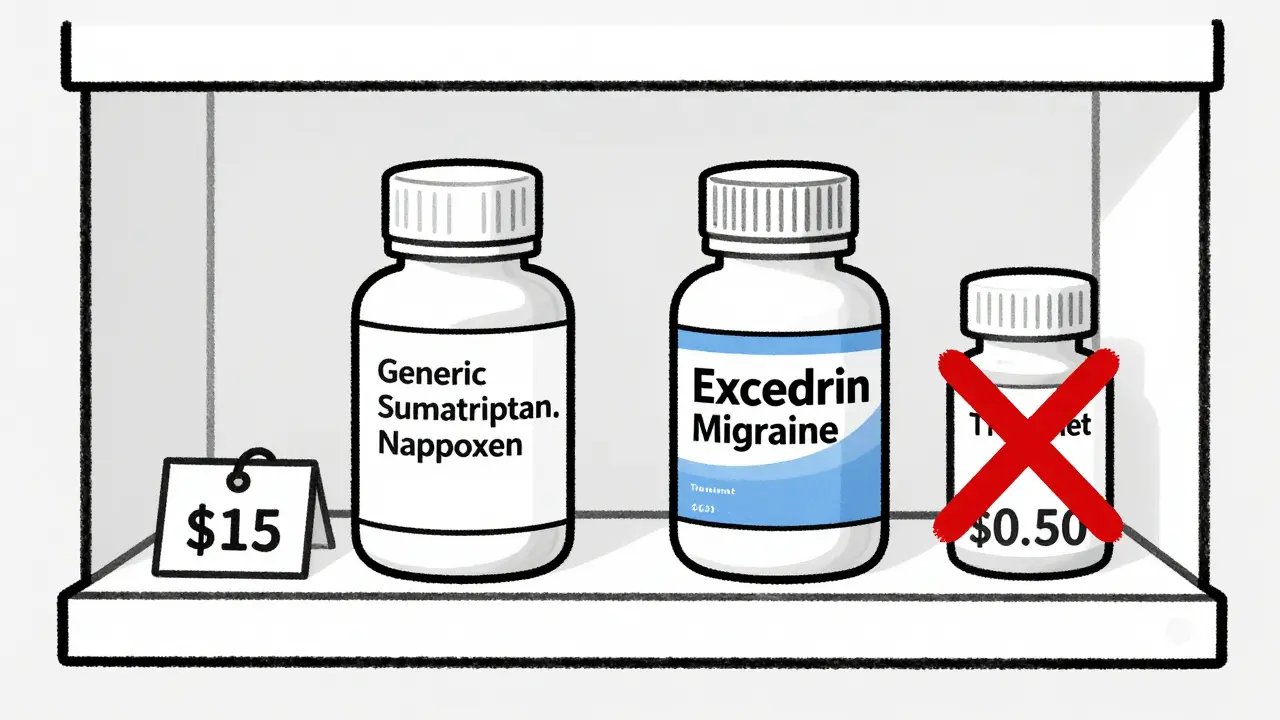
The big win with generic combination meds is price. Here’s what you’re paying now:- Generic sumatriptan/naproxen: $15-$25 per dose
- Branded Treximet: $350-$450 per dose
- Generic Excedrin Migraine: $0.50-$1.00 per dose
- Branded Excedrin Migraine: $5-$7 per dose
Potential Risks and Side Effects
No medication is risk-free. Here’s what to watch for:- Naproxen: Can irritate your stomach or raise blood pressure. Avoid if you have kidney problems or a history of ulcers.
- Sumatriptan: May cause chest tightness, dizziness, or tingling. Not safe if you have heart disease or uncontrolled high blood pressure.
- Aspirin: Risk of bleeding, especially if you take blood thinners. Avoid in children and teens due to Reye’s syndrome risk.
- Caffeine: Can cause anxiety, insomnia, or rebound headaches if used too often.
How to Get Started
If you’re tired of migraines dragging you down, here’s how to try a combination approach:- Track your attacks: Note severity, duration, and what worked (or didn’t).
- See your doctor: Ask about generic sumatriptan/naproxen or acetaminophen/aspirin/caffeine.
- Start low: Try one combo at a time. Don’t mix multiple options.
- Use it early: Take the combo as soon as you feel the migraine starting - not after it’s full-blown.
- Limit frequency: Don’t use more than 10 days per month.
What’s Next for Migraine Treatment?
New combos are on the horizon. In 2025, Axsome Therapeutics expects to release data on AXS-07 - a new pill combining meloxicam (an NSAID) and rizatriptan (a triptan). Early results suggest it may be even more effective than sumatriptan/naproxen. But the real story isn’t about new drugs. It’s about access. Generic combination therapies have made powerful relief available to millions who couldn’t afford it before. That’s a win for patients, doctors, and the healthcare system. The message is clear: you don’t need expensive brand-name pills to get strong, lasting migraine relief. The science, the generics, and the data are all on your side.Are generic migraine combination meds as effective as brand names?
Yes. Generic sumatriptan/naproxen and acetaminophen/aspirin/caffeine contain the exact same active ingredients in the same doses as the branded versions. Multiple studies confirm they work just as well. The only difference is price - generics cost up to 95% less.
Can I take sumatriptan and naproxen separately instead of using a combo pill?
Absolutely. Taking 50 mg of generic sumatriptan and 500 mg of generic naproxen together is just as effective as the fixed-dose Treximet pill. Many people prefer this method because it’s cheaper and lets them adjust timing if needed. Just make sure to take them at the same time for best results.
Is Excedrin Migraine safe for long-term use?
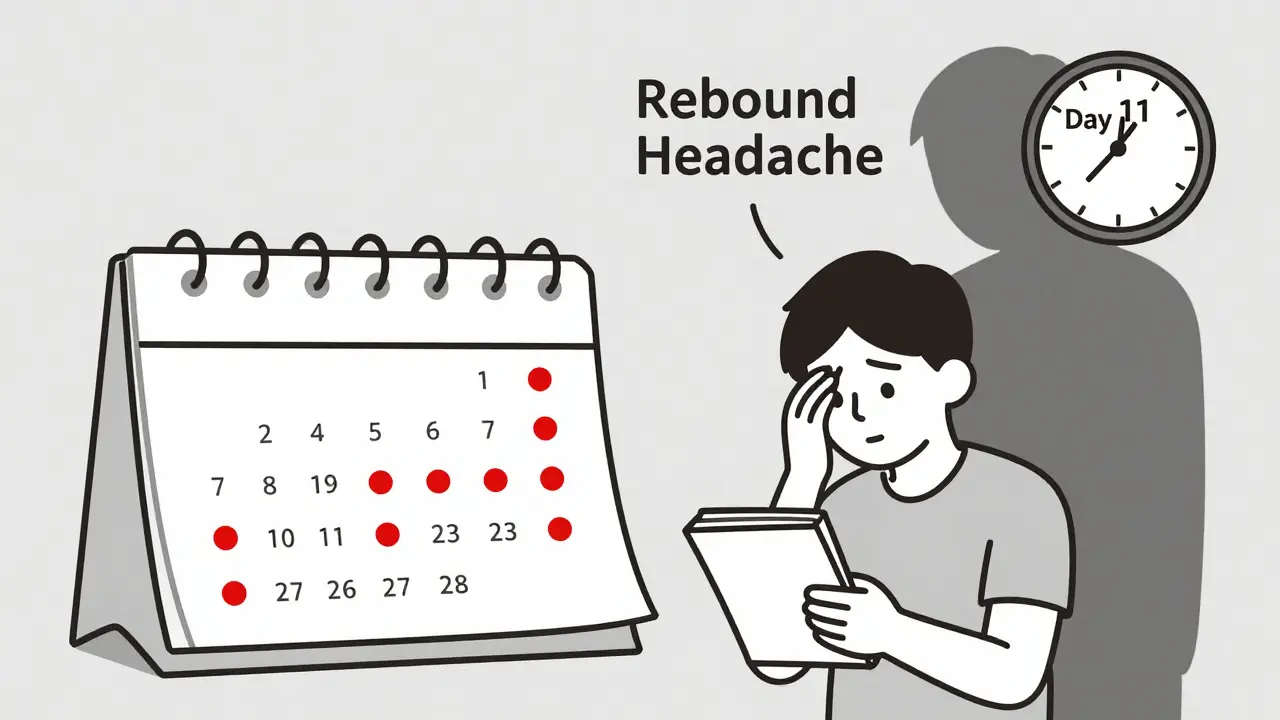
Not if you use it too often. Excedrin Migraine contains caffeine and aspirin, both of which can trigger rebound headaches if taken more than 10 days a month. It’s fine for occasional use, but if you’re relying on it weekly, talk to your doctor about preventive options.
What’s the best combination for severe migraines?
For moderate to severe migraines, sumatriptan/naproxen is the most proven combo. It gives the highest rates of pain relief and sustained results. If that doesn’t work, your doctor may suggest other triptans like rizatriptan or zolmitriptan combined with naproxen. In emergencies, IV combinations like ketorolac and metoclopramide are used.
Can I use migraine combination meds if I have high blood pressure?
Sumatriptan is not safe if your blood pressure is uncontrolled - it can cause dangerous spikes. Naproxen and aspirin can also raise blood pressure in some people. If you have hypertension, talk to your doctor before using any combination med. You may need a different approach, like CGRP inhibitors or preventive meds.
How do I know if I’m overusing my migraine meds?
If you’re using any migraine medication - including OTC combos - more than 10 days per month, you’re at risk for medication-overuse headaches. These feel like your usual migraine but happen more often and get worse over time. Track your doses for a month. If you’re hitting 10+, schedule a doctor’s visit to reset your treatment plan.
Are there any natural alternatives to combination meds?
Some people find relief with magnesium, riboflavin (vitamin B2), or butterbur supplements for prevention. For acute attacks, ginger tea, cold compresses, and acupuncture may help mild symptoms. But for moderate to severe migraines, combination medications remain the most reliable, science-backed option.
All Comments
Mike Rengifo December 17, 2025
Been using generic sumatriptan and naproxen for years. Works like a charm. Took me 3 migraines in the ER to figure out I didn’t need to pay $400 for a pill that’s just as good at Walmart for $18.
Isabel Rábago December 18, 2025
People don’t realize how dangerous caffeine is in these combos. You think you’re fixing your headache but you’re just training your brain to need it. Then you get rebound headaches that last weeks. This isn’t medicine it’s a chemical trap. Wake up.
Matt Davies December 19, 2025
Man I love this post. It’s like someone finally took the fog off the whole migraine world. I used to think I was broken because nothing worked. Turns out I just needed the right combo and the guts to ask for generics. Now I’m not just surviving I’m living. Thank you for this.
Connie Zehner December 20, 2025
Did you know Big Pharma still pushes brand names even though generics are identical? They’re lying to us. They want you addicted to overpriced pills so they can keep raking in cash. I saw a rep at my doctor’s office last month trying to hand out samples of Treximet. I told him to get out. I’m not their lab rat.
Chris Davidson December 22, 2025
Sumatriptan and naproxen is the gold standard for moderate to severe migraines. The data is clear. The cost savings are undeniable. Any clinician who doesn’t recommend this combo is either uninformed or complicit in profit-driven care. This isn’t opinion it’s evidence.
Ashley Bliss December 22, 2025
I used to take Excedrin like candy. Every other day. Thought I was being smart. Then one morning I woke up and my head felt like it was being crushed by a steel drum. I didn’t even have a migraine. Just… pain. Constant. Unrelenting. I spent 6 months getting back to normal. Now I don’t touch it unless it’s a nuclear event. Don’t be me.
bhushan telavane December 24, 2025
In India we don’t have these combo pills easily. But I read this and I understand now why doctors here are starting to push same idea with paracetamol and diclofenac. Science is same everywhere. Good post.
Elaine Douglass December 25, 2025
Thank you for writing this. I’ve been scared to try anything stronger than ibuprofen because I didn’t want to mess up my stomach. This makes it feel safe to ask my doctor about the combo. I’ve had migraines since I was 16 and I’m 32 now. I’m ready to try something that actually works.
Mahammad Muradov December 26, 2025
Incorrect. The 50mg sumatriptan + 500mg naproxen regimen is not equivalent to the 85mg/500mg fixed dose. Pharmacokinetic profiles differ. The FDA approved the fixed dose for a reason. You are risking suboptimal efficacy by splitting doses. This is dangerous advice.
mark shortus December 27, 2025
YOU THINK YOU’RE SMART TAKING SPLIT DOSES?!?!?!?!? I’VE SEEN PEOPLE GET SEIZURES FROM THAT. THE FDA DIDN’T JUST PICK 85MG OUT OF THIN AIR. YOU’RE PLAYING WITH YOUR BRAIN AND YOU DON’T EVEN KNOW IT. I’M NOT EVEN JOKING. THIS IS A ONE WAY TICKET TO THE ER.
Anna Sedervay December 29, 2025
It is, of course, profoundly ironic that the very pharmaceutical industry which once monopolized migraine treatment through predatory pricing has now, in its corporate altruism, permitted the emergence of generic alternatives-albeit only after the expiration of its artificially extended intellectual property rights. One cannot help but reflect upon the broader sociopolitical implications of this transition: the commodification of neurological suffering, the normalization of cost-driven clinical decision-making, and the quiet erosion of physician autonomy in favor of economic pragmatism. The patient, in this paradigm, is not healed-she is optimized.