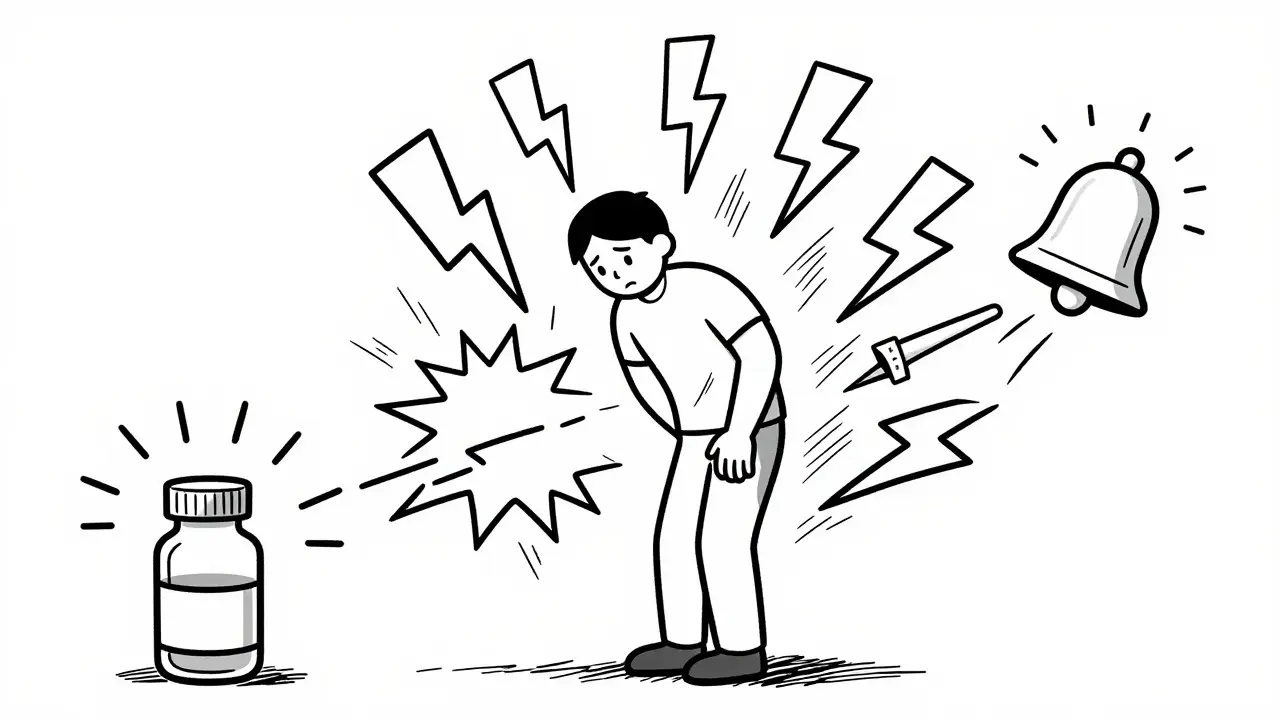
Imagine taking more pain medication, only to feel the pain getting worse. It sounds counterintuitive, doesn't it? For most of us, the logic is simple: if the hurt increases, we need a stronger dose. But for a significant number of patients on long-term opioid therapy, this common approach backfires spectacularly. This phenomenon is known as Opioid-Induced Hyperalgesia, or a state of increased sensitivity to pain caused by exposure to opioids, where higher doses lead to heightened pain perception rather than relief. First documented in rats in 1971 by Eddy et al., OIH represents a paradoxical clinical condition where the very drugs meant to silence pain actually amplify the nervous system’s alarm bells.
If you are a patient feeling like your medication has stopped working-or made things worse-or a clinician puzzled by escalating pain despite dose increases, understanding OIH is critical. It affects approximately 2% to 15% of chronic opioid users. Misdiagnosing OIH as simple disease progression or tolerance leads to dangerous dose escalations that worsen the suffering. Let’s break down how to spot this hidden culprit and what steps you can take to manage it effectively.
The Difference Between Tolerance and Opioid-Induced Hyperalgesia
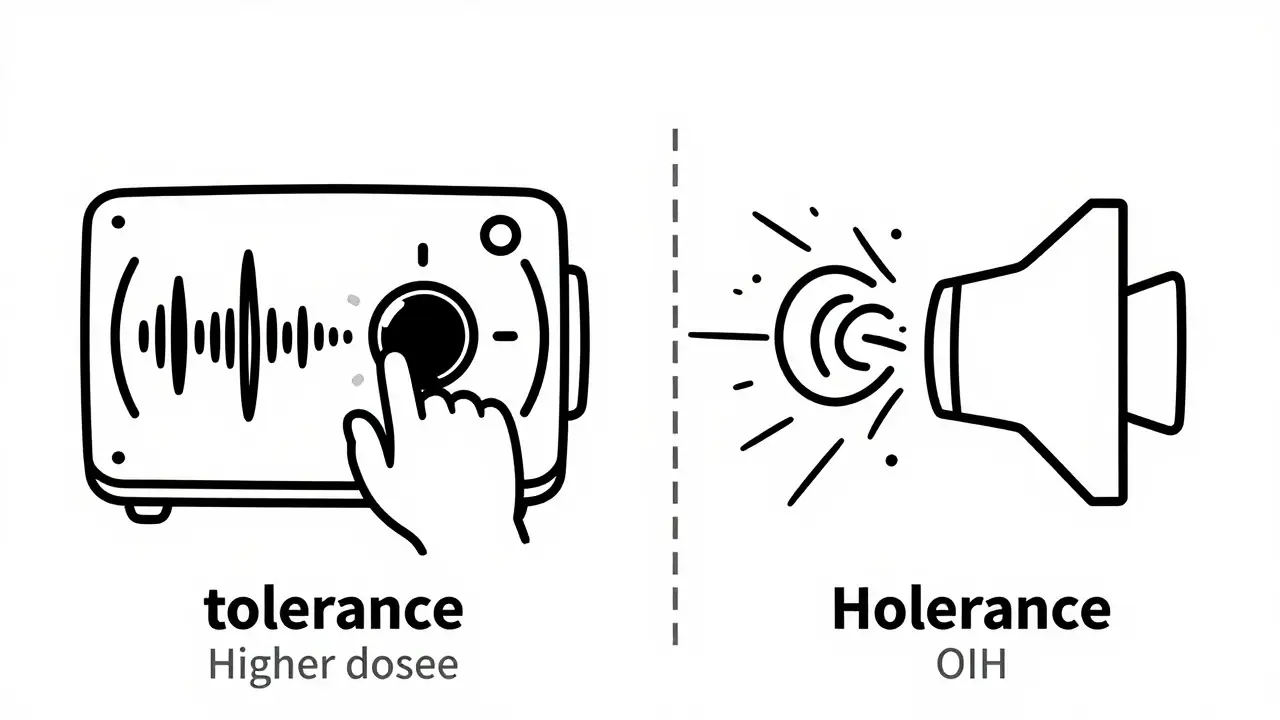
The biggest hurdle in diagnosing OIH is distinguishing it from opioid tolerance. They look similar on the surface but have opposite underlying mechanisms. Opioid tolerance occurs when the body adapts to the drug, requiring a higher dose to achieve the same level of pain relief. In contrast, Opioid-Induced Hyperalgesia means the patient becomes more sensitive to painful stimuli overall. The pain isn’t just returning; it’s spreading and intensifying because the nervous system is in a state of hyper-arousal.
Think of it like volume control. With tolerance, the speaker gets quieter, so you turn up the volume (dose) to hear it again. With OIH, the speakers start screeching with feedback no matter how low you keep the volume. You might even hear noise from sources that shouldn’t be loud at all. This distinction matters because treating tolerance involves increasing the dose, while treating OIH requires decreasing it. Getting this wrong can trap a patient in a vicious cycle of worsening pain and higher addiction risk.
| Feature | Opioid Tolerance | Opioid-Induced Hyperalgesia (OIH) |
|---|---|---|
| Mechanism | Adaptation to drug effect | Nociceptive sensitization (heightened sensitivity) |
| Pain Response to Dose Increase | Temporary relief, then return to baseline | Pain worsens or spreads further |
| Pain Distribution | Localized to original injury/site | Becomes diffuse, widespread, or new areas affected |
| Allodynia | Rare | Common (pain from light touch or non-painful stimuli) |
| Treatment Approach | Dose escalation or rotation | Dose reduction, tapering, or NMDA antagonists |
How to Recognize the Signs of OIH
Recognizing OIH requires careful observation because it is a diagnosis of exclusion. You must rule out disease progression (like cancer growing or an infection spreading) and withdrawal symptoms first. However, there are specific red flags that point toward OIH.
According to the Palliative Care Network of Wisconsin’s Fast Fact #142 (updated September 2024), key indicators include:
- Diffuse Pain Expansion: The pain spreads beyond the original site. If you had knee surgery, but now your entire leg and lower back ache intensely, that’s a warning sign.
- Allodynia: This is perhaps the most distinct symptom. It’s when normally non-painful stimuli become painful. Does the weight of your bedsheets hurt? Does a gentle breeze on your skin feel like sandpaper? That’s allodynia.
- Worsening Pain with Higher Doses: You increase the morphine or hydromorphone, but within hours or days, the pain report goes up, not down.
- Timing: Symptoms often emerge after 2 to 8 weeks of continuous opioid therapy, particularly with high parenteral doses (e.g., >300mg/day of morphine) or in patients with renal failure where toxic metabolites accumulate.
Clinicians may use tools like the Opioid-Induced Hyperalgesia Questionnaire (OIHQ), which was validated in a 2017 study showing 85% sensitivity and 78% specificity. Quantitative sensory testing (QST) can also help by measuring pain thresholds before and after opioid administration, revealing decreased thresholds in OIH patients.
Why Does This Happen? The Biology Behind OIH
To manage OIH, you need to understand why it happens. It’s not psychological; it’s a real neurobiological change. The primary mechanism involves N-methyl-D-aspartate (NMDA) receptors in the central nervous system. When opioids bind to their usual targets, they inadvertently activate these NMDA receptors, leading to central sensitization. Essentially, the spinal cord and brain start amplifying pain signals instead of dampening them.
Other contributing factors include:
- Toxic Metabolites: Drugs like morphine break down into morphine-3-glucuronide, which can be neurotoxic and pro-nociceptive (pain-promoting).
- Spinal Dynorphins: Opioids can trigger the release of dynorphin, a peptide that activates kappa-opioid receptors, which are associated with pain facilitation rather than relief.
- Genetic Factors: Variations in the catechol-O-methyltransferase (COMT) enzyme can make some individuals genetically predisposed to developing OIH.
Understanding these pathways explains why simply adding more opioids fails. You’re pouring gasoline on a fire fueled by NMDA activation.
Management Strategies: Reversing the Cycle
The treatment for OIH feels counterintuitive to many patients: you have to reduce the opioid. Yes, really. The goal is to reset the nervous system’s sensitivity. Here is the step-by-step approach recommended by pain specialists.
- Opioid Reduction: Reduce the current opioid dose by 10-25% every 2-3 days. Expect a temporary flare-up in pain during this process, but it should subside as the hyperalgesia resolves. Complete resolution typically takes 4-8 weeks.
- Opioid Rotation: Switch to a different opioid with a different metabolic profile. Methadone is often preferred because it acts as an NMDA receptor antagonist, directly blocking the pathway causing OIH. Other options include fentanyl or buprenorphine, which may have lower risks of inducing hyperalgesia.
- Add NMDA Antagonists: Medications like Ketamine (at sub-anesthetic doses of 0.1-0.5 mg/kg/hour) can reverse OIH by blocking those overactive NMDA receptors. This is often used in hospital settings or specialized pain clinics.
- Adjunctive Therapies: Incorporate Gabapentinoids (like gabapentin or pregabalin) to target central sensitization, or alpha-2 agonists like Clonidine. These drugs help calm the nervous system without relying solely on opioids.
Non-pharmacological approaches are equally vital. Cognitive behavioral therapy (CBT) helps patients cope with the anxiety of pain flares during tapering, while physical therapy maintains mobility and prevents deconditioning. Multimodal analgesia-using a combination of medications and therapies-is the gold standard here.
Navigating Patient Concerns and Challenges
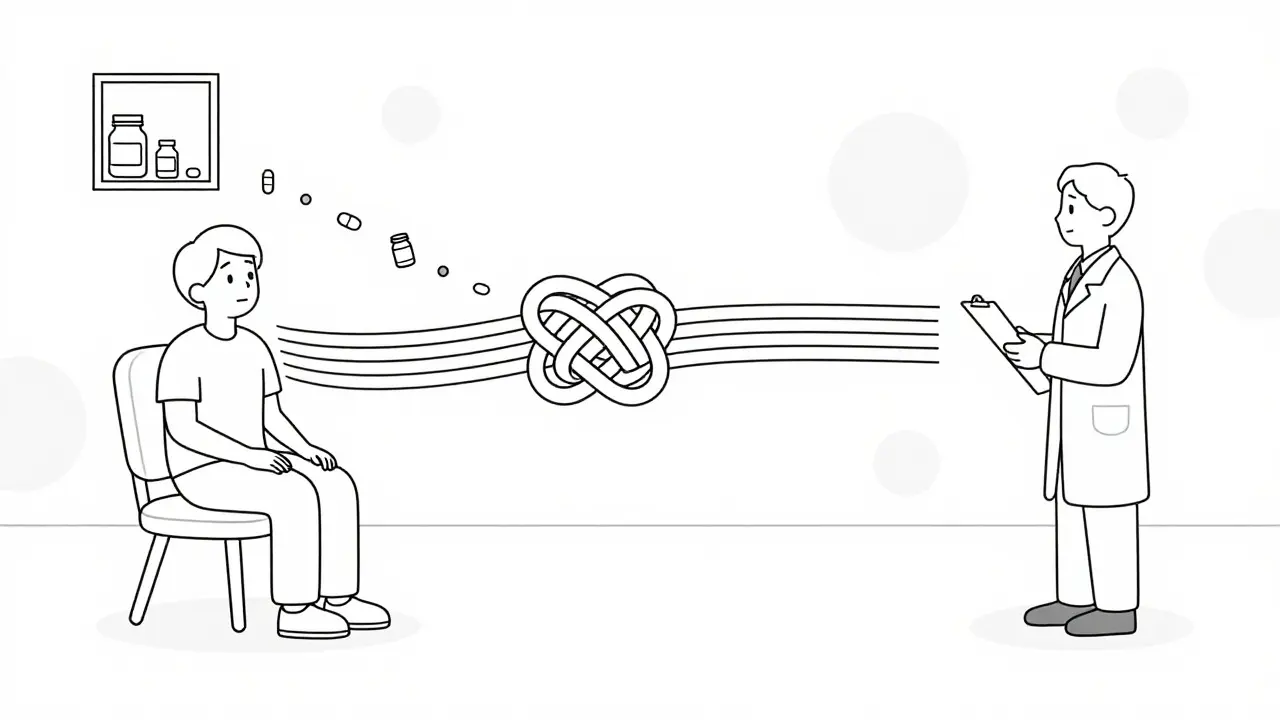
One of the biggest hurdles in managing OIH is patient resistance. Hearing “we need to lower your dose” when you are in severe pain can be terrifying. Patients fear withdrawal or that their pain will become unmanageable. Clear communication is essential. Explain that the current high dose is likely *causing* part of the pain, not just failing to stop it.
Clinicians should monitor closely for withdrawal symptoms, which can mimic OIH. Withdrawal includes symptoms like yawning, sweating, agitation, and dilated pupils, whereas OIH is characterized specifically by heightened pain sensitivity. If withdrawal signs appear, slow the taper rate. Document everything meticulously, following guidelines like those from the National Comprehensive Cancer Network (NCCN), which dedicates significant space to OIH protocols.
It’s also important to manage expectations. Improvement isn’t instant. It usually takes 2-4 weeks of consistent dose adjustment to see clinical improvement. Patience and a strong support system are crucial during this window.
The Future of OIH Treatment
Research into OIH is accelerating. As of 2024, pharmaceutical companies are investing heavily in novel analgesics that avoid NMDA activation entirely. There are currently three compounds in Phase II/III trials specifically targeting OIH mechanisms. Additionally, genetic testing panels for COMT polymorphisms are expected to launch commercially in mid-2025, allowing clinicians to identify susceptible patients *before* starting long-term opioid therapy.
This shift reflects a broader change in pain management: moving away from one-size-fits-all opioid prescribing toward personalized, multimodal strategies. With opioid prescriptions in the U.S. down 44% from 2016 to 2023, the focus is shifting to optimizing care for the millions still on long-term therapy. Recognizing OIH is no longer niche knowledge; it’s a fundamental skill for any modern pain specialist.
Is Opioid-Induced Hyperalgesia permanent?
No, OIH is generally reversible. By reducing the opioid dose, rotating to a different agent, or using NMDA antagonists like ketamine, the nervous system can desensitize. Most patients see significant improvement within 4 to 8 weeks of proper management.
What is the difference between allodynia and hyperalgesia?
Hyperalgesia is an increased response to a stimulus that is normally painful (e.g., a pinprick feels like a stab). Allodynia is pain due to a stimulus that does not normally provoke pain (e.g., light touch from clothing or wind causes burning pain). Both are signs of central sensitization seen in OIH.
Can methadone treat Opioid-Induced Hyperalgesia?
Yes, methadone is often effective for OIH because it is an NMDA receptor antagonist. Unlike most other opioids that primarily activate mu-opioid receptors, methadone blocks the NMDA receptors involved in central sensitization, helping to reverse the hyperalgesic state.
How do I know if my pain is getting worse due to disease progression or OIH?
Disease progression usually presents with localized pain corresponding to the pathology (e.g., tumor growth). OIH presents with diffuse, widespread pain, allodynia (pain from light touch), and worsening pain despite increasing opioid doses. A thorough medical evaluation, including imaging if necessary, is required to rule out disease progression first.
Are there genetic tests for OIH susceptibility?
As of 2024, research is ongoing regarding genetic markers like COMT polymorphisms. Commercial genetic testing panels aimed at identifying OIH susceptibility are expected to become available in mid-2025. Currently, diagnosis is clinical based on symptoms and response to treatment.