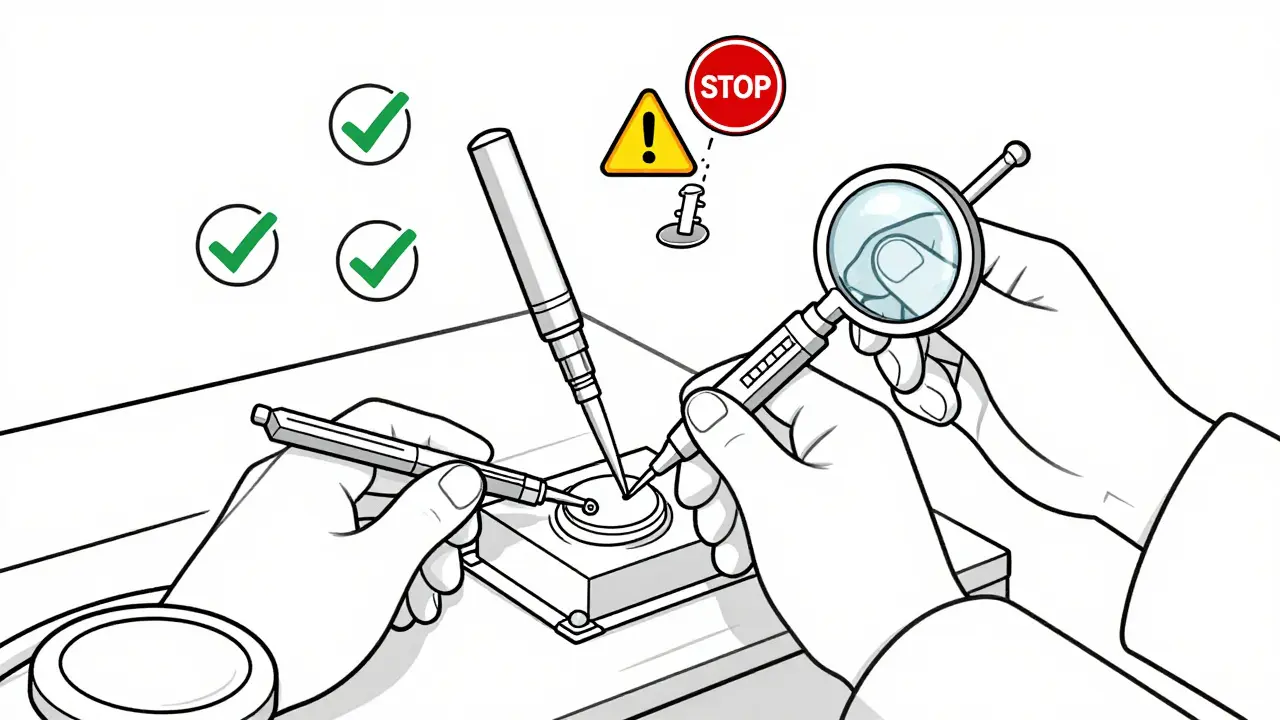
When a pacemaker is implanted, an insulin pump is worn, or a surgical tool is used in an operating room, no one should have to wonder if it will work. That certainty doesn’t happen by accident. It’s built into every step of manufacturing through quality control systems designed for one purpose: keeping patients safe.
Why Quality Control Isn’t Just About Defects
Quality control in medical device manufacturing isn’t about catching broken parts at the end of the line. It’s about stopping problems before they start. A single faulty component can lead to device failure, infection, or worse. The FDA estimates that strong quality systems prevent about 30% of potential device failures that could reach patients. That’s not a small number-it’s thousands of lives protected every year. Think of it like this: if a car’s brake pedal fails, the driver might get hurt. But if a heart monitor fails, someone could die. There’s no room for error. That’s why quality control in medical devices is stricter than in almost any other industry.The Rules That Keep Patients Safe
Two main standards govern how medical devices are made: the U.S. FDA’s 21 CFR Part 820 and the international ISO 13485:2016. For years, these were different. U.S. companies had to follow FDA rules for American sales and ISO rules for Europe and other markets. That meant double the paperwork, double the audits, and double the cost. That changed on January 31, 2024, when the FDA announced the Quality Management System Regulation (QMSR). Starting February 2, 2026, the FDA will officially adopt ISO 13485:2016 as its standard. This isn’t just a paperwork update-it’s a global alignment. Now, a device made in the U.S. can meet the same rules as one made in Germany or Japan. ISO 13485:2016 isn’t just about checking boxes. It demands risk-based thinking. Every design choice, every supplier, every step in production must be evaluated for potential harm. If a component could fail under heat or moisture, the manufacturer must prove it won’t. This isn’t optional. It’s required.What Happens During Manufacturing?
Quality control isn’t a single test at the end. It’s built into every stage:- Incoming inspection: Every part that comes in from a supplier is checked against exact specs. No exceptions.
- In-process checks: During assembly, sensors and manual inspections monitor temperature, pressure, torque, and alignment. Statistical process control (SPC) tracks variations in real time.
- Final testing: Every device is tested for function, safety, and performance. Electrical devices must pass IEC 60601-1 standards-like surviving a 1,500-volt electrical surge and limiting leakage current to under 100 microamperes.
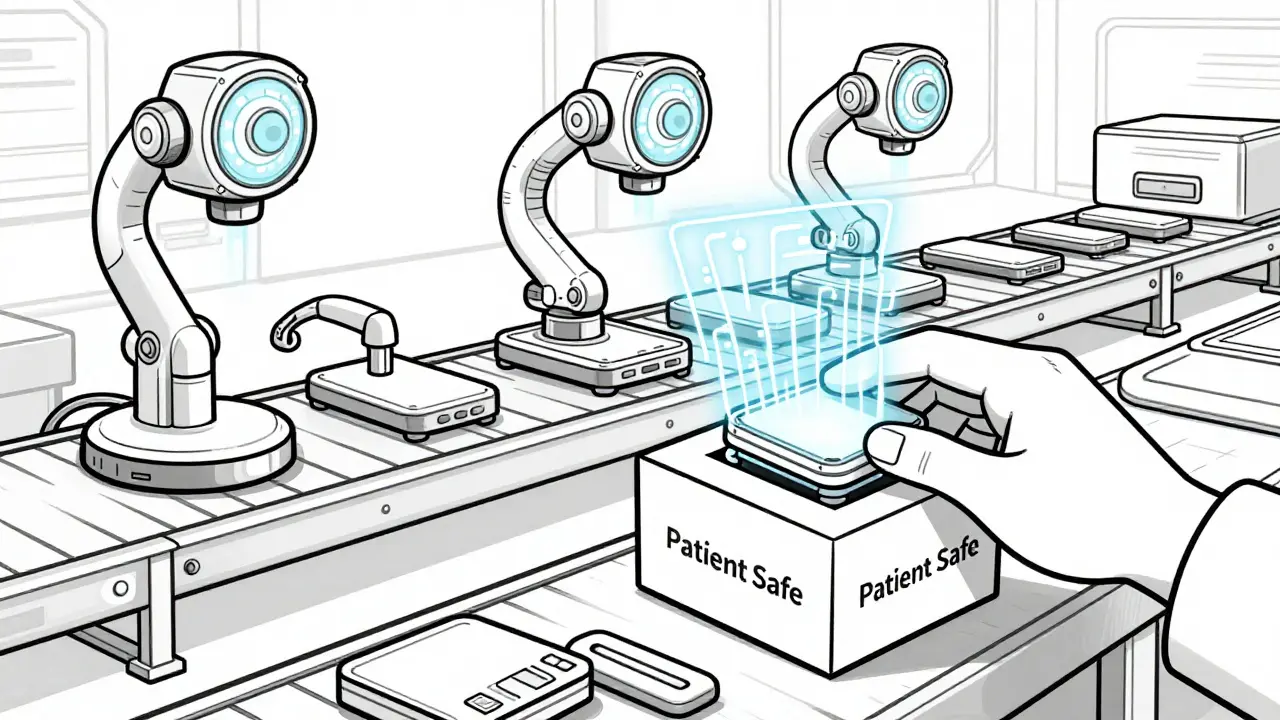
- Traceability: Every device has a unique identifier. If a problem pops up, manufacturers can trace it back to the exact batch, operator, and even the screw used.

How Risk Management Makes the Difference
ISO 14971 is the standard for risk management in medical devices. It’s not just about listing possible failures-it’s about calculating how likely they are and how bad the consequences could be. A device that delivers a shock to a patient? That’s a high-risk failure. A label that peels off? Lower risk, but still tracked. Manufacturers must create a risk management file that follows the device from design to disposal. If a software update changes how a glucose monitor reads blood sugar, that change must be validated, tested, and documented. One company on LinkedIn reported their traceability system caught an unvalidated software update affecting 5,000 implanted devices-before a single patient was harmed. This is where many companies fail. The FDA found that 23% of inspection observations were for “paper quality systems”-where documentation looked perfect, but the actual process didn’t work. That’s dangerous. Real quality isn’t in the folder. It’s in the machine.Real Results from Real Systems
The numbers speak for themselves:- Facilities with mature quality systems hit 99.97% first-pass yield. Those with weak systems? Only 98.2%. That’s a 17-fold drop in defects.
- Companies using ISO 13485:2016 with integrated risk management saw 35% fewer field actions-like recalls or safety alerts.
- One manufacturer cut their corrective action cycle from 45 days to 17 after switching to ISO 13485.
What It Takes to Get It Right
Building a compliant system isn’t quick. For Class II and III devices-like implants or life-support machines-it takes 12 to 24 months. That includes:- 4-8 weeks of gap analysis
- 200-400 hours of training per employee
- 6-12 months for staff to master risk management
The Future: AI, Automation, and More
The next wave is automation. Early adopters are using AI to analyze production data and predict defects before they happen. One study showed 25-40% fewer defects using machine learning on sensor data from assembly lines. By 2027, Gartner predicts 60% of medical device quality systems will use AI-driven analytics. That could cut human error in half. But even with AI, the core stays the same: no system is better than the people running it. Training, culture, and accountability matter more than ever.What You Need to Know Right Now
If you’re a manufacturer, the clock is ticking. February 2, 2026, is the deadline. The FDA is giving you two years to transition. Use it wisely. Start with:- Compare your current system to ISO 13485:2016
- Train your team on risk-based thinking
- Upgrade your traceability and supplier audits
- Invest in software that automates documentation without replacing understanding
What is ISO 13485:2016 and why does it matter for patient safety?
ISO 13485:2016 is the global standard for medical device quality management systems. It requires manufacturers to implement risk-based controls, document every step of production, and ensure traceability from raw materials to final product. This prevents unsafe devices from reaching patients by forcing companies to think ahead about how and why something might fail-before it happens. Since the FDA adopted it as its official standard in 2026, it’s now the baseline for safety in the U.S. and most of the world.
How does the FDA’s QMSR change things for manufacturers?
Before QMSR, U.S. manufacturers had to follow two different sets of rules: FDA’s 21 CFR Part 820 for the U.S. market and ISO 13485 for international sales. That meant duplicated efforts, higher costs, and confusion. QMSR eliminates that by making ISO 13485:2016 the single standard for both. Manufacturers now only need one system, one audit, and one set of documents. This reduces compliance costs by an estimated $400 million annually and speeds up global market access.
What happens if a medical device fails quality control?
If a device fails any quality check-whether it’s a component test, electrical safety scan, or software validation-it’s quarantined. It cannot be shipped. The manufacturer must investigate why it failed, fix the root cause, and document the solution through a Corrective and Preventive Action (CAPA) process. If the failure points to a systemic issue, like a faulty supplier or flawed design, the entire batch may be recalled. The goal isn’t punishment-it’s prevention.
Can AI really improve quality control in medical device manufacturing?
Yes. AI is being used to analyze data from sensors on production lines to spot tiny deviations before they become defects. For example, if a robotic arm applies slightly less torque on a screw over several hours, AI can flag it as a trend-not just a one-time error. Early adopters report 25-40% fewer defects. AI doesn’t replace human judgment-it gives teams better information to make faster, smarter decisions.
Why do some quality systems fail even when documentation looks perfect?
Because documentation isn’t the same as execution. Many companies create perfect-looking SOPs and records but don’t train staff properly or monitor actual production. This is called a “paper quality system.” The FDA found that 23% of inspection findings were for this exact problem-where the paperwork was complete, but the process didn’t work in real life. True quality comes from people understanding why each step matters, not just checking a box.
How can small manufacturers afford to meet these standards?
It’s harder, but possible. Start with the most critical processes first-like supplier control and final testing. Use free FDA resources like the Quality System Manual. Choose affordable QMS software with templates built for small teams. Focus on training one person deeply rather than spreading thin across the team. Many small firms partner with contract manufacturers who already have certified systems. The goal isn’t to do everything at once-it’s to build a system that works and grows with you.
All Comments
Jane Wei December 17, 2025
Man, I just got my knee replaced last year. Didn’t even think about how many checks that thing went through before it was in me. Kinda wild when you stop to think about it. 🤯
Peter Ronai December 17, 2025
Oh please. The FDA’s ‘quality system’ is just a glorified bingo card. I’ve seen plants where the inspectors get free lunch and the machines are held together with duct tape and hope. They’re not protecting patients-they’re protecting their budgets. And now they want us to adopt ISO? Please. That’s just another way for consultants to get rich off us.
Jessica Salgado December 18, 2025
I work in a small clinic and we get devices from all over. I’ve seen the paperwork. Some of it looks perfect-color-coded binders, laminated SOPs, even QR codes for traceability. But then you see the same device fail in the field, and the log shows the technician skipped the torque check because ‘it was fine last time.’ That’s the real problem. The system’s not broken. The people running it are tired, underpaid, and trained to check boxes, not think.
Jonathan Morris December 19, 2025
Let’s not pretend this is about safety. This is a power grab. The FDA didn’t adopt ISO 13485 because it’s better-it’s because they wanted to outsource enforcement to a global bureaucracy. Now they can say, ‘It’s not us, it’s ISO.’ Meanwhile, the same companies that cut corners in China are now cutting corners in Wisconsin under the same ‘standard.’ The real danger isn’t defective devices-it’s the illusion of control.
amanda s December 21, 2025
Y’all are overthinking this. The FDA doesn’t care about your ‘risk management files.’ They care about headlines. If a kid dies because a pacemaker glitched, the CEO gets arrested, the stock crashes, and the FDA gets more funding. That’s the real quality control system: fear. All this ISO nonsense? Just theater to keep the media quiet.
Nishant Desae December 21, 2025
As someone from India where medical device manufacturing is growing fast, I’ve seen both sides. In small factories, people work with bare hands because gloves cost too much. But I’ve also seen startups in Pune using open-source QMS tools and training their workers with YouTube videos in Hindi. It’s not perfect, but it’s real. Quality isn’t about dollars-it’s about respect. When you treat your workers like part of the solution, not just cogs, the defects drop. I’ve seen it. It’s not magic. It’s just human.
Anna Giakoumakatou December 22, 2025
How delightful. We’ve replaced one bureaucratic nightmare with another. Now, instead of American red tape, we get international red tape-with better fonts and more acronyms. And yet, somehow, the same people who designed the original system still get promoted. Truly, the only thing that’s improved is the PDF export quality.
Steven Lavoie December 23, 2025
I’ve worked in Germany, Japan, and the U.S. The culture around quality is different, but the goal is the same: don’t let someone die because you were lazy. ISO 13485 doesn’t make you better-it just gives you a common language to talk about being better. The real win? When a line worker in Ohio stops a production run because something feels off-and the manager listens. That’s the system working.
Martin Spedding December 24, 2025
AI won’t fix this. You can’t train a model on data that’s never been collected. Most factories still use paper logs. The ‘smart’ systems? They’re for big pharma. The rest of us are still using Excel and prayers. The FDA’s deadline? A joke. Most small firms won’t make it. And when they fail? Patients pay the price.
Raven C December 24, 2025
One must ask: Is the pursuit of perfection, in the context of life-sustaining technology, not an ethical imperative? The cost of non-compliance-measured not in dollars, but in the cessation of cardiac function-is incalculable. And yet, we are told to ‘optimize’? To ‘streamline’? To ‘cut costs’? This is not engineering. This is moral negligence dressed in corporate jargon.
Donna Packard December 26, 2025
I know a guy who works at a small implant maker in Ohio. They’re using a $200/month cloud QMS tool. No fancy consultants. Just one person who actually talks to the floor staff. They’ve had zero recalls in 3 years. It’s not about the software. It’s about listening.
Chris Van Horn December 27, 2025
Let’s be honest-this whole ISO 13485 adoption is a Trojan horse. The FDA is quietly letting European regulators dictate U.S. medical policy. Who benefits? Big multinationals who can afford the compliance team. Small U.S. manufacturers? They’ll be forced out. This isn’t safety. It’s economic warfare disguised as regulation. And the people who scream ‘patient safety’? They’re the ones who profit from the chaos.
Virginia Seitz December 28, 2025
My dad’s pacemaker worked perfectly. I’m just glad someone cared enough to check the screws. ❤️🫡
Patrick A. Ck. Trip December 29, 2025
While I recognize the profound importance of regulatory alignment and the potential for enhanced global harmonization, I must also express my sincere concern regarding the potential for systemic over-reliance on technological automation, which may inadvertently erode the foundational human elements of quality assurance-namely, vigilance, ethical accountability, and the tacit knowledge cultivated through years of hands-on experience. It is my hope that, as we advance, we do not lose sight of the fact that no algorithm can replace the moral courage of a technician who says, ‘This doesn’t feel right.’