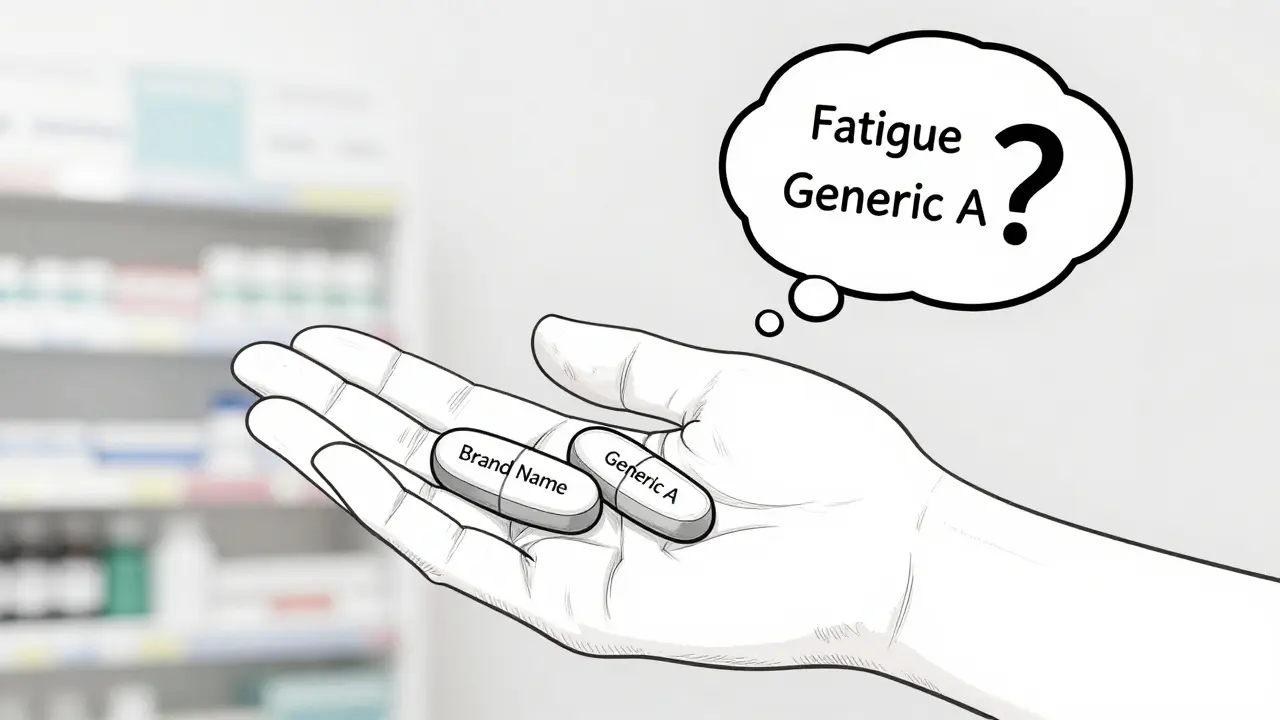
When your pharmacist hands you a new pill that looks completely different from what you’ve been taking for years, it’s easy to assume it’s the same thing. After all, the label says the same name, the same dose, and the same manufacturer code. But if you’ve noticed new side effects, a return of old symptoms, or just a strange feeling that something’s off - you’re not imagining it. For some people, switching between generic versions of the same drug can cause real, measurable problems.
Why do generic drugs look different?
Generic drugs aren’t copies in the way you might think. They contain the same active ingredient as the brand-name version - that part is strictly regulated. But everything else? The fillers, the coating, the shape, the way the drug releases into your body - those can vary wildly between manufacturers. One generic version of levothyroxine might use cornstarch as a binder, while another uses lactose. One might release the medication slowly over 12 hours, while another releases it in bursts. These differences are legal. They’re even approved by the FDA. But for certain people, they make all the difference.Which drugs are most likely to cause problems?
Not all medications are created equal when it comes to switching. Some drugs have what’s called a narrow therapeutic index - meaning the difference between a dose that works and a dose that’s dangerous is tiny. For these, even small changes in how your body absorbs the drug can lead to serious consequences. The top five drug classes where switching causes the most trouble:- Antiepileptics - Like phenytoin, levetiracetam, and extended-release divalproex. A switch can trigger breakthrough seizures, even if blood levels appear normal.
- Thyroid meds - Levothyroxine is the most common. Patients report fatigue, weight gain, brain fog, or heart palpitations after a generic switch - symptoms that vanish when they go back to their original version.
- Anticoagulants - Warfarin is especially sensitive. A small change in absorption can lead to dangerous clots or uncontrolled bleeding.
- Immunosuppressants - Tacrolimus and cyclosporine are critical for transplant patients. A switch can cause organ rejection.
- Psychiatric meds - Especially extended-release ADHD drugs like Adderall XR or Vyvanse. Patients report sudden anxiety, insomnia, or loss of focus within hours of switching to a new generic.
A 2019 study in BMJ Open tracked over 2,800 patients with heart disease who switched between generic versions of the same drug. Within 30 days, they had a 12.3% higher chance of being hospitalized. That’s not a fluke. That’s a pattern.
What do patients actually experience?
Real people report real problems - and they’re not rare. On Reddit’s r/ADHD community, hundreds of users describe the same story: they’ve been stable on a generic version of Adderall XR for months. Then, their pharmacy switches to a different manufacturer. Within 24 to 72 hours, their focus vanishes. Their anxiety spikes. They can’t sleep. One user wrote: “I went from functioning normally to crying at my desk, unable to concentrate. I thought I was having a mental breakdown. It was the pill.” A 2023 hospital study of 1,437 patients found that 63% of people could only identify their medication by its color or imprint. When those changed, many didn’t realize they’d been switched - until they started feeling sick. One patient ended up in the ER with serotonin syndrome after accidentally taking two different generics of the same antidepressant, thinking they were the same pill. A MedShadow survey of 1,247 people taking generic ADHD meds found that 63% noticed reduced effectiveness after a manufacturer switch. Over 40% developed new side effects - headaches, nausea, jitteriness - that weren’t there before.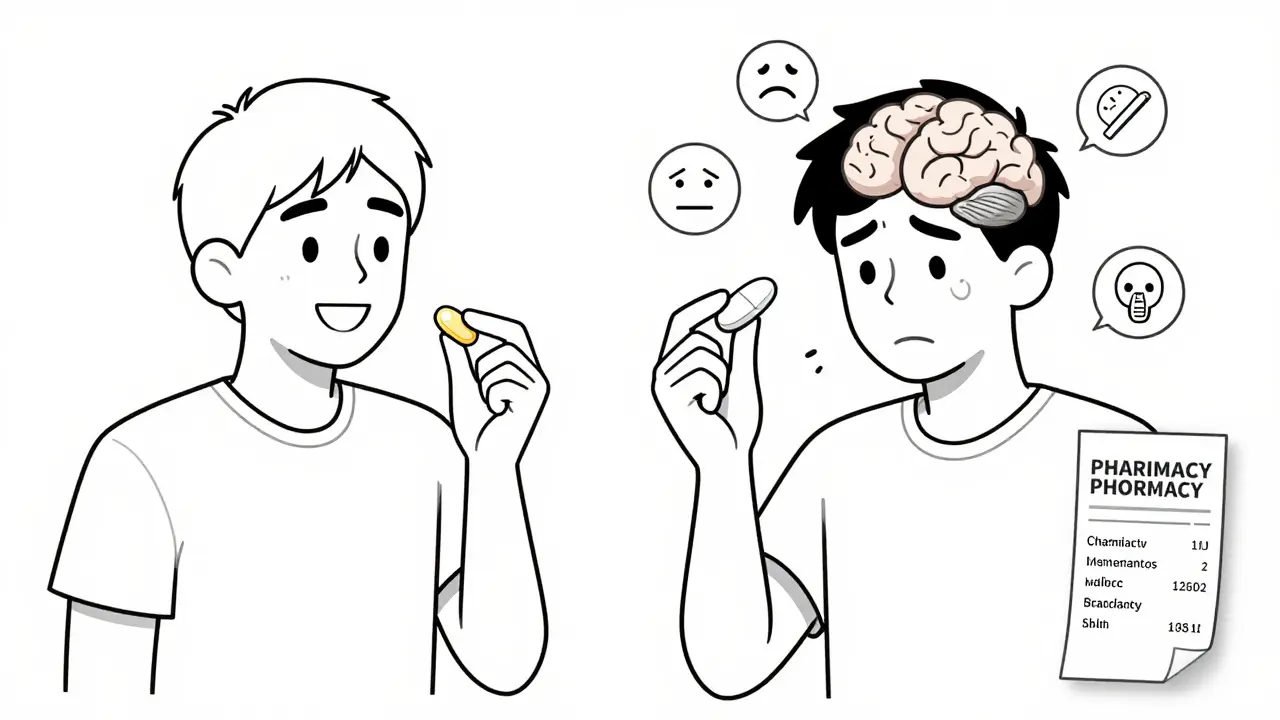
Why does the FDA say it’s safe?
The FDA says generics are “therapeutically equivalent.” And technically, they’re right. For the average person, the difference between two generics is too small to matter. But “average” doesn’t mean everyone. The FDA allows up to a 20% variation in how much of the drug enters your bloodstream compared to the brand-name version. That means one generic could deliver 80% of the active ingredient, while another delivers 125%. Between two different generics? The gap could be as wide as 45%. For most drugs, that’s fine. For levothyroxine? Not even close. Doctors who treat epilepsy, thyroid disease, and transplant patients know this. A 2021 survey of 147 neurologists found that 68.7% believed switching generic antiepileptics increased seizure risk. Over 40% had seen it happen in their own clinics. The FDA’s stance is based on population averages. But medicine isn’t about averages - it’s about the person in front of you.What can you do if you suspect a switch is causing problems?
You don’t have to accept side effects as normal. Here’s what works:- Check the pill. Look at the color, shape, and imprint. If it’s different from your last refill, you’ve been switched. Write down the name of the manufacturer - it’s usually printed on the pill or listed on the bottle.
- Ask for the same manufacturer. Pharmacists can often order a specific generic version if it’s available. Say: “I’ve had problems with other versions. Can I get the same one I was on?”
- Ask for a DAW-1 prescription. This code means “dispense as written” - no substitutions allowed. It’s legally binding. This is especially important for levothyroxine, warfarin, and antiepileptics.
- Track your symptoms. Keep a simple log: date of switch, new pill appearance, symptoms, and when they started. This helps your doctor connect the dots.
- Talk to your pharmacist. A 2021 study found that patients who got counseling about switching were 37% less likely to have bad outcomes. Don’t assume they know your history - tell them.
Some hospitals now use “medication fingerprinting” - keeping the same manufacturer for high-risk patients. It’s not perfect, but it cuts switching-related problems by over half.
Why are switches happening so often?
The real reason you’re being switched isn’t medical - it’s financial. Pharmacy benefit managers (PBMs) like CVS Caremark and Express Scripts make money by negotiating rebates with generic drug makers. The company that offers the biggest rebate gets to supply your drug - even if it’s a different version than the one you’ve been stable on. And they change it often. On average, PBMs switch generic manufacturers 4.7 times a year per drug. That means you could be on a different version of your medication every few months. No one tells you. No one asks if it’s working. It’s just a business decision - and you’re the one paying the price in side effects.
What’s changing?
There’s growing pressure to fix this. In 2023, Medicare started limiting generic switches to just twice a year for its beneficiaries. A 2024 study found that people with a specific genetic profile (CYP2D6 poor metabolizers) are 4.2 times more likely to have treatment failure after a switch. That’s not random - it’s predictable. The American Society of Health-System Pharmacists now recommends avoiding automatic substitution for 17 specific drugs, including tacrolimus, bupropion XL, and phenytoin. The FDA is also investing in better testing for complex generics - like extended-release pills and inhalers - where old methods just don’t work. But until these rules become standard, you’re your own best advocate.When should you worry?
You should worry if:- Your symptoms return after a switch - even if you’ve been stable for years.
- You develop new side effects like anxiety, insomnia, dizziness, or nausea right after a refill.
- You’re on a drug for epilepsy, thyroid disease, heart disease, or mental health - especially if it’s extended-release.
- You’ve had a bad reaction to a generic before.
Don’t wait for a crisis. If you feel off after a switch, call your doctor. Don’t assume it’s “just in your head.” The science says otherwise.
Bottom line
Generics save billions. That’s good. But they’re not all the same. For some people, switching between them isn’t just inconvenient - it’s dangerous. You have the right to know what you’re taking. You have the right to ask for consistency. And if your medication feels different - it probably is.Can generic drugs really cause side effects if they have the same active ingredient?
Yes. While the active ingredient is the same, differences in fillers, coatings, and how the drug is released in your body can affect how much of it enters your bloodstream. For drugs with a narrow therapeutic index - like levothyroxine, warfarin, or antiepileptics - even small changes can cause side effects or reduced effectiveness.
Why do pharmacies switch generic manufacturers?
Pharmacy benefit managers (PBMs) - companies that manage drug benefits for insurers - switch manufacturers to get the highest rebates. The company offering the biggest discount gets the contract, even if it’s a different version of the drug. This happens as often as 4-5 times a year for some medications, and patients are rarely told.
How can I find out which generic manufacturer I’m getting?
Check the pill itself - the manufacturer’s name or initials are often printed on it. You can also look at the bottle label or ask your pharmacist directly. The National Drug Code (NDC) on the label will also tell you the exact manufacturer. Write it down so you can request the same one next time.
Should I ask my doctor to write “dispense as written” on my prescription?
If you’re on a high-risk medication - like levothyroxine, warfarin, tacrolimus, or extended-release ADHD drugs - yes. “Dispense as written” (DAW-1) means the pharmacist can’t substitute a different generic without your doctor’s approval. This is especially important if you’ve had problems with switches before.
Is it safe to switch between generic versions of statins or antibiotics?
For most people, yes. Drugs like atorvastatin (Lipitor) or amoxicillin have wide therapeutic windows, meaning small changes in absorption don’t cause harm. Most patients don’t notice a difference. But if you’ve had side effects after a switch in the past, it’s still worth asking for consistency - your body might be more sensitive than average.
What should I do if I think a generic switch made me sick?
Don’t ignore it. Contact your doctor immediately and explain what changed - the pill’s appearance, the timing of your symptoms, and the manufacturer name if you have it. Keep a log of symptoms and dates. Many doctors now recognize this issue and can help you switch back or request a DAW-1 prescription. You’re not overreacting - this is a documented medical concern.
All Comments
Josh Potter December 16, 2025
Bro i switched generics for my Adderall and went from crushing work to crying in the bathroom at 3pm. No joke. My brain felt like it was wrapped in wet cardboard. I thought i was losing it until i checked the pill and saw a different logo. Back to the old one and im back to human again.
Marie Mee December 16, 2025
theyre poisoning us on purpose. the big pharma and PBMs are in bed together. they dont care if you have seizures or panic attacks as long as they get their rebate. its not a glitch its a feature. they want you dependent on the system that makes you sick. dont trust anyone in white coats anymore.
Jane Wei December 16, 2025
i noticed this with my thyroid med. i was exhausted and gaining weight for no reason. switched back to the old generic and boom energy returned. i just write the manufacturer name on my pill bottle now. simple fix.
Martin Spedding December 18, 2025
lol the fda is a joke. they approve this stuff like its candy. i had a friend who had a stroke after a generic switch. nobody took it seriously. because its just a pill right? until your kidneys fail.
Victoria Rogers December 19, 2025
you people are so weak. if you cant handle a different pill shape then maybe you shouldnt be on meds at all. america is full of crybabies who think their body is a magic box that only works with one brand. get tough.
Naomi Lopez December 20, 2025
It is profoundly disingenuous to claim that pharmacokinetic variability is negligible when the FDA permits up to a 45% inter-generic bioavailability differential for drugs with a narrow therapeutic index. The regulatory framework is predicated on population-level averages, which is a catastrophic epistemological error in clinical pharmacology. Your body is not a statistical model.
Salome Perez December 21, 2025
Hi everyone - I'm a pharmacist in Chicago and I see this every single day. I want you to know: you're not alone, and you're not crazy. When someone comes in and says, 'I feel different,' I don't dismiss it. I check the NDC code, I call the manufacturer, I ask if they've switched. I even keep a little notebook of which generics work best for which patients. It takes five extra minutes - but it saves lives. You deserve consistency. Ask for it. You've got this.
Kaylee Esdale December 23, 2025
my mom’s on warfarin and they switched her generic last month. she started bruising like a cartoon. we called the pharmacy, showed them the pill, and asked for the old one. they rolled their eyes but did it. now she’s fine. if you feel off, don’t wait. your body knows before your brain does.
Jody Patrick December 24, 2025
stop whining. generics are cheaper for a reason. if you want brand name pay for it. the system works. you just dont like it.
Linda Caldwell December 26, 2025
you’re not broken. your body is just smart enough to notice when the pill doesn’t feel right. i used to think i was just anxious until i realized every time my pill changed color, my anxiety spiked. now i keep a photo of my pill on my phone. if it looks different? i call my doctor before i swallow it. small thing. huge difference.
BETH VON KAUFFMANN December 26, 2025
the entire premise is flawed. bioequivalence is a regulatory fiction. the FDA’s 80-125% window is statistically meaningless for chronic, high-risk populations. we need pharmacogenomic-guided prescribing and mandatory manufacturer tracking. this isn’t a patient issue - it’s a systemic failure of evidence-based policy.
Raven C December 27, 2025
And yet… the FDA has approved these generics… and the medical community continues to endorse them… so… isn’t it just… your body being overly sensitive? Perhaps you’re overreacting to a perfectly acceptable pharmaceutical alternative? I mean… it’s not like people are dying… right?
Meghan O'Shaughnessy December 29, 2025
my neurologist told me to never switch my levetiracetam. she said if the pharmacy tries, tell them ‘DAW-1’ and if they push back, ask to speak to the pharmacist on duty. i’ve done it twice now. both times they backed down. turns out, they don’t want to deal with the paperwork. you’re not being difficult - you’re being smart.