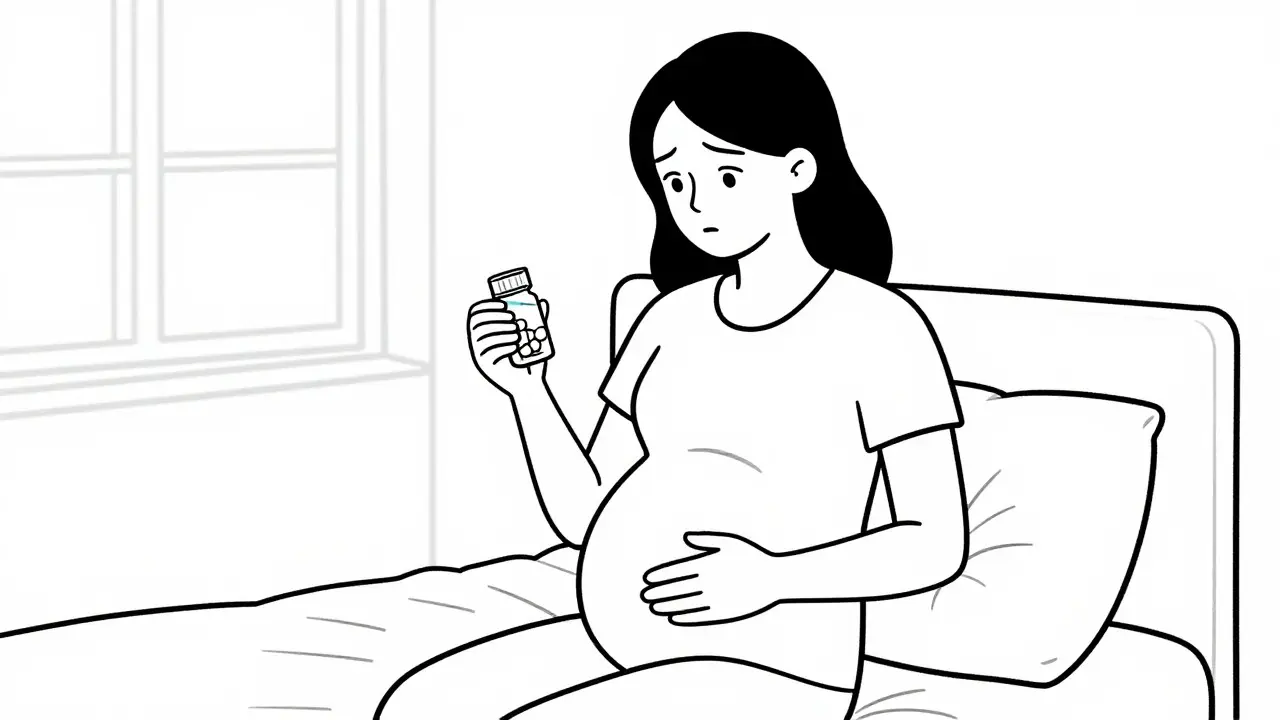
Imagine you are eight weeks pregnant and your doctor suggests continuing the antidepressants that have kept your anxiety at bay for two years. The question on your mind is simple but heavy: will this medication hurt your baby? For millions of women, this dilemma is not hypothetical. It is a daily reality where the fear of side effects often clashes with the known dangers of untreated mental health issues.
The medical consensus has shifted significantly in recent years. While older data suggested caution, newer large-scale studies indicate that for many women, the risks of stopping treatment far outweigh the potential hazards of continuing it. This guide breaks down the current evidence, helping you understand exactly what Selective Serotonin Reuptake Inhibitors (SSRIs) do during pregnancy, which specific drugs are considered safest, and how to make an informed decision with your healthcare provider.
Understanding SSRIs and Their Role in Pregnancy
SSRIs are a class of medications that increase serotonin levels in the brain to improve mood and reduce anxiety symptoms. They are the most commonly prescribed antidepressants worldwide. During pregnancy, hormonal changes can trigger or worsen depression and anxiety in approximately 10-15% of women. Left untreated, these conditions pose serious risks not just to the mother's well-being, but to the developing fetus.
The primary concern with any medication in pregnancy is placental transfer. Drugs like Sertraline cross the placenta to varying degrees. Recent pharmacokinetic studies show that sertraline has a cord blood to maternal blood ratio of about 0.9 to 1.1, meaning the fetus is exposed to nearly the same concentration as the mother. However, exposure does not automatically equal harm. The body is remarkably resilient, and the absolute risks associated with standard SSRI doses remain low when viewed against the backdrop of untreated severe depression.
The Risks of Untreated Depression
To understand why doctors often recommend continuing medication, you must first look at the alternative: stopping treatment. The risks of untreated perinatal depression are substantial and well-documented.
- Maternal Mortality: Suicide is a leading cause of pregnancy-related death, accounting for roughly 20% of such cases in the United States. Women with untreated depression face a significantly higher risk of suicidal ideation.
- Preterm Birth: Studies show that preterm birth occurs in about 10.5% of pregnancies complicated by depression, compared to 6.8% in non-depressed populations. The odds ratio for preterm birth in untreated depression is 2.2 times higher than in treated groups.
- Postpartum Depression: Antenatal depression is the strongest predictor of postpartum depression. Without treatment, the risk jumps to 14.5%, whereas treated women see a rate closer to 4.8%.
- Mother-Infant Bonding: Severe untreated depression can impair attachment behaviors, potentially affecting the infant's early emotional development.
When clinicians weigh these factors, the picture becomes clearer. A woman who stops her medication might avoid a small theoretical risk to the fetus, only to face a much larger, proven risk to both herself and the child’s long-term stability.
Evaluating Fetal Risks: What the Data Says
So, what are the actual risks if you continue taking SSRIs? The answer depends heavily on which study you read and whether they controlled for "confounding by indication"-the fact that women prescribed SSRIs often have more severe depression, which itself carries risks.
Large population-based studies, including a 2020 analysis of 1.8 million births in Nordic countries, found no substantial increase in major congenital malformations. The absolute risk of birth defects was 2.8% in SSRI-exposed pregnancies versus 2.5% in non-exposed groups. This tiny difference is statistically significant but clinically minor.
However, specific concerns remain for certain outcomes:
- Persistent Pulmonary Hypertension of the Newborn (PPHN): This rare condition affects 1-2 per 1,000 babies in the general population. With third-trimester SSRI exposure, the risk rises to 3-6 per 1,000. While the relative risk increases, the absolute probability remains low.
- Neonatal Adaptation Syndrome: About 30% of newborns exposed to SSRIs near delivery may experience temporary withdrawal-like symptoms such as jitteriness, difficulty breathing, or feeding issues. These symptoms typically resolve within two weeks without long-term consequences.
- Cardiac Defects: This is highly drug-specific. Paroxetine (Paxil) has been linked to a slightly higher risk of cardiac septal defects in the first trimester, increasing the risk from 0.5% to 0.7-1.0%. Other SSRIs do not show this same association.
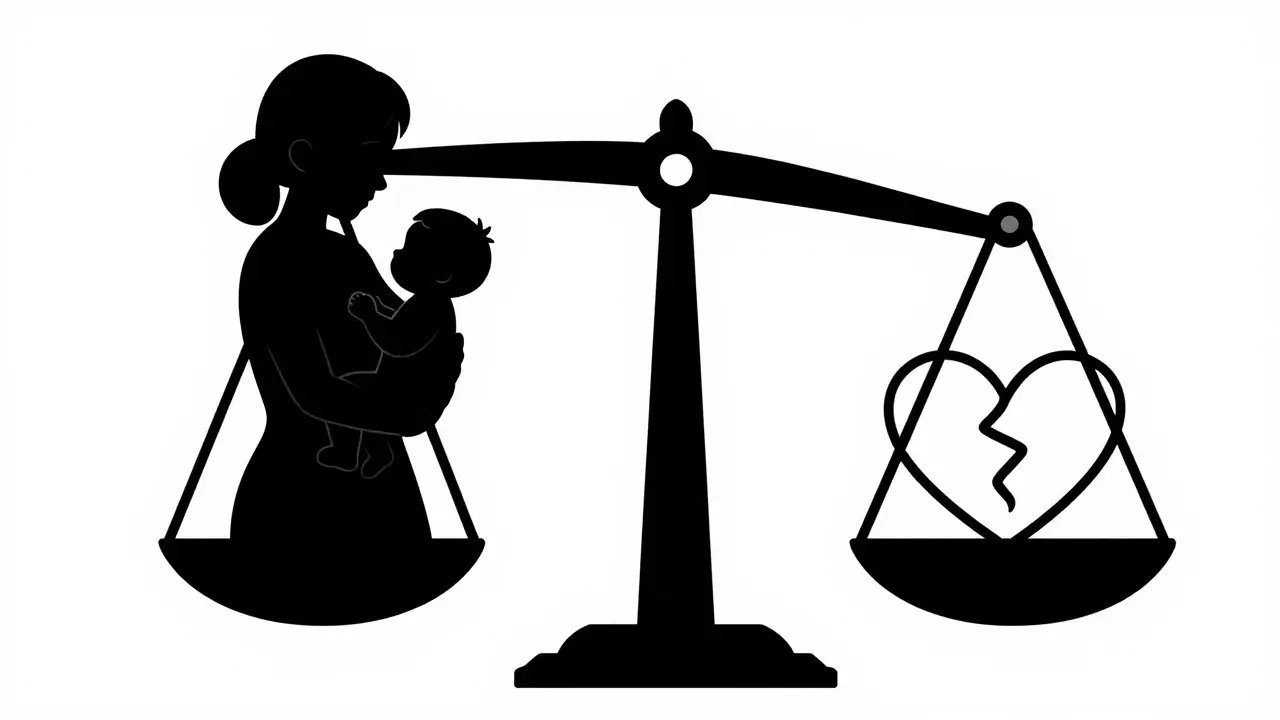
Comparing Specific SSRI Medications
Not all SSRIs are created equal when it comes to pregnancy safety. Your provider will likely choose a medication based on your history, symptom profile, and the latest safety data. Here is how the common options compare:
| Medication | Safety Profile | Key Considerations | Typical Use Case |
|---|---|---|---|
| Sertraline (Zoloft) | First-line choice; lowest PPHN risk | Best studied; high placental transfer but safe profile | Anxiety-predominant depression |
| Fluoxetine (Prozac) | Second-line; long half-life | Stays in system longer; fewer withdrawal symptoms if missed | Anergic depression (low energy) |
| Citalopram (Celexa) | Generally safe | Good for sleep-related symptoms | Insomnia-predominant symptoms |
| Paroxetine (Paxil) | Avoid in 1st trimester if possible | Higher risk of cardiac defects; short half-life causes severe withdrawal | Generally switched to other SSRIs before conception |
Sertraline is widely regarded as the go-to option because it has the most extensive safety data and the lowest risk profile for neonatal complications. If you were already stable on another SSRI before conceiving, your doctor may advise staying on it rather than switching, as the stress of changing medications can also destabilize your mood.
Long-Term Effects on Children
One area of ongoing debate involves the long-term neurodevelopment of children exposed to SSRIs in utero. Some studies suggest a slightly increased risk of autism spectrum disorder or attention-deficit/hyperactivity disorder (ADHD). However, these findings are often confounded by genetics. If a mother has depression, there is a genetic component that may also predispose the child to similar conditions, regardless of medication use.
A 2021 study in *The Lancet* adjusted for familial confounding and found no significant association between SSRI exposure and autism (OR 1.02). Conversely, some Columbia University research indicated that adolescents exposed to SSRIs had higher rates of depression by age 15 compared to unexposed peers with depressed mothers. This highlights the complexity of the issue: the medication itself may not be the culprit, but the underlying illness and genetic factors play a huge role. Current guidelines suggest monitoring adolescent mental health closely, but not avoiding treatment due to fear of these long-term outcomes.
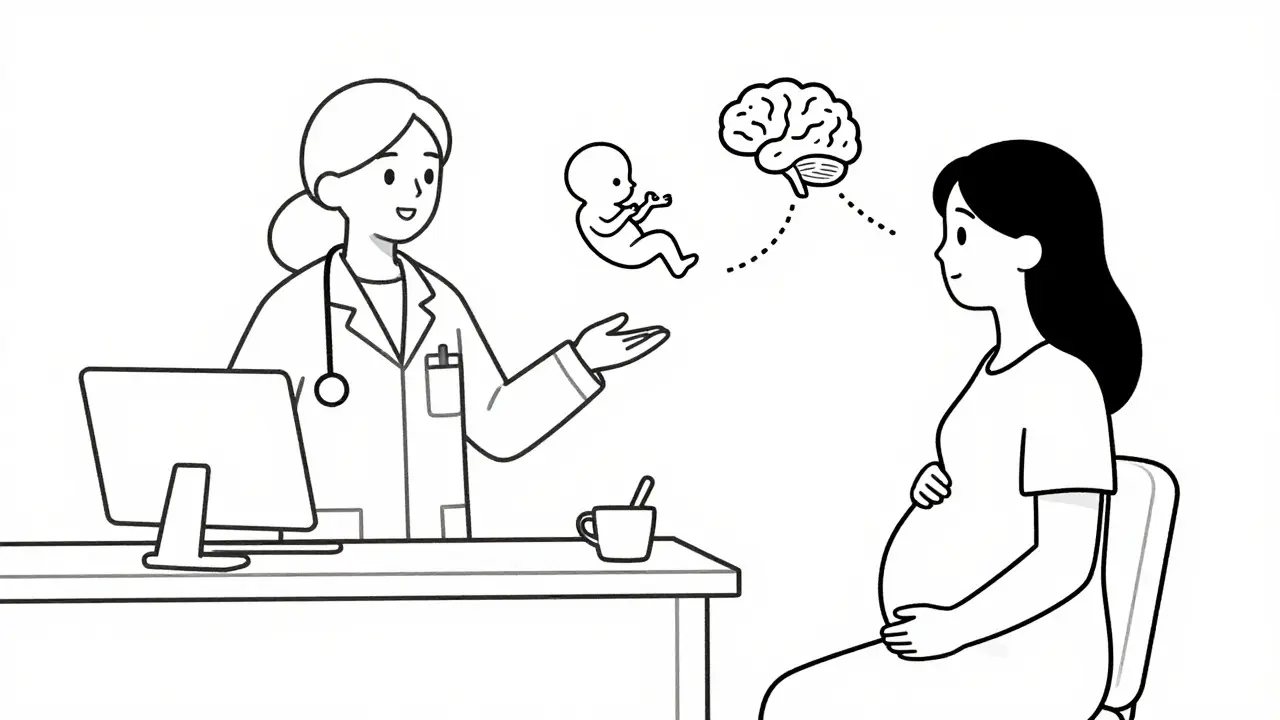
Practical Steps for Managing Treatment
If you decide to continue or start SSRIs during pregnancy, here is how to manage the process safely:
- Use the Lowest Effective Dose: Work with your psychiatrist to find the minimum dose that keeps your symptoms under control. Higher doses do not necessarily provide better protection but may increase fetal exposure.
- Monitor Blood Pressure: There is a slight association between SSRI use and gestational hypertension. Regular check-ups after 20 weeks are crucial.
- Plan for Delivery: Inform your obstetrician and pediatrician that you are taking an SSRI. They will monitor the newborn for signs of Neonatal Adaptation Syndrome, which usually resolves quickly.
- Avoid Abrupt Stopping: If you do decide to stop, taper slowly over 4-6 weeks. Abrupt discontinuation leads to withdrawal symptoms like dizziness, nausea, and "brain zaps" in up to 73% of women.
Counseling should focus on absolute risks rather than relative ones. Instead of saying "your risk is doubled," providers should explain that the risk goes from 1 in 1,000 to 3 in 1,000. This context helps prevent unnecessary alarm.
Frequently Asked Questions
Is it safe to take SSRIs while breastfeeding?
Yes, most SSRIs are compatible with breastfeeding. Sertraline and paroxetine are often preferred because they have lower levels in breast milk. The amount transferred to the infant is generally too small to cause side effects, though monitoring for sedation or poor feeding is recommended.
Should I switch my antidepressant before getting pregnant?
Only if necessary. If you are stable on your current medication, staying on it is usually safer than switching, which can cause mood instability. However, if you are on paroxetine, your doctor might suggest switching to sertraline before conception to minimize first-trimester cardiac risks.
Do SSRIs cause birth defects?
Major birth defects occur in about 2.8% of SSRI-exposed pregnancies, compared to 2.5% in the general population. This slight increase is not considered clinically significant for most SSRIs, except for paroxetine, which has a slightly higher risk of cardiac issues.
What happens if I stop my medication suddenly?
Stopping abruptly can lead to severe withdrawal symptoms, including dizziness, nausea, irritability, and sensory disturbances. More importantly, it drastically increases the risk of depressive relapse, which poses greater risks to both mother and baby than the medication itself.
Which SSRI is considered the safest during pregnancy?
Sertraline is widely considered the safest first-line option due to its extensive safety data and low risk of neonatal complications. Fluoxetine is a close second, particularly for women who need a longer-acting medication.