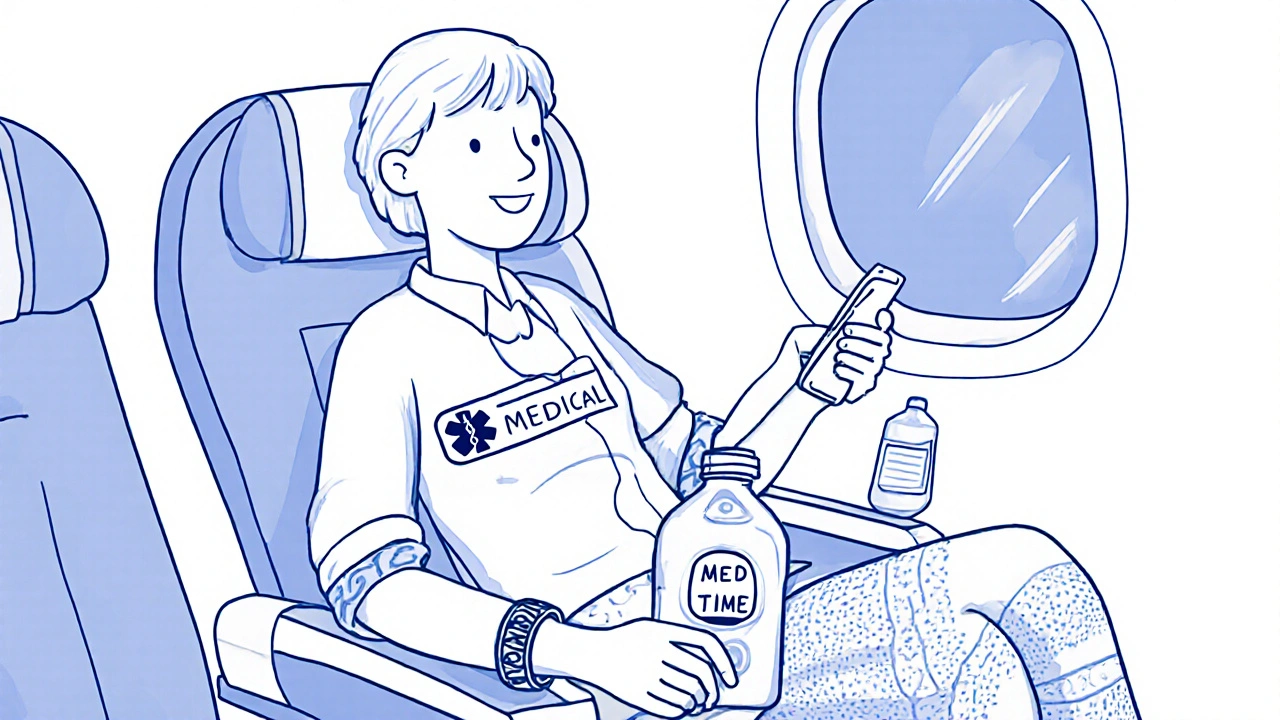
If you're on blood thinners and planning a trip, you're not alone. Millions of people worldwide take anticoagulants every day - and many of them fly, hike, or explore foreign cities without incident. But travel introduces risks that don't exist at home: long flights, unfamiliar food, time zone shifts, and limited access to medical care. The key to staying safe isn't avoiding travel - it's preparing smartly.
Know Your Medication: Warfarin vs. DOACs
There are two main types of blood thinners: warfarin and direct oral anticoagulants (DOACs). They work differently, and that changes how you travel.Warfarin has been around for decades. It works by blocking vitamin K, which your body needs to make blood clot. But that also means what you eat matters. A big plate of kale, spinach, or broccoli on vacation can throw your INR (a blood test that measures clotting time) out of balance. If your INR is too high, you risk bleeding. Too low, and you could form a dangerous clot. Warfarin users need regular blood tests - usually every 4 to 6 weeks - and must carry their yellow INR booklet everywhere. Without it, a doctor abroad won’t know your target range or dose.
DOACs - like apixaban, rivaroxaban, dabigatran, and edoxaban - are newer. They don’t need blood tests. They don’t react with vitamin K. And they’re more predictable. If you're on a DOAC, you can skip the weekly clinic visits. You still need to take it exactly as prescribed, but you don’t need to track your diet or carry a booklet. For most travelers, DOACs are the easier, safer choice.
According to the NIH’s 2018 review, DOACs are now the standard treatment for blood clots. They’re just as effective as warfarin, with fewer interactions and no need for monitoring. If you’re still on warfarin, talk to your doctor before your trip. Switching to a DOAC might be the best travel decision you make.
Timing Your Doses Across Time Zones
Time zones are the silent troublemaker of anticoagulant travel.If you take your pill at 8 a.m. London time and fly to New York, you’re now 5 hours behind. Do you take your next dose at 8 a.m. New York time (which is 1 p.m. London time)? Or stick to your home schedule? The answer: stick to your home schedule.
For DOACs, consistency matters more than exact hours. Most DOACs last 12 to 24 hours. Skipping a dose - even one - raises your clot risk. Setting an alarm on your phone or smartwatch is the simplest fix. Name the alarm “Med Time” and set it for your usual dose time, no matter where you are. Don’t try to adjust to local time. Your body doesn’t care about the clock on the wall - it cares about when you last took your pill.
Warfarin users face a tougher challenge. If you normally get your INR tested every 4 weeks, and your trip lasts 6 weeks, you need to plan ahead. Talk to your doctor before you leave. Can you get a test done before you go? Can you arrange a test at a clinic abroad? Many clinics in Europe, Canada, Australia, and Japan can handle INR tests for travelers. But don’t assume. Call ahead. And always carry your booklet - even if you think you won’t need it.
Stay Hydrated, Avoid Alcohol
Dehydration thickens your blood. That’s the last thing you want if you’re on a blood thinner.Long flights, hot climates, and alcohol all pull water out of your body. Airplane cabins have low humidity - often below 20%. That’s drier than the Sahara Desert. Add a few cocktails or sugary sodas, and you’re setting yourself up for trouble.
Drink water. Constantly. Aim for at least 8 ounces every hour on a flight. Carry a refillable bottle. Skip the wine, beer, and energy drinks. Alcohol doesn’t just dehydrate you - it can interfere with how your blood thinner works, especially warfarin. Even one drink can raise your bleeding risk if you’re not careful.
Dr. Coogan from UT Physicians says it plainly: “Choose water instead of alcohol or sugary drinks.” That’s not a suggestion. It’s a safety rule.

Movement Is Non-Negotiable
Sitting still for hours - whether on a plane, train, or bus - increases your risk of deep vein thrombosis (DVT). That’s when a clot forms in your leg. If it breaks loose, it can travel to your lungs and cause a pulmonary embolism (PE). That’s life-threatening.Studies show that flights longer than 6 hours carry the highest risk. But even a 4-hour car ride can be dangerous if you don’t move.
Here’s what to do:
- Stand up and walk every 2 to 3 hours. Even a quick trip to the bathroom helps.
- If you can’t get up, do seated leg exercises: flex your feet, roll your ankles, lift your knees.
- Wear compression socks. They’re not fancy - just tight, knee-high socks that squeeze your calves gently. They help blood flow back to your heart.
- Don’t cross your legs. It blocks circulation.
These aren’t tips. They’re medical requirements. If you’ve had a clot before, your risk is even higher. The American Heart Association says people with a recent clot should avoid travel for at least 4 weeks. That’s not a suggestion. It’s a warning.
What to Pack - Beyond Your Pills
You wouldn’t leave home without your wallet. Don’t leave without your medical essentials.For warfarin users:
- Your yellow INR booklet - always in your carry-on, never in checked luggage.
- Extra tablets - at least 2 weeks’ worth, in different strengths (e.g., 1mg, 5mg). You might need to adjust your dose if your INR drifts.
- A letter from your doctor listing your medication, dose, and reason for taking it. Translate it into the local language if possible.
For DOAC users:
- Your pills - at least 1.5 times your trip length. Always pack more than you think you’ll need.
- The original prescription bottle with your name on it. Customs officers might ask.
- A note from your doctor explaining your condition and medication. Not required, but helpful.
Both groups should carry:
- A medical ID bracelet or necklace that says “On Blood Thinners.”
- A list of emergency contacts and your doctor’s phone number.
- Travel insurance that covers pre-existing conditions - and make sure it includes emergency medical evacuation.

Know the Warning Signs
You’re not just protecting yourself from clots - you’re watching for signs that one might be forming.Call for help immediately if you notice:
- Sudden swelling, pain, or warmth in one leg (sign of DVT).
- Shortness of breath, chest pain, or coughing up blood (sign of PE).
- Bleeding that won’t stop - nosebleeds, gums, cuts, or heavy periods.
- Severe headache, dizziness, or confusion (could mean bleeding in the brain).
Don’t wait. Don’t think, “It’ll pass.” These are emergencies. If you’re abroad, go to the nearest hospital. Emergency rooms worldwide are trained to handle blood thinners. The key is acting fast.
As the National Blood Clot Alliance says: “Getting help early has a low likelihood of interrupting your trip - and may prevent a far worse problem.”
Special Risks: Diving, High Altitude, and More
Some activities are riskier than others.Diving: If you’re on warfarin, scuba diving is dangerous. Pressure changes can cause bleeding in your ears, sinuses, or spinal cord. The Divers Alert Network warns this risk is real - even if some people do it without issues. Don’t gamble with it.
High altitude: Flying to mountain destinations? Altitude can thicken your blood and raise clot risk. Stay hydrated. Move often. Watch for symptoms. If you’re on DOACs, you’re better protected - but not immune.
Extreme heat: Sweating too much without replacing fluids can lead to dehydration. That’s a clot risk. Avoid long hikes in the midday sun. Plan rest stops. Drink water.
There’s no one-size-fits-all rule. But if an activity makes you feel dizzy, swollen, or short of breath - stop. Talk to your doctor before trying anything new.
Final Checklist Before You Go
Before you pack your bags, run through this:- Have you talked to your doctor about your travel plans? (Especially if you’ve had a clot in the last 4 weeks.)
- Are you on a DOAC? If not, should you switch?
- Do you have enough medication - plus extras?
- Do you have your INR booklet (if on warfarin)?
- Have you set alarms for your doses?
- Have you packed compression socks and water bottles?
- Do you have medical ID and emergency contacts?
- Is your travel insurance valid for your condition?
If you answered yes to all of these, you’re ready. Traveling with blood thinners isn’t about fear - it’s about control. You know your body. You know your meds. You know the risks. Now you’ve got the plan.
Can I travel if I just had a blood clot?
Most doctors recommend waiting at least 4 weeks after a recent blood clot before traveling. This gives your body time to stabilize on medication and lowers the risk of another clot during travel. Even if you’re on blood thinners, your risk is still elevated in the first month after diagnosis. Always get clearance from your doctor before booking a trip.
Do I need to stop my blood thinner before flying?
Never stop your blood thinner without your doctor’s approval. Stopping increases your risk of a clot - especially during long flights. The goal is to keep your medication going exactly as prescribed. If you’re worried about bleeding, talk to your doctor about adjusting your dose before travel - but never skip it.
Can I drink alcohol while on blood thinners?
Moderate alcohol - one drink per day - is usually okay for most people on DOACs. But alcohol thins your blood further and can increase bleeding risk. With warfarin, alcohol can interfere with how your liver processes the drug, making your INR unpredictable. The safest choice is to avoid alcohol while traveling. Stick to water.
What if I lose my blood thinner pills while traveling?
If you lose your pills, go to the nearest hospital or clinic immediately. Bring your prescription bottle or doctor’s note. Most countries can fill prescriptions for DOACs and warfarin. Don’t wait. Missing even one dose increases your clot risk. Pharmacies in major cities in Europe, Canada, Australia, and Japan commonly stock these medications. Keep your doctor’s contact info handy.
Are compression socks really necessary?
Yes - especially on flights longer than 4 hours. Compression socks reduce swelling and help blood flow back from your legs. They’re not a cure, but they’re a proven way to lower your risk of DVT. Look for medical-grade socks with 15-20 mmHg pressure. Wear them from the moment you sit down until you stand up.
All Comments
Jessica Healey November 19, 2025
I took my DOAC to Bali last year and honestly? Best trip ever. No INR booklet, no kale anxiety, just me, a beach, and a phone alarm labeled "Med Time". I drank water like it was my job and wore compression socks like they were fashion. No clots, no drama. Do the thing.
Levi Hobbs November 19, 2025
This is incredibly well-researched-and I mean, seriously, thank you. I’ve been on warfarin for 7 years, and I never realized how much I needed to prepare. I’m switching to apixaban next month. I’ll bring extra pills, my booklet, and a water bottle that glows in the dark. Also, compression socks? I’m buying three pairs. One for each continent.
henry mariono November 19, 2025
I’ve traveled with a DOAC for three years now. I don’t overthink it. I take my pill. I drink water. I move. I don’t drink. I pack extra. I carry my prescription. That’s it. No drama. No panic. Just routine. It’s not complicated. You just have to be consistent.
Sridhar Suvarna November 20, 2025
As someone from India who travels to the US for medical care, I can confirm: DOACs are a game-changer. In Delhi, I used to wait weeks for INR tests. Now, I fly with my pills in my pocket and my phone set to remind me. No stress. No bureaucracy. Just freedom. Travel is not a luxury for us-it’s survival. This guide saved my life.
Joseph Peel November 21, 2025
One thing missing here: the importance of knowing local emergency numbers. In Germany, it’s 112. In Japan, dial 119 for ambulance. In Brazil, 192. Save them in your phone. Write them on a sticky note. Don’t assume your hotel staff speaks English. I once had to explain to a pharmacist in Lisbon that I needed rivaroxaban because I was on a blood thinner-and he had never heard of it. I carried the generic name too. Always be prepared.
Kelsey Robertson November 21, 2025
Wow. Just... wow. So you’re telling me that if I don’t drink water like a camel on a desert trek, I might die? And if I cross my legs? I’m basically signing my own death warrant? And if I dare enjoy a single glass of wine? I’m a reckless idiot? This isn’t advice-it’s a guilt trip wrapped in a medical pamphlet. Who made you the blood thinner police? I’m on DOACs. I’m fine. Let people live.
Joseph Townsend November 23, 2025
Okay, real talk: I had a PE last year. I was on warfarin. I flew to Vegas. Didn’t move. Drank two margaritas. Forgot my booklet. Thought, "I’m fine." Spoiler: I was NOT fine. Ended up in the ER with a 3-hour wait because the nurse didn’t know what an INR was. I cried. I screamed. I swore off alcohol forever. I bought compression socks shaped like dragons. I wear them everywhere now. I’m alive because I listened. Don’t be me. Be better.
Bill Machi November 24, 2025
This article is a joke. You’re telling Americans to avoid alcohol and walk around? That’s your big tip? In my country, we don’t need hand-holding. We don’t need alarms. We don’t need socks. We take our pills, we travel, we live. This is overmedicalization. People have been flying since the 1950s. We didn’t have DOACs back then. We didn’t have alarms. We didn’t have "medical ID bracelets." We had guts. Maybe you need less advice and more backbone.
Elia DOnald Maluleke November 26, 2025
From the dusty plains of South Africa to the neon chaos of Tokyo, I’ve walked this path. I carry my pills like sacred scrolls. I drink water like it’s the last gift from the earth. I move because stillness is the enemy. I do not fear death-I fear regret. This article is not a guide. It is a prayer. And I pray every time I board a plane. May your veins stay clear. May your body remember its strength. May your journey be long, and your clot, never found.