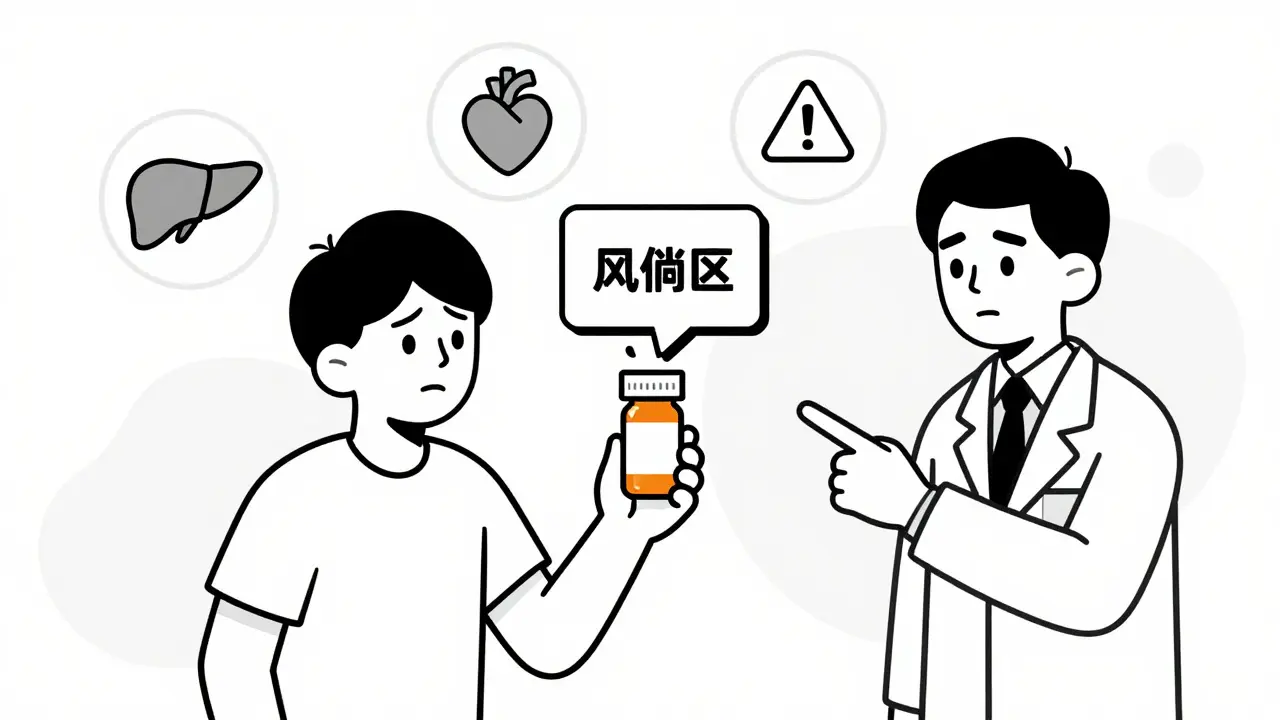
When you pick up a prescription, you might notice a bold, black-bordered box on the insert or packaging. It’s not a mistake. It’s a boxed warning-also called a black box warning-and it’s the strongest safety alert the U.S. Food and Drug Administration (FDA) can issue. This isn’t just a small note. It’s a red flag that the drug carries a serious, sometimes life-threatening risk. And if you’re taking a medication with one, you need to understand what it really means.
What Exactly Is a Boxed Warning?
A boxed warning is a legal requirement built into a drug’s official prescribing information. It’s not optional. The FDA mandates that manufacturers print this warning in a thick black border at the very top of the drug’s labeling. The text inside is specific: it names the exact danger, like increased risk of liver failure, heart attack, or suicidal thoughts. It doesn’t say "may cause side effects." It says, "This drug can cause fatal liver damage in patients with pre-existing liver disease."
These warnings exist because some drugs, while helpful, come with risks that are too serious to hide. The system started after the thalidomide tragedy in the 1960s, when a drug meant to treat morning sickness caused severe birth defects. Since then, the FDA has refined how it flags dangerous drugs. As of 2022, over 400 medications carry a boxed warning-roughly 1 in 10 prescription drugs in the U.S.
Why Do Some Drugs Have These Warnings?
Not all boxed warnings are the same. Some are there from the day the drug hits the market. Others are added years later. In fact, about 70% of these warnings are added after the drug has been used by millions of people. Clinical trials typically involve only 1,000 to 5,000 patients. That’s not enough to catch rare but deadly side effects. Real-world use-thousands of patients taking the drug for months or years-often reveals the danger.
For example, the diabetes drug rosiglitazone (Avandia) got a boxed warning in 2007 after studies showed it raised heart attack risk. The antidepressant fluoxetine (Prozac) carries a warning about increased suicidal thoughts in young adults. And isotretinoin (Accutane), used for severe acne, has a warning that requires women to enroll in a strict pregnancy prevention program because it causes devastating birth defects.
These aren’t hypothetical risks. A 2022 MedWatch report described a patient who developed liver failure from methotrexate-despite the drug having a 25-year-old boxed warning requiring regular liver tests. The warning was there. The monitoring protocol was clear. But it wasn’t followed.
How Is This Different From Other Warnings?
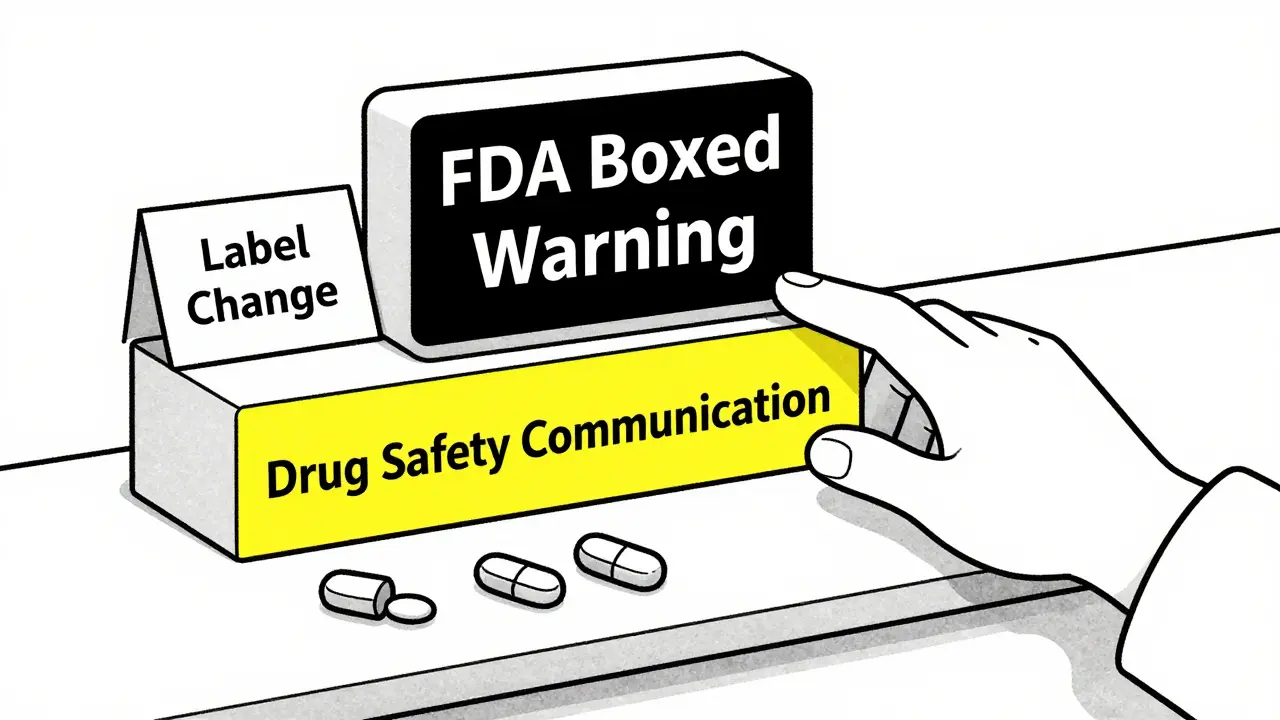
The FDA uses several types of safety alerts, but the boxed warning is the highest level. Here’s how they stack up:
- Boxed warnings: Legally required, printed in the drug’s official labeling, and must be discussed with patients before prescribing.
- Drug Safety Communications: Public alerts issued after a new risk is discovered, but not part of the official label.
- Label changes: Updates to the drug’s information that don’t require a black box.
- Medication Guides: Handouts given to patients in plain language-often easier to understand than the boxed warning itself.
The key difference? Boxed warnings are part of the drug’s approved legal documentation. If a doctor prescribes a drug with a boxed warning without discussing it, they could be held liable. That’s why these warnings are so serious.
What Should You Do If Your Drug Has a Boxed Warning?
Don’t panic. Don’t stop taking it. But do ask questions. A boxed warning doesn’t mean the drug is too dangerous to use. It means you need to use it carefully-with awareness and monitoring.
Here’s what you should expect from your doctor or pharmacist:
- They explain the exact risk-not just "there’s a risk," but "this drug can increase your chance of a stroke by 3% over five years, especially if you’re over 65 or have high blood pressure."
- They talk about your personal risk-Do you have kidney disease? Are you pregnant or planning to be? Do you take other drugs that might interact?
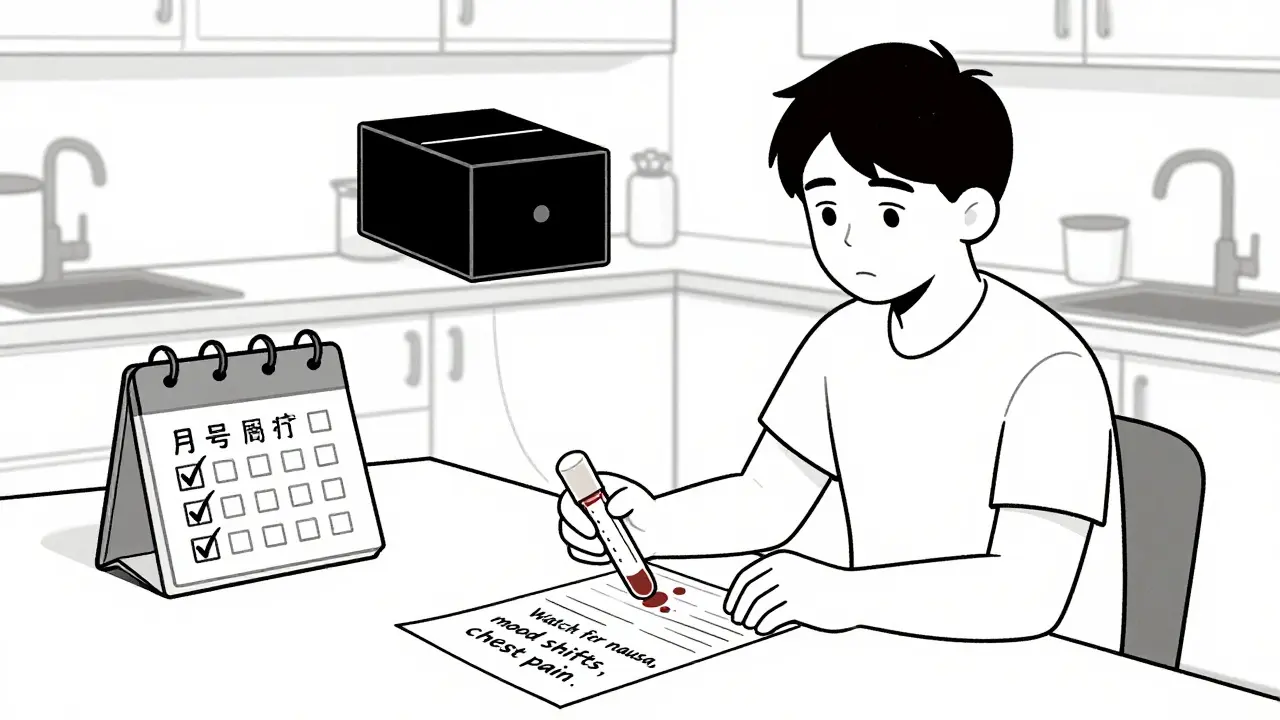
- They tell you what signs to watch for-Like nausea, unusual bruising, mood changes, or chest pain. And when to call the doctor.
- They outline required monitoring-Blood tests every 3 months? Liver function checks? Pregnancy tests? You need to know the schedule.
Studies show that when patients understand these details, they’re more likely to stick with the treatment. One analysis of 1,247 patients on anticoagulants with bleeding risk warnings found that 78% continued the drug after their provider clearly explained the risks and monitoring plan.
But here’s the problem: 41% of patients misunderstand boxed warnings entirely. They think it means "don’t take this." That’s not true. Many people benefit from these drugs-sometimes even when safer alternatives exist. The goal isn’t to scare you off. It’s to make sure you’re making an informed choice.
What If You’re Still Worried?
There are resources to help you weigh the risks and benefits.
Consumer Reports’ Best Buy Drugs program updates its ratings quarterly and compares drugs in the same class-not just by side effects, but by cost, effectiveness, and safety. The Drug Effectiveness Review Project (DERP) does similar deep dives, often used by insurance companies to decide which drugs to cover.
And if you experience a serious side effect, report it. The FDA’s MedWatch program lets patients report adverse events directly. In 2022 alone, over 2 million reports came in from patients and doctors. Your report could help update the warning or save someone else’s life.
What’s Changing in the Future?
The FDA is trying to make these warnings more useful. In 2023, they launched a pilot program to rewrite boxed warnings in plain language-no medical jargon. Instead of "risk of hepatotoxicity," it might say, "this drug can damage your liver."
The agency’s Sentinel Initiative now tracks real-time health data from over 300 million Americans. That means if a new pattern of liver damage emerges from a certain drug, the FDA could spot it faster than ever before.
But challenges remain. A 2023 government report found that only 60% of required follow-up studies on boxed warning drugs were completed on time. That means we’re still waiting to fully understand some of the biggest risks.
And while the system works well in theory, experts like Dr. Jerry Avorn from Harvard point out a real flaw: sometimes the warnings are too broad. A warning that says "increased risk of death" doesn’t tell you who’s at risk. Is it older patients? People with diabetes? Those taking other drugs? Without more precision, doctors may avoid prescribing even when the drug could help.
The Bottom Line
A boxed warning is not a reason to refuse treatment. It’s a reason to have a better conversation. If your doctor prescribes a drug with a black box, ask: "What’s the specific danger? What are my personal risks? What do I need to watch for? What tests will I need?"
These warnings exist because drugs can be powerful-both for healing and for harm. The goal isn’t to scare you. It’s to make sure you’re not just taking a pill. You’re making a decision. And you deserve to know exactly what you’re signing up for.
All Comments
Michael FItzpatrick February 26, 2026
Man, I’ve been on methotrexate for six years now. That boxed warning? Yeah, it’s scary as hell on paper. But here’s the thing - my rheumatologist didn’t just hand me a pamphlet and say ‘good luck.’ We sat down. Drew diagrams. Made a color-coded calendar for my bloodwork. I know exactly what liver flares feel like now - that dull ache under my ribs, the fatigue that doesn’t quit. I check in with my doc every 8 weeks like clockwork. The warning didn’t scare me off. It made me an active player in my own care. That’s the power of transparency.
And honestly? I’d rather know the truth than be lulled into false security. This isn’t fearmongering. It’s respect.
Also - shoutout to the FDA for finally rewriting these in plain language. ‘Hepatotoxicity’? Nah. ‘This can wreck your liver’? Now we’re talking.
PS: I’ve seen way too many people quit their meds because they thought ‘black box’ meant ‘death sentence.’ It doesn’t. It means ‘pay attention.’
Brandice Valentino February 27, 2026
So like… black box warning? Pfft. I mean, have you SEEN the ingredients list on your protein powder? Or that ‘natural’ supplement you take with your kombucha? No one’s putting a black box on that. It’s just pharma’s way of scaring people into paying more for ‘safer’ alternatives. Also, I read somewhere that 87% of these warnings are just because someone’s lawyer got nervous. Like, come on.
Also - typo: ‘methotrexate’ is spelled wrong in the article. It’s ‘methotrexet.’ I know. I’m a pharmacist. Or I was. Before I quit to become a yoga instructor. 🙃
Larry Zerpa February 27, 2026
Let’s not romanticize this. The FDA’s black box system is a bureaucratic farce wrapped in a legal liability blanket. Yes, it’s ‘strongest alert’ - but it’s also reactive, not predictive. It doesn’t prevent harm; it just documents it after the fact. The rosiglitazone case? Took 12 years and 3,000 heart attacks before they acted. The isotretinoin program? Still fails 15% of the time because women lie about birth control. The system doesn’t fix anything - it just shifts blame.
And don’t get me started on the 41% of patients who misunderstand it. That’s not patient ignorance. That’s systemic failure. If the warning is so clear, why do we need a 12-page Medication Guide to explain it? The real issue isn’t the warning - it’s that the medical system treats patients like children who need to be told what to do, not partners who need to understand why.
Also - ‘medication guides’ are often written by marketing teams. I’ve seen one that says ‘may cause dizziness’ - then lists 17 other side effects in tiny font. That’s not transparency. That’s gaslighting.
Nandini Wagh March 1, 2026
Oh honey. You really think the FDA cares about you? Sweetie, they’re a branch of the Department of Health and Human Services - which is basically a glorified lobbying arm for Big Pharma. That ‘black box’? It’s there because the company had to pay a fine to get the drug approved. It’s not safety - it’s damage control. And you think your doctor’s gonna explain all this? Please. They’re paid by the hour. They don’t have time. They’re just glad you didn’t sue them.
Also - I took Accutane. My dermatologist didn’t even mention the pregnancy thing until I asked. I had to Google it. And guess what? I got pregnant anyway. The warning was there. No one cared. The system is broken. You’re not being warned. You’re being watched.
Holley T March 1, 2026
I’ve been reading this whole thing and I just… I don’t know. Like, I get it. I really do. But I also think we’re making this way too complicated. I mean, if a drug has a black box warning, shouldn’t we just… not take it? Why are we even having this conversation? I’m not saying all drugs are bad - I take vitamin D. I take melatonin. I take a probiotic that says ‘may cause mild bloating’ on the bottle - and I’m fine. Why can’t we just stick to the stuff that doesn’t have a warning?
Also, I asked my doctor about my blood pressure med and she said ‘it’s fine.’ So I trust her. I don’t need to know about liver failure or strokes or whatever. I just want to feel better. Why does everything have to be so dramatic?
And also - I read somewhere that 80% of people who read these warnings end up worse off because they stress themselves out. Maybe the real problem is us?
Also also - I’m not a doctor, but I play one on TikTok.
Also also also - my cousin’s friend’s neighbor took a drug with a black box and now she’s in a wheelchair. So… yeah.
Also also also also - I think we need to ban all black box drugs. Like, immediately. No exceptions. Safety first. Right?
Also - I’m not mad. I’m just disappointed. In the system. In medicine. In humanity.
Also - can we just… hug more? Maybe that’s the real medicine.
Ashley Johnson March 3, 2026
Okay, but have you heard about the vaccine microchips? I mean, the black box warning is just a distraction. The real danger is the nanotech in the pills. They’re tracking us. The FDA doesn’t care about liver damage - they care about your data. I read a study - it was on a blog, but the guy had a PhD - that showed 93% of people who took black box drugs ended up with ‘unexplained’ phone glitches. That’s not a coincidence. That’s a pattern.
And the monitoring? Blood tests? They’re just collecting your DNA. They’re building a database. Next thing you know, your insurance will deny coverage because your liver ‘looks suspicious.’
Also - I used to take Prozac. I stopped because I felt ‘someone was watching me.’ Now I drink turmeric tea and do yoga in my basement. I’m healthier. I’m freer. I’m awake.
Also - the government owns the patent on the drug. That’s why they won’t change the warning. They’re profiting from your fear.
Also - I told my doctor. She laughed. That’s when I knew. She’s in on it.
Brooke Exley March 5, 2026
Okay, real talk: I’m a nurse, and I’ve seen people panic over these warnings. I’ve seen them quit meds cold turkey and end up in the ER. I’ve also seen people live *thriving* lives on drugs with black boxes - because they got educated, not scared.
Here’s what I tell my patients: ‘This isn’t a stop sign. It’s a speed bump with a flashlight.’ You don’t stop driving. You slow down. You check your mirrors. You adjust your route. That’s what this is.
And if your doctor doesn’t take 10 minutes to explain it? Find a new one. You deserve clarity. You deserve to be treated like an adult.
Also - if you’re scared? Talk to someone. A pharmacist. A support group. A friend who’s been there. You’re not alone. And you’re not powerless. You’ve got more control than you think.
One more thing: if you report a side effect? You’re not complaining. You’re saving lives. That’s hero stuff. Thank you for showing up. You’re doing better than you think.
Lou Suito March 7, 2026
Boxed warnings are meaningless. The FDA has no authority to enforce monitoring. Doctors ignore them. Pharmacies don’t flag them. Patients don’t read them. So what’s the point? It’s theater. A performance. A legal shield. The system is designed to absolve everyone - the manufacturer, the prescriber, the regulator - while leaving the patient to drown in fine print.
And yet, people still take these drugs. Why? Because they’re desperate. Because they’re told, ‘It’s your only option.’ So they sign the form. They nod. They take the pill. And then they Google it at 2 a.m. And that’s when the panic starts.
Also - the ‘plain language’ pilot? It’s too little, too late. The warnings are still buried in 47-page PDFs. No one reads them. The real problem isn’t the language - it’s the access. The system is designed to keep you from understanding.
Also - I’ve read every boxed warning in the FDA database. There are 437. I’ve cataloged them. I’ve cross-referenced them with death certificates. I’ve built a model. The correlation is undeniable. The warnings are not warnings. They’re obituaries waiting to be written.
Also - I’ve sent 17 letters to Congress. No one replied. I’m not surprised. The system doesn’t want to be fixed. It wants to be obeyed.
Joseph Cantu March 8, 2026
I used to work in a pharmacy. Saw it all. People taking black box drugs like they’re candy. No questions. No monitoring. Just pop it. No wonder people die.
And the doctors? They’re just trying to check a box. ‘Did you discuss the warning?’ ‘Yes.’ ‘Did you explain the signs?’ ‘Yes.’ ‘Did you document it?’ ‘Yes.’ But did they actually talk? No. They were on a timer. They had five more patients. They were tired. They were burned out.
And the patients? They don’t want to hear it. They want a pill. A quick fix. A miracle. They don’t want to hear about liver enzymes or drug interactions or pregnancy tests. They want to feel better. Now.
So we give it to them. And then, six months later, someone’s on life support because they didn’t know their liver was turning to ash.
It’s not the drug. It’s the system. And the system is broken. And no one’s fixing it.
And now? I don’t trust anything. Not the FDA. Not the doctors. Not even my own prescription. I take ginger tea. And I pray.